

Interior design project stages: create a unique and finished space
More than 60 percent of interior design projects exceed the original budget. That's why clear planning and detailed preparation are crucial for a successful outcome. By knowing the order of the steps and learning how to avoid the most common pitfalls, you can create a unique and functional space for your home or office without any unnecessary surprises.
Table of contents
- Step 1: Determine project goals and budget
- Step 2: Create a detailed plan
- Step 3: choose materials and color scheme
- Step 4: implement the necessary structural changes
- Step 5: acquire and install interior design elements
- Step 6: Check the final result and finalize the details
Quick summary summary
| Pivot | Explanation |
|---|---|
| 1. Set clear goals | Write down what kind of atmosphere you want to create and what functional needs the space has. |
| 2. Create a realistic budget | List all possible costs and set aside extra in your budget for unexpected expenses. |
| 3. Plan in detail | Write down the work stages, schedule and responsible persons, and prepare for possible challenges. |
| 4. Choose materials carefully | Explore different materials and colors that support your original vision and create the desired atmosphere. |
| 5. Finalize the project details | Check the entire end result, ensure its success, and take any necessary corrective actions. |
Step 1: Determine project goals and budget
A successful interior design project starts with clear planning. In this phase, you lay the foundation for the project by defining specific goals and a realistic budget that will guide the entire process.
Start by writing down your specific goals. What kind of atmosphere do you want to create in the space? Is it a cozy living room or a modern office space? Think about the needs and preferences of the people who will use the space. Write down both your functional and aesthetic goals as precisely as possible. Use mood boards or reference images to help you visualize your vision.
Budgeting requires honest self-assessment. List all possible costs for furniture, materials, possible renovations, and professional help. Also, set aside 10 to 20 percent of your budget for unexpected expenses. This will help you avoid financial surprises as the project progresses.
Pro tip: Organize your budget by category and set specific monetary goals for each category. This will help you keep the project financially under control and avoid unnecessary overspending.
Step 2: Create a detailed plan
Creating a detailed plan is the most critical stage of an interior design project, where you transform your vision into a concrete implementation plan. This process requires precision, organization, and creative thinking.
Start by building a project plan that includes all the key elements of the project. Define each phase, schedule, and responsibilities in detail. Use visual tools like timelines or project management apps to help you visualize the whole. Write down all material purchases, renovation needs, furniture placements, and any professional help needed.
Also consider potential challenges and prepare for them in advance. Plan alternative implementation methods and keep your budget flexible. Document all plans carefully and keep them easily accessible throughout the project.
Pro tip: Use digital project management tools that enable real-time tracking and collaboration. This way, you stay up to date on the progress of the project and can make quick corrections if necessary.
Step 3: Choose materials and color scheme
The choice of materials and color scheme is the heart of the interior design project, where your creative vision begins to become reality. This is where you create a unique and personal space that reflects your style.
Be bold with creative material choices . Explore different textures, surfaces and materials that add depth and interest to a space. Think about how different materials work together to create a harmonious or contrasting whole. For example, the warm tone of wood can work wonderfully alongside metal or glass surfaces.
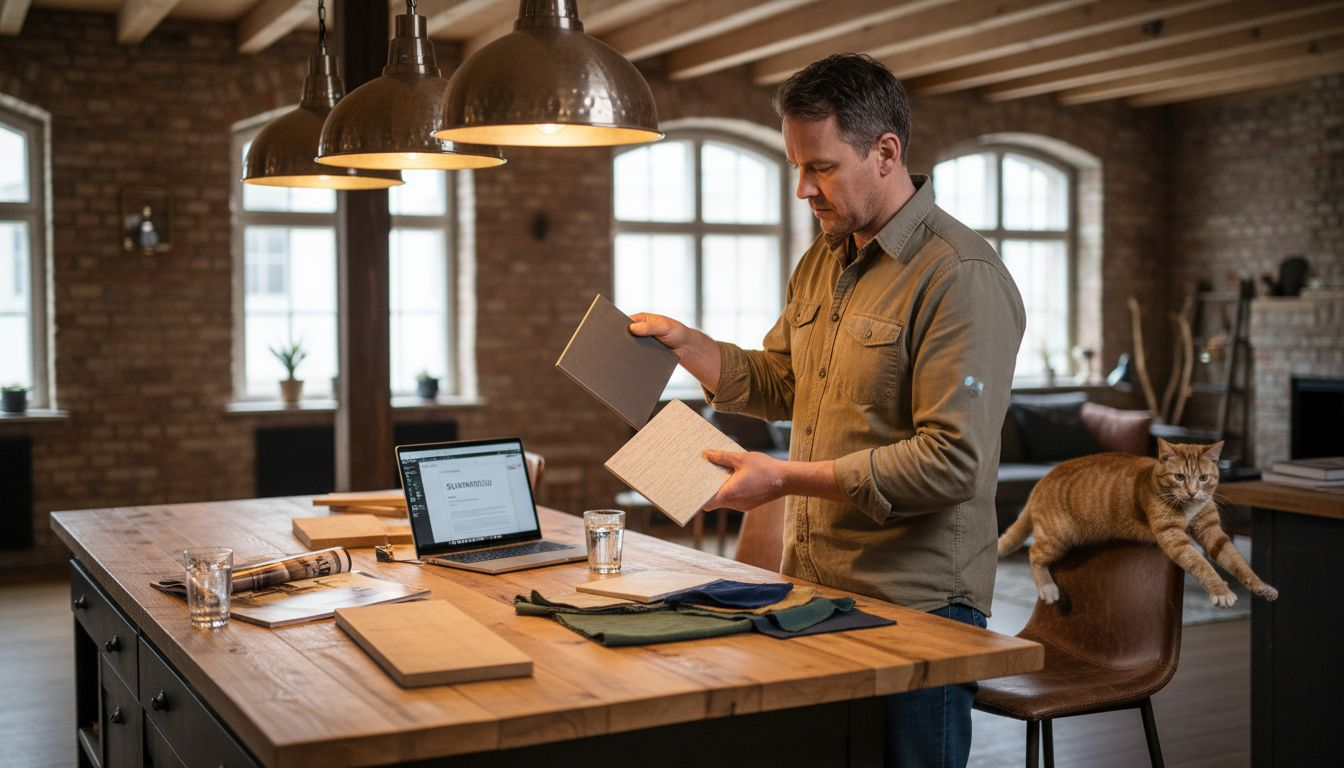
When designing a color scheme, it’s a good idea to start with the mood you want to evoke in the space. Choose a base color that creates a basic sense of peace, and then add accent colors that bring personality and energy to the space. Remember, colors have a significant impact on the mood and experience of a space.
Pro tip: Collect and keep sample pieces for your color and material plan so you can easily evaluate their compatibility. Photograph the sample pieces in daylight and artificial lighting to ensure they work in all lighting situations.
The following table helps you visualize the strengths and potential challenges of different interior design materials:
| Material | Benefits | Challenges |
|---|---|---|
| Wood | Warm atmosphere, durability | Requires maintenance, can get scratched |
| Metal | Modern, easy to clean | Cold expression, can be scratched |
| Glass | Adding light, a sense of space | Sensitive to breakage, fingerprints visible |
| Textiles | Softness, acoustic improvement | Collects dust, requires washing |
Step 4: Implement the necessary structural changes
Structural changes are the physical implementation phase of an interior design project, where plans are transformed into concrete changes in the space. It is important to proceed systematically and in a controlled manner during this phase.
The design process requires careful documentation and management of technical details . Start by mapping out all structural changes needed, such as wall demolition, new partitions, flooring materials, or electrical wiring. Measure the space carefully and make clear markings of the changes. Be prepared for surprises during the implementation phase that require flexibility in the original plan.
Pay special attention to technical details. Make sure that any structural changes are both technically feasible and economically sound. If necessary, consult professionals such as structural engineers or interior architects who can help you solve technical challenges.
Pro tip: Document all structural changes by taking before and after photos. This will help you track progress, make it easier to make any changes later, and serve as a great reminder of the project’s progress.
Step 5: Acquire and install interior design elements
Purchasing and installing interior design elements is the most concrete phase of the project, where your plans become a real space. This is where you create an environment that reflects your personality and meets your functional needs.
Start by mapping out smart interior design solutions . Figure out which furniture and elements will best support your plan. Measure the space carefully before purchasing and make sure that all the elements you choose fit the space in terms of size and style. Pay attention to both aesthetics and practicality.
Be patient and precise during the installation process. Start with the largest elements and work your way down to the smaller details. Make sure each piece of furniture is in balance with the rest of the space and supports your original vision. If necessary, seek professional help for more demanding installations, such as fixed furniture or demanding hangings.
Pro tip: Keep your smartphone camera ready during installation. Document each step with photos so you can later compare the final result to your original plan and learn from the different stages of the project.
Step 6: Check the final result and finalize the details
Reviewing the final result is the final and most important step in an interior design project, where you evaluate the success of the entire project. This is where you ensure that the final result matches your original vision and meets both your aesthetic and functional goals.
You can also apply the terrace decoration guidelines to the interior decoration. Go through every detail systematically. Check the lighting at different times of the day, the arrangement of furniture, the harmony of colors and the overall impression of the atmosphere. Pay attention to small details, such as the length of the curtains, the hanging of pictures and the storage arrangements.
Compare the final result to your original plan. Where did you excel? What could you have done differently? Don't be too critical, but learn from the different stages of the project. Make small adjustments that enhance the finished look of the space.
Pro tip: Get a sense of distance from the project by taking photos of the space from different angles. These photos will help you see the bigger picture more objectively and identify any small finishing touches that may be needed.
Below you will find a summary of the key stages of an interior design project and their goals:
| Step | Target | Typical tools |
|---|---|---|
| Defining goals and budget | Clarify the direction of the project | Budget tables, mood boards |
| Creating a plan | Concrete the implementation path | Project management programs |
| Choice of materials and colors | Create a unified look | Sample folders, color charts |
| Structural changes | Implement space changes | Tape measure, drawings |
| Interior installation | Finishes the space | Tools, installation instructions |
| Final check and finishing | Ensures the realization of the vision | Cameras, checklists |
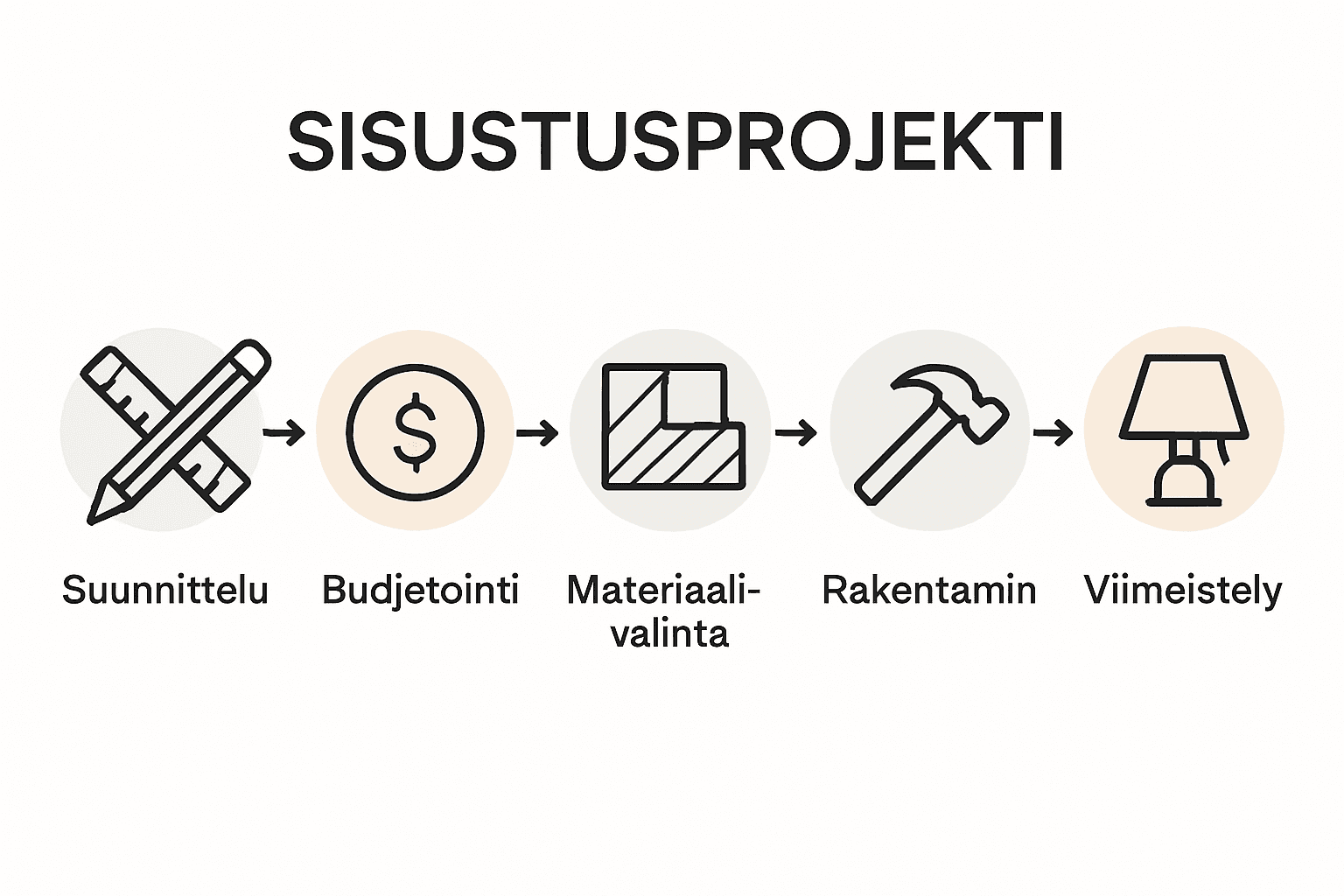
Make your interior design project a holistic experience with Dekoja.net
The stages of an interior design project require careful planning, material selection and careful execution. The challenge is often to find solutions that combine aesthetics and functionality in a way that makes the space come alive and feel truly yours. The article's emphasis on visual contrast, personal materials and finished details highlights the importance that the right lighting, surfaces and materials bring to the atmosphere of a space.
Dekoja.net offers unique materials and solutions that combine design, technology and creativity. For example, check out lamps that enhance lighting and elevate the atmosphere of a space to a new level. Smart interior design solutions such as Lemus sound and lighting solutions bring both functionality and experientiality to the space. Also remember to utilize the world's blackest paint, Musou Black, which pays off in contrast and offers a dramatic end result in symbiosis with your design work.

Get started now and make your dreams come true with high-quality design materials and comprehensive solutions. Explore our selection in more detail at Dekoja.net and be inspired by how you can create a truly unique and finished space.
Frequently asked questions
How do I determine the goals and budget for my interior design project?
Start by writing down your specific goals and estimating how much you are willing to invest in the project. For example, use a budget spreadsheet for all costs, such as furniture and materials, to ensure you stay financially in control.
Why is it important to create a detailed plan?
A detailed plan will help you flesh out your vision and define the key stages and timelines of your project. Create a plan with specific work steps and responsibilities so you can track your project progress effectively.
How do I choose the right materials and colors for my interior design project?
Choose materials and colors that reflect your personal style and create the desired atmosphere in the space. Collect samples of different materials and colors so you can evaluate their compatibility and make final decisions before purchasing.
What are the key steps in implementing structural changes?
Key steps include planning the structural changes, securing all necessary materials and tools, and documentation. Start by clearly mapping out all the change needs and preparing accurate measurements before starting work.
How do I ensure that the installation of interior design elements goes smoothly?
To ensure a smooth installation, measure the space accurately and choose furniture that fits both in size and style. Start with the large elements and work your way down to the smaller details to make sure everything is in place correctly.
How do I check the final result of the project and make the final touches?
Check the final result by comparing it to your original plan and assessing whether it meets your goals. Go over every detail, such as lighting and furniture placement, and make any small adjustments necessary to complete the space.
Recommendation
- Smart home interior design solutions: Create an experience and technology at home – Dekoja.net
- Smart home interior design solutions: Create an experience and technology at home – Dekoja.net
- Smart home interior design solutions: Create an experience and technology at home – Dekoja.net
- Smart home interior design solutions: Create an experience and technology at home – Dekoja.net