

Role in Art: The Visual Power of Ultra Black
With ultra black absorbing over 99.4 percent of the light that hits it, its optical effect surprises even the most experienced artist. The unique ability of this material to create depth and extreme contrast has transformed the visual field of interior design projects in Central Europe. In this text, you will gain an understanding of how ultra black enables a completely new spatial experience and inspires limitless creativity.
Table of contents
- The definition and uniqueness of ultra black
- A new dimension of art installations
- The effect of ultra black on optical depth
- Using Musou Black in Interior Design
- Key risks and work errors
- Ultra Black compared to alternatives
Key considerations
| Address | Detail |
|---|---|
| Ultra black light absorption | Ultra black absorbs over 99.4% of light, which sets it apart from traditional black colors. |
| Visual depth | Ultra black creates maximum depth and contrast, transforming the visual experience of a space. |
| Use in art | Artists can utilize ultra black to create interactive works where light and shadow interact in unique ways. |
| Working requirements | Handling ultra black requires careful work because the material is sensitive to touch and contamination. |
The definition and uniqueness of ultra black
Ultra black is an extremely dark surface solution that can absorb almost all light that falls on it. According to scientific studies, ultra black reflects only less than 0.5 percent of the light that falls on it, making it one of the darkest colors in the world.
In nature, ultra-black coloration is found in rare marine animals, birds of paradise, and butterflies. These organisms have developed a unique mechanism in which dense layers of melanin scatter light sideways, preventing reflection. This biological phenomenon has inspired artists and designers to create materials that mimic this extraordinary light absorption.
Technically, ultra black differs from regular black in its ability to completely scatter light. While a regular black surface reflects some light, ultra black acts like an optical trap, completely absorbing the light. This property creates a bewildering depth and contrast that changes the visual experience of space and objects.
Pro tip: Choose ultra black material wisely – it works best in spaces where you want to create a dramatic, depth-enhancing visual element.
A new dimension of art installations
Art installations are in a state of flux, and ultra black offers a new, astonishing dimension to visual expression. New media interactive art installations create a living art system that connects the audience, artists, media and the environment through interactive relationships.
Traditionally, art has been a static experience, but now the use of ultra black completely changes this setting. It creates a three-dimensional space where light, shadow and space merge together to create a completely new kind of aesthetic experience. Artists can use the ultra black surface as a kind of blank canvas, absorbing all light and leaving only pure form and movement.
Interactive art installations challenge traditional art exhibitions by bringing the audience into the work. Ultra Black acts in this context as a catalyst that changes the perception of space. It forces viewers to view the work from a new perspective, where light, shadow and emptiness engage in a dialogue with each other. This approach breaks down the familiar boundaries between art and the experiencer.
Pro tip: When designing an art installation using ultra black, focus on how light and movement form the true essence of the piece.
The effect of ultra black on optical depth
Ultra Black technology is based on complex surface geometries that manipulate the path of light with extreme precision . Surfaces designed with nanometer precision create a system that distorts light through internal reflections, maximizing absorption and optical depth.
Opto-acoustic measurement techniques have shown that ultra-black materials radically change the way we perceive space and surfaces. Studying the penetration and interaction of light reveals how these materials can create eye-baffling depth illusions where traditional optical rules no longer apply.
These technical properties make ultra-black act like an optical black hole, completely absorbing light. This property enables a completely new kind of spatial experience, where the boundaries between objects and space become blurred. Designers and artists can exploit this effect to create startling visual experiences.
Pro tip: Use ultra black judiciously – its power lies in controlling contrast and optical illusion.
Using Musou Black in Interior Design
In interior design, Musou Black represents a revolutionary approach that will revolutionize interior design trends in 2025 with its completely unique properties. This water-based acrylic-based color offers exceptional light absorption, creating dramatic and minimalist aesthetic ensembles.
Home theaters, showrooms, and modern interior design solutions will particularly benefit from Musou Black’s ability to minimize light reflection. It creates depth and contrast that transforms an ordinary space into a completely new kind of visual experience. Designers can take advantage of this property to create spaces where light behaves in completely unpredictable ways.
In creating different spaces and moods, Musou Black acts like an optical instrument that shapes the behavior of light. In restaurants, galleries and private homes, it can act as an effective element that guides the eye, creates depth and evokes awe. The color’s ability to absorb light makes it the perfect choice for spaces where you want to emphasize shapes, objects or architectural details.
Pro tip: Try Musou Black in small amounts first – its strength requires careful consideration and composition.
Key risks and work errors
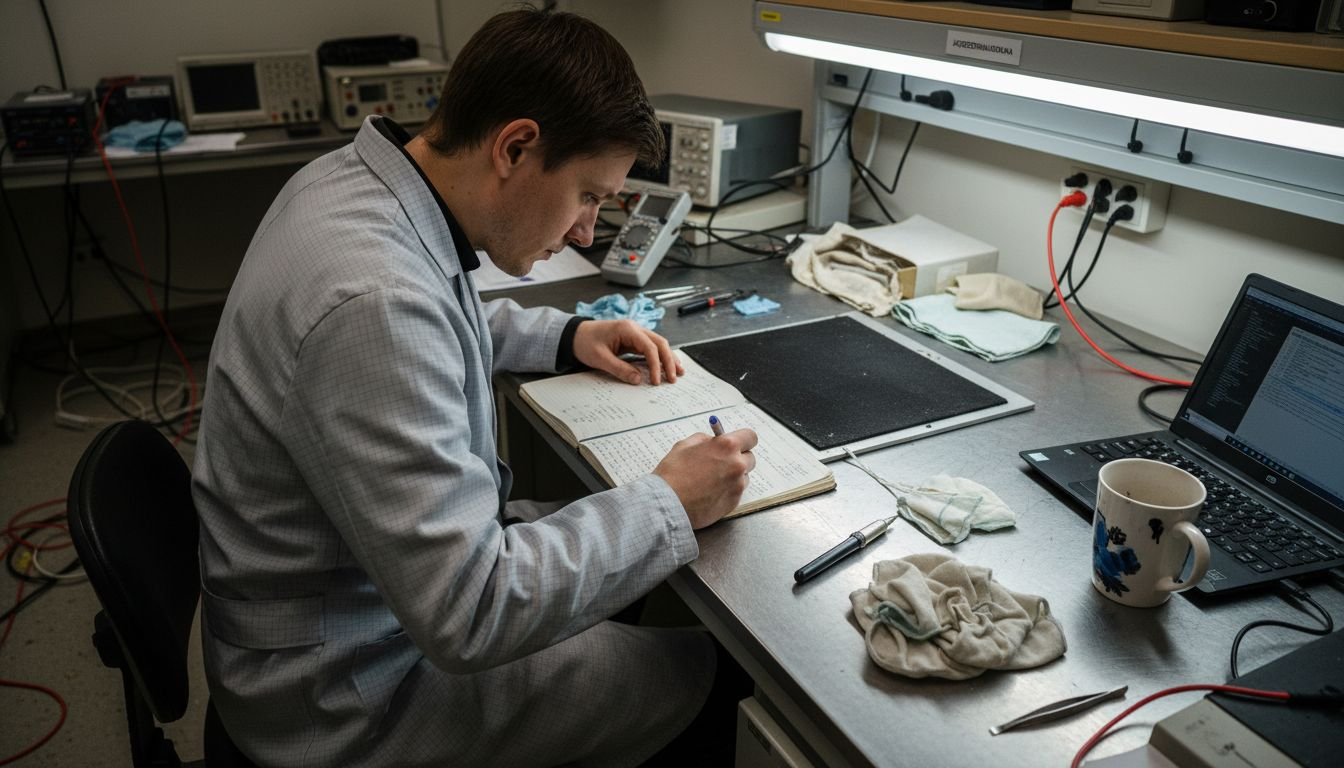
The processing of ultra black involves a number of technical challenges that require extreme precision. The unique powdery surface structure of Musou Black paint is extremely sensitive to physical contact, which can easily damage its light absorption capabilities.
The most common risks are related to incorrect tools and techniques. Aerator nozzles can easily become clogged, and uneven application reduces the performance of the material. Professionals therefore recommend several thin layers, applied under controlled conditions using special aerator methods.
Physical wear and contamination are the most significant threats to the durability of an ultra black coating. Abrasive contact, dust or stains on the surface can quickly degrade its optical properties. Therefore, working requires a clean environment, precise tools and careful handling.
The following table summarizes the main risks and requirements for using ultra black:
| Element of risk | Effect on the surface | Contraception |
|---|---|---|
| Physical contact | Reduces depth and absorption | Avoid contact and protect the surface carefully. |
| Wrong tools | Uneven surface, decreased performance | Use lint-free and clean tools |
| Contamination (dust, stains) | Deterioration of surface optical properties | Work in a clean environment |
Top professional tip: Use clean, lint-free working tools and carefully protect the surface immediately after application.
Ultra Black compared to alternatives
Traditional black paint surfaces and ultra black differ radically in how they handle light. The definitions of black paint reveal that regular black surfaces still reflect a significant portion of the light that hits them, while ultra black absorbs almost 99.4 percent.
While regular black acts as a contrasting surface that appears black but retains some degree of reflectivity, ultra black acts like an optical aperture that completely absorbs light. This means that while regular black merely obscures, ultra black radically transforms the visual experience of a space.
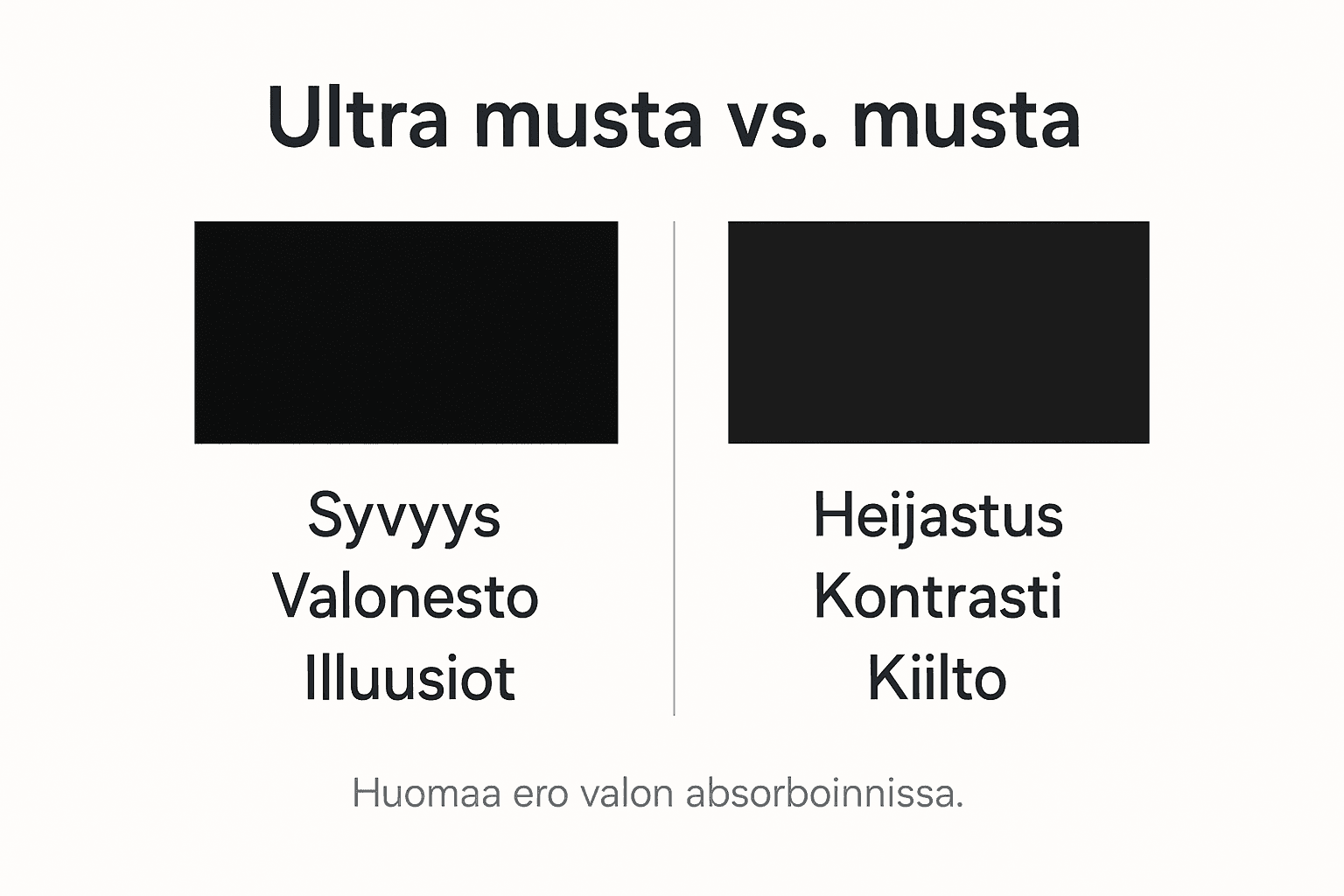
The different shades of black can be roughly divided into three categories: traditional black, matte black and ultra black. Of these, ultra black stands out for its perfect light absorption, making it a unique choice for spaces where you want to create perfect visual depth and contrast.
Below I compare the key features of ultra black, matte black, and traditional black:
| Feature | Ultra black | Matte black | Traditional black |
|---|---|---|---|
| Light absorption | Over 99.4% | 80–95% | 60–75% |
| Visual depth | Maximal | Reasonable | Limited |
| Reflectivity | Practically non-existent | Minuscule | Clearly noticeable |
| Suitability for art | Especially good | Good | Less impressive |
Pro tip: Always compare different shades of black by testing – the behavior of light varies significantly on different surface structures.
Experience the Artistic Power of Ultra Black in Your Own Space
The article highlights the ability of ultra black to transform the visual experience to a whole new level. This depth and contrast are challenging to achieve with regular colors or surfaces. When using ultra black, space and lighting merge into an intense work of art that captures the viewer's eye and creates a unique visual experience. If you are aiming for the same drama for an art installation, restaurant or interior design, for example, the limitations of regular black tones can feel like an obstacle.
Dekoja.net's Musou Black fabrics offer the world's blackest material directly to your fingertips. Musou Black absorbs up to 99.4 percent of visible light and maximizes contrast in a way that changes both the atmosphere of the space and the dynamics of the environment. Our interior design solutions are perfect choices for home theaters, showrooms and restaurants, where visual depth and non-reflectiveness bring a competitive advantage.
Bring the powerful visual power of ultra black into your own project today. Explore our offering and discover technically advanced solutions that will take your space to the next level. Visit our website https://dekoja.net and order Musou Black materials easily from Finland with fast delivery.
Frequently Asked Questions
What is the definition of ultra black?
Ultra black is an extremely dark surface that absorbs almost all light that falls on it, reflecting only less than 0.5 percent of it.
How does ultra black affect the visual experience of an art installation?
The use of ultra black changes the perception of space, creating depth and contrast, which gives the works a new aesthetic dimension.
What are the technical characteristics of ultra black?
Ultra-black materials manipulate light with nanometer precision, effortlessly creating profound optical illusions where the boundaries between light and dark space blur.
What is the difference between ultra black and regular black?
Ultra black absorbs over 99.4 percent of light, while regular black surfaces reflect a significant portion of it, making ultra black a unique creator of visual depth and contrast.