

Black Paint Definition – The Power of Visual Contrast
Over 99 percent of visible light is lost on a surface treated with Musou Black, making it one of the blackest paints in the world. Black paints are no longer just a technical choice, but have a decisive impact on the atmosphere of a space, artistic effects and even technological possibilities. In this topic, you will learn why different black paints and their optical properties are of interest to more and more interior designers, artists and professionals.
Table of contents
- Black paint definition and basic terms
- Different types of black paints and their differences
- Applications: interior design, art and technology
- Light absorption and visual contrast
- Safety, maintenance and technical limitations
- Comparison with traditional matte paints
Key findings
| Target | Detail |
|---|---|
| Black paint absorbs light | Black paint, like Musou Black, can absorb up to 99.4% of visible light, creating new visual experiences. |
| Applications | Black paint is used in art, theater, and architecture, where depth and contrast are required. |
| Different types of paint | Black paints fall into different categories, such as spray paints and high-absorption paints, which serve specific needs. |
| Maintenance and safety | Using black paint requires an understanding of its properties and regular maintenance to ensure its benefits last. |
Black paint definition and basic terms
Black paint is a special coating designed to absorb almost all visible light. This essentially means a surface that appears so black that it virtually eliminates all shapes and reflections.
The basic terms in black paint are related to the amount of light absorption and surface properties. The key concepts are:
- Light absorption : How much light a surface can absorb
- Reflectance : How little light a surface reflects back
- Optical opacity : The ability of a surface to create the impression of depth
The special feature of Musou Black paint is its ability to absorb up to 99.4% of visible light, making it an exceptional material that completely transforms the visual experience of a space.
Black paint is used in a variety of contexts: art installations, theater backdrops, exhibition spaces, and architectural solutions that create a dramatic and profound visual effect. It can be used to emphasize light, shapes, and spatial elements in a completely new way.
Different types of black paints and their differences
Black paints are divided into different technical categories, each with its own specific properties, based mainly on their intended use and composition. Understanding these differences will help you choose the right type of paint for each project.
There are several types of black paints in industrial use:
- Spray paints : Quick and easy to use, such as AT Color spray paints , which are alkyd-based and suitable for metal and wood surfaces
- Matte black paints : With minimal reflection
- High absorption paints : Special paints that absorb almost all light
- Industrial paints : Durable and chemical-resistant coatings
The main differences between different types of paint arise from their chemical composition, absorption level and intended use. Photographers and architects often prefer special types of black paint that create perfect contrast and depth.
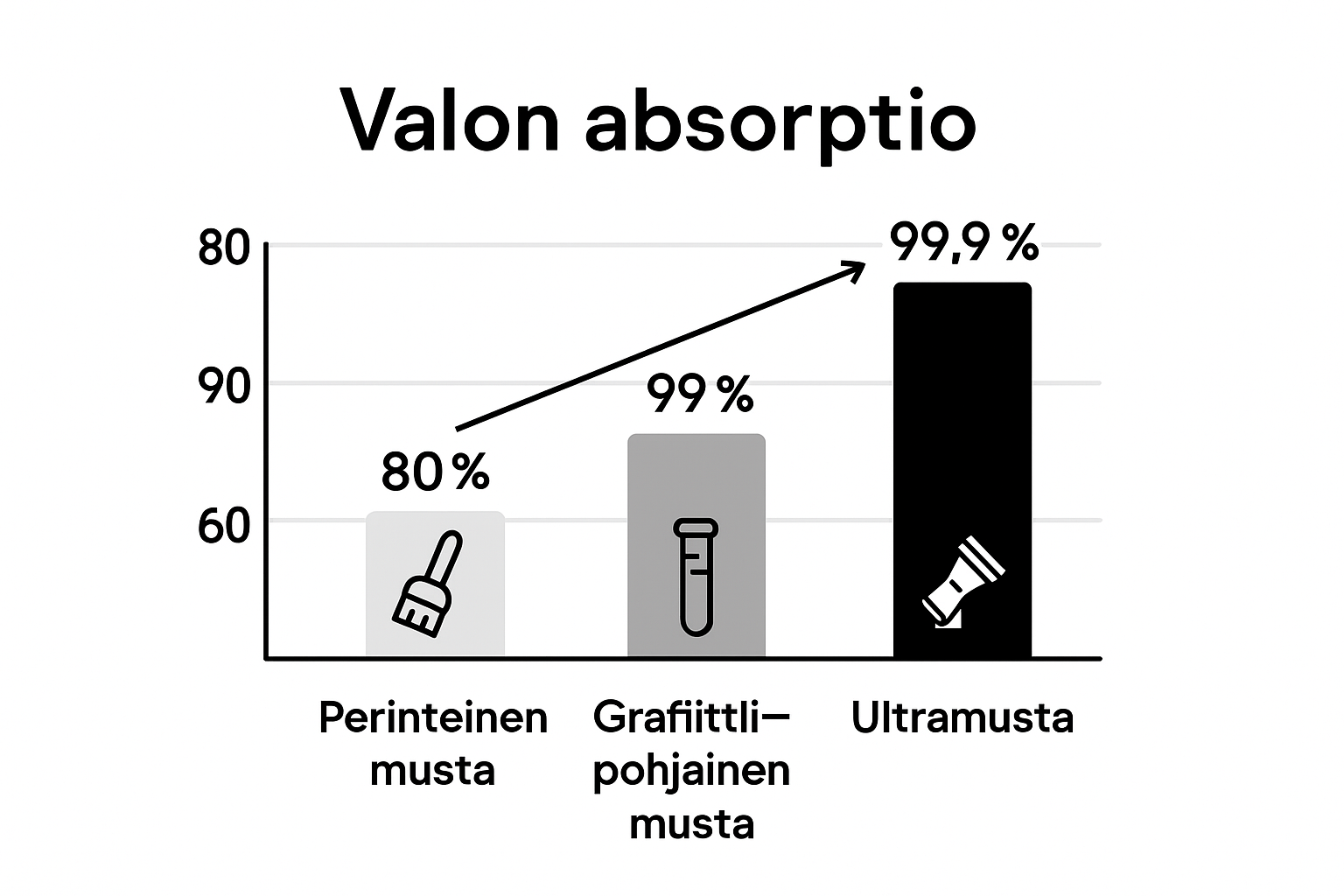
In the most visually demanding applications, such as theater backdrops or exhibition spaces, ultra-black paint that absorbs almost all light – such as Musou Black, which absorbs 99.4% of light – is increasingly being sought. These types of paints have revolutionized the possibilities of visual design.
Applications: interior design, art and technology
Black paint is revolutionizing several creative and technical fields where visual contrast and light control play a significant role. In interior aesthetics, black surface materials create depth and drama in spaces in a way that immediately attracts attention.
The use of black paint in art falls into several categories:
- Installation art : Modifying space with completely black surfaces
- Light art : Emphasizing the contrast of shadows and light
- Performance art : Creating visual illusions
- Digital Art : Fading Background Elements
On the technology side, black paints have revolutionized several application areas. For example, optical design and laboratory technology use special coatings that minimize reflections and improve measurement accuracy. Photography and film production benefit significantly from black surfaces, which create perfectly neutral backgrounds.
In interior design, black tones have become trendy elements in recent years, bringing elegance and mystery to a space. These surface materials are no longer just a technical solution, but an artistic element that shapes the atmosphere and visual experience of a space.

Light absorption and visual contrast
Light absorption is a key phenomenon in creating visual contrast. Research shows that black paint can reach an absorption coefficient of up to 0.94, meaning it absorbs 94% of the light that hits it – creating extremely strong visual contrast.
Light absorption mechanisms can be divided into three main types:
- Perfect absorption : Almost all light is absorbed by the surface
- Partial absorption : Some of the light is reflected, some is absorbed
- Spectral absorption : Selective absorption of different wavelengths
Technically, light absorption means that a surface material absorbs light energy and converts it into heat or another form of energy. The higher the absorption rate, the deeper and more intense the visual contrast the material creates. This is particularly relevant in art, architecture and visual design, where dramatic spatial experiences are desired.
In lighting solutions, the high absorption capacity of black paint allows for amazing contrast effects, where light appears to disappear into the black surface. This creates a sense of depth and mystery in the space, which arouses the viewer's interest and amazement.
Safety, maintenance and technical limitations
The use of black paint requires a thorough understanding of its technical properties and potential limitations. It is important to note with Musou Black materials that although the product is water-based and odorless, when used outdoors, UV radiation and weather conditions may degrade its effectiveness over time.
Security considerations fall into several categories:
- Chemical safety : Contains no harmful chemicals
- Safety of use : Suitable for both indoor and outdoor use
- Environmental friendliness : Minimal environmental impact
- Service life : Requires proper maintenance
Technical limitations are key to the long-term use of the material. The absorption capacity of black paint can be reduced when exposed to continuous direct sunlight, high humidity or extreme temperature fluctuations. Therefore, regular inspection and maintenance are recommended to maintain the optical performance of the surface for as long as possible.
Maintenance instructions include gentle cleaning with a soft cloth, avoiding abrasive cleaners or hard brushes. When used indoors, black paint retains its properties significantly longer than outdoors, where environmental factors wear down the surface more quickly.
Comparison with traditional matte paints
Traditional matte paints differ significantly from special black paints both visually and technically. AT Color spray paints represent a classic alkyd-based matte paint type that offers good coverage and durability, but does not achieve the same light absorption capacity as modern special black paints.
The main differences can be divided into the following features:
- Light absorption : Traditional matte paints reflect 10-30% of light
- Surface texture : Regular matte surface vs. ultra-absorbent surface
- Intended use : General decoration and protection tasks vs. specialized applications
- Visual depth : Limited contrast vs. perfect depth
The technical differences are particularly evident in the way light behaves on different types of topcoats. Traditional matte paints create a soft, faded surface, while special black paints act as an optical trap that absorbs almost all light. This enables a completely new kind of visual experience in architecture, art and technological applications.
Professionals are increasingly choosing specialty paints like Musou Black , which offer a completely new way to control light and contrast. The use of these paints is no longer just a surface treatment, but an element of composition that shapes the visual dynamics of a space.
Experience the Full Power of Visual Contrast with Musou Black
The article Black Paint Definition highlights the challenges that arise in the design of creative spaces when standard matte surfaces fail to provide sufficient light absorption and visual depth. Light absorption and non-reflection are key when it comes to creating dramatic and memorable spatial experiences. If your goal is to impress clients, visitors or audiences, traditional paints are often not enough. You need a solution that absorbs over 99 percent of visible light and takes the visual contrast of your space to a whole new level.

Dekoja.net offers Musou Black – the world's blackest paint, which meets these very challenges. It creates a deep, completely non-reflective surface that is perfect for theaters, restaurant interiors and art installations. Explore our selection and give your space a new look and depth with our interior design selection . Don't settle for a standard matte surface, choose a technological and aesthetic top solution. Also visit our website and find more inspiration dekoja.net and stay up to date with our new materials in our new collection . Now is the time to raise the visual level of your space to a new dimension.
Frequently Asked Questions
What is black paint?
Black paint is a special coating designed to absorb almost all visible light, making it infinitely black and blurring shapes and reflections.
How does light absorption work in black paint?
Light absorption is the process by which a surface absorbs light energy. For example, Musou Black paint absorbs up to 99.4% of visible light, creating strong visual contrast.
What are the differences between different types of black paint?
Different types of black paints, such as spray paints and high-absorption paints, have different chemical compositions and uses. High-absorption paints absorb almost all light, while spray paints are easy to use and suitable for a variety of surfaces.
Where is black paint used?
Black paint is widely used in art installations, theater backdrops, exhibition spaces, and interior design, where it creates depth and visual drama to spaces.