

Light absorption – New possibilities for spatial design
Most interior designers are not yet taking advantage of the experiential possibilities that light absorption offers in their spaces. In Central Europe, the interaction between light and different materials allows the designer to influence the mood of the entire space. Musou Black absorbs up to 99.4 percent of visible light , which opens up a whole new level of depth and contrast. Here we delve into the ways in which light absorption can transform a space into a work of art.
Table of contents
- What does light absorption mean in spaces?
- Light-reflecting ability of different materials and colors
- Physics of light absorption and effects on the senses
- Musou Black and high-end contrast surfaces
- Practical examples: utilizing light absorption
Key findings
| Paragraph | Detail |
|---|---|
| Light absorption affects the atmosphere of a space | The light absorption of materials in a space determines how light behaves, creating different moods and experiences. |
| The choice of materials and colors is strategic | Different surfaces and colors react to light in different ways, making their selection an essential part of space design. |
| Light affects well-being | The physical phenomena of light shape sensations and can improve well-being and mood. |
| Practical applications are extensive | Knowledge of light absorption is beneficial in many areas, such as workplaces, restaurants, and educational spaces. |
What does light absorption mean in spaces?
Light absorption is a multidimensional phenomenon that forms the basis for the visual and experiential nature of a space. When light encounters different surfaces, it not only reflects or transmits, but is also absorbed by the materials in different ways. The light-receiving ability of the materials in a space determines how the light behaves and what kind of atmosphere it creates .
In practice, light absorption means that the surfaces of a space – walls, floors, furniture – do not just reflect light, but absorb and transform it. This process directly affects the mood, colors and visual depth of a space. For example, dark surfaces absorb more light, creating depth and dramatic contrast, while light surfaces reflect light more widely and create an open, airy impression.
In spatial design, light absorption is a strategic tool. It is not just aesthetics, but directly affects the functionality and user experience of a space. The amount and distribution of light in a space determines how the space is perceived and how it is used . Professional interior designers utilize light absorption to create spaces that not only look good, but also feel right.
Pro tip: When designing a space, test the light-absorbing properties of different materials using small sample pieces in different lighting situations before making final choices.
Light-reflecting ability of different materials and colors
Materials and colors play a crucial role in the absorption and reflection of light. The choice of surface materials has a significant impact on how light behaves in a space , making them a key element in spatial design.

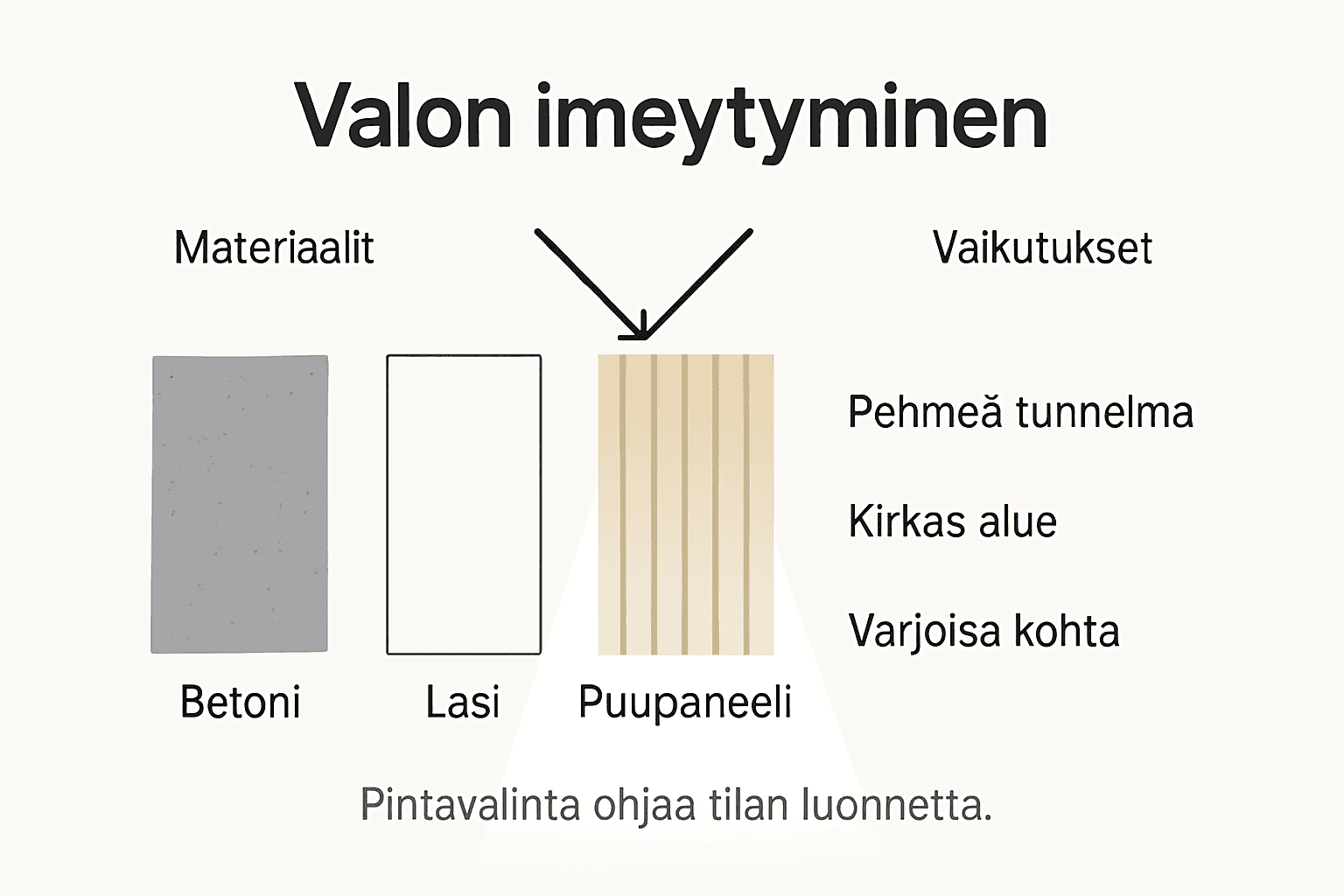
Different surface materials react to light in different ways. Light, glossy surfaces reflect light widely, creating an open and bright atmosphere. In contrast, dark, matte materials absorb light, deepening the visual dimension of the space and creating a more intense atmosphere. The color and gloss of the floor significantly shape the dynamics of the lighting of the space , especially in rooms where natural light is scarce.
In spatial design, understanding light perception means strategic material selection. Professionals use different combinations of materials and colors to create spaces that not only look good, but also feel right. For example, dark walls paired with light floors can create dramatic contrast while optimizing light distribution.
Pro tip: Use color charts and material samples in different lighting situations to test how they behave in light before making final interior design decisions.
The following table summarizes how different materials and colors affect light absorption in spaces:
| Material/Color | Light absorption | Mood effect |
|---|---|---|
| Dark, matte | Strong | Deep, intimate |
| Light, shiny | Weak | Bright, spacious |
| Wooden surface | Moderate | Warm, natural |
| Concrete | Variable | Cold, modern |
| Musou Black | Superior | Infinite contrast, depth |
Physics of light absorption and effects on the senses
The physical phenomena of light are a complex process that completely determines how we experience our environment. The absorption and reflection of light form the basis of how our brain interprets visual stimuli , making the lighting of a space much more than just a visible effect.
Vision is not the only sense that responds to light absorption. Human-centered lighting research has shown that light directly affects human biological rhythms and well-being . When light is absorbed by different surfaces, it changes the colors, contrasts, and depth of the environment. This process is not just aesthetic, but has a tangible impact on our state of mind, alertness, and even health.
Physically, light absorption means that the energy of light waves is converted into heat in the surface layers of a material or absorbed into the structure of the material. This means that each surface – be it a wall, floor or piece of furniture – behaves as a light source in its own unique way. Dark surfaces absorb more light, while light surfaces reflect it, creating a complex interaction between light and space.
Pro tip: Measure the color temperature and spectrum of your space's lighting at different times of the day to understand how the light actually behaves in your space.
Musou Black and high-end contrast surfaces
Contrast surfaces are a revolutionary approach to the visual design of space. The Light Measurement Laboratory has studied the special properties of special surfaces, such as Musou Black, in terms of light absorption , which completely change the way we perceive space and light.
Aalto University research has explored how special surfaces can be used to control light and create contrast . Musou Black represents the ultimate technology here – a material that absorbs up to 99.4% of visible light. This means that it doesn’t just darken, but practically blurs the surface in the traditional sense, creating a sense of depth and emptiness that ordinary matte surfaces never achieve.
The use of contrasting surfaces is a strategic choice in spatial design. They not only change the visual appearance of a space, but also manipulate the behavior of light. Dark, light-absorbing surfaces create dramatic shadows, emphasize shapes and deepen the three-dimensionality of a space. They act as visual black holes, changing the behavior of light and evoking strong emotional reactions in the viewer.
Pro tip: Try Musou Black surfaces in areas where you want to create dramatic contrast or completely blur the boundaries of a space.
Practical examples: Utilizing light absorption
The absorption of light radically changes the experience of a space. In user-centered design, the use of light is a key strategy in creating the functionality and atmosphere of spaces, where every surface material acts as an active element.
Practical applications vary in different environments. In workspaces, dark, light-absorbing walls can reduce reflections from display screens, while light, light-reflecting surfaces create an open and energetic atmosphere. In lighting solutions, material choices determine how light is distributed and what kind of user experience the space ultimately offers. In restaurants, this means atmospheric corners or dramatic areas of light that guide the customer’s gaze.
In teaching spaces, understanding light absorption enables intelligent spatial design. Dark board spaces reduce reflections, while light walls effectively reflect natural light, creating an optimal learning environment. In art exhibitions, light absorption can be utilized to create dramatic lighting spaces that highlight the details of the works and create unique experiences.
The table below illustrates how light absorption affects different types of spaces in practice:
| Type | Benefit in planning | Example of impact |
|---|---|---|
| Office | Reduces reflections | A peaceful workspace |
| Restaurant | Create atmospheric areas | Emphasizes privacy |
| Teaching mode | Optimized light for learning | Brighter, fresher environment |
| Art exhibition | Brings out the details | Enhances contrast |
Pro tip: Test different surface materials on small sample pieces in different lighting situations to see how they really behave in relation to light.
Light absorption and the revolution of space design with Dekoja.net
Light absorption opens up new dimensions to the atmosphere and functionality of spaces. When you want to create spaces where light behaves in a controlled and impressive way, you need solutions that take your interior design to a new level. Dekoja.net offers materials designed for this very purpose, such as the world's blackest Musou Black, which creates deep contrast and a visually clean surface. Light absorption is the key to the experience and functionality of a space, for example in restaurants, home theaters and showrooms.
Discover inspiring lighting and special materials that will enhance the interplay of light and shadow in your spaces. Discover Dekoja.net and take your space planning to the next level with today's solutions. Don't just let light be, make it a powerful source of visual experience Dekoja.net .
Frequently asked questions
What is light absorption?
Light absorption refers to the phenomenon where light encounters different materials and is absorbed by them, affecting the atmosphere and visual experience of a space.
How do different materials affect light absorption?
Different surface materials behave differently when it comes to light; light and shiny surfaces reflect light, while dark and matte materials absorb it.
Why is light absorption important in spatial design?
Light absorption affects the functionality and experience of a space by creating different moods and light distribution, which is key in spatial design.
How can I test the light absorption properties of materials before making a decision?
You can test small samples of materials in different lighting situations to see how they behave in relation to light; this helps you make informed design decisions.