

The role of lighting in spatial design – Visual contrast and experience
The atmosphere and identity of a space are not built solely from materials; lighting plays a crucial role in the success of interior design. When well-designed lighting creates atmosphere and directs the eye to desired focal points, interior designers and architects in Central Europe can bring a completely new kind of visual contrast to their projects. This article offers concrete perspectives on innovative solutions that make spaces experiential and distinctive.
Table of Contents
- The Significance of Lighting for Spatial Experience
- Types of Lighting and Design Principles
- Visual Contrast and Lighting Emphasis
- Innovative Materials and Special Effect Paints in Interior Design
- Common Mistakes and Key Factors for Successful Lighting
Key Insights
| Point | Details |
|---|---|
| Importance of Lighting | Lighting significantly affects a space's atmosphere and people's behavior. The right lighting can transform a space's identity and positively influence mood. |
| Role of Lighting Types | Different lighting types, such as ambient and accent lights, offer varying atmospheres and uses. Design must consider the specific characteristics of the space. |
| Importance of Visual Contrast | Well-designed visual contrast creates depth and interest in a space. This can be achieved through light direction and intensity. |
| Common Mistakes in Lighting Design | Overly bright lights and uneven lighting are typical mistakes that disrupt a space's atmosphere. Comprehensive design is key to success. |
The Significance of Lighting for Spatial Experience
Lighting is not merely a technical detail; it is an extremely powerful tool for shaping the atmosphere and experience of a space. Well-designed lighting creates atmosphere and completely transforms a space's identity.
Whether in a restaurant or at home, light directly affects a person's mood and behavior. The right lighting can, for example:
- Create a relaxed and inviting atmosphere
- Highlight architectural details of the space
- Direct the eye to desired focal points
- Seemingly change the size and proportions of a space
- Increase or decrease intimacy
The psychological impact is significant. The importance of light is particularly emphasized during dark periods, when it directly affects a person's mood and alertness. The same space can look and feel completely different simply by changing the lighting.
Professionals understand that lighting is much more than just visibility. It is a narrative element that can create profound emotional experiences and shape the personality of a space.
Professional Tip: Always use at least three different light sources to create depth and multi-dimensionality in a space.
Types of Lighting and Design Principles
Lighting design is a multifaceted process that requires careful consideration and understanding of different light sources. The energy efficiency of lamp types varies significantly, making choices crucial both aesthetically and economically.
Several key elements must be considered in space lighting design:
- Functional purpose
- Intended use of the space
- Natural light
- Intensity of artificial light
- Color temperature
- Energy efficiency
Light quality is central to modern design. The role of smart technology in light control is emphasized, enabling more flexible and environmentally friendly solutions. Smart lighting can automatically adapt to changing environmental conditions.
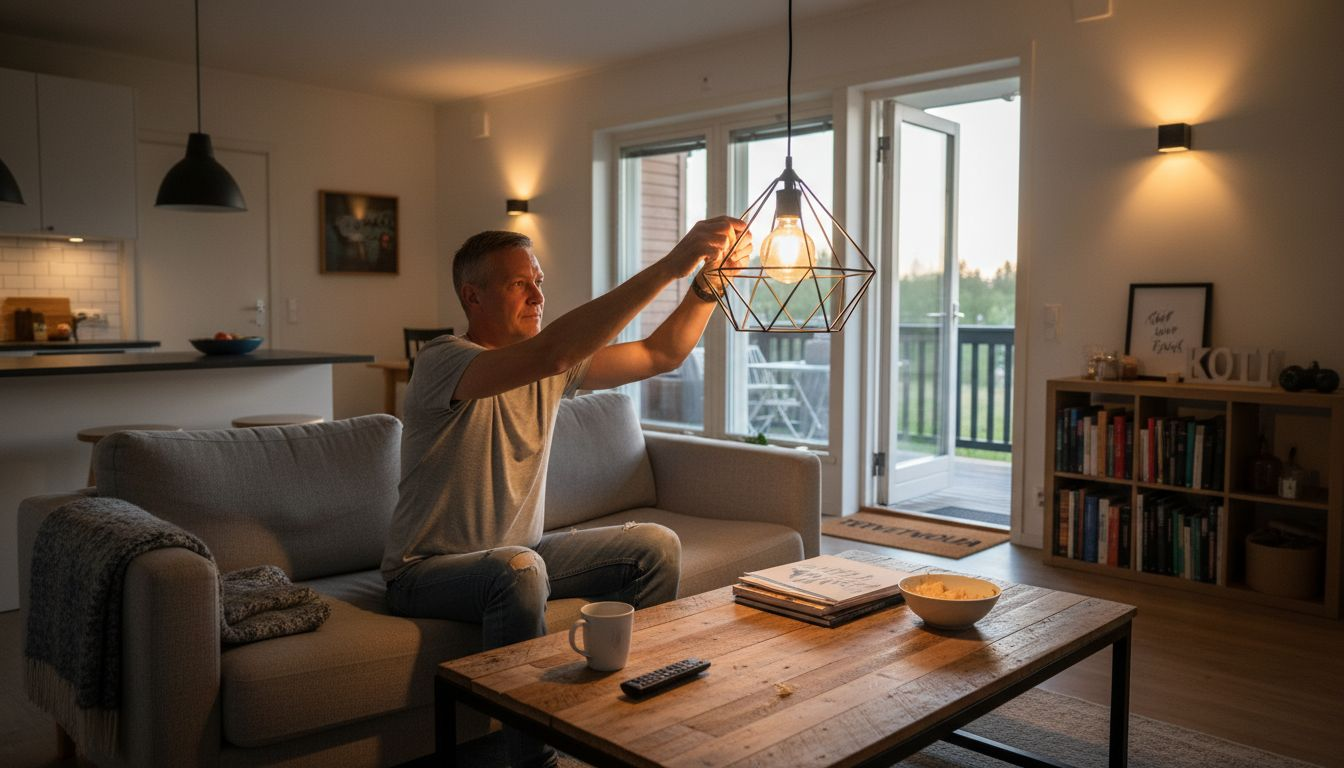
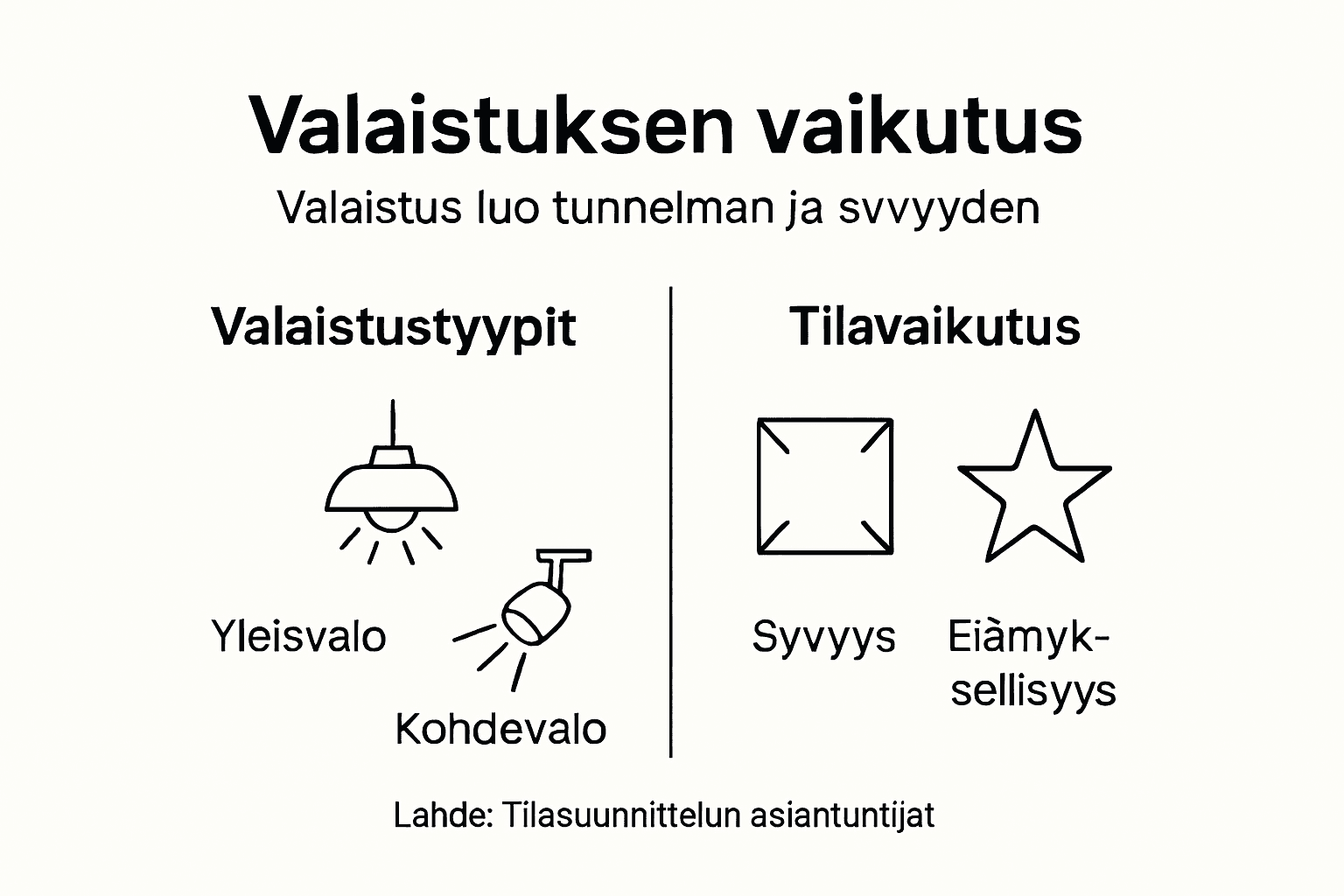
Different types of lighting include ambient lights, task lights, accent lights, and mood lights. Each serves different purposes and creates its own unique atmosphere in a space.
The following table summarizes the effects of different lighting types on the spatial experience:
| Lighting Type | Area of Use | Atmospheric Effect | Example Space |
|---|---|---|---|
| Ambient Light | Entire space | Clarity, openness | Office, kitchen |
| Task Light | Limited areas | Purposefulness | Workstation, reading nook |
| Accent Light | Highlighting architecture | Drama, depth | Art gallery, living room |
| Mood Light | Relaxation areas | Warmth, intimacy | Spa, restaurant |
Professional Tip: Use layered lighting, combining at least three different light levels to create depth and versatility.
Visual Contrast and Lighting Emphasis
Visual contrast is the most important element of lighting design, creating depth and interest in a space. Accent lighting is an effective way to create dynamic light-and-shadow play that makes a space lively and inviting.
There are several key strategies for creating contrast:
- Directing light to important elements
- Utilizing different color temperatures
- Variations in light intensity
- Strategic use of shadows
- Considering the reflective properties of surfaces
Controlled lighting is key to visual management of a space. Optimal light distribution reduces glare and effectively highlights desired parts of the space. This means careful consideration of how and where light is directed.
Combining different light sources enables diverse and dynamic contrast, where each shade and direction of light tells its own story about the space.
Professional Tip: Use three different light sources to create depth and multi-dimensional contrast in a space.
Innovative Materials and Special Effect Paints in Interior Design
Special effect paints are a new generation solution that revolutionizes the possibilities of interior design. Innovative accessories enable light control, creating entirely new visual experiences.
Innovative materials in interior design can be divided into the following categories:
The table below compares the properties and purposes of innovative spatial materials:
| Material Category | Primary Feature | Purpose of Use |
|---|---|---|
| Smart coatings | Adjustable light and color | Atmosphere change, energy saving |
| Non-reflective materials | Controlled use of light | Minimizing glare |
| Light-conducting structures | Even light distribution | Visual progression |
| Acoustic effect materials | Combines light and acoustics | Sound environment control |
- Smart coatings
- Non-reflective materials
- Light-conducting structures
- Transformable color surfaces
- Acoustic effect materials
Modern smart lighting solutions are revolutionizing interior design. Smart control systems enable lighting automation and create entirely new experiential environments.
These innovative materials are not just technical solutions; they are artistic tools that can create entirely new spatial experiences.
Professional Tip: Combine at least two different innovative materials to create a multi-dimensional and experiential space.
Common Mistakes and Key Factors for Successful Lighting
Lighting design is a complex art form where even small details determine the outcome. Common mistakes include bright hotspots and cool lights that disrupt the atmosphere of a space.
The most typical mistakes in lighting design include:
- Overly powerful light sources
- Uneven lighting
- Uncontrolled use of color temperatures
- Ignoring the nature of the space
- Overlooking functional needs
Comprehensive design is the essence of successful lighting. Lighting should guide movement and create an inviting atmosphere, which requires a precise understanding of the context.
A good lighting plan considers the user of the space, functionality, and aesthetics in perfect balance. It is not just about arranging light, but about creating an experiential quality for the space.
Professional Tip: Always test your lighting plan at different times of day and in various usage scenarios.
Add Visual Depth and Contrast to Interior Design
Central to the role of lighting in interior design, as described in this article, is visual contrast and experiential quality. Often the challenge is to create spaces where light and shadow complement each other and evoke emotional experiences without glare or cold light spots. This highlights the importance of high-quality materials and precisely designed light sources that guide the eye and bring the space to life.
Dekoja.net offers solutions for these needs. Especially our Musou Black material family creates a perfectly black surface that absorbs up to 99.4% of visible light, dramatically increasing contrast. This makes the space deeper and visually clean. In addition, our selection includes lighting fixtures with which you can easily control the layering of lighting and highlight the best elements of a space.
Utilize Dekoja.net's unique materials and lighting fixtures to create spaces that not only look stunning but also touch on an emotional level. Explore our selection and take the first step towards a space whose visual contrast and lighting make it unforgettable at dekoja.net.
Frequently Asked Questions
What is the significance of lighting in interior design?
Lighting significantly affects the atmosphere, experience, and visual appearance of a space. The right lighting can create different moods, highlight architectural features, and completely change the perception of a space.
How does visual contrast affect the spatial experience?
Visual contrast is crucial as it creates depth and interest in a space. Combining different light sources, directing light, and using shadows help create dynamic light-and-shadow play that makes a space come alive.
What are the different types of lighting and their uses?
Different types of lighting include ambient lights, task lights, accent lights, and mood lights. Ambient light provides general illumination for the entire space, while task lights emphasize specific areas. Accent lights create drama, and mood lights add an intimate atmosphere.
How can I avoid common lighting design mistakes?
Common lighting design mistakes include overly powerful light sources, uneven lighting, and the use of incorrect color temperatures. It's important to design lighting comprehensively, considering the users and functional needs of the space, and to test the lighting under different conditions.
Recommendation
- Highlighting Lighting in Interior Design: Create an Impressive Result – Dekoja.net
- Highlighting Lighting in Interior Design: Create an Impressive Result – Dekoja.net
- Highlighting Lighting in Interior Design: Create an Impressive Result – Dekoja.net
- Highlighting Lighting in Interior Design: Create an Impressive Result – Dekoja.net
- Architecture Feasibility Study | 3D Cityplanner