

Unique Outdoor Space Design: A Guide 2026
TL;DR:
- A unique outdoor space is built around its purpose and clear zones that enhance functionality and aesthetics. Material choices, mood lighting, and plants complete the overall look, creating a multi-sensory and sustainable experience. In small spaces, vertical utilization and contrasting colors can visually enlarge and personalize the outdoor area.
Designing a unique outdoor space means building the area according to its intended purpose, so that aesthetics and everyday functionality support each other. It's not just about decoration. A well-designed yard or terrace is divided into clear zones, where every square meter serves a purpose. Functional use areas such as relaxation and dining areas, along with logical pathways, form the foundation of a unique outdoor space. Material choices, mood lighting, and plants complete the overall look. In this guide, we will go through all the key steps, from a small balcony to a large yard.
How does unique outdoor space design start with its purpose?
Clarifying the purpose is the most important first step in design. Before choosing any furniture or plants, you should write down what actually happens in the space: do people eat there, play, garden, or just relax? The answer guides all subsequent decisions.
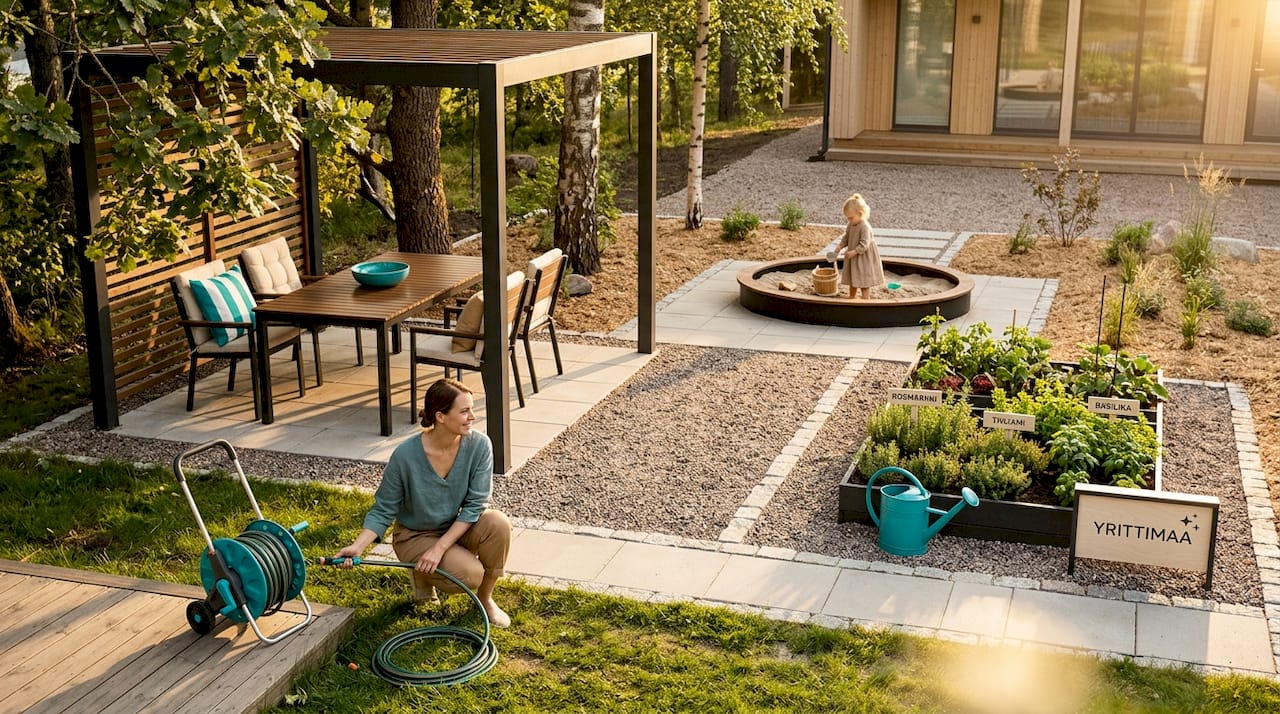
Dividing yard areas into distinct sections makes them easier to use and daily life smoother. In practice, this means that the yard is divided into zones such as lounging, dining, gardening, and storage. Each zone has its own character, but they are logically connected.
As a basis for design, it is worth making observations on the plot. Tracking the sun's movement and wind reveals where a lounging area should be placed and from which direction the wind blows most. This information saves money and effort later.
Below is a practical order in which to start planning your outdoor space:
- List your usage needs: how many people will use the space, at what time of day, and in what ways.
- Mark the zones on the plot on paper or with an app before making any purchases.
- Monitor the sun and wind for at least a few days at different times of day.
- Design pathways so that movement between zones is natural and does not require detours.
- Check neighborhood views and consider whether protective elements such as fences, shrubs, or a pergola are needed.
This staged approach prevents the most common mistake: buying furniture or plants before knowing where they belong. Elements of a designer garden always arise from a plan, not from impulse purchases.
Which materials are suitable for a durable and low-maintenance outdoor space?
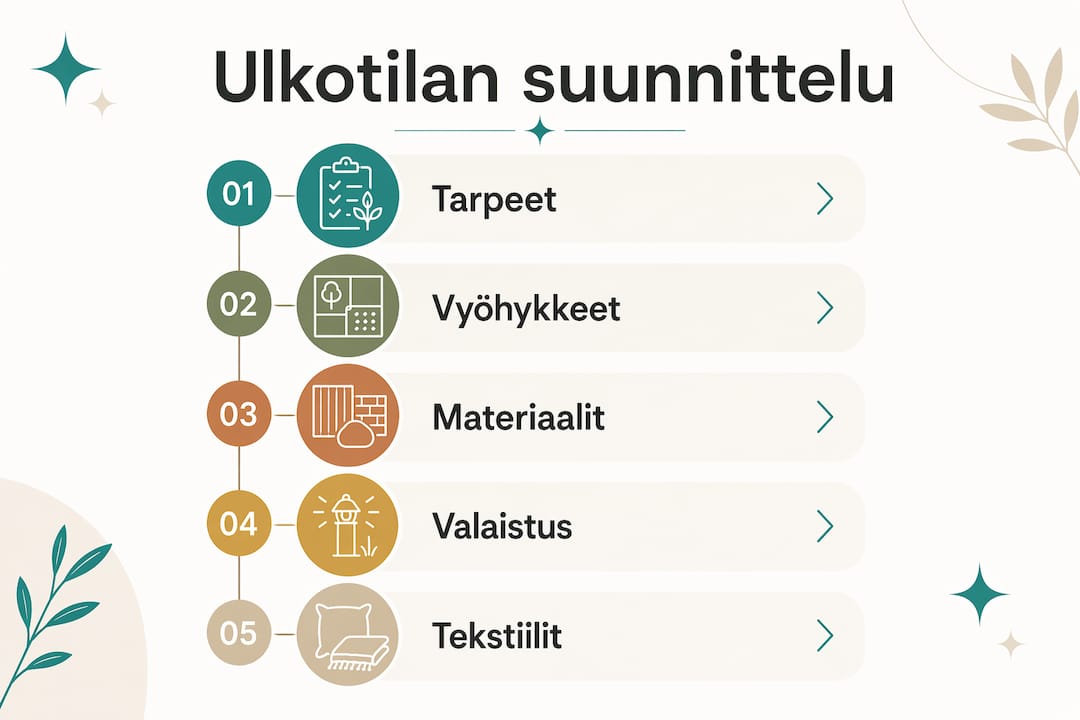
Durable outdoor design relies on materials that can withstand Finland's varied weather conditions without constant maintenance. UV-protected furniture and low-maintenance materials increase the comfort of outdoor spaces and significantly extend the life of the furniture. This practically means less maintenance work and more time to enjoy the space.
Best materials for a durable outdoor space:
- Sintered stone withstands frost, moisture, and UV radiation without needing resurfacing. It is suitable for both floors and tabletops.
- Aluminum is lightweight, rust-proof, and easy to clean. Aluminum-framed furniture lasts for decades with proper surface treatment.
- Teak and thermo-wood are the most durable wood options. Thermo-wood does not require oiling as often as ordinary pine or spruce.
- Poly rattan mimics natural rattan but withstands rain and sun without deterioration. It has rapidly become popular on Finnish terraces.
- Removable cushion covers significantly ease maintenance. The covers can be machine washed and dry quickly indoors.
The versatility and easy portability of furniture increase the usability of the space in everyday life. Modular sofa sets that can be rearranged are especially suitable for spaces where the intended use varies depending on the number of guests.
Professional tip: Always choose at least 600D density polyester or acrylic fabrics for cushion covers. Cheaper fabrics fade after the first summer, and replacement costs more than the initial price of quality fabric.
Material choices for building an outdoor space should be made holistically. Dekoja offers materials suitable for experiential spaces that also perform well in demanding outdoor conditions. Contrasting colors outdoors take on a whole new dimension when surface materials are selected for durability and visual impact together.
How to create an atmospheric outdoor space with lighting and textiles?
Mood lighting is one of the most effective ways to change the character of an outdoor space in the evening. Solar-powered lights, lanterns, and soft textiles can be easily added without an electrician or major installation work. This makes updating the lighting a low-threshold project.
Practical lighting solutions for outdoor spaces:
- Solar-powered lights charge during the day and turn on automatically in the evening. They are suitable for path edges, between bushes, and on tables.
- LED strips under a pergola or railing create a soft glow without glare. A warm white tone (2700K–3000K) is best suited for lounging areas.
- Pendant lights and string lights between trees or a pergola bring a festive atmosphere and make the space visually interesting even when viewed from above.
- Lanterns and candles are the easiest way to add atmosphere instantly. Wind-protected candle holders prevent them from blowing out.
Mood lighting should be planned already in the initial design phase, as positioning cabling or solar panels afterwards is more challenging. Lighting is one of the garden design trends that has strengthened year by year.
Textiles bring layering and softness to an outdoor space. Outdoor pillows, throws, and rugs make the space inviting and personal. A feeling of comfort arises from layering and considering the senses, not just from furniture or plants. This means that even a small budget is enough to create an atmosphere when textiles are chosen carefully.
Plants complete the atmosphere. Fragrant plants like lavender, thyme, and roses activate the sense of smell and make the space a multi-sensory experience. Nature and sensory stimulation enhance well-being and make the space comforting and relaxing. This is a researched fact that should be included in the design.
Professional tip: Place at least one light source below eye level, for example, floor lamps or low lanterns. Light coming only from above makes an outdoor space clinical. Low light sources create depth and warmth.
How to make small outdoor spaces functional and personal?
The uniqueness of a small outdoor space comes from functionality, clear zones, and movable elements. Layering and portability bring variation and enlarge the feeling of space without major renovations. In a small space, every choice affects the overall look more than in a large yard.
Effective solutions for a small space:
- Utilize vertical space. Wall planters, climbing plant supports, and vertical plant panels bring greenery upwards without taking up floor space. This works particularly well on balconies and narrow terraces.
- Choose movable pots. A potted garden allows the space to be adapted according to the season and need. In summer, pots are on display; in winter, they are moved to shelter.
- Use space-saving furniture. Foldable chairs, stackable seats, and wall-mounted tables free up floor space when there are no guests.
- Create clear sightlines. When the space is not cluttered, it feels larger. Keep the floor level as clear as possible and raise elements onto walls or upwards.
Below is a comparison between two different approaches to small outdoor spaces:
| Approach | Advantages | Challenges |
|---|---|---|
| Fixed structures (pergola, stone slab) | Durable, neat appearance, adds value | More expensive, not flexible to changes |
| Movable elements (pots, modular furniture) | Flexible, more affordable, easy to update | Requires storage space in winter |
In a small space, contrasting colors outdoors work particularly well. A dark background wall makes plants and light-colored furniture stand out clearly. Dekoja specializes in such visual contrast solutions, where durable material solutions combine with a strong aesthetic impact.
Unique yard solutions do not require large budgets. Garden theme ideas like a Japanese zen garden, Scandinavian minimalism, or lush tropical style are created with a few key elements that are consistently repeated throughout the space.
Key takeaways
A unique outdoor space is built based on its intended purpose, and the right materials and atmospheric details create a durable and experiential whole.
| Point | Details |
|---|---|
| Purpose first | Clarify needs and divide the yard into zones before buying furniture. |
| Durable materials | Choose sintered stone, aluminum, or poly rattan for Finnish weather conditions. |
| Mood lighting | Plan lighting from the start and use low light sources to create atmosphere. |
| Vertical space | Utilize walls and climbing plant supports in small spaces to save floor area. |
| Portability | Modular furniture and potted plants allow the space to be reconfigured without renovation. |
Why zones matter more than furniture
I have followed outdoor space design for a long time, and one thing constantly recurs: people buy furniture before they know where it will go. The result is a yard with nice individual elements but no cohesion. The space feels cluttered, even if each furniture choice is of high quality in itself.
The clarity of zones is the factor that distinguishes a functional yard from a beautiful but impractical one. When lounging areas, dining areas, and pathways are clearly marked, the space begins to function almost automatically. People know where to go and where to sit.
In material selection, I see another recurring mistake: choosing the cheapest option in the hope of short-term savings. Furniture that lasts two summers is not a saving. Quality aluminum or sintered stone furniture costs more initially, but its total cost over ten years is a fraction of the cheaper alternative.
The importance of atmosphere in everyday life is systematically underestimated. An outdoor space where you don't want to go in the evening is a failure, regardless of how it looks during the day. Lighting, textiles, and fragrant plants are the elements that make the space a place you return to day after day. Garden design trends for 2026 emphasize precisely this multi-sensory approach, and it is entirely justified.
— Mikko
Dekoja helps create a unique outdoor space
Dekoja.net offers specialized materials that make an outdoor space visually distinctive and a durable whole. Musou Black and other super-black effect surfaces are suitable for contrast walls, where plants and light elements stand out in a completely new way.
Dekoja delivers materials directly from a domestic warehouse in 1–3 business days. The selection includes non-reflective surfaces, optical illusion solutions, and visual effect surfaces for both private individuals and professionals. Explore aesthetic solutions for outdoor spaces or go directly to the Dekoja.net online store to find the right material for your project.
FAQ
Where should I start designing a unique outdoor space?
Start by listing your usage needs and dividing the yard into zones before making any purchases. Clarity of purpose guides all subsequent material and furniture choices.
Which furniture materials best withstand Finnish weather?
Sintered stone, aluminum, and poly rattan best withstand Finnish frosts, moisture, and UV radiation. Removable cushion covers facilitate maintenance and extend the furniture's lifespan.
How can a small balcony be made functional and personal?
Utilize vertical space with wall planters and climbing plants, choose foldable or stackable furniture, and keep the floor area clear. Movable pots allow the space to be reconfigured without renovation.
How important is lighting in an outdoor space?
Lighting critically changes the character of an outdoor space in the evening. Solar-powered lights and LED strips are the easiest way to add atmosphere without installation work, and they should be planned already in the basic design phase of the space.
Can contrasting colors work in a small outdoor space?
Yes. A dark background wall makes plants and light-colored furniture stand out clearly and creates a sense of depth that makes the space feel larger. Contrasting colors work particularly well in small spaces where individual elements are highlighted.