

Phases of space planning – step by step to functionality
The space in a restaurant or design accommodation can either support or hinder business operations. A poorly designed layout increases staff workload, detracts from the customer experience, and complicates brand communication. Functional space planning is not accidental; it arises from clear stages where goals, user needs, and technical solutions combine to form a cohesive whole. This guide covers the stages of space planning sequentially, from the perspective of professionals in the restaurant and design accommodation industry. Each stage builds upon the previous one, resulting in a space that functions effectively in both everyday and special situations.
Table of Contents
- Where Does Space Planning Begin?
- Needs and Opportunities: Stages of Space Survey
- Concept and Ideation: Creative Solutions for the Plan
- Technical Design and Detail Management
- Evaluation and Continuous Development: How to Ensure the Success of a Space Solution
- What Often Goes Unnoticed in the Space Planning Process?
- Inspiration and Support for Every Stage of Space Planning
- Frequently Asked Questions About Space Planning Stages
Key Observations
| Aspect | Details |
|---|---|
| Strong Foundation | Clearly defined goals and thorough needs assessment facilitate successful space planning. |
| Creative and Functional Concept | An inventive and customer-centric plan improves both comfort and brand visibility. |
| Importance of Materials | Properly selected materials support durability, safety, and spatial functionality. |
| Continuous Evaluation | Collecting user feedback and continuous development ensure a successful and evolving space solution. |
Where Does Space Planning Begin?
Space planning always starts with questions, not answers. Before drawing a single floor plan or choosing any material, it's essential to understand what is expected from the space and whose needs it will serve. Good space planning begins with identifying user groups and functionality. This practically means that the designer and client collaboratively review who will move through the space, how they will move, and what they will need.
In a restaurant, this might involve the placement of table groups relative to the kitchen, managing customer flow, and staff movement routes. In design accommodation, the emphasis is on privacy, ambiance, and the brand's visual identity. These are different aspects, and the design process begins by distinguishing between them.
In the initial stage, it's crucial to clearly define:
- The primary purpose of the space and secondary uses
- Target groups: customers, staff, potential special groups
- The brand's visual identity and its reflection in the space
- Budget and timeline, realistically estimated
- Stakeholders: who decides, who comments, who implements
The budget is often the most significant determinant of the final outcome. Therefore, a realistic assessment at the outset saves time and prevents unnecessary changes later on. The timeline, in turn, affects how much iteration is possible.
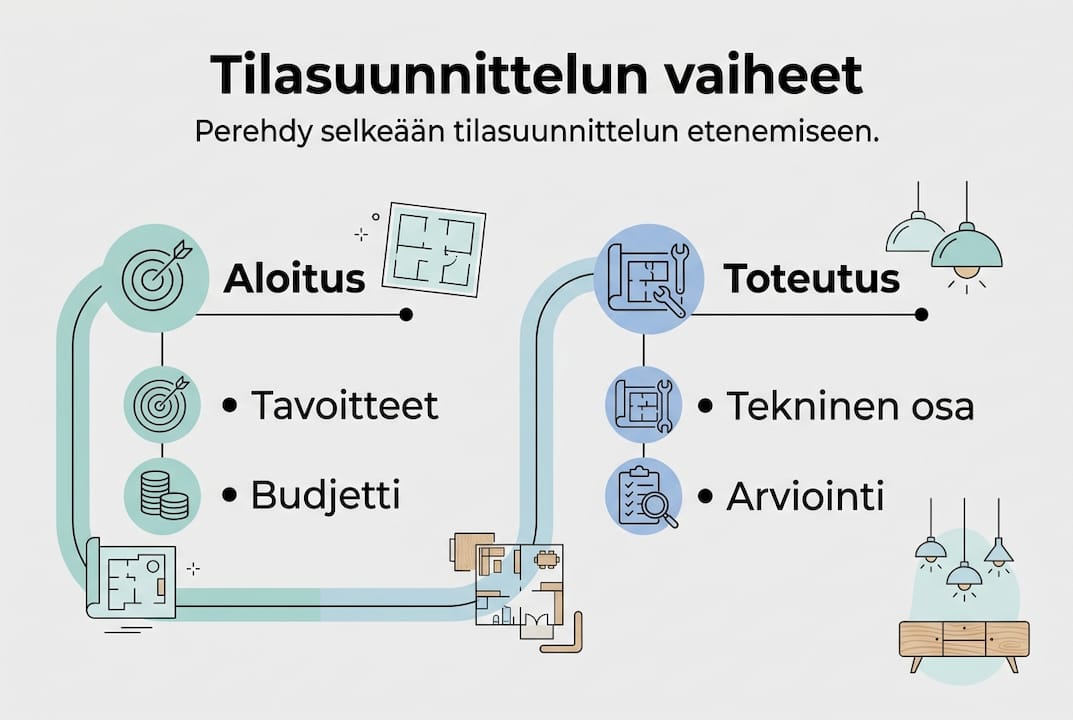
Professional Tip: Ask the client to describe three spaces or places they have particularly enjoyed. This concrete exercise often reveals more than lengthy briefs.
Collaboration between the architect, interior designer, and client is critical at this stage. When all parties understand the starting points in the same way, costly misunderstandings in later stages are avoided. The impact of materials on space planning is one of those topics that should be addressed at this stage, even if the actual selections are made later.
Once the starting points are clear, it's time to move on to the concrete tools and stages of space planning.
Needs and Opportunities: Stages of Space Survey
The space survey is the analytical core of the process. It ascertains what is currently in the space and what could be there. The initial survey identifies the current challenges and opportunities of the space. This doesn't just mean using a tape measure, but a comprehensive analysis of the space's physical, technical, and functional characteristics.
The sub-areas of the survey can be divided as follows:
- Physical dimensions and structures: floor areas, heights, load-bearing structures, windows, and doors
- Technical systems: electricity, HVAC, lighting, acoustics, and data networks
- Functionality analysis: how the space currently functions and where bottlenecks exist
- Visual opportunities: which elements support the desired look, which hinder it
- Environmental factors: natural light, noise, temperature, and ventilation
| Survey Sub-area | Key Questions | Documentation Method |
|---|---|---|
| Physical Dimensions | Are there restrictive structures in the space? | Floor plan, photographs |
| Technical Systems | Does the space require electrical or HVAC modifications? | Technical drawing |
| Functionality | Which processes are inefficient? | User interviews |
| Visuals | Which elements support the brand? | Mood board, reference images |
| Environmental Factors | How does natural light affect the space? | Observation log |
Documentation is the most important output of the survey phase. Without proper documentation, design relies on recollections, and recollections are unreliable. Floor plans, photographs, and written observations form the basis for all subsequent design.
Professional Tip: Visit the space at different times of the day. A restaurant looks entirely different empty in the morning than full in the evening. Lighting, soundscape, and customer flows change significantly.
During the survey phase, it's also advisable to explore the circular economy in architecture and materials, as well as the basics of outdoor area design, if the project also includes outdoor spaces. These perspectives affect the overall solution more than is often realized.
The next step is to move on to the space concept and ideation.
Concept and Ideation: Creative Solutions for the Plan
The concept is the red thread of the space. It is not a mood board or a color palette, but an idea of what the space wants to communicate and how it does so. Conceptualization and inspiration give the space a distinctive atmosphere that sets it apart from competitors.
In a restaurant, the concept might be built around a story: where the food comes from, what culture it represents, what kind of atmosphere supports the dining experience. In design accommodation, the concept might arise from local history, nature, or a specific era. The most important thing is that the concept is consistent and visible in every detail.
The following elements are typically used in building a concept:
- Atmosphere and ambiance: warm or cool, intimate or open, modern or classic
- Color palette: primary colors, accent colors, and complementary colors
- Materials: wood, concrete, metal, textiles, and special materials
- Lighting: natural light, artificial light temperature and direction
- Furniture and fixtures: shape, size, and placement
| Concept Type | Typical Features | Best Suited for |
|---|---|---|
| Minimalist | Simplified, neutral color palette, clean lines | Design hotels, fine dining |
| Industrial | Concrete, metal, exposed structures | Trendy cafes, pop-up restaurants |
| Natural | Wood, stone, plants, warm lighting | Wellness accommodation, bistros |
| Dramatic | Dark tones, contrasts, effect surfaces | Cocktail bars, boutique hotels |
User experience is the most important metric in the concept phase. A good concept is not just beautiful; it guides customer movement, creates expectations, and fulfills them. Inspirations from outdoor area design can offer surprising ideas for indoor spaces, especially when seeking to bring natural elements indoors.
Once the creative part of the plan is complete, we move on to technical implementation and details.
Technical Design and Detail Management
Technical design transforms ideas into implementable solutions. In this phase, the concept meets building physics, building regulations, and practical constraints. Material choices directly affect the functionality and durability of the space, and therefore must be made thoughtfully.
The stages of technical design typically proceed as follows:
- Structural design: load-bearing structures, openings, floor surfaces, and ceiling solutions
- Electrical design: outlets, lighting points, emergency exits, and AV systems
- HVAC design: ventilation, heating, cooling, and water points
- Acoustic design: sound-absorbing and reflecting surfaces, noise control
- Technical review of materials: fire safety, wear resistance, cleanability
In materials, technical quality and aesthetic quality do not always go hand in hand. A beautiful surface can be difficult to clean or may wear out quickly in busy restaurant use. Therefore, each material choice must be evaluated visually and functionally.
“Technical design is not the opposite of creativity. It is the structure within which creativity can operate safely and sustainably.”
Detail management is the most critical part of the technical phase. Small errors, such as incorrect outlet placement or insufficient ventilation, can ruin an otherwise successful project. Documentation and change management are therefore essential. Every change must be recorded, and its effects on other systems must be checked. Materials and spatial functionality are interconnected in a way that often surprises even experienced designers.
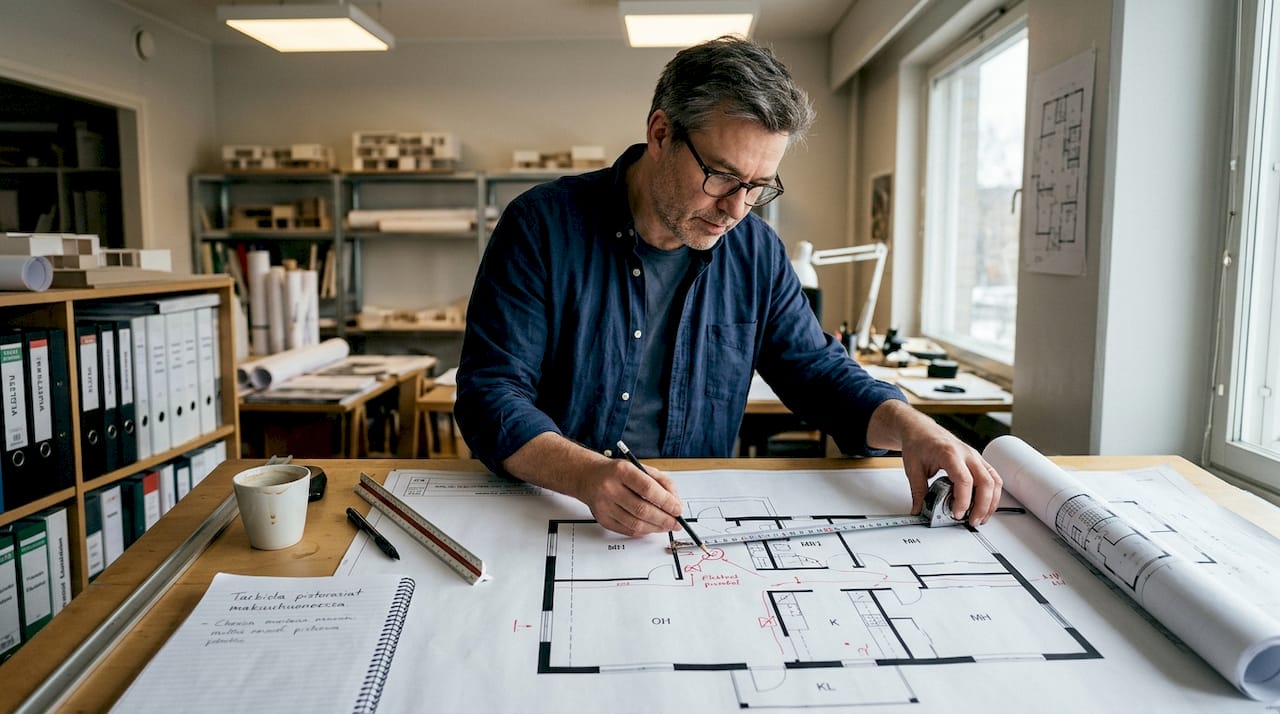
Once the plan has been implemented down to the smallest detail, it is important to verify the outcome and make any necessary adjustments.
Evaluation and Continuous Development: How to Ensure the Success of a Space Solution
A space is not finished when construction ends. It is finished when it functions in practice as intended. Evaluation is the last formal stage of the process, but in practice, it continues throughout the entire lifecycle of the space.
Key tools for evaluation and continuous development include:
- User observation: observe how customers and staff move in the space during the first few weeks
- Feedback surveys: collect structured feedback from both customers and staff
- Sales and efficiency metrics: compare business figures before and after the change
- Visual inspection: look at the space with fresh eyes a month after opening
- Technical inspection: ensure all systems are functioning as planned
Feedback is valuable only if it is acted upon. Many spaces remain unfinished because the original plan is implemented as is, and small adjustments are not made, even if user experience indicates their necessity. Continuous evaluation and feedback lead to evolving and successful spatial solutions.
Monitoring brand and customer experience is especially important for restaurants and design accommodations. Customer expectations change, trends shift, and the competitive landscape evolves. A space that was innovative three years ago might feel outdated today. Therefore, space planning is not a one-time project but a continuous process.
Updates don't always require major investments. Adjusting lighting, new textiles, or a single accent surface can significantly refresh the atmosphere of a space without structural work.
What Often Goes Unnoticed in the Space Planning Process?
Based on our experience, two things are repeatedly overlooked in space planning: adaptability and sensory experience.
Adaptability means that the space can serve different purposes at different times. A restaurant that functions for lunch, dinner, and private events requires different flexibility than a space designed solely for dinner use. This should be considered in the concept phase, but in practice, it is often forgotten in the rush of technical design.
The sensory experience, especially acoustics and lighting, is also easily pushed to the background. In a restaurant, noise is one of the most common causes of customer complaints, but acoustic design often receives a fraction of the budget compared to the visual appearance. Lighting, in turn, affects how colors and materials appear, but it is often only evaluated during the construction phase, not in the final operating environment.
The opportunities of the circular economy also offer a significant competitive advantage that few fully utilize. Sustainable material choices and long-lasting solutions are not only an environmental act but also an economically sound choice in the long run.
Inspiration and Support for Every Stage of Space Planning
The space planning process is demanding, but with the right partners, it is also rewarding. Dekoja.net offers special materials and expert assistance for every stage of space planning, especially when the goal is to create spaces that stand out visually and leave a lasting impression.
From our warehouse, you'll find Musou Black paints, non-reflective fabrics, and other effect surfaces suitable for restaurants, design accommodations, and galleries. We deliver within 1–3 business days from our domestic warehouse. Dekoja.net services include not only products but also B2B consulting and project-specific support to ensure your space planning outcome exceeds expectations.
Frequently Asked Questions About Space Planning Stages
How should budget and timeline be considered in the initial stages?
The goals and constraints of space planning should be clearly defined from the outset. Realistic budgeting and scheduling prevent costly changes in later stages.
What is the difference between a space concept and an actual space plan?
A space concept guides the desired atmosphere and functionalities of the space, while a space plan specifies individual solutions and technical details. The concept provides direction, and the plan is the implementation guide.
How important is collecting user feedback after opening?
User feedback helps to make the space more functional and increases customer satisfaction in the future. Continuous evaluation is a prerequisite for a successful space solution.
What risks are associated with material selection in space planning?
Incorrectly chosen materials can lead to premature wear of the space and functional challenges. Material choices directly affect the functionality and durability of the space, so they should be evaluated both aesthetically and technically.