

What Is Design Thinking: A Guide to Visual Innovation
Many people think of design thinking as just a fashionable term for interior designers or a theoretical process that cannot be applied in practice. In reality, it is an iterative, user-centered problem-solving method that transforms the entire approach to creating visual effects and spaces. In this guide, I will go through the key stages of design thinking and show you how to use it in selecting innovative materials and designing user-centric spatial solutions.
Table of Contents
- Key Learnings
- What is Design Thinking and Why is it Important?
- The Five Stages of Design Thinking in Practice
- Innovative Materials and Visual Effects in Design Thinking
- How Design Thinking Changes the Designer's Role and Collaboration
- Discover dekoja.net's Innovative Materials and Design Solutions
- Frequently Asked Questions about Design Thinking
Key Learnings
| Point | Details |
|---|---|
| Design thinking is user-centered | Human experience is at the core of the process, not just aesthetics or form. |
| Five iterative stages | Empathize, define, ideate, prototype, and test form a flexible framework. |
| The designer transforms into a problem-solver | The role shifts from decoration to deep user-centric solutions. |
| Materials and technology enrich the process | Bio-based materials and 3D printing bring new visual possibilities. |
| Continuous testing improves results | Gathering feedback and refining ensures functional solutions. |
What is Design Thinking and Why is it Important?
Design thinking is a user-centric method that offers a solution-oriented approach to problem-solving. It differs from traditional design in that it focuses on people's needs and experiences, not just the visual outcome. The process is built around five stages, but it remains flexible and adaptable as the project progresses.
In architecture and interior design, design thinking prioritizes the human experience in a space, considering daily routines, emotional reactions, and practical challenges. This approach improves quality of life and creates spaces that truly serve their users. It combines functionality and aesthetics in a way that makes the end result both beautiful and usable.
The iterative nature of the process means you can return to any stage at any time. This makes design thinking particularly effective in complex projects where requirements can change. It is not a linear formula but a learning system that continuously evolves.
Professional tip: Don't view design thinking as merely a tool for making aesthetic decisions. Use it to transform your entire design process to emphasize functionality and user-centricity. This way, you create aesthetic spaces where material choices support the overall concept.
“Design thinking is not just a method, but a mindset that places human experience at its core.”
Key differences from traditional design:
- Starting from user needs, not aesthetics
- Continuous testing and utilization of feedback
- Iterative process instead of linear
- Problem-solving instead of decoration
The Five Stages of Design Thinking in Practice
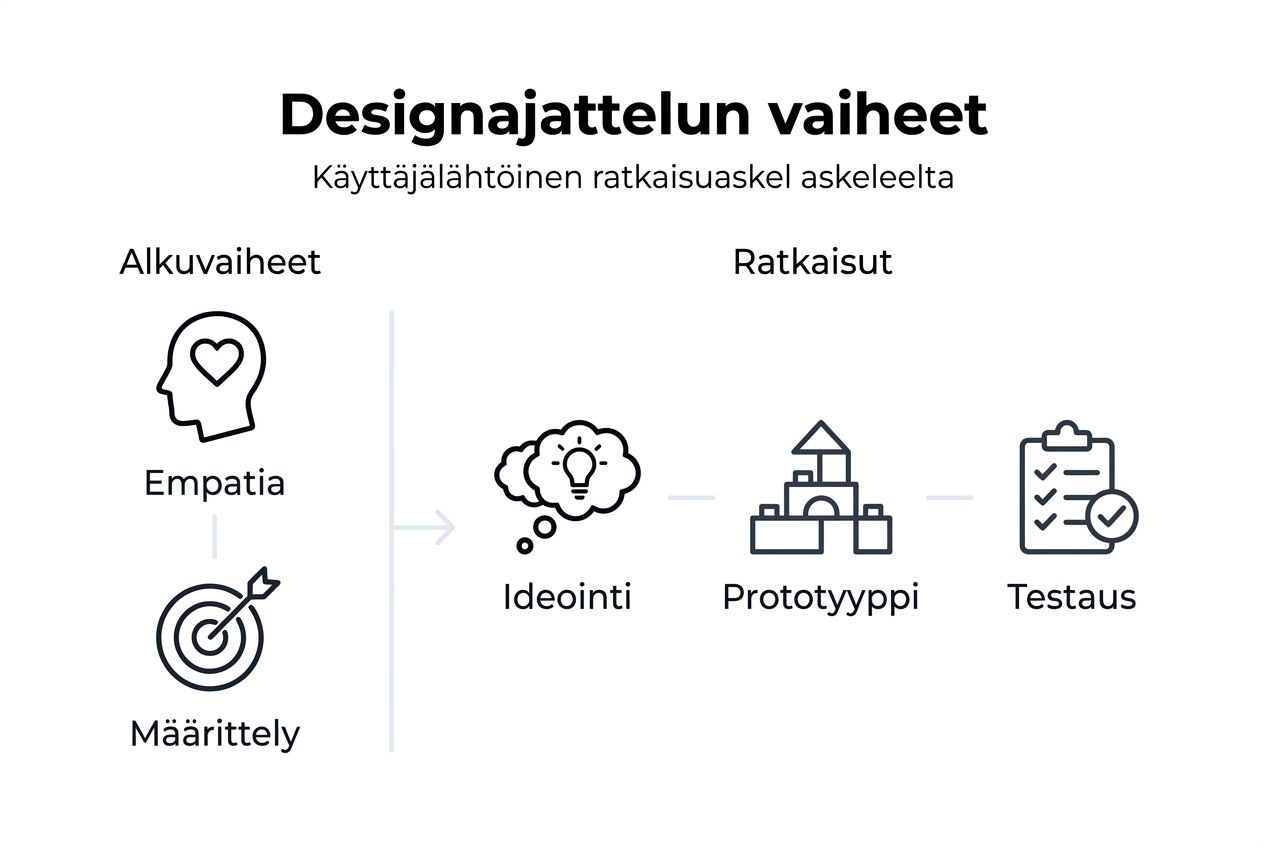
The process is built on five iterative stages: empathize, define, ideate, prototype, and test. These form a flexible framework where you can move back and forth as needed. Each stage contributes to the success of the final outcome.
-
Empathize: Deeply understand the real needs and emotions of users. Map out their daily routines, challenges, and wishes. This stage is the foundation for all other work.
-
Define: Accurately define the problem from the user's perspective, not based on your own assumptions. A concise problem definition guides the entire process and prevents the development of unnecessary solutions.
-
Ideate: Generate creative solutions without limitations or self-censorship. In this stage, quantity trumps quality. Don't criticize ideas too early.
-
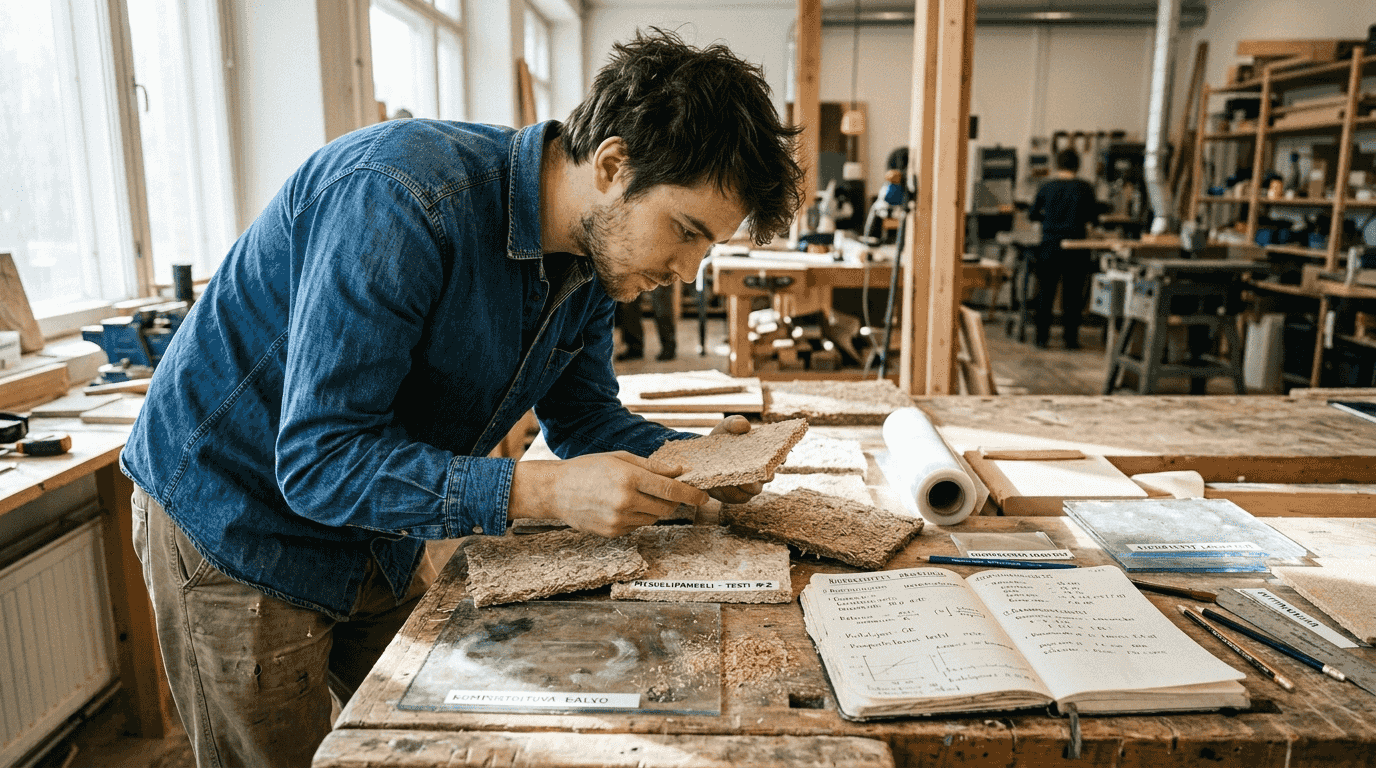
Prototype: Test concepts in practice quickly and affordably. Assemble material samples, create 3D visualizations, or build miniature models. This allows you to detect problems before final implementation.
-
Test: Collect feedback from end-users and continuously refine the solution. Feedback can lead you back to any earlier stage.
Professional tip: Avoid common design thinking mistakes, such as overly linear thinking or superficial empathy. The process should function as a learning system, not a rigid formula. This way, you achieve the best results in material choices and design solutions.
Each stage builds the foundation for the next, but you can always go back. For example, feedback received during the testing phase may reveal that the problem was defined incorrectly. In this case, you return to the define stage and continue from there. This flexibility makes the process effective.
Innovative Materials and Visual Effects in Design Thinking
When applying design thinking to material selection, the most creative and functional spaces emerge. Biodegradable and recycled materials become key alternatives in 2026, as sustainability combines with visual impact. These materials offer unprecedented opportunities to create spaces that stand out from the crowd.
Robot-based 3D printing with bio-based materials enables the creation of complex shapes that traditional methods cannot achieve. Technology opens new doors for designing visually distinctive elements. You can create organic, flowing forms that fit perfectly into the space.
| Material | Visual Impact | Sustainability | Applicability |
|---|---|---|---|
| Recycled wood | Warm, organic | High | Wall surfaces, furniture |
| Bioplastic | Modern, malleable | Medium | Lighting elements, partitioning structures |
| Musou Black | Intense depth, light absorption | Very high | Contrast walls, artworks |
| Recycled metal | Industrial, glossy | High | Accents, architectural details |
The use of recycled building elements significantly reduces the carbon footprint and simultaneously introduces unique visual elements to spaces. Each recycled element carries its own story, adding depth to the space. This approach supports the principles of design thinking by connecting user values to the end result.
Most popular new materials for creating visual impact in 2026:
- Super black Musou Black for surfaces that absorb almost all light
- Bio-based 3D printed elements for organic shapes
- Recycled glass for transparent partitions and lighting
- Anti-reflective surfaces for AV rooms and galleries
- Recycled textiles as acoustic elements
Professional tip: Creatively combine new materials with the stages of design thinking. Quickly test prototypes of different materials and gather user experiences before final selection. This ensures that material choices support both functionality and visual appeal.
How Design Thinking Changes the Designer's Role and Collaboration
Design thinking transforms the designer's role from decorator to creative problem solver. The focus is no longer solely on selecting visual elements but on solving deep user-specific challenges. This change requires a new mindset and approach to projects.
Service design methods support collaboration with various stakeholders and bring the user's voice more strongly into the entire process. This significantly improves the quality of the end result when all parties actively participate. Collaboration enriches the process and brings out perspectives that might go unnoticed when working alone.
Benefits of collaboration in the design process:
- More diverse ideas from the perspectives of different experts
- User feedback guides solutions in the right direction at an early stage
- Stakeholder commitment improves when they are involved in the process
- Problems are detected faster thanks to teamwork
- The end result better meets real needs
Design thinking promotes flexibility and continuous learning at all stages of a project. It encourages experimenting, failing fast, and learning from mistakes. This leads to more innovative solutions than traditional, rigid design processes.
Finnish design culture is becoming more user-centric with design thinking. Traditional aesthetic values combine with functionality and people's real needs. This creates spaces that are not only beautiful but also improve the quality of life.
Best practices in collaboration:
- Organize regular workshops with all stakeholders
- Use visual tools, such as mood boards and prototypes, for communication
- Collect feedback at each stage and document the learning
- Allow space for different perspectives and ideas
- Utilize smart material solutions in collaboration with technology providers
Discover Dekoja.net's Innovative Materials and Design Solutions
Applying design thinking requires the right tools and materials. Dekoja.net offers a wide range of specialized materials that support creative and functional design in creating user-centric spatial solutions.
We offer solutions that others don't: super black Musou Black surfaces for light absorption, anti-reflective materials for AV rooms, and optical illusions and contrast walls for restaurants and galleries. These materials enable the creation of visual effects that stand out from everything else.
You get more than just products from us. You get an expert who helps you through the project from start to finish. We assist with material selection, the testing phase, and final implementation. Fast deliveries from a Finnish warehouse ensure that the project proceeds on schedule.
Professional tip: Start designing by exploring innovative materials and utilize expert services for customized solutions. This ensures that the design thinking process leads to concrete, functional results.
Frequently Asked Questions about Design Thinking
What distinguishes design thinking from traditional design?
Design thinking starts from user needs and problems, not aesthetic choices or the designer's preferences. It is an iterative process where solutions are continuously tested and refined, whereas traditional design often proceeds linearly towards a predefined outcome.
How can design thinking be applied to creating visual effects?
Start by understanding what emotions and experiences you want to create in the space. Ideate different material combinations and visual solutions, such as super black surfaces or anti-reflection. Test prototypes and gather feedback before final implementation.
What mistakes should be avoided in design thinking?
Common mistakes include an overly linear process, superficial empathy, and neglecting users' true needs. Also, avoid rushing into solutions before properly defining the problem. Give the process time and space to evolve iteratively.
How often should the testing phase be repeated?
Always test when you have a new prototype or concept ready. Continuous testing and feedback collection should be part of every stage, not just a separate final phase. The earlier you identify problems, the easier they are to fix.
How to choose innovative materials in design thinking?
First, identify user needs and the functionality of the space. Explore materials that support both aesthetic and practical goals. Test material samples in real conditions and gather feedback. Ultimately, choose materials that best combine visual impact, durability, and functionality.