

Spatial Design Trends 2026: Differentiate Yourself Creatively from Competitors
TL;DR:
- Space versatility, adaptability, and communality are key trends for 2026.
- Spatial design directly impacts customer flow and sales, especially through lighting and acoustics.
- Sustainable, recycled materials and a clear interior design style help spaces stand out in a sustainable way.
Competition for customers in restaurants, cafes, and galleries is constantly intensifying. Good food or coffee alone is no longer enough; customers are looking for a complete experience. The atmosphere of a space, its adaptability, and visual identity directly influence whether a customer returns and recommends your place to others. In this article, we will go through concrete spatial design trends that will help you stand out from the competition in 2026. The examples have been chosen from the Finnish operating environment, and each idea is applicable in practice without a massive budget.
Table of Contents
- Versatility and Communality: Space Adapts to the Time of Day
- Optimizing Customer Flow and Space Efficiency: Sales-Supporting Solutions
- Sustainability and Materials: Durable Design for Differentiation
- Interior Design Styles Now: Quiet Luxury, Rustic Modern, and Scandinavian Maximalism
- Trend Comparison Table: Which Model for Your Space?
- Surprisingly Effective Solutions: Learned Through Experience
- Do You Want Practical Help with Spatial Design?
- Frequently Asked Questions about Creative Spatial Design
Key Takeaways
| Item | Details |
|---|---|
| Multi-purpose spaces increase value | Different concepts under one roof attract more customer groups and maximize utilization rate. |
| Sustainable materials emphasized | Recycled and durable solutions support the image of modern construction and customer perception. |
| Acoustics, light, flow are decisive | Correct spatial solutions increase both sales and customer dwell time. |
| Trend comparison facilitates selection | Quick tools and comparison tables streamline decision-making in your own project. |
Versatility and Communality: Space Adapts to the Time of Day
One of the clearest trends is the versatility of spaces. The same square footage can produce more when it serves different purposes at different times of the day. In the morning, the space functions as a tranquil café, at lunchtime as a bustling restaurant, and in the evening as an event or bar space. This is not just a trend but an economic necessity, especially in high-rent urban centers.
Soft clubbing, coffee raves, and personal branding are examples of how restaurants are finding new ways to differentiate themselves. Soft clubbing refers to an atmospheric evening out without loud music and a noisy bar atmosphere. Coffee raves, on the other hand, are morning or daytime events where a communal experience is built around coffee culture. Both concepts are well-suited for spaces where furniture and lighting can be easily changed.
Practical implementation of versatility requires a few key solutions:
- Lightweight and movable furniture that allows for quick layout changes
- A lighting control system that changes the ambiance at the push of a button
- Sound system that scales from quiet background music to event use
- Modular partitions or curtains to divide spaces as needed
- Clear storage solutions to ensure quick changes and save staff time
Communality is often built around events. Pop-up dinners, artist gatherings, or theme weeks bring in new customer groups and keep regular customers engaged. It is important that the space physically supports these events, rather than having to build them around the space's limitations.
See more about the benefits of restaurant interior design when considering which changes to make first.
Professional tip: Pilot a new concept first for one weekend or during a quiet season. This allows you to test its functionality with low risk before making larger furniture or interior investments. Collect customer feedback systematically and make decisions based on data.
Once the versatile use of space and communality are ensured, it is important to understand how the space's design affects customer flow and sales.
Optimizing Customer Flow and Space Efficiency: Sales-Supporting Solutions
Spatial design is not just about aesthetics. It is directly linked to turnover. In restaurant design, customer flow, acoustics, and lighting are optimized to increase sales. A simple calculation illustrates this: a medium-sized restaurant with 50 customers per day, 360 days a year, significantly increases its margin if each customer orders 5 euros more due to better comfort. In a small cafe with 40 customers 300 days a year, the same logic applies equally well.
Managing customer flow begins at the entrance. How does the customer move through the space? Where is their gaze drawn first? Is it easy to find the cashier? These questions determine whether additional sales are generated or not. 3D modeling is an effective tool here: it allows testing flows and identifying problem areas before any walls are moved or furniture acquired.
Practical solutions for guiding customer flow:
- Space dividers and furniture placement that naturally guide movement
- Clear visual anchors, such as a work of art or a illuminated element, that draw the customer into the space
- Positioning the cash register so that the customer passes products before payment
- Seating arrangements that allow for both privacy and communality
Acoustics is one of the most underrated factors in restaurant design. A noisy space makes customers leave faster. Good acoustics, on the other hand, prolong dwell time and increase orders. Acoustic solutions include upholstered surfaces, acoustic panels, textiles, and greenery.
Lighting is divided into three functions: presentation, atmosphere, and sales. Good lighting design tips help choose the right level for different situations. Warm lighting slows down eating and increases comfort. Bright lighting is suitable for lunch, where quick turnover is important. Additionally, it's worth exploring how to highlight light in restaurant interiors in the best possible way.
| Factor | Impact on customer experience | Impact on sales |
|---|---|---|
| Acoustics | Increases dwell time, reduces stress | Increases order volume |
| Lighting | Creates atmosphere, directs attention | Boosts impulse purchases |
| Customer flow | Facilitates movement, reduces congestion | Speeds up service |
| Furniture placement | Allows for privacy or communality | Optimizes seating capacity |
Efficient customer flow management and effective lighting and acoustics form the foundation for the entire customer experience. Now, let's move on to personal, experiential solutions.
Sustainability and Materials: Durable Design for Differentiation
Sustainability has moved from marketing talk to concrete material choices. Customers notice if a space has been built with a disposable mindset. They also notice when materials are authentic, durable, and thoughtfully chosen. Recycled and sustainable materials no longer mean a compromise on aesthetics; in fact, they are often more visually interesting than new equivalents.
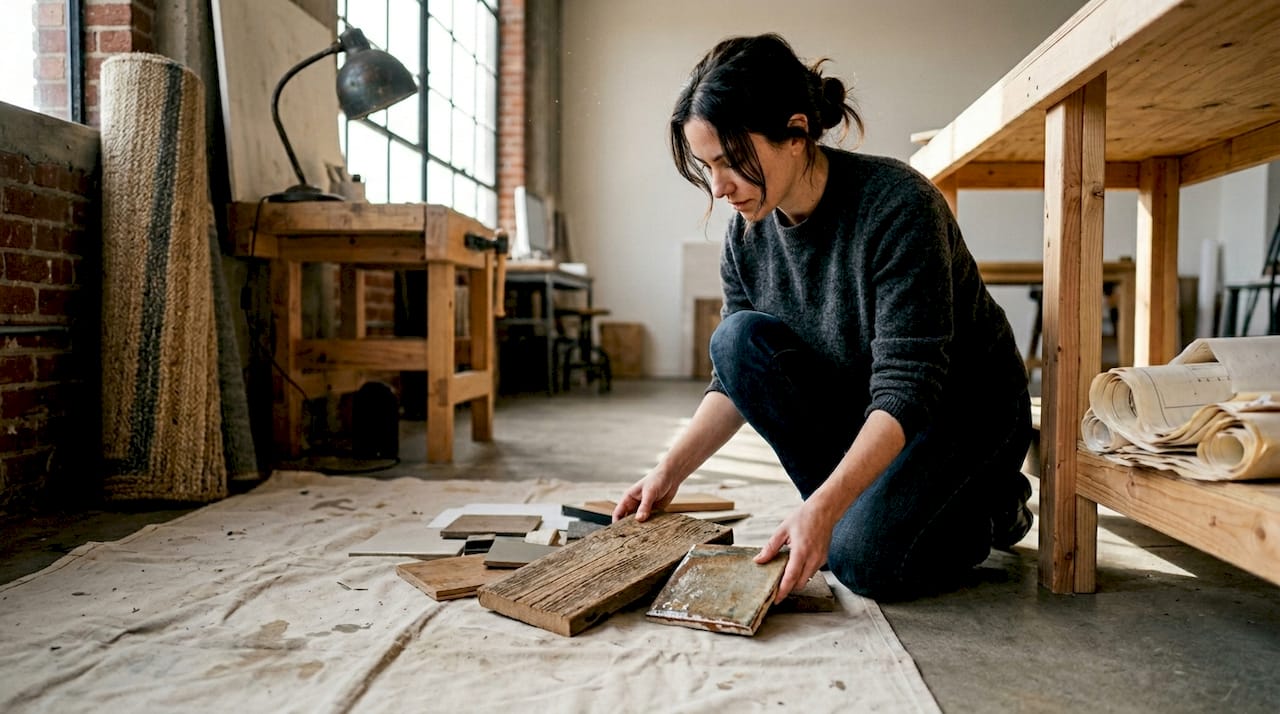
A good example is Kyrö Sauna Bar in Helsinki, where the space is divided into clear zones: barn, yard, barrel storage, and sauna. Recycled materials such as wood, concrete, and old barrels create a sense of authenticity that cannot be bought with new items. The modular sauna in the courtyard combines a cultural and cocktail experience in a way that is both functional and visually strong.
Comparing material options helps in making decisions:
| Material | Image impact | Cost level | Suitability |
|---|---|---|---|
| Recycled wood | Authentic, warm | Low or medium | Restaurants, cafes |
| Raw concrete | Urban, modern | Medium | Galleries, bistros |
| Ceramics | High-quality, artisanal | High | Fine dining, cafes |
| Textiles | Soft, acoustic | Low | All spaces |
| New industrial materials | Neutral, neat | Varies | Offices, chains |
Modularity supports versatility: when furniture and structures are easily movable or changeable, the space adapts to different uses without major investments. The use of zones, in turn, allows different parts of the space to serve different needs simultaneously.
Another interesting perspective is the process related to the reuse of materials, where old materials find new uses. This reduces costs and builds a narrative for the space's background.
Professional tip: Map out local recycled material suppliers and second-hand shops before ordering anything new. You can often find unique elements that make your space stand out from the crowd and cost a fraction of new prices.
Many sustainable solutions also link to trendy Finnish aesthetics. Therefore, it is important to know the current interior design styles.
Interior Design Styles Now: Quiet Luxury, Rustic Modern, and Scandinavian Maximalism
The interior design trends for 2026 are divided into a few clear directions that suit different types of spaces. Each offers its own way to create an atmosphere and stand out.
Quiet luxury is based on consistent, warm tones and matte surfaces. Greys, beiges, and muted whites create a calm ensemble where individual elements stand out. This style is particularly suitable for cafes and fine dining restaurants where customers want to relax and linger. Matte surfaces absorb light and create depth without the distraction of shiny surfaces.
Rustic modern combines organic shapes and rough textures into a neat whole. Uneven plasterwork, visible seams, and natural stones are combined with modern furniture and clear lighting. The result is a space that feels both human and deliberate. This style works well for bar counters, wall surfaces, and flooring materials.
Midimalism is a hybrid of quiet luxury and maximalism: less is more, but the space always has one or two strong statement elements. It could be a large artwork, a peculiar lighting solution, or a single material surface that catches the viewer's eye.
Scandinavian maximalism takes bold steps: strong contrasts, rich colors, and layered textures. This does not mean clutter, but rather deliberate abundance. Galleries and concept cafes utilize this style particularly well.
The best way to implement a trend is to choose one element at a time. First, change the surface materials or lighting, evaluate the impact, and then proceed from there. The overall look is built in layers.
When the time comes to make decisions about spatial design, it's helpful to see how different trends compare to each other.
Trend Comparison Table: Which Model for Your Space?
Helsinki's Design District is a good example of how different concepts can coexist. The area hosts galleries such as Bronda, Forsblom, and Galleria G, cafes like Andante, Mat Distrikt, and Nolla zero-waste, as well as numerous specialty design shops. What these have in common is functional, sustainable design and a second-hand approach. Each space is clearly itself, but they all tell a unified story of quality and consideration.
The following table helps choose the right design model for your space's needs:
| Trend | Benefits | Best use case | Budget level |
|---|---|---|---|
| Versatility | Increases sales, expands customer base | Restaurants, cafes | Low or medium |
| Quiet luxury | Long dwell time, premium image | Fine dining, cafes | Medium or high |
| Rustic modern | Authenticity, distinctiveness | Bistros, bars | Low or medium |
| Scandinavian Maximalism | Visual impact, social media visibility | Galleries, concept cafes | Medium or high |
| Sustainable design | Brand story, cost savings | All spaces | Low |
Additionally, sustainable design choices support both environmental values and long-term cost-effectiveness. Materials that stand the test of time do not require constant renewal.
For a small cafe, versatility and sustainable design are often the best starting point: they add value without significant investment. For a large restaurant, it's worth investing in optimizing customer flow and acoustics. A gallery benefits most from visually strong contrast solutions and statement elements.
Surprisingly Effective Solutions: Learned Through Experience
Solutions that sound good on paper don't always work in practice. The most common mistake is to copy a trend directly from another space without considering the unique characteristics of your own space: layout, customer base, staff working methods, and daily logistics.
For example, an open kitchen looks great in inspiration photos, but if the restaurant's layout doesn't support it, it can create noise problems or slow down service. Similarly, a bold color scheme works in a gallery but can overwhelm customers in a small cafe.
3D design tests flows and acoustics before renovation, minimizing risks, especially in street-level spaces where level differences and load-bearing structures limit changes. This is particularly important in Helsinki, where high rents mean that every square meter must be productive.
The smallest detail can elevate the feeling to a new level. One well-chosen piece of art, the right scent, or a surprising material surface makes a space memorable. These don't cost much, but their impact on the customer experience is disproportionately large. Direct copying of trends without personal interpretation results in spaces that look familiar but don't leave a lasting impression.
Do You Want Practical Help with Spatial Design?
Spatial design trends offer many opportunities, but finding the right solutions for your space requires expertise. Dekoja.net offers specialized materials and expert assistance for projects that aim for visual distinctiveness. Super black surfaces, non-reflective materials, and accent walls are solutions not found in ordinary interior design stores.
Whether it's a gallery statement wall, enhancing the ambient lighting of a restaurant, or a visual refresh for a cafe, full-service space design begins with the right materials. Deliveries in 1-3 business days directly from our domestic warehouse. Contact us and tell us about your project, and together we will find a suitable solution.
Frequently asked questions about creative space design
What does versatility practically mean in restaurant spaces?
Versatility means that a space adapts, for example, from a morning cafe to an afternoon lunch restaurant and an evening event venue. Restaurants operate with different concepts at different times of the day, which increases sales in the same square footage.
How can space design increase sales in a cafe or restaurant?
Space design optimizes customer flow and comfort, which increases dwell time and additional orders, for example, through lighting and table arrangements. Optimizing customer flow and lighting can lead to a significant increase in daily profit margins.
What materials are favored in 2026 interior design trends?
Recycled and sustainable materials, as well as genuine wood, ceramics, and natural textures, are strongly featured. Quiet luxury and rustic modern favor matte surfaces and organic shapes.
How can I test the functionality of a trend in my space before a big investment?
The easiest way is to pilot it on a small scale, for example, in the form of a pop-up event, furniture change, or temporary material solution. This way, you get concrete customer feedback before committing to larger changes.