

Combining technology and design in spatial planning
In short:
- The combination of technology and design creates sustainable and user-centric spaces in Finland, where the process is continuous and iterative. Key elements include joint needs assessment, digital modeling, and synchronized prototype testing, with AI tools supporting the design. Challenges are addressed through clear role definitions, a shared design system, and an understanding of "TechExperience".
The integration of technology and design is a process where innovative technologies and creative design collaboratively produce user-centric and sustainable spaces. Finnish architects and interior designers increasingly face this challenge: digital tools, material technology, and human-centered design must be harmonized from the very beginning of a project. The Newil & Baun Gen 2 smart home concept and the Art & Design Hub project demonstrate that in Finland, this integration is already a practice, not just a vision. This guide outlines the processes, tools, and philosophy professionals need for a successful outcome.
How does the integration of technology and design work in space planning?
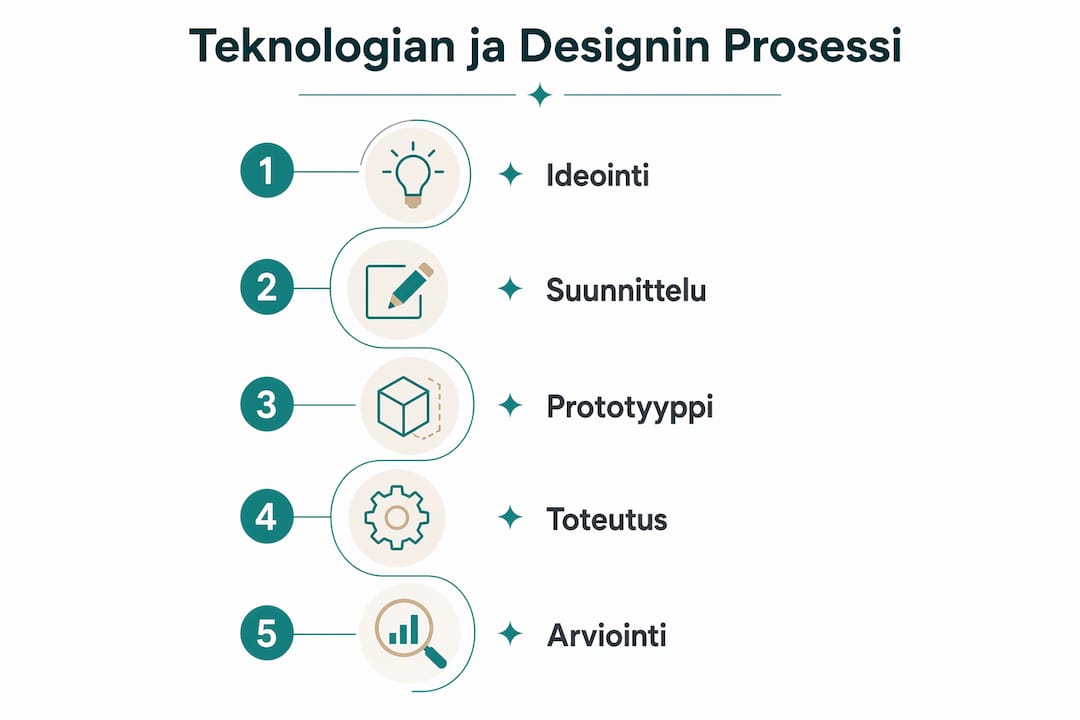
Collaboration between technology and design begins with the process structure. An iterative, human-centered design process means that digital and physical implementation proceed in parallel from start to finish, not sequentially.
The practical process unfolds as follows:
- Needs assessment and user research. Determine how the space serves the individual. Ask what the user does in the space and when.
- Concept development and digital modeling. Build a digital model of the space before creating a physical prototype. Tools include Rhino, Revit, and parametric design.
- Design system structure. A design system acts as critical infrastructure when working with AI. A shared token structure and principles keep design and code in sync throughout the project.
- Prototyping. Robot-based 3D printing enables rapid testing of physical prototypes. Finland will have two large robot-based 3D printers in use by early 2026.
- Iteration and feedback. Test the prototype with real users. Modify and improve before final implementation.
- Implementation and synchronization. Ensure that digital control and physical structure correspond. This phase most often fails if synchronization is left until the end of the project.
Professional tip: Start with the design system structure before any walls are designed. A structure added later will not save a project that has already gone in the wrong direction.
AI tools, such as generative design software, produce hundreds of space alternatives based on given constraints. The designer's role is to select, evaluate, and modify, not to automatically accept. Synchronizing digital and physical implementation requires continuous dialogue within the team, not a one-time division of responsibilities.

Which technologies and materials support the integration of design and technology?
Design within the context of technology relies on three areas: manufacturing technology, smart systems, and materials.
Manufacturing Technologies
Robot-based 3D printing has transformed the prototyping of space designs. It enables the creation of unique and durable structures that traditional methods cannot produce. In Finland, this technology is already in use for design, and its applications are rapidly expanding from construction to interior design.
Smart Living Systems
Newil & Baun Gen 2 combines architecture, design, and technology into a mobile app-controlled system. Over 1,000 smart homes are planned for the Helsinki metropolitan area, with the first units to be completed in autumn 2026. This demonstrates that smart living integration has moved from experimentation to production scale.
Key technological solutions for smart living:
- Mobile app-controlled lighting, HVAC, and security systems
- Automation systems that learn user routines
- Real-time monitoring and control of energy consumption
- Integrated voice control systems for space management
Materials and Sustainability
Sustainable materials are the third pillar of design and technology integration. Responsible material selection does not mean compromising on aesthetics. For example, 3D-printed structures from recycled raw materials combine environmental responsibility with design freedom.
| Technology | Application | Benefit for Designer |
|---|---|---|
| Robot-based 3D printing | Prototypes, structures | Rapid iteration, unique forms |
| Smart living automation | Homes, offices | User-centric spatial experience |
| Parametric design | Architecture, interior design | Computational design solutions |
| Non-reflective surfaces | Galleries, restaurants, studios | Visual control and contrast |
The Art & Design Hub pilots an innovation ecosystem that connects designers, artists, engineers, and technology companies. The project will run in South Karelia from 2026–2027. It serves as a concrete example of how technological solutions in design are best created through multidisciplinary collaboration.
How does human-centered philosophy unite technology and design?
Human-centered design is the most important principle for integrating design and technology. The HumanTech philosophy emphasizes that technology must adapt to human needs, not the other way around. Technology is a true partner only when it is transparent and reliable.
In practice, this means the following:
- Technology must not be a visible disturbance in the space. It should operate unobtrusively in the background.
- Designers and technicians must understand the logic of each other's work. Mere coexistence is not enough.
- User experience and sustainability are not separate goals. They support each other when design starts with the human.
- Transparency in technology's operation builds trust. A user who understands the system uses it better.
The Fifth Industrial Revolution emphasizes human-centeredness and tailored solutions. Design can be used to develop meaningful and sustainable environments where technology serves people instead of directing them.
Professional tip: Ask the technician to attend the first round of design meetings, not just the implementation phase. Technical understanding improves design solutions already at the concept level.
The Finnish Design Push project emphasizes practicality and collaboration between companies and universities. This model works: when designers and engineers work in the same space from the beginning, the outcome is better than a solution produced by either one alone.
What are the most common challenges in combining technology and design?
The different logics of physical and digital design create friction unless they are synchronized from the start of the project. Physical design often proceeds linearly, digital iteratively. This difference is the most common reason for project delays.
Most common problems and solutions
- Schedule incompatibility. Physical construction does not flex in the same way as software development. Solution: agree on a common iteration cycle at the beginning of the project.
- Ambiguity of roles. Who is responsible when a digital system doesn't work in a physical space? Solution: appoint a responsible person for the interface.
- Technical debt in design. A quickly made digital solution will backfire later. Solution: use a design system structure from the outset.
- Communication breakdowns. The designer talks about aesthetics, the technician about functionality. Solution: use a common visual language and prototypes.
| Challenge | Consequence without solution | Solution |
|---|---|---|
| Schedule conflict | Project delays or quality suffers | Common iteration cycle from the start |
| Ambiguity of roles | Responsibility disappears at the interface | Appointed interface person |
| Technical debt | Expensive repair later | Design system from the beginning |
| Communication breakdown | End result does not meet objectives | Prototypes as common language |
A TechDesigner is a professional who deeply integrates design and technical implementation. They act as a bridge-builder in the team, understand the challenges of application development, and bring a solution-oriented approach to design. This role is crucial in multidisciplinary projects where the physical and digital meet.
Successful teams engage in continuous dialogue, not a one-time division of responsibilities. This means weekly joint reviews, shared documentation, and a clear decision-making process. In construction projects, integrated systems help keep design, procurement, and implementation in sync throughout the project.
Key takeaways
The integration of technology and design is best achieved when a human-centered philosophy, an iterative process, and clear roles are combined from the very first stage of the project.
| Point | Details |
|---|---|
| Start synchronization immediately | Physical and digital design must be aligned from the start of the project, not during the implementation phase. |
| Build a design system first | A shared token structure keeps design and code in sync throughout the project. |
| Appoint a TechDesigner to the team | An interface person prevents communication breakdowns between the designer and technician. |
| Utilize 3D printing for prototypes | Robot-based printing speeds up iteration and reveals problems before construction. |
| Human-centeredness is a principle, not an add-on feature | The HumanTech philosophy ensures that technology serves the user and does not control them. |
Mikko: what I've learned at the intersection of technology and design
I have closely followed projects where technology and design were attempted to be combined retrospectively. The outcome is almost always the same: expensive corrections, a frustrated team, and a space that doesn't feel finished. The problem is not with technology or design. The problem is with the order.
The best result comes when the designer and technician sit at the same table before a single line is drawn. This sounds obvious, but in practice, it is rare. In most projects, the technician is brought in only when the plans are already locked.
Another underestimated aspect: materials. A space is not created from technology alone or from form alone. Surfaces, textures, and the behavior of light determine how a space feels. Visual effect surfaces, such as non-reflective materials and contrast walls, are one way technology and design concretely meet. Dekoja specializes in this very interface.
In the future, the TechDesigner role will become more common. A designer who understands the logic of code, and a technician who understands aesthetics, are stronger together than either one separately. This doesn't mean everyone has to know everything. It means a common language must be consciously built.
— Mikko
Dekoja: materials for the intersection of technology and design
The integration of technology and design is ultimately manifested in surfaces and materials within a space. Dekoja supplies specialized materials from Finland that architects, interior designers, and AV professionals use to create visually impactful spaces.
Dekoja's selection includes Musou Black paint, non-reflective fabrics, and effect surfaces that change the visual logic of a space. These materials are suitable for galleries, restaurants, studios, and all spaces where light control is part of the design. Deliveries from the domestic warehouse take 1–3 business days. Explore smart home material solutions or browse the full selection at dekoja.net.
Frequently Asked Questions
What does combining technology and design mean in practice?
It means that digital tools, such as 3D printing and a design system, and physical space planning run in parallel throughout the project. The process begins with a joint needs assessment and ends with synchronized implementation.
What is a design system and why is it important?
A design system is a shared structure that keeps visual design and technical implementation in sync. It works particularly well with AI tools because a common token structure prevents conflicts between code and design.
Who is a TechDesigner and what do they do?
A TechDesigner is a professional who combines expertise in design and technical implementation. They act as a bridge between the designer and developer, solving problems that arise at the intersection of these two worlds.
How does robot-based 3D printing benefit space planning?
It enables rapid prototyping of unique structures before actual construction. Finland has robot-based 3D printers that can be used to test both shapes and materials before a final decision is made.
How to avoid common mistakes in the integration of technology and design?
Synchronize physical and digital design from the start of the project. Appoint a TechDesigner to the team to be responsible for the interface. Use a design system structure from the outset to prevent technical debt from becoming unmanageable.