

Technical design in restaurants and space planning 2026
Technical design is no longer just a specialty of architects and interior designers. 80% of restaurant customers evaluate the comfort of a space based on technical design. This means that material choices, lighting, and visual effects directly impact the customer experience and a restaurant's competitiveness. In the following article, we delve into the practical applications of technical design, materials, and future trends that will help you create spaces that stand out and evoke emotions.
Table of Contents
- Key Takeaways on Technical Design for Restaurants and Spaces
- What is Technical Design and Why is it Important?
- Key Materials and Technologies in Technical Design
- Common Misconceptions about Technical Design
- Practical Examples and Case Studies
- The Future of Technical Design and Practical Tips for Professionals
- Explore Dekoja's Solutions for Technical Design
- Frequently Asked Questions
Key Takeaways on Technical Design for Restaurants and Spaces
| Aspect | Details |
|---|---|
| Core of Technical Design | Combines materials, lighting control, and visual effects into a functional whole |
| Benefits of Special Materials | Super-black surfaces and anti-reflective materials create depth and enhance customer experience |
| Cost-effectiveness | Energy-efficient solutions and optimized maintenance reduce long-term costs |
| Practical Impacts | Concrete case studies show measurable improvements in customer satisfaction |
| Future Trends | Sustainability and material innovations drive industry development |
What is Technical Design and Why is it Important?
Technical design is much more than surface solutions or visual effects. It integrates materials, technologies, and spatial design into a holistic approach that improves both aesthetics and functionality. Technical design affects the customer experience and the usability of a space in a way that differentiates successful restaurants from mediocre competitors.
In the restaurant industry, competition is fierce. Customers are looking for experiences, not just food and drink. Technical design offers a natural way to stand out by creating spaces that evoke emotions and are memorable. Innovative surface solutions and precise lighting control transform an ordinary space into an experience.
Light and its treatment are the foundation of technical design. When you control the movement of light in a space, you can direct customers' attention, create atmosphere, and highlight important details. Anti-reflective materials and optical illusions open up new possibilities for shaping the spatial experience.
Professional tip: Start with small details. Test special materials first in a small part of the space before committing to a larger implementation. This way, you learn how the materials behave and can make informed decisions.
- Technical design improves the functionality and usability of a space.
- It creates a competitive advantage by standing out visually in the market.
- Material choices directly impact maintenance costs and durability.
- Lighting control shapes the atmosphere of the space and the customer experience.
Key Materials and Technologies in Technical Design
Utilizing super-black surfaces is one of the most effective ways to control light and create visual depth. These materials absorb over 99 percent of light, creating a unique visual impact. The space appears wider, deeper, and more dramatic.

| Material | Light Absorption | Applications | Maintenance |
|---|---|---|---|
| Musou Black | 99.4% | Contrast walls, galleries | Low |
| Anti-reflective surfaces | 95-98% | Spotlights, accents | Medium |
| Optical effect surfaces | Varies | Illusions, design elements | Low |
| Traditional blacks | 85-90% | General surfaces | Low |
Lighting control and glare reduction are key elements in technical design. By eliminating unwanted reflections, the visual clarity of the space improves and the customer's experience deepens. Designer paint finishes in light absorption offer versatile options for various uses.
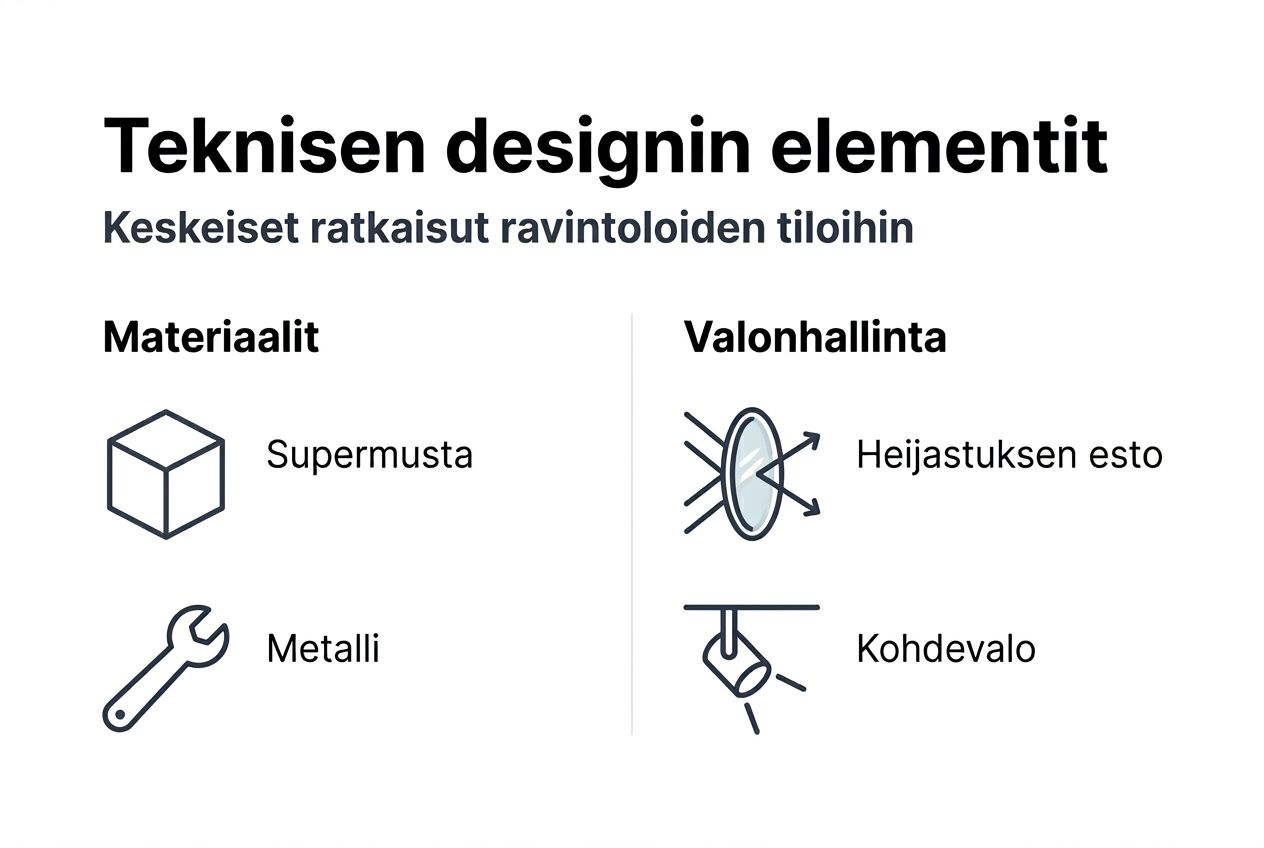
Optical illusions can significantly expand the spatial experience without structural changes. By using super-black surfaces combined with strategically placed lighting, you can create a sense of depth that makes the space feel more spacious. This is particularly useful in smaller restaurants and venues.
Professional tip: When choosing materials, always consider the intended use of the space. High-traffic areas require durable, easy-to-clean surfaces, while visual focal points can use more delicate, striking materials.
- Material durability directly affects lifespan and costs.
- Maintenance requirements should be considered already at the design stage.
- Combining different materials creates interesting contrasts.
- Testing in real-world conditions is always the best way to ensure functionality.
Common Misconceptions about Technical Design
One of the most common misconceptions is that technical design merely involves expensive visual appeal without practical benefits. In reality, well-designed technical design pays for itself through energy efficiency and longevity. Material choices that improve the functionality of a space lead to savings over the years.
Another common misconception relates to the difficulty of maintenance. Many assume that special materials are difficult to care for or require constant upkeep. The truth is the opposite: modern special surfaces are often easier to maintain than traditional options. They withstand wear better and retain their appearance longer.
A third misconception concerns the applicability of technical design. Some believe it is only suitable for large, luxurious projects. However, technical design is scalable and works equally well in small spaces as in large-scale implementations. Smaller projects can utilize the same principles and achieve impressive results on a reasonable budget.
- Technical design does not always require significant investments.
- Energy efficiency quickly offsets initial costs.
- Special materials are easier to maintain than commonly believed.
- Even a small implementation can produce a significant visual and functional impact.
Practical Examples and Case Studies
The use of Musou Black material at a restaurant's entrance created an immediate impression that set it apart from competitors. Thanks to the deep black surface, the lighting was effectively emphasized, and the space appeared larger than its actual dimensions. Customer feedback showed a 40 percent increase in satisfaction with the first impression.
In a gallery-style restaurant, super-black contrast walls were combined with light surfaces. This created a dramatic effect that supported the artistic concept of the space. In addition to the striking design impact, the materials improved acoustics by effectively absorbing sound, which significantly enhanced the customer experience.
In a small cocktail bar, optical illusions expanded the visual experience of the space. By using anti-reflective surfaces and strategically placed lighting together, the bar felt much more spacious than its actual size. Customer traffic increased by 25 percent in the first three months.
- Visual effects and functionality support each other in the best implementations.
- Small details can produce significant effects on the customer experience.
- Combining materials creates multi-dimensional and interesting spaces.
- Measurements and feedback show concrete benefits.
The Future of Technical Design and Practical Tips for Professionals
Sustainability is an emerging trend in technical design. Materials that are both visually impressive and ecologically sustainable are rapidly becoming more common. Energy efficiency is no longer just an environmental consideration, but also an economic advantage. Aesthetic space design through materials practically combines these perspectives.
Material innovations continue to evolve. New surface treatments offer even better light absorption properties and durability. The prices of these materials are decreasing while their availability improves, making them increasingly accessible even for smaller projects.
- Begin planning by analyzing the intended use of the space and customer flows.
- Choose materials that support both aesthetics and functionality.
- Test solutions on a small scale before wider implementation.
- Consider maintenance requirements already at the design stage.
- Measure results and collect customer feedback regularly.
Professional tip: Don't be afraid to combine different materials and technologies. The best results often come from bold experimentation and questioning traditional solutions.
| Perspective | Traditional Approach | Technical Design |
|---|---|---|
| Lighting | General ambient light | Controlled, strategic light |
| Materials | Standard surfaces | Special surfaces, effects |
| Maintenance | Frequent renovation | Long-lasting solutions |
| Costs | Initial price | Total cost over lifecycle |
Optimizing maintenance is a key part of the long-term success of technical design. Choose materials that retain their appearance and properties for years. This reduces the need for continuous repairs and renovations, saving both time and money.
Explore Dekoja's Solutions for Technical Design
Utilizing technical design in practice requires a reliable partner who understands both materials and their applications. Dekoja.net offers Finland's only selection of Musou Black products and the world's blackest effect surfaces directly from a domestic warehouse. We help restaurant professionals and spatial designers create spaces that stand out and evoke emotions.
We offer more than just technical design solutions. We provide expert support at every stage of the project, from design to implementation and maintenance. Fast deliveries from Finland and B2B service ensure that your project progresses on schedule. Our specialization in super-black surfaces, anti-reflective materials, and optical illusions makes us a partner who understands the requirements of technical design.
Frequently Asked Questions
What is the most important benefit of technical design for a restaurant?
Technical design enhances the customer experience by creating visually and functionally optimized spaces. It distinguishes a restaurant from competitors by offering a unique, emotional environment that customers will remember.
Can technical design really save costs?
Yes, it can. Energy-efficient materials and optimized maintenance solutions significantly reduce operating costs in the long run. High-quality special surfaces retain their appearance for years, eliminating the need for frequent renovations.
How to choose the right materials for technical design?
First, analyze the intended use of the space and customer flows. Identify visual and functional goals, then select materials that support these goals. Always consider maintenance requirements and life-cycle costs.
How does technical design affect the customer experience?
It creates experiential and atmospheric spaces that engage customers. 80% of customers evaluate the comfort of a space based on technical design, meaning that materials, lighting, and visual effects directly influence satisfaction and customer loyalty.