

Theater Lighting Guide: Create Perfect Contrast and Depth
In theatre spaces, every light and surface has a greater impact on the whole than is often understood. The reflectivity and texture of materials form the basis for visual contrast and the atmosphere of the space , which is especially emphasized in demanding Central European performance environments. In this guide, you will find concrete solutions for material selection and light source placement, which will help you raise the visual contrast of a theatre space to a new level.
Table of contents
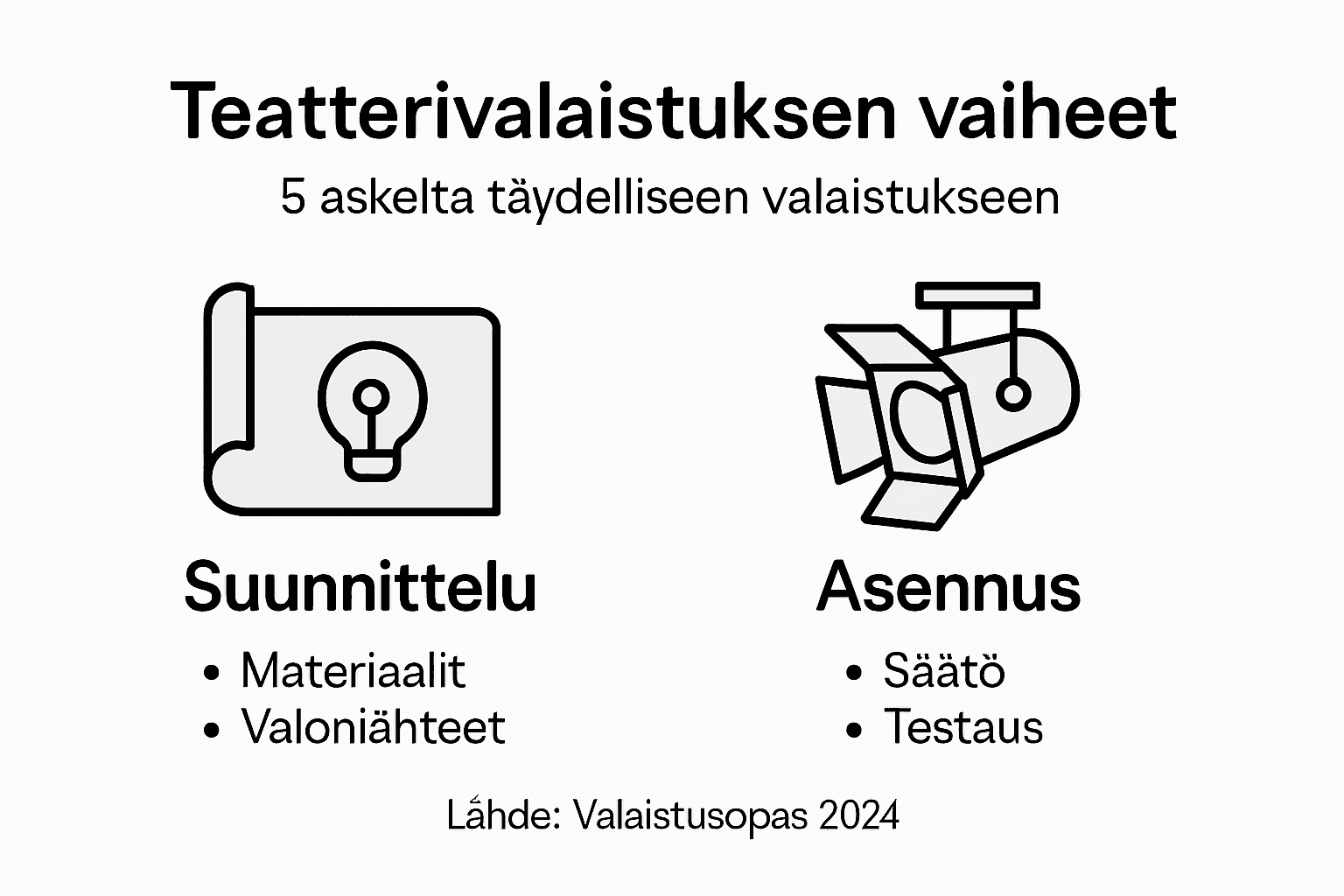
- Step 1: Choose optimal materials and surface effects
- Step 2: Plan the placement of light sources for the space
- Step 3: Install lighting solutions and contrasting surfaces
- Step 4: Adjust and calibrate light output and color temperature
- Step 5: Test the visual outcome of the space and correct if necessary
Quick summary
| Key message | Explanation |
|---|---|
| 1. Choose the right materials | Pay attention to the reflectivity and texture of materials to create the atmosphere of the space. |
| 2. Plan your light sources strategically | Place light sources at optimal angles and use different lighting fixtures for versatility. |
| 3. Install layered lighting solutions | Pay attention to contrasting surfaces and their effect on the distribution of light in the space. |
| 4. Calibrate light output and color temperature | Adjust brightness and color temperature for different scenes to create the desired atmosphere. |
| 5. Test and repair lighting | Evaluate the lighting from different angles and make adjustments if necessary to achieve optimal results. |
Step 1: Choose optimal materials and surface effects
When designing lighting for a theatre space, material choices are crucial in creating a visual experience. The right materials and surface effects can create depth, enhance the atmosphere of the stage, and enhance the impact of the lighting.
Start by looking at the color scheme and lighting characteristics of the space. Pay attention to the reflectivity and texture of materials, which shape the behavior of light. Matte surfaces absorb light, while glossy surfaces reflect and diffuse it. In a theater space, you often need contrast opportunities between different surfaces.
Choose materials that create depth and multi-dimensionality. For example, dark, low-reflective materials can add drama to a scene, while lightly reflective surfaces can soften lighting. Consider the layering of materials and how they react to different light sources.
Pro tip: Always test the light reflection properties of materials in practice before making final choices to ensure the desired visual effect.
The following table outlines the effects of different surfaces and materials in theatrical lighting:
| Material type | Light reflectivity | Typical effect on stage |
|---|---|---|
| Matte finish | Weak | Reduces glare, enhances depth |
| Glossy surface | Strong | More dramatic reflections |
| Dark material | Very weak | Deepens contrast and drama |
| Light surface | Good | Spreads light widely |
Step 2: Plan the placement of light sources for the space
The strategic placement of light sources is at the heart of theatre lighting. The goal is to create a dynamic and functional lighting environment that supports the expressive power of the stage and adapts to different performance situations.
Pay attention to the optimal angle and placement of light sources. The recommended angle is 45–60 degrees, which minimizes distracting shadows and ensures even lighting. Use different types of lamps to create a diverse light map: spotlights for accent areas, general lights for basic lighting, and directional lights for dynamic changes in space.
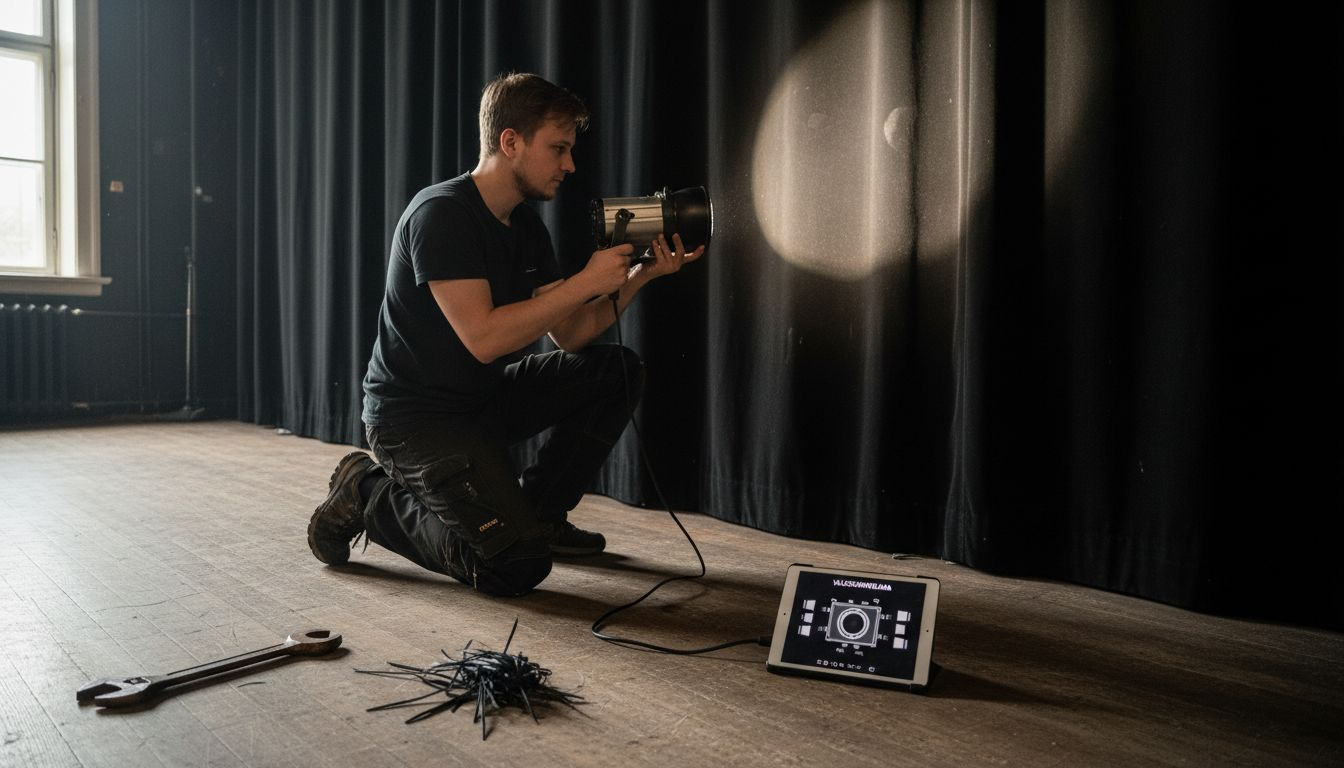
In auditoriums and theaters, flexibility in the light source is key. Consider lighting control systems that allow for quick adjustment of brightness and direction for different scenes. The advantage of LED lighting is its versatile adjustability in terms of color temperature and brightness.
Pro tip: Always do a test lighting and test lighting arrangements in practice before finalizing the plan to ensure the desired visual effect.
Below we compare different light sources and their suitability for a theater space:
| Light source | Adjustability | Suitability for the stage |
|---|---|---|
| Spot | Accurate orientation | Spotlights, accents |
| General light | Limited | Even basic lighting |
| Directional LED | Wide | Rapid mood changes |
Step 3: Install lighting solutions and contrasting surfaces
Installing lighting solutions in a theatre space requires careful planning and an understanding of how light shapes the atmosphere and visual experience of the space. The goal is to create a layered and dynamic lighting environment that supports the expressive power of the stage.
When installing a complete lighting solution, it is important to pay attention to contrasting surfaces that emphasize the shapes of the space and create depth. Choose surfaces that react to light in different ways: glossy surfaces reflect and diffuse light, while matte surfaces absorb and create a softer effect. Focus especially on the areas you want to highlight or soften.
Start by installing the main lighting groups that create the basic lighting. Place complementary spotlights and directional lights strategically to highlight different areas of the stage. Use lighting control systems that allow for quick and flexible lighting changes for different scenes. Remember that each light source and contrasting surface contributes to the overall mood of the space.
Pro tip: Do a trial installation and test lighting arrangements from several different angles to ensure that each light source and contrast surface works as intended.
Step 4: Adjust and calibrate light output and color temperature
Precise adjustment of light output and color temperature is the final touch of lighting in a theater space, determining the visual atmosphere and expressiveness of the entire performance. This is where you transform your technical plan into an experiential whole.
Lighting calibration requires careful consideration when using different color temperatures. Cooler bluish tones are suitable for intense dramatic scenes, while warm yellowish tones create a softer and more intimate atmosphere. The adjustability of LED lighting allows for quick and flexible changes to create exactly the mood you want.
Focus on gradually adjusting the brightness. Start with basic lighting and add layers of intensity or softness for each scene. Test the lighting settings from different angles and make sure no area is too dark or too bright. Remember that light is just as important an actor in theatre as the performers themselves.
Pro tip: Document all lighting setups by taking photos and taking notes so you can later replicate successful lighting arrangements exactly.
Step 5: Test the visual outcome of the space and correct if necessary
Visual proofing is a critical step in theatre lighting design, moving from theory to practical implementation. This is where you ensure that all of your lighting solutions work perfectly and create the desired atmosphere.
When testing your lighting in a comprehensive manner, it is important to evaluate your lighting system from multiple perspectives. Observe the lighting at different times of day, in different operating conditions, and from different viewing angles. Pay attention to light distribution, shadow formation, and changes in mood. Document your observations in detail so you can make any necessary adjustments.
Focus especially on the functionality and flexibility of lighting control systems. Test changes in brightness and color temperature in different scenes. Make sure that the lighting supports the dramatic moments on stage and that the transitions are smooth. If something is not working as planned, don't hesitate to make small corrective moves.
Pro tip: Ask an external reviewer or colleague to objectively test your lighting solution, as someone else's eyes often see things you don't.
Create incredible contrast and depth in your theater space with Musou Black materials
The challenge of lighting a theatre space is to create the perfect contrast and multi-dimensionality that will capture the viewer’s attention and take the performance to the next level. The article emphasized the control of light reflection, the right choice of materials, and the precise placement of light sources. Musou Black paint and related materials absorb over 99 percent of visible light, making the space dramatic and non-reflective. This gives your theatre stage a unique depth and contrast that you can’t get with standard matte surfaces.
Experience the union of creativity and technical precision at Dekoja.net. Discover our selection, where lamps merge with Musou Black materials to create a perfect whole and take your lighting design to the next level.

Take a step towards an impressive visual experience today. Explore Dekoja.net's materials and lighting solutions and create a space with unparalleled depth and contrast in your theater space. Find out more at https://dekoja.net and start the transformation that will leave your audience speechless.
Frequently asked questions
What materials affect the lighting of a theater space?
The right materials, such as matte and glossy surfaces, will affect the behavior of the cast light. Carefully choose materials that create the depth and atmosphere you want for your scene.
How does the placement of light sources affect the look of the presentation?
The placement of light sources has a significant impact on the formation of shadows and the uniformity of lighting. We recommend an angle of 45-60 degrees and test different lighting settings to ensure the right mood for each scene.
How do I calibrate the light output and color temperature in theater mode?
By calibrating the light output and color temperature, you can create an effective visual atmosphere during your presentation. Test different temperatures, such as cool bluish tones for drama and warm yellowish tones for an intimate atmosphere.
Why is it important to test lighting solutions before a show?
Testing your lighting solutions can help you ensure that all light sources work together to create the desired atmosphere. Conduct a trial run from different angles and document your observations so you can make adjustments if necessary.
How can I create a dynamic lighting environment in a theater?
Creating a dynamic lighting environment requires the use of a variety of light sources, such as spotlights and general lighting. Use lighting control systems that allow for quick adjustments across scenes to enhance the visual appeal of your presentation.
Recommendation
- Lighting for AV environments – The power of visual contrast – Dekoja.net
- Lighting for AV environments – The power of visual contrast – Dekoja.net
- Lighting for AV environments – The power of visual contrast – Dekoja.net
- Lighting for AV environments – The power of visual contrast – Dekoja.net
- Understanding Using Projector in Daylight for Best Results - Projector Display