

The Power of Deep Black in Interior Design – A Visual Experience
What makes Central European restaurant spaces truly visually distinctive? The use of deep black offers professionals the opportunity to create drama and contrast in spaces that emphasize architectural details. When choosing materials, surface properties, such as fire safety , are an essential part of successful design. In this article, you will find concrete ways to utilize the depth of black and the dialogue of light, which transform a restaurant space in both aesthetics and user experience.
Table of contents
- The concept and effect of deep black in spaces
- Musou black and deep black materials in the interior
- Utilizing contrast, light, and depth in design
- Aesthetic and experiential solutions for restaurants
- Common mistakes and prerequisites for successful implementation
Key conclusions
| Paragraph | Detail |
|---|---|
| The meaning of deep black | Deep black is not just a color, but a strategic solution that changes the atmosphere and user experience of a space. |
| The uniqueness of Musou Black | Musou Black absorbs up to 99.4% of visible light, enabling new visual dimensions in interior design. |
| The role of contrast and light | When used correctly, contrast can create depth and interest in a space, making it meaningful. |
| Prerequisites for successful implementation | Careful planning and material choices are key to successful interior design and the functionality of the space. |
The concept and effect of deep black in spaces
Deep black is not just a color – it is a philosophy that changes the way we view architecture and interior design. It is a material experience that challenges traditional notions of spatial design.
The concept of deep black is based on its unique ability to absorb light. Fire safety and surface properties are key factors when choosing deep black materials for a space. This color is not just an aesthetic choice, but a strategic decision that affects the atmosphere of the space and the user experience.
The effects of deep black in spaces can be divided into the following dimensions:
- Visual depth : Creates the illusion of boundless space
- Contrast Enhancement : Highlights other colors and shapes
- Acoustic performance : Attenuates sounds and creates a peaceful environment
- Aesthetic minimalism : Simplifies the visual appearance of a space
Deep black highlights the architectural features of a space. It acts as a visual blank canvas that allows other elements to shine. When used correctly, deep black can transform an ordinary space into a dramatic and meaningful experience.
Pro tip: Use deep black judiciously – a few strategic touches are enough to create an impressive ensemble.
Musou Black and deep black materials in the interior
Musou Black represents a new generation of deep black materials that are revolutionizing the way interior design is conceived. It is more than just a color – it is a technological innovation that transforms the visual experience of spaces.
Interior design trends with Musou Black have shown how this material solution can create completely new visual dimensions. Musou Black is developed to absorb light extremely effectively, creating a unique sense of depth in spaces.
Musou Black's interior features can be divided into the following categories:
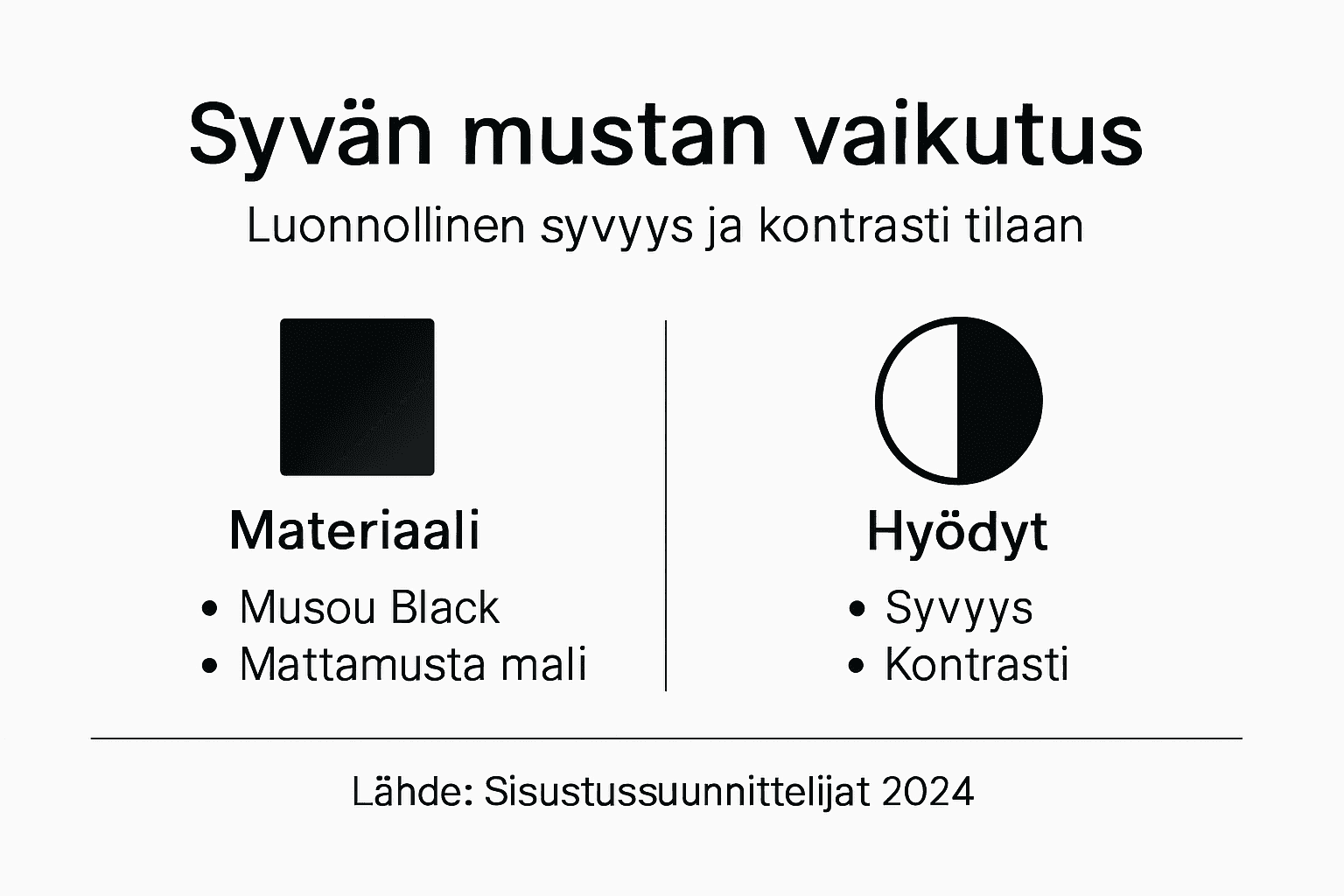
- Light absorption : Absorbs up to 99.4% of visible light
- Contrast Control : Create dramatic visual contrasts
- Surface properties : Non-reflective and smooth surface
- Versatility : Suitable for both public and private spaces
The use of the material requires careful consideration. Musou Black works best when used strategically as part of a larger design concept. It is not just a color, but an architectural element that can change the mood of an entire space.
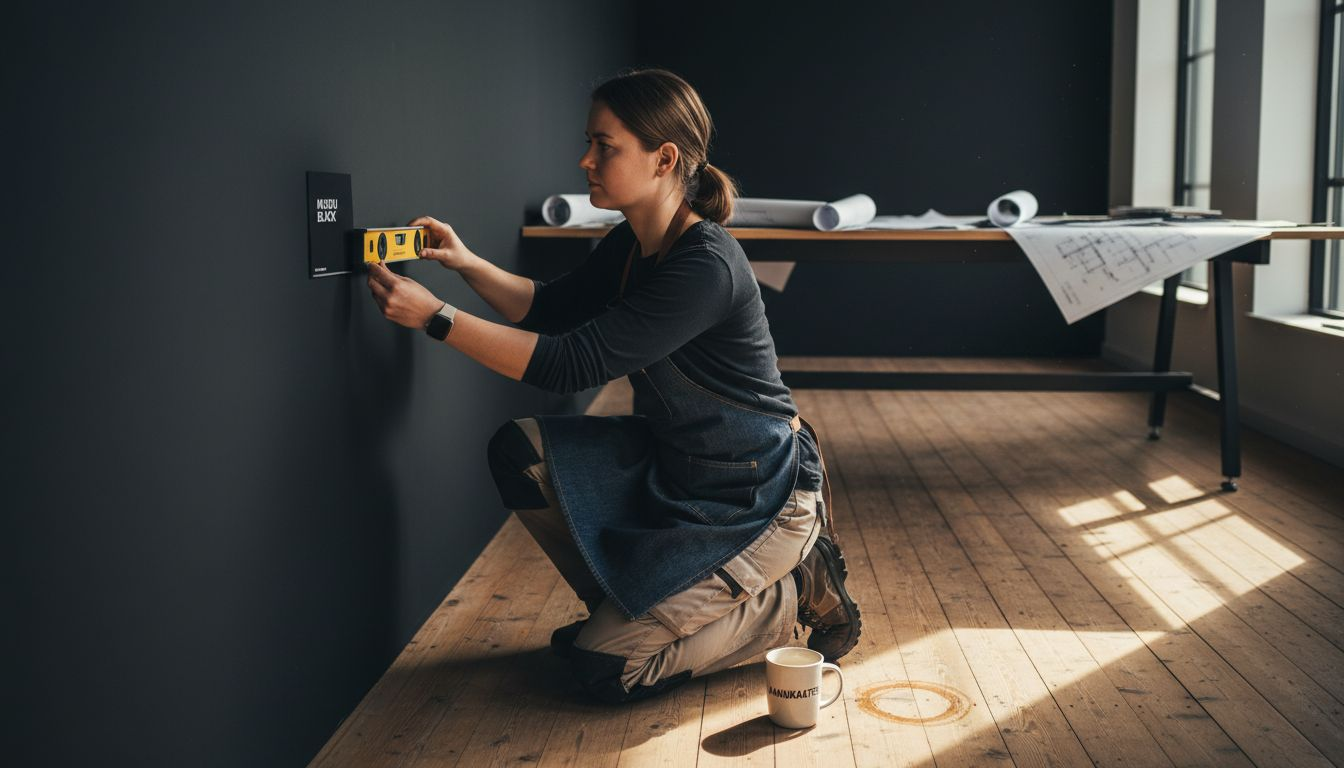
Below is a comparison of the specific characteristics of Deep Black and Musou Black materials in interior design:
| Material | Light absorption level | Applications | Visual impact |
|---|---|---|---|
| Deep black | High but variable | General interior spaces | Create depth and contrast |
| Musou Black | Very high (99.4%) | Special items, highlights | Maximum blackness and drama |
Pro tip: Try Musou Black on smaller elements first – for example, as a single wall or accent piece – before using it on a large scale.
Utilizing contrast, light, and depth in design
Managing contrast in interior design is much more than just contrasting colors – it’s an artistic way to create depth, tension, and visual perspectives in a space. When done right, contrast can transform an ordinary space into a dramatic and meaningful experience.
Lighting tones can create a multidimensional atmosphere that highlights the architectural features of a space. Warm and cool light tones act as strategic tools that shape the mood and visual dynamics of a space.
The main principles of utilizing contrast and light can be divided into the following categories:
- Color contrasts : Effective use of dark and light
- Lighting levels : Layered light sources
- Material variation : Glossy and matte surfaces side by side
- Geometric contrast : Combining straight and curved shapes
Visual depth is created through thoughtful contrasts. Black frames, furniture and details create tension and interest that draws the eye in. Designing a space is all about finding balance – too much contrast can be overwhelming, but when done right, it creates an unforgettable experience.
Pro tip: Try creating a layered lighting plan with different levels of lights – general lighting, spotlights, and mood lighting.
Aesthetic and experiential solutions for restaurants
Restaurant interior design is much more than just aesthetics – it is a holistic way to create a unique and memorable customer experience. Every detail in a space tells a story, evokes emotions and builds a restaurant's identity.
Fine dining systems show how every element of a space affects the customer experience. Carefully considered furniture, lighting and materials create a harmonious whole that supports the restaurant's brand and level of service.
The key elements of aesthetic solutions for restaurants can be divided into the following categories:
- Functionality of the space : Smooth customer flow and ergonomic design
- Visual identity : A color scheme and atmosphere that reflects the restaurant's concept
- Acoustic solutions : Sound environment management and comfortable sound levels
- Technological integration : Invisible intelligent systems
- Material choices : Durable and aesthetically pleasing surfaces
Comprehensive restaurant interior design is about much more than just a pretty appearance. It is a strategic tool that directly impacts customer experience, brand communication, and business success.
Pro tip: Design your restaurant space in layers – think about functionality first, then aesthetics, and finally the atmosphere.
Common mistakes and prerequisites for successful implementation
Interior design is an art form where even the smallest details can determine the success of an entire space. Mistakes are not only aesthetic, but can significantly impair the functionality and user experience of the space.
The most common pitfallsin interior architecture implementation are often related to careless planning and lack of overall control. Successful implementation requires careful consideration at every design stage.
The most common mistakes in interior design can be divided into the following categories:
- Dimensional errors : Incorrectly sized furniture
- Lighting deficiencies : Insufficient or dazzling lighting
- Material selection errors : Materials not suitable for the intended purpose
- Uncontrollable color scheme : Too colorful or monotonous colors
- Ignoring functionality : Pure aesthetics without practicality
The prerequisites for successful implementation arise from careful planning, in which every element is carefully considered. The space must serve both aesthetic and practical needs, creating a harmonious and functional whole.
Here is a summary of the consequences and solutions to the most common interior design mistakes:
| Error | Possible consequences | Corrective approach |
|---|---|---|
| Wrong proportions | Unbalanced state | Dimensional drawing and mockup tests |
| Poor lighting | Tired or dreary atmosphere | Layered lighting design |
| Unsuitable material | Short lifespan and impracticality | Precise material selection according to the intended use |
Pro tip: Test the functionality of the space with mockup plans and 3D visualizations before making final decisions.
The power of deep black in practice – make your space unique
The light absorption and dramatic visual depth of deep black are a huge opportunity in interior design that requires experientiality and precise contrast control. If you want to bring a new dimension to spaces and maximize the aesthetic impact of deep black with selected materials, Dekoja.net is your partner. We offer in particular the Musou Black material family, which absorbs up to 99.4 percent of light and creates a theatrical atmosphere in restaurants and exhibition spaces, for example.
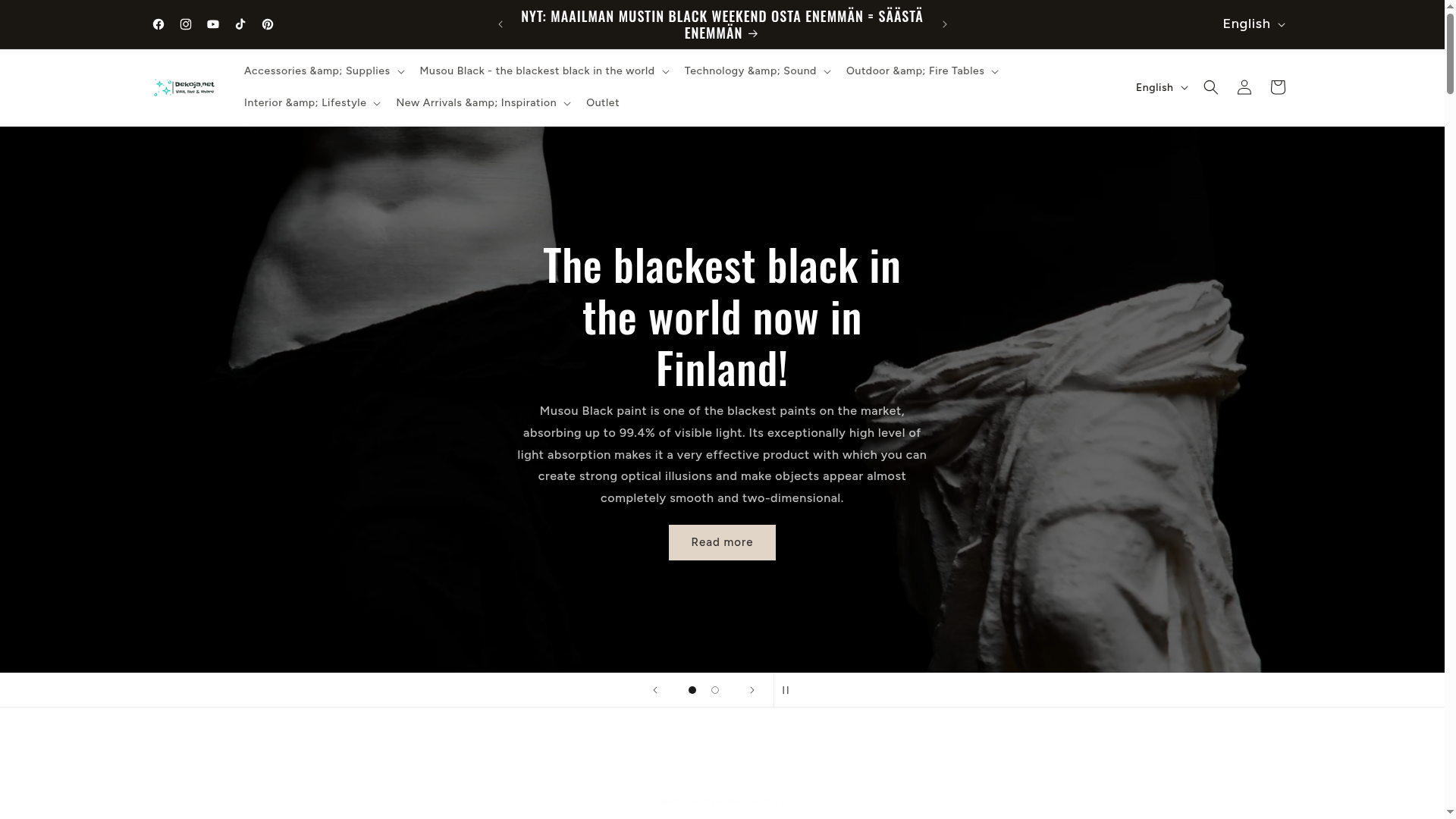
Experience how Musou Black transforms your space into a visual experience stage. Also explore technical solutions for restaurant interior design and our lighting range. With Lightning , you get the perfect contrast of light and shadow. Find more inspiration and technical quality on our website and start creating a space that will be remembered. Take the first step today and visit Dekoja.net !
Frequently Asked Questions
What is the concept of deep black in interior design?
Deep black is a color used in the design and interior design industry that absorbs light and creates visual depth and contrasts in spaces.
How is Musou Black different from traditional deep black?
Musou Black is an innovative material that absorbs up to 99.4% of visible light, creating an extremely deep black effect compared to traditional deep black materials.
How can I use deep black in my interior design without making the space feel oppressive?
Deep black should be used judiciously on strategic surfaces, such as individual walls or furniture, and combined with lighter colors to balance the space.
What are the benefits of deep black in terms of acoustics?
Deep black dampens sounds, creating a calm environment and improving the acoustic performance of a space, especially in public spaces such as restaurants.
Recommendation
- Deep black as a vibration – The power of visual contrast in spaces – Dekoja.net
- Deep black as a color – The power of visual contrast in spaces – Dekoja.net
- Deep black as a vibration – The power of visual contrast in spaces – Dekoja.net
- Deep black as a vibration – The power of visual contrast in spaces – Dekoja.net