

Using Deep Black in Interior Design: Create an Impressive Space
The atmosphere of a space is created by small choices, and the use of deep black offers the opportunity to create a bold, distinctive interior for restaurants and design accommodations in Central Europe. The interplay of materials and lighting is crucial, as the perfect balance of color-material pairs changes the character of the entire space . Here you will find practical tips for utilizing the color black when the goal is an impressive and finished visual appearance.
Table of contents
- Step 1: Choose the right deep black materials and surfaces
- Step 2: Design lighting to enhance the depth of black
- Step 3: Prepare the surfaces of the space for careful treatment
- Step 4: Apply Musou Black and ensure a flawless finish
- Step 5: Test the effect of lighting and contrasts in the space
Quick Summary
| Key point | Explanation |
|---|---|
| 1. Choose matte materials | Matte materials create depth and contrast, enhancing the impact of black in a space. |
| 2. Design layered lighting | Combine general lighting, spotlights, and accent lighting to bring out the textures and depth of a black surface. |
| 3. Take care of surface preparation | Careful cleaning and leveling are key to successfully applying black paint. |
| 4. Test the lighting from different angles | Experiment with different light sources and directions to see how lighting affects black surfaces. |
| 5. Use the right application tools | High-quality tools, such as a micro-receipt roller or a special brush, guarantee a smooth and flawless finish. |
Step 1: Choose the right deep black materials and surfaces
Choosing materials for deep black in interior design requires careful consideration and an understanding of the true power of the color. Color and material combinations significantly affect the mood and visual appearance of a space.
Start by choosing materials that complement the deep black naturally. Opt for matte materials like mineral paints, specialty fabrics, or untreated wood that create depth and contrast. Consider materials with different textures: shiny metal, rough concrete, or velvety fabric can add interesting layers to a black surface.
Pay special attention to the reflective properties of the materials. The less light a surface reflects, the deeper and more mysterious the space will appear. This means that matte materials often work better than glossy surfaces.
Pro tip: Test materials in a small area first to see how they behave in different lighting and times of day.
Here is a comparison of the properties and uses of different black interior materials:
| Material | Reflectivity | Texture | Recommended use |
|---|---|---|---|
| Matte paint | Very low | Smooth or slightly rough | Walls, ceilings |
| Velvet fabric | Low | Soft, deep | Curtains, upholstery |
| Shiny metal | High | Smooth, shiny | Details, decorations |
| Rough concrete | Low | Rough, alive | Floors, accent walls |
| Untreated wood | Medium level | Natural | Furniture, wall panels |
Step 2: Design lighting to enhance the depth of black
Lighting design in black spaces requires careful consideration and an understanding of the importance of light. Using layered lighting strategies, you can create depth and atmosphere that highlights the stunning qualities of black surfaces.
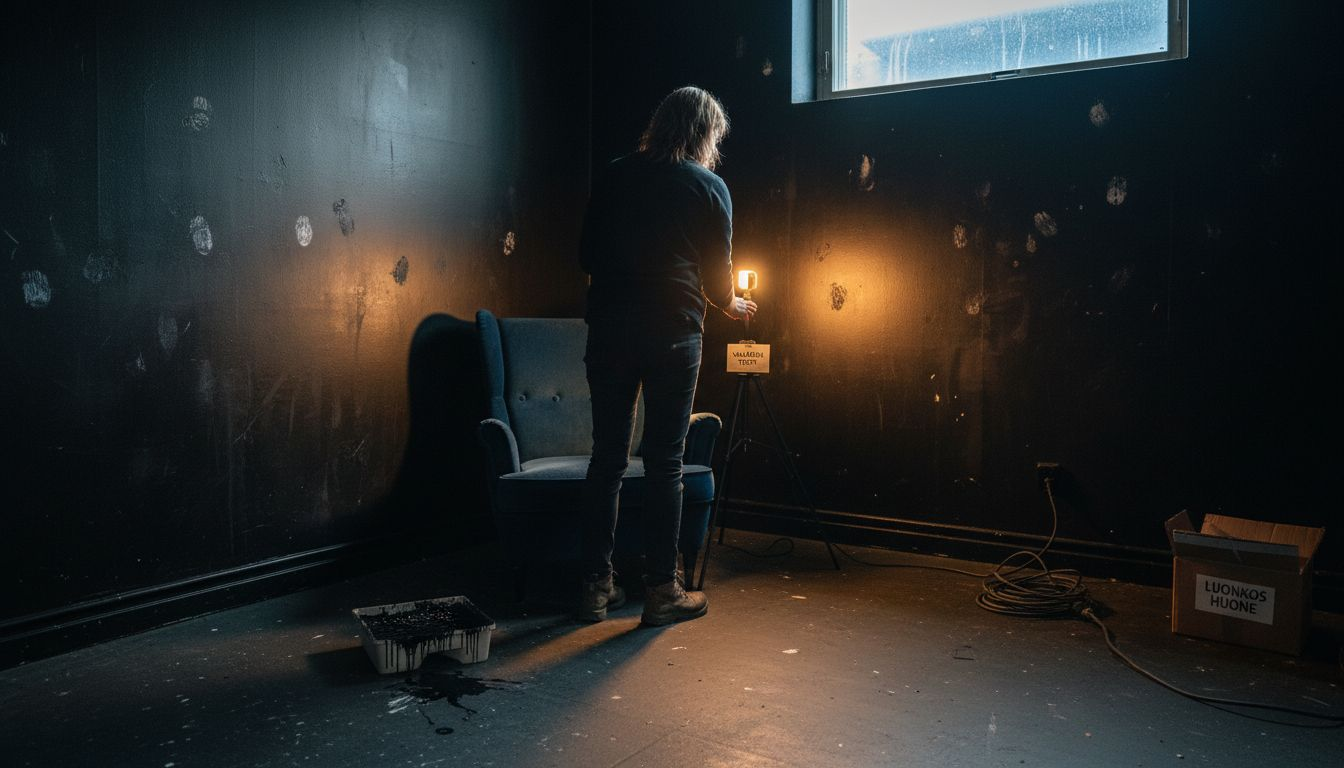
Use three basic lighting types harmoniously: general lighting, spotlights and accent lighting. General lighting creates the basic lighting in a space, spotlights emphasize specific areas and accent lighting brings out the textures and depth of black surfaces. Opt for warm-toned LED lights that bring out the soft nuances of black surfaces.
Pay attention to the direction and intensity of the light. Sidelights and indirect lighting work best in dark spaces because they create long shadows and highlight surface textures. Consider wall-mounted fixtures that point up or down to create dramatic shadows and add depth to the space.
Pro tip: Use dimmable lights to adjust the light intensity and create different moods in a dark space.
Below is a summary of lighting types and their effects in a black interior:
| Lighting type | Impact on the space | Suitable location |
|---|---|---|
| General light | Levels the basic lighting | Ceiling, whole room |
| Spotlight | Emphasizes details | Certain areas, objects |
| Accent light | Texture highlighting | Walls, surfaces |
| Indirect light | Softens shadows | Moldings, ceiling borders |
Step 3: Prepare the surfaces of the space for careful treatment
Preparing the surfaces of the space is a crucial step before introducing black. Thorough pre-treatment of the surfaces ensures that the end result is high-quality and impressive.

Start with a thorough cleaning. Remove all dirt, dust and grease from the surfaces using a suitable cleaning agent. Check the condition of the surface and repair any dents, cracks or unevenness. Sand the surfaces until smooth and remove any old paint layers. Pay special attention to creating a smooth and even surface, as any imperfections will be clearly visible on black surfaces.
Use a primer to improve paint adhesion and even out the surface. Choose a primer that is compatible with deep black paint. Apply the primer carefully and allow it to dry completely before moving on to the next step. Remember, careful preparation is the key to a successful finish.
Pro tip: Use a white primer under black surfaces for a deeper, more even finish.
Step 4: Apply Musou Black and ensure a flawless finish
Applying Musou Black requires precision and care. The blackness of Musou Black means that every brush stroke and technique affects the final result.
Choose the right tool for applying the paint. Use a high-quality micro-grain roller or a special brush, which ensures a smooth and even surface. Apply the paint in thin layers using long, parallel strokes. Do not use too much paint at a time, but let each layer dry completely before applying the next. This will prevent run-off and ensure an even finish.
Pay special attention to lighting during application. Good lighting will help you see any unevenness and mistakes. Check the surface from different angles and make sure the paint has spread evenly. Remember that Musou Black absorbs up to 99.4% of light, so any mistakes will be clearly visible.
Pro tip: Use an LED light with a cool color temperature during application – it helps reveal even small irregularities.
Step 5: Test the effect of lighting and contrasts in the space
Testing lighting in a deep black space requires a systematic approach. The importance of contrast in interior design is crucial when you want to create a dramatic and deep space.
Start by experimenting with different light sources. Use spotlights to direct light from different angles onto black surfaces. Try side lighting to create long shadows and highlight the texture of surfaces. Explore how the color temperature of the light affects the tone of black: cool white lights bring out the depth of black, while warm yellow lights soften the surface.
Pay attention to the reflection of light and the formation of shadows. Musou Black has the unique property of absorbing up to 99.4% of light, so even small changes in lighting are clearly visible. Test the lighting at different times of day and in different weather conditions. Move the lamps to see how the light and shadow change and create different visual effects.
Pro tip: Use a digital camera to document your lighting experiments and compare the effects of different lighting setups.
Create a Deep Black Space Effect on a New Level
Deep black in interior design offers a unique opportunity to bring dramatic depth and pure contrast to a space. However, the challenge is finding materials and lighting solutions that truly enhance the depth of black without distracting reflections. The article's instructions on applying Musou Black and designing lighting will open the way to a completely new kind of spatial experience.
If you are looking for an impressive, non-reflective black surface depth and -
Interior design and lifestyle – modern lamps, paintings and design products – Dekoja.net

Take a step towards impressive space design with Musou Black. Dekoja.net offers everything you need in the form of the world's blackest paint family and materials. You can also find lighting solutions that emphasize black and take the atmosphere of your space to a new level. Explore the selection and professional support at Dekoja.net and create a space that will be remembered today.
Frequently asked questions
Why is choosing deep black materials important in interior design?
Choosing deep black materials is important because they significantly affect the mood and visual appearance of the space. Choose matte materials, such as mineral paints and velvet fabrics, which create depth and contrast in the space.
How does lighting affect the atmosphere of a deep black space?
Lighting plays a crucial role in the mood of a space, especially with deep black surfaces. We recommend experimenting with different lighting solutions, such as indirect lighting or spotlights, to create interesting shadows and depth in the space.
How to prepare surfaces before applying black paint?
Prepare the surfaces thoroughly by cleaning and smoothing them. Sand the surfaces smooth and use a primer to improve paint adhesion before applying the black paint.
What is the special feature of Musou Black in terms of interior design?
Musou Black is known for its ability to absorb up to 99.4% of light, making it a unique black paint product. Apply the paint in thin layers to ensure a flawless finish and notice how light and shadow affect the surface textures.
How to test the effect of light and contrast in deep black mode?
Test the effect of light by moving different light sources and observing how they highlight the textures of the black surface. Experiment at different times of day and weather conditions to see how light and shadow change and create different visual effects.
What are the best practices for decorating a deep black space?
Apply the basic principles of three types of lighting: general lighting, spotlighting, and accent lighting. Create a space where the lighting enhances the beauty of the black surface, and use different materials to add texture.