

Deep black interior design – How it changes the mood of a space
How does it feel to step into a restaurant where every surface directs your gaze exactly where you want it to go? Interior and space design professionals in Central Europe are constantly looking for solutions that make a space dynamic and unforgettable. The deep black material allows for almost perfect light absorption and provides a contrast that deepens the visual impression and enhances lighting control. This article explores the technical properties of deep black and its role in creating atmosphere in European restaurants and showrooms.
Table of contents
- Definition and properties of deep black material
- The role of contrast and visual effects
- Accentuating lighting on a deep black surface
- Applications in restaurants and exhibitions
- The most common challenges and mistakes when using deep black
Key findings
| Paragraph | Detail |
|---|---|
| The uniqueness of the deep black material | The deep black material absorbs up to 99.4% of visible light, creating an intense visual effect. |
| The importance of contrast | Well-controlled contrast can change the mood of a space, creating excitement or calmness. |
| The role of lighting | Strategically placed light sources enhance the effect of deep black, making the space adaptable. |
| Operational challenges | Too much deep black can make a space feel heavy, so it's important to consider using it with other elements. |
Definition and properties of deep black material
Deep black material is a technically complex surface solution that differs significantly from standard black coloring. Deep black refers to materials that absorb almost all visible light, creating an exceptionally dark and contrasting surface.
The materials have several key properties that make them unique:
- Very high light absorption capacity (up to 99.4%)
- Minimal reflection
- Deep, three-dimensional visual impression
- Fire-safe properties such as B-s1, d0 classification
The physical properties of a deep black material are determined by its density and light absorption . These factors allow the surface to produce a completely absorbing, deep and intense black tone.
Below is a summary of the significant differences between deep black material and regular black:
| Feature | Deep black material | Plain black material |
|---|---|---|
| Light absorption | Almost perfect, up to 99.4% | Moderate, noticeable reflections |
| Visual impact | Three-dimensional, very intense | Traditional, matte or glossy |
| Fire safety | Often B-s1, d0 classification | May vary, not always tested |
| Intended use | Special effects, depth, contrast | Basic interior, general background |
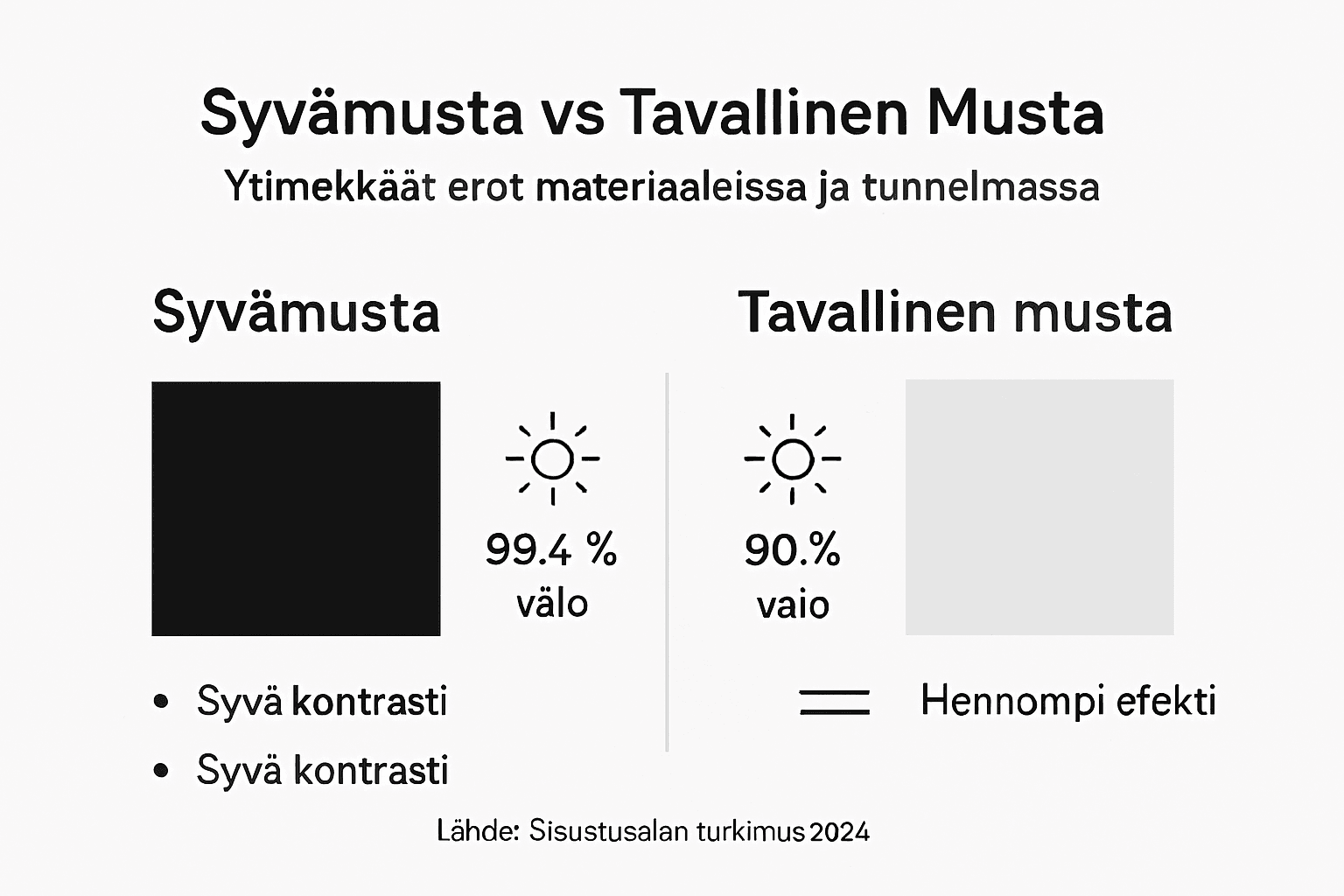
Technically, deep black is achieved through special coatings and material choices designed to minimize light reflection. This means microstructures that absorb light instead of reflecting it back.
Pro tip: Always choose a deep black material carefully, considering the space, as it has a significant impact on the atmosphere and lighting of the space.
The role of contrast and visual effects
Contrast is a fundamental element of the atmosphere and aesthetic experience of a space, radically shaping the visual dynamics of the space. It is not a simple difference between colors, but a complex interaction between light, shadow and surfaces.
The sensory experience of a space is created through contrast, where key visual elements create tension and depth:
- The interaction of light and shadow
- Differences in surface textures
- Relative intensity of colors
- Contrast between geometric shapes
The color black has a special ability to create depth and drama. The light and views from the window act as contrast builders that can either expand or contract the experience of a space. In this interaction, the deep black surface material acts as an empty space, deepening and emphasizing other visual elements.
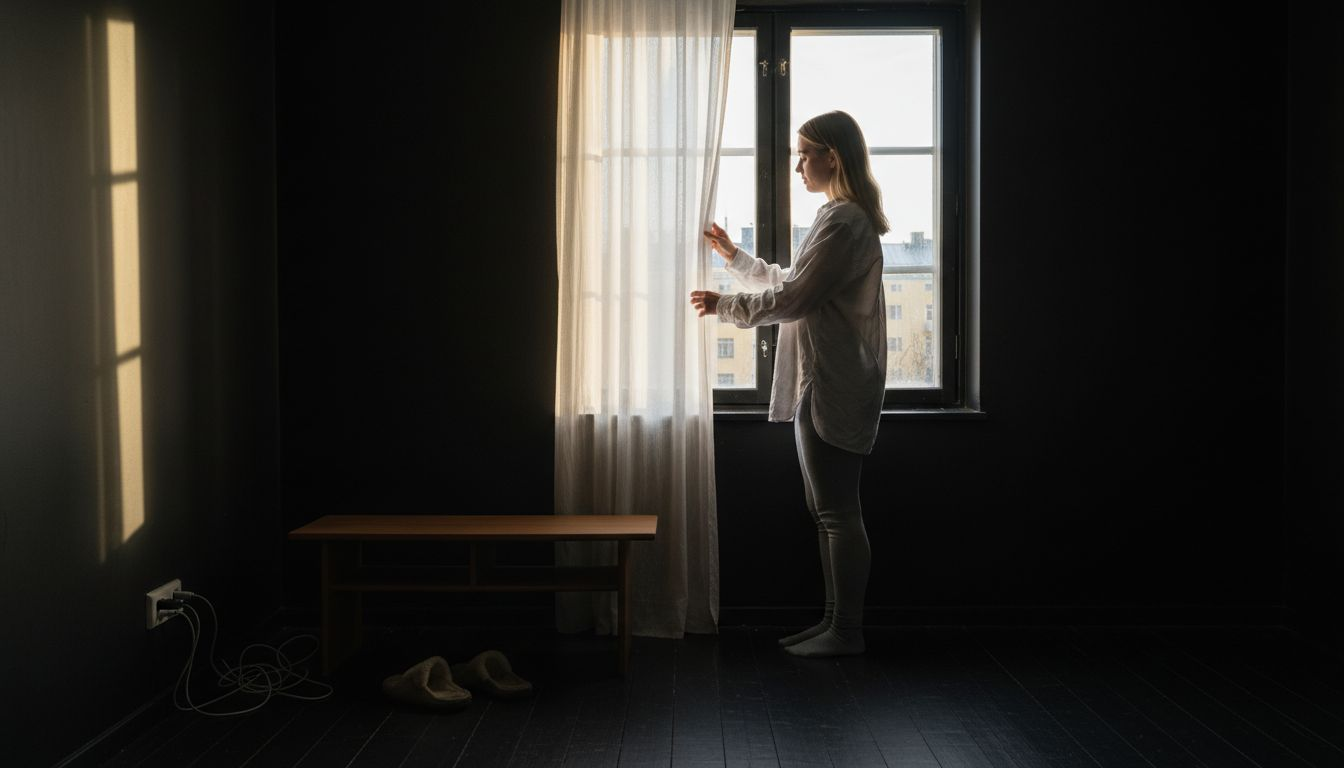
The psychological dimension of contrast is as important as its aesthetic function. It directly affects the emotional state of the user, calming or stimulating depending on the intensity of the contrast and how it is implemented. Skillfully controlled contrast can completely transform a space – creating a sense of intimacy or openness.
Pro tip: Use contrast judiciously, don't overdo it – even small visual tensions can create significant mood shifts.
Accentuating lighting on a deep black surface
The deep black surface acts like an optical instrument that transforms the behavior of light in a space in a completely unique way. It not only absorbs light, but also creates a dynamic interaction between light and surface, where each ray of light shapes the atmosphere of the space.
Strategic placement of light sources is crucial in a deep black interior. Key lighting elements include:
- Soft, focused lighting solutions
- Indirect lighting
- Dimmable wall lights
- Point-like spotlights
- LED strips to highlight textures
Low-light technology allows the subtle texture of deep black surfaces to be brought out. The less light, the more the deep black surface seems to absorb all the light, creating a mystical effect.
The ability to adjust lighting is key to a successful outcome. Controlling the intensity and direction of light allows you to create a completely transformative space – a peaceful work environment or a dramatic stage.
Pro tip: Use at least three different light sources to create depth and multi-dimensionality on a deep black surface.
Applications in restaurants and exhibitions
Deep black interior design is revolutionizing the visual appearance of restaurants and showrooms, creating entirely new types of experiential environments. It is no longer just a color, but a strategic design tool that can control the atmosphere of the space and the user's perception.
Modern restaurant interior design solutions utilize deep black in the following ways:
- Creating intimate dining spaces
- Building dramatic accent walls
- Visually highlighting food and drinks
- Serving as a luxurious backdrop
- Deepening the customer experience
The visual design of exhibition spaces benefits from deep black material, especially when presenting works. The dark background acts as an optical tool that directs the eye to the exact desired object.
In restaurants, deep black material can serve both aesthetic and functional purposes – it blurs distracting details and creates depth and mystery in the space. In exhibitions, the same principle highlights artworks, creating a valuable and intense backdrop for them.
The following table illustrates the specifics of using deep black in restaurants and showrooms:
| Application | Desired atmosphere | Design focus | Potential challenges |
|---|---|---|---|
| Restaurants | Intimate, elegant | Lighting flexibility | The wrong scale makes the space feel heavy |
| Exhibition spaces | Dramatic, highlighting | Highlighting works | Too much darkness can blur details |
Pro tip: Use deep black as a material judiciously and in small doses – a few well-chosen elements are enough to create a dramatic effect.
The most common challenges and mistakes when using deep black
Deep black interior design is a technically demanding solution that requires precise planning and an understanding of the material's behavior. Most interior designers make mistakes that can ruin the entire atmosphere of the space.
The most common mistakes when using deep black are:
- Covering too much area with deep black
- Poor lighting design
- Lack of textures and depth
- Complete fading of contrast
- Material incompatibility
Managing visual contrast requires the judicious use of deep black. It is not just a color, but a strategic element that shapes the perception of space.
Incorrect implementation can lead to a space that feels oppressively heavy or completely impersonal. Deep black requires lighter elements alongside it to create liveliness and depth to the space.
Pro tip: Test the deep black material on a small scale first and observe how the light behaves at different times of the day.
Deep black interior and perfect harmony of lighting with Dekoja.net solutions
The use of deep black material brings a dramatic and profound atmosphere to the space, but requires careful lighting design and contrast control to achieve a successful end result. The article highlighted challenges such as the lack of suitable lighting and the oppressive impression created by the large black surface area. Dekoja.net offers solutions for this, such as high-quality lamps and the Musou Black paint family, which allows maximum light absorption and emphasizes contrast in a way that completely changes the visual experience of the space.
Bring depth and visual purity to your design that will stay with you by choosing Dekoja.net's modern deep black materials and lighting solutions. Explore our selection and find the right products for your project now at Dekoja.net Don't let lighting or materials limit your creativity, take the first step to a new kind of space experience today.
Frequently Asked Questions
What is deep black material and its key properties?
Deep black material is a technical surface solution that absorbs almost all visible light, creating an extremely dark and contrasting surface. Its key characteristics are high light absorption, minimal reflection, and a deep visual impact.
How does deep black interior design affect the atmosphere of a space?
Deep black interior design creates an intense and dramatic atmosphere that can significantly change the experience of a space. It affects the interplay of light and shadow, creating depth and contrast, making the space more interesting and dynamic.
What are the best lighting solutions with a deep black surface material?
Recommended lighting solutions with deep black include soft and focused lighting solutions, indirect lighting, dim wall lights, and point-like spotlights that emphasize the textures of the space.
What are the challenges associated with using deep black in interior design?
Typical challenges include covering too much surface area with deep black, poor lighting design, and lack of contrast. Thoughtful use and consideration of light behavior can prevent a space from feeling oppressive or impersonal.