

Deep black: The essence of visual experience in interior design
Every restaurant designer in Central Europe faces the challenge of creating a space with unique visual depth and contrast. Conventional matte black materials simply do not meet the demanding aesthetic requirements. Deep black absorbs up to 99.4 percent of light , making it much more than a color – it changes the atmosphere, lighting and architectural details of a space. In this article, you will get a clear understanding of the physical basis of deep black, its differences from traditional solutions, and insights to avoid misunderstandings.
Table of contents
- Deep black – concept, physical basis and misconceptions
- Musou black and other deep blacks: differences and uses
- The effect of deep black on space and contrasts
- Practical applications in restaurants and showrooms
- Risks, challenges and mistakes when using deep black
Key considerations
| Paragraph | Detail |
|---|---|
| Deep black is not just a color | It is a combination of technology and special materials that absorb light and create a three-dimensional effect. |
| The difference between Musou Black and regular black | Musou Black offers significantly better light absorption levels, which affects the visual experience of the space. |
| Contrast is key | Deep black creates a strong contrast with other colors and lighting, enhancing the visual richness of the space. |
| The importance of lighting | Without adequate lighting, deep black can make a space feel dark and uncomfortable, so lighting is essential in the design. |
Deep black – Concept, physical basis and misconceptions
Deep black is much more than just a color. It is a physical phenomenon that differs from ordinary surfaces in a significant way. When we talk about deep black, we mean materials that absorb up to 99.4 percent of visible light. The rest of the light is not reflected back to our eyes, but disappears into the material.
Light absorption and lack of it form the physical basis of deep black. A typical matte black surface reflects about 5–15 percent of light randomly in different directions. Deep black, on the other hand, covers its surface with small structures that capture light and convert it into heat. This makes the material appear three-dimensionally deeper and more dimensional.
But this is where the misunderstanding comes in. Many people think that deep black is a simple color that can be achieved with a regular black paint. This is not the case. According to scientific misunderstandings, people often have incorrect perceptions of natural scientific phenomena. This is partly due to incorrect previous education and partly to a misinterpretation of scientific language.
For restaurant interior designers, this difference means that plain black will never create the same visual impact. The space looks flat and two-dimensional. When you use deep black, the viewer feels it, even if they don’t know why. The contrast increases dramatically, the lighting becomes visible, and the space gains depth.
Avoiding misconceptions starts with understanding what you're really buying. Deep black is a technology and a material family, not just a color. It absorbs light through its physical structures. Regular matte black, on the other hand, reflects light and easily creates a fragmented, thin appearance.
Pro tip _When choosing a deep black for your restaurant interior, test the material first in your own space under different lighting conditions. This way you can see the real difference compared to regular matte black and understand why it costs more.
Musou Black and other deep blacks: Differences and uses
There are many options in the world of deep black, but not all are created equal. Musou Black stands out radically. It absorbs up to 99.4 percent of visible light, making it almost perfect light absorption. Other traditional black materials lag far behind with their own 5-15 percent reflectivity.
Why is this difference significant in interior design? Musou Black's optical properties create a dramatic visual experience that regular black can never replicate. When light hits Musou Black, it doesn't randomly reflect off of the surface. Instead, the surface absorbs the light, creating the illusion of depth and making a space appear more three-dimensional.
In restaurants, the difference is tangible. Musou Black makes other colors appear brighter and more vibrant. Lighting stands out naturally because the contrast is so significant. When you use regular matte black, the space has an uneven appearance because the light reflects differently in different places. With Musou Black, you get consistent, professional lighting behavior.
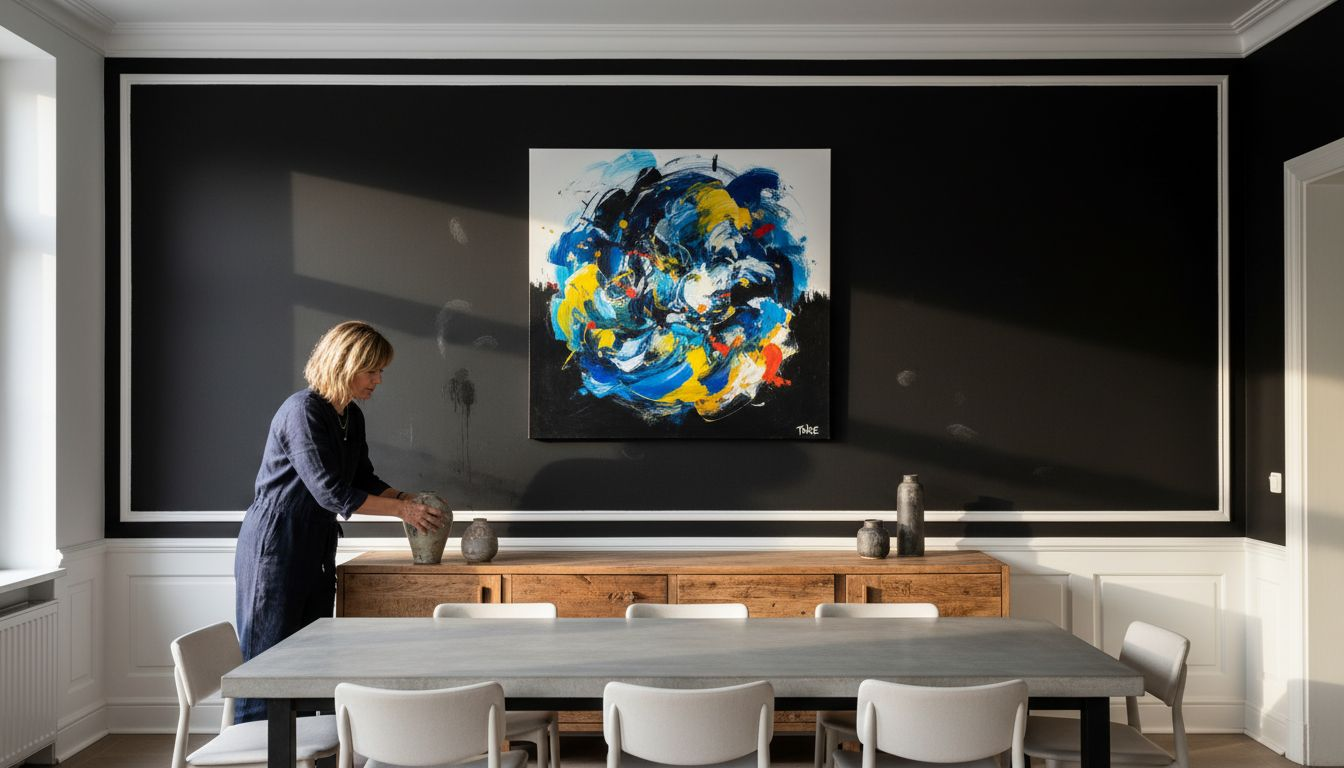
The differences are not limited to light absorption. Musou Black adapts to modern interior trends in a way that traditional solutions cannot. It is a choice that signals design professionalism and thoughtful visual planning.
Talking about the intended use is important. Musou Black is particularly suitable for spaces where high visual contrast and a dramatic atmosphere are desired. In a restaurant, it works perfectly on background walls, accent walls and dramatic elements where you want to direct attention. Plain black is better suited for neutral backgrounds where you don't want too much drama.
Professional Advice _Choose Musou Black where you want maximum contrast and visual depth, and regular black for neutral backgrounds that don't compete with other elements.
Below is a summary of the differences between Musou Black and regular black in practical terms:
| Feature | Musou Black | Plain matte black |
|---|---|---|
| Light absorption | Up to 99.4% | 5–15% |
| Visual impact | Extreme contrast and depth | Flat, two-dimensional look |
| Suitable applications | Backgrounds, effects | For neutral, large surfaces |
| Design signal | Top design, distinctiveness | Traditional, discreet |
The effect of deep black on space and contrasts
Deep black is not just a color. It is a structural material that changes the psychological and visual reality of a space. When deep black enters a space, the change that occurs is immediate and dramatic. The space becomes more structured, deeper, and more three-dimensional.
Contrast is the key to everything. Deep black creates a strong contrast to other colors and lighting. When you use deep black as a backdrop, everything else in the space suddenly becomes brighter and more defined. Lights, colors, and shapes are naturally emphasized, without you having to do anything else. Contrast does the visual work for you.
In terms of restaurant architecture, deep black is an offensive tool. It can highlight a beautiful high ceiling line or hide an uninteresting structure. When you want to direct your guests’ gaze in a certain direction, deep black does it effectively. It’s like a question to the eyes, to which the viewer automatically answers.
The atmosphere changes all the time. With deep black, the space becomes more intimate, more determined, more thoughtful. It is not aggressive, but rather invites you in. Guests feel like they are in a special place, where the designers have thought through every detail.
Finding balance is critical. Too much deep black makes a space feel dark and oppressive. Deep black works best as accents and in strategic locations. The background wall can be black, but tables and seating require other shades. Lighting should be planned consciously, as contrast requires light to be visible.
Professional advice Start in a smaller area by testing deep black on one wall, and see how it affects the space at different times of day and lighting situations before implementing it on a larger scale.
Practical applications in restaurants and showrooms
Deep black is not just a theoretical concept. It is a concrete solution that transforms spaces in everyday use. However, applying deep black in restaurants and showrooms requires consideration and planning.
In a restaurant, deep black works best in strategic locations. Background walls distract the eye and make the food look more appealing. When lighting hits the food against a contrasting black background, the food appears visually brighter and more colorful. Customers take better pictures of their food for social media, which is the unwritten gold of marketing.
In exhibition spaces, the use of deep black is more systematic. Spotlights and hanging devices achieve maximum visibility of the artworks. The black background acts as a framer, isolating the artwork from the rest of the world. The visitor focuses solely on the artwork, because nothing else competes for attention. The exhibition space becomes their own.
In restaurants for different reasons. Customers have not come to look at the wall but to enjoy the food and drink. Deep black helps to create an atmosphere and emphasize selected elements. The restaurant's logo, interior design image or lighting can shine with deep black. The space becomes a theater where everything works together.
On a practical level, this means not painting the entire space black. Choose one or two surfaces in a deep black. A background wall and possibly an accent wall are enough to create the desired effect. Lighting is critical. Without light, deep black does nothing. Plan lighting first, then color.
The size and height of the space also play a role. Small spaces can use deep black, but it requires more lighting to compensate. High ceilings allow for bolder choices. A low space can easily feel cramped if black is used in too large an area.
Professional advice Start with a deep black on one wall and add lighting to that area and its surroundings to keep the space feeling open.
Risks, challenges and mistakes when using deep black
Deep black is a powerful tool, but its misuse can quickly ruin a space. Many interior designers make the same mistake. They see the dramatic potential of deep black and use it too broadly, too aggressively. The result is failure.
The biggest risk is that the space becomes too dark and closed. When customers enter a restaurant, they want to feel welcome, not trapped. Too much deep black creates an oppressive atmosphere that makes guests want to leave quickly. This is a direct threat to business.
Another mistake is uncontrolled material selection. Deep black works well with paints and sharp-edged surfaces, but a glossy black surface does the opposite. It reflects light inconsistently and makes the space feel heavy. The texture and gloss of the material determine whether the space looks inviting or offensive.
Lighting is the third big risk. Without enough light, deep black will just absorb light and make the space dark. Customers will sit in the dark and drink their drinks. This is not the dramatic, atmospheric experience you wanted. Lighting design with deep black needs to be proactive, not an afterthought.

The fourth mistake is geometric. In small spaces, deep black makes it even smaller. Under low ceilings, it creates a heavy atmosphere. With these situations, special consideration is needed and often smaller surfaces or lighting to compensate.
The fifth mistake is an imbalance in colors. Deep black requires light and bright colors nearby to work. If you use it with a neutral gray, the space will look informal and impractical. High contrast is essential.
The following table summarizes the most common mistakes in using deep black and their effects on the space:
| Error | Impact on restaurant facilities |
|---|---|
| Too large an area | The space feels dark and cramped. |
| Insufficient lighting | Customers perceive the environment as dark |
| Wrong gloss level | Uneven appearance of surfaces |
| Imbalance in colors | The whole thing looks dull. |
Professional advice Always test the use of deep black in a small area and lighting before committing to large surface areas, and ask for customer feedback on concrete experiences.
Deep black in the interior to a new level with Musou Black
Deep black is the key to visual depth and dramatic contrast that ordinary matte black cannot provide. If you dream of a restaurant or showroom where light disappears and the atmosphere of the space is elevated to a new level, Musou Black is the solution. It absorbs up to 99.4% of visible light, making the space three-dimensional, impressive and unique.
Explore our selection of interior design and experience the influence of Musou Black for yourself.
Don't settle for plain black when you can choose the blackest material in the world. Your guests will experience the space differently and stay longer to enjoy the moment. Explore our offering and let us help you create a restaurant or exhibition space that will be remembered. Find more solutions at Dekoja.net or directly Musou Black fabrics here .
Frequently Asked Questions
What makes deep black special compared to regular matte black?
Deep black absorbs up to 99.4 percent of visible light, while regular matte black reflects 5 to 15 percent. This creates stronger visual contrast and depth in a space.
How does the use of deep black affect the atmosphere of a restaurant?
Deep black creates a more intimate and inviting atmosphere, which can enhance the customer experience. It also helps to highlight other visual elements, such as lighting and color.
What are the best uses for deep black in interior design?
Deep black works great for backdrops and effects where you want to create high visual contrast and depth. It can also accentuate light and colors in the environment.
What mistakes should be avoided when using deep black in interior design?
The most common mistakes are using too much surface area, insufficient lighting, the wrong gloss level, and an imbalance in colors, which can lead to a gloomy and oppressive atmosphere.