

Finnish design – The competitive advantage of visual contrast
How can Finnish design offer a completely new kind of experientiality and visual contrast to spatial design and restaurants in Central Europe? By combining minimalist design, nature-based materials and long-lasting quality, a Nordic aesthetic is created, where every detail is a meaningful part of the user experience . This article reveals why the foundations and innovations of Finnish design bring a competitive advantage and inspire bold solutions.
Table of contents
- The meaning and foundation of Finnish design
- Natural materials and minimalist design
- Innovative solutions and new trends 2026
- Visual contrast in spatial design
- Musou black – enhanced visual experience
- Responsibility, sustainability and international competitive advantage
Key findings
| Paragraph | Detail |
|---|---|
| The basics of Finnish design | Minimalism, functionality and closeness to nature are key elements of Finnish design. |
| Innovative trends | In 2026, the focus will be on smart technology, adaptability and ecology in design. |
| The importance of responsibility | Responsibility is a strategic competitive advantage that improves brand reputation and customer relationships. |
| Visual contrast | Contrast in spatial design serves as a strategic tool that creates experiences and guides the user experience. |
The meaning and foundation of Finnish design
Finnish design is much more than just products - it is a national identity and a form of cultural expression. Over the decades, Finnish design has developed into a minimalist, natural and high-quality art form that reflects Finnish values and aesthetic vision.
The basic pillars of design can be divided into three key elements:
- Minimalism : A minimalist design where every detail has meaning.
- Functionality : Balance of form and usability
- Closeness to nature : The organic connection of materials and forms to the environment
Historically, Finnish design has emerged from the need to create beautiful, practical solutions in harsh Nordic conditions. The fundamental characteristics of Finnish design emphasize timelessness and durability, which is reflected in classic objects such as the works of Tapio Wirkkala and Alvar Aalto.
Today, Finnish design continues to reinvent traditional aesthetics. Young designers bring boldness and innovation to design, while respecting the long design tradition. This means taking into account both technological and ethical perspectives in product design.
Pro tip: Authentic Finnish design always combines both aesthetics and functionality – remember that good design serves its user.
Natural materials and minimalist design
Finnish design is based on a deep-rooted nature-based mindset, where materials and shapes have a deeper meaning. Designers draw their inspiration directly from Finland's diverse nature - forests, seasonal changes and natural imperfections.
The key characteristics of natural materials are:
- Sustainability : Long-lasting and recyclable materials
- Origin : The authentic and pure essence of the raw materials
- Ethics : Responsible and environmentally friendly sourcing
According to Vepsäläinen's research , Finnish design emphasizes wooden materials, such as birch, which bring a natural and warm atmosphere to the interior. Simplified design does not mean boring, but carefully considered simplicity, where every shape and material has been carefully chosen.
Today's Finnish design combines traditional natural materials with modern technology. This means increasingly innovative solutions where ecology and aesthetics go hand in hand. Designers have learned to interpret nature in an increasingly diverse and creative way.
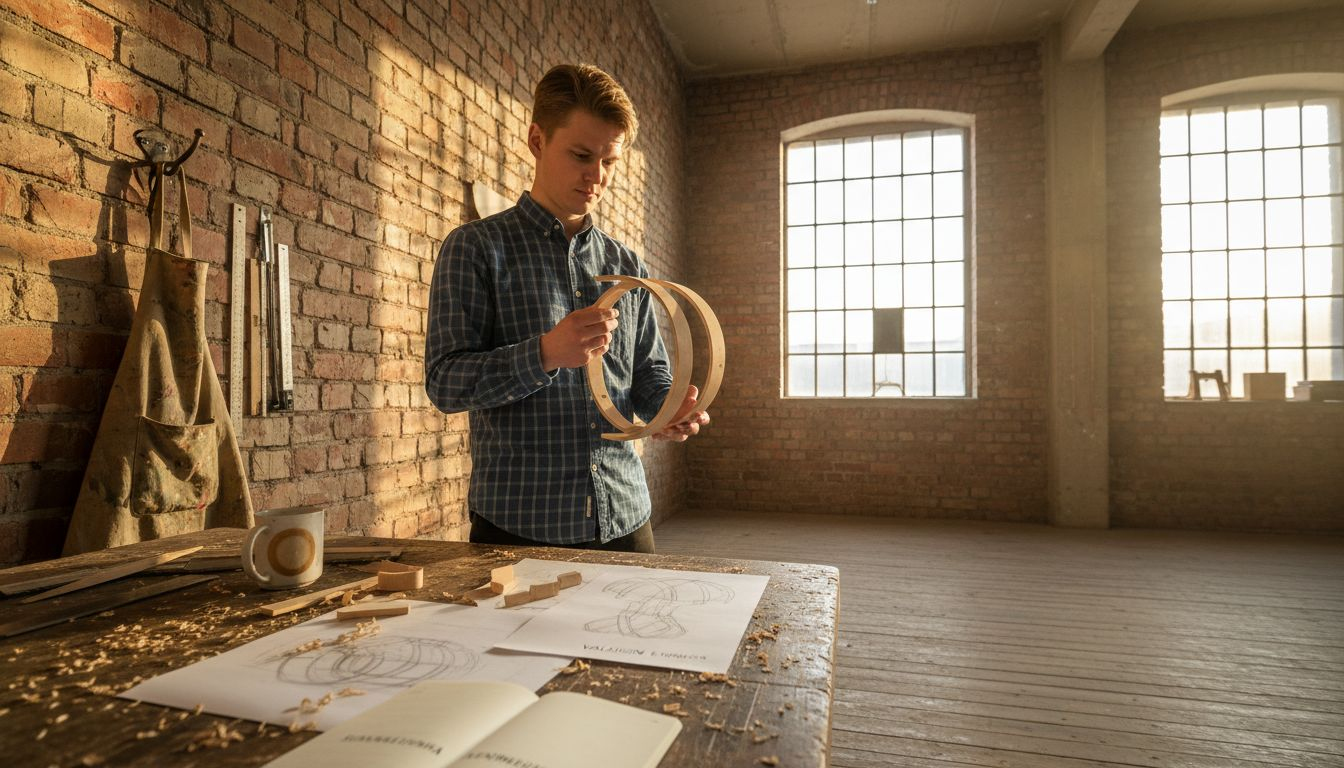
Pro tip: Choose materials for your interior that will last both physically and aesthetically – nature is our best teacher in quality design.
Innovative solutions and new trends 2026
Finnish design is undergoing a transformation where traditional values meet technological progress. The 2025 design trends show that innovation does not only mean technology, but design that supports holistic well-being and sustainability.
The key innovation trends in 2026 are:
- Smart technology : Integrated into the spaces naturally and functionally
- Adaptability : Spaces that adapt to the user's needs
- Ecology : Recyclable and long-lasting materials
New directions in Finnish design boldly combine traditional minimalism with modern technological solutions. Artificial intelligence supports the design process, but does not replace human creativity. This means intelligent design, where technology serves the user, not dominates them.
The design of the future is not just an aesthetic choice, but a strategic decision. It speaks of values, understanding and the ability to see beyond the present. Finnish designers are pioneers in this transformation, where technology, aesthetics and ecology go hand in hand.
Pro tip: Follow designs that challenge the status quo – true innovation comes from the courage to break away from the norm.
Visual contrast in spatial design
Visual contrast is much more than just an aesthetic choice – it is a strategic tool for creating spatial experiences and guiding the user experience. From an accessibility perspective, the importance of contrast goes beyond mere appearance – it is a key element in conveying information and the functionality of a space.
Key dimensions of contrast in spatial design:
- Color contrast : The skillful use of contrasting colors and tonal differences
- Brightness contrast : The dialogue between light and shadow
- Material contrast : Combining different surface materials
- Shape contrast : Variations in geometric shapes and lines
In spatial design, contrast acts as a multi-sensory tool. It not only creates visual tension, but also directs flow, evokes emotions, and delineates spatial experiences. High contrast can make a space feel energetic and stimulating, while softer contrast creates a calm and harmonious atmosphere.
Multidimensional contrast thinking means that the designer sees the space as a dynamic whole. Musta Dekoja.net is a great example of how perfect color contrast can create depth and drama in spaces.
Pro tip: Don't be afraid of contrast – it's the boldest and most expressive expression of design language.
Musou Black – enhanced visual experience
Musou Black is a revolutionary material that takes visual contrast to a whole new level. Musou Black's properties completely change the way we perceive space and light.
Key features of Musou Black:
- Absorption capacity : Absorbs up to 99.4% of visible light
- Depth : Creates an exceptionally deep and mysterious impression
- Versatility : Suitable for both indoor and outdoor use
- Anti-reflective surface : Minimizes distracting reflections
This material choice is not just an aesthetic choice, but a strategic solution to enhance the experience of spaces. The deep black color challenges traditional notions of how to perceive space by creating a completely new kind of visual experience.
Musou Black acts as a visual void that deepens all other elements in a space. It is not just a color, but a holistic design element that evokes emotions, guides the eye, and creates exciting contrasts.
The following table illustrates the differences between Musou Black and traditional black surfaces in spatial design.
| Feature | Musou Black | Traditional black paint |
|---|---|---|
| Light absorption | Very high (99.4%) | Moderate (80–90%) |
| Visual depth | Unique and mystical | Plain and neutral |
| Reflections | Virtually no reflections | Strong especially in direct light |
| Applications | Gallery, experience and effect surfaces | Base and background surfaces |
Pro tip: Use Musou Black judiciously – a few well-placed surfaces can change the mood of an entire space.
Responsibility, sustainability and international competitive advantage
Finnish design is more than just aesthetics – it is a philosophy that combines sustainability, innovation and social responsibility. Responsibility has become a significant source of competitive advantage for companies that can see beyond the appearance of a product.
The strategic cornerstones of responsible design are:
- Material choices : Recyclable and renewable materials
- Lifecycle thinking : Product longevity and repairability
- Transparency : Open communication about production processes
- Social responsibility : Ethical labor policy
Sustainability is no longer an optional feature, but a necessary condition in international competition. Finnish companies are already at an advantage because responsibility is an inherent part of our operating culture. This means that every design choice is considered not only aesthetically, but also ecologically and socially.
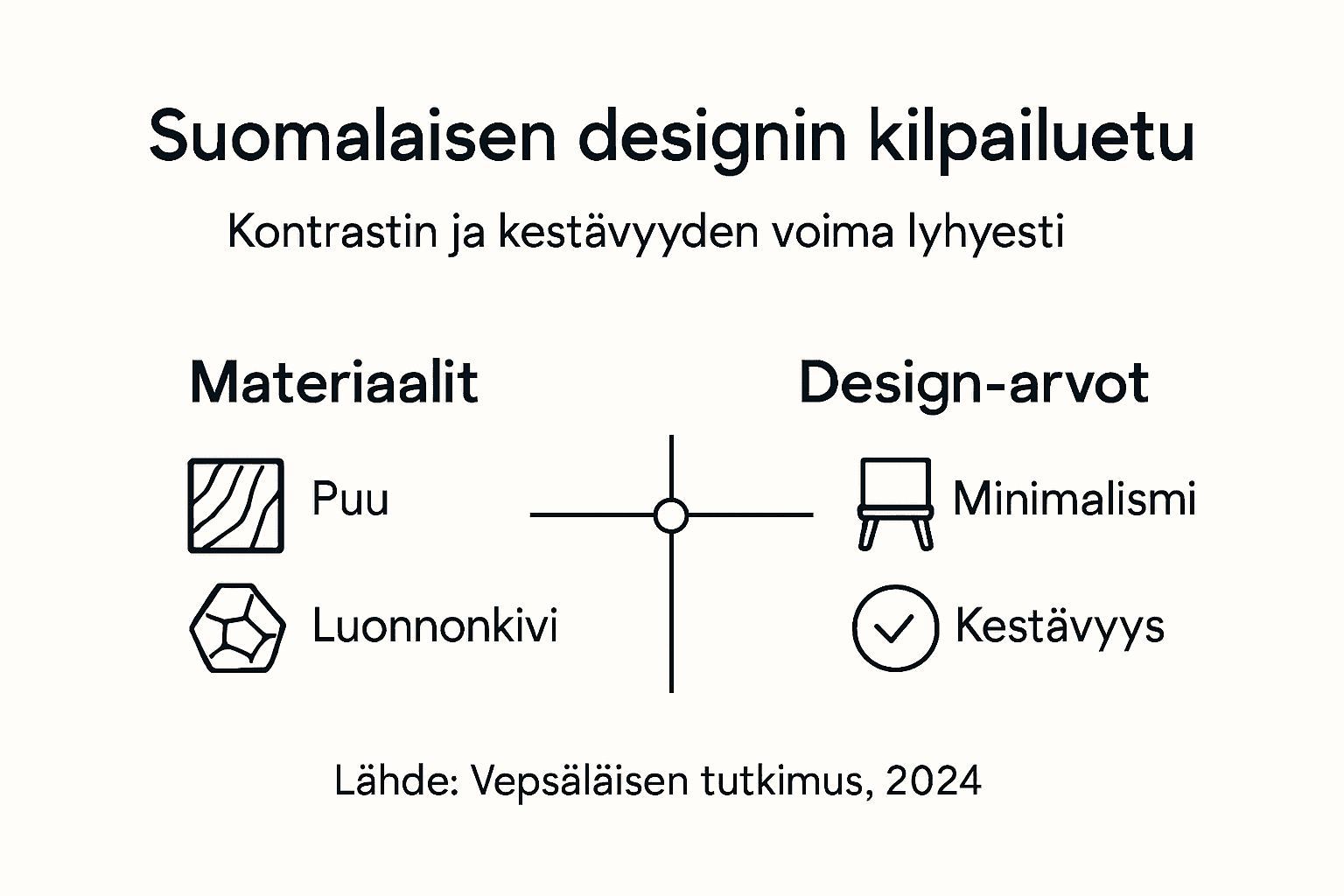
The table below summarizes four ways in which responsible design brings a competitive advantage to Finnish companies.
| Responsibility perspective | Business benefit | International influence | Example in practice |
|---|---|---|---|
| Material choices | Reduces costs and waste | Improves brand reputation | Recycled wood in interior design |
| Lifecycle thinking | Extends product life | Supports sustainability certifications | Furniture to be repaired |
| Transparency | Increase customer trust | Open new markets | Open production data on websites |
| Social responsibility | Improves job satisfaction | Strengthens the company's sustainability profile | Ethical working conditions |
The future winners are those who see responsibility as an opportunity – not a constraint. International competitive advantage comes from the courage to innovate our systems and challenge prevailing practices towards a more sustainable world.
Pro tip: Don't think of sustainability as a cost, but as a strategic opportunity to create more meaningful design.
Increase the Power of Visual Contrast in Spatial Design
Visual contrast is a competitive advantage of Finnish design, which sets your space apart from others and creates depth and experientiality. If you are aiming for spaces where light disappears and aesthetics speak strongly, get to know the world's blackest paint, Musou Black, and its unique properties. This way, you can offer users an experience that will be remembered and increase the competitiveness of your space.
Utilizing Musou Black requires the right materials and an understanding of lighting. We offer a comprehensive range of lighting and other design solutions that help maximize visual contrast.
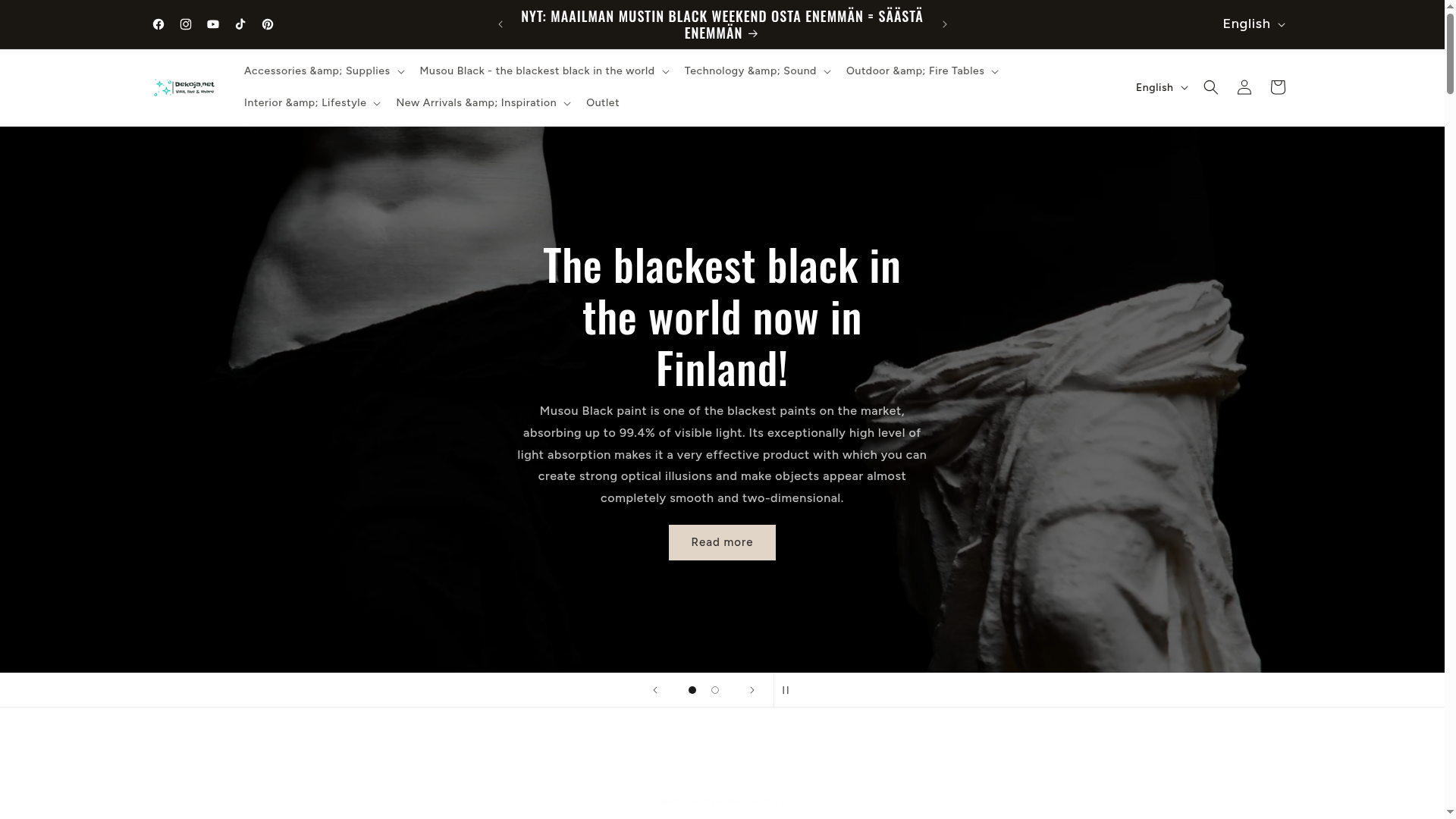
Join us in renovating your spaces with bold and striking Finnish design. Explore our selection at Dekoja.net and take the first step towards impressive and functional contrast design. Also check out our Lemus audio and electronics products and find new ways to complement the atmosphere of your space.
Contact us now and create a space experience that users will remember for a long time.
Frequently Asked Questions
What is visual contrast in spatial design?
Visual contrast refers to the use of different colors, lights, and materials in a space, which creates visual tension and guides the user experience.
How can I utilize color contrast in my interior design?
Color contrast can be utilized, for example, by adding contrasting colors to a space or by creating tonal differences that attract attention and make the space dynamic.
What is Musou Black and how is it different from traditional black surfaces?
Musou Black is a material that absorbs up to 99.4% of visible light, creating a deep and mystical effect, while traditional black paint reflects light and can appear neutral.
Why is visual contrast important in spatial design?
Visual contrast is important because it not only adds aesthetics, but also affects the functionality of the space and the transmission of information to the user.
Recommendation
- Interior Design Competitive Advantage 2025 – Maximize the Visual Experience – Dekoja.net
- Interior Design Competitive Advantage 2025 – Maximize the Visual Experience – Dekoja.net
- Interior Design Competitive Advantage 2025 – Maximize the Visual Experience – Dekoja.net
- Interior Design Competitive Advantage 2025 – Maximize the Visual Experience – Dekoja.net