

Role in Architecture: Circular Economy and Materials 2026
The architect's role extends far beyond simply drawing spaces. In 2026, the architect is a key enabler of the circular economy, guiding material choices, life cycle thinking, and the adaptability of buildings. In restaurant and hospitality projects, this translates into concrete solutions: innovative recycled materials, visual effects, and sustainable spatial solutions that evoke emotions and extend the lifespan of buildings. In Finland, architects utilize new tools such as laser scanning and building information modeling (BIM), which enhance both new construction and renovation projects. In this article, we will discuss the architect's role in promoting the circular economy and introduce materials that are transforming the Finnish construction industry.
Table of Contents
- Key Learnings
- The Architect's Role in Circular Economy Design
- Innovative Recycled Materials in Architecture
- The Architect's Role in Renovation and Transformations
- Visual Effects and Sustainable Materials in Restaurant and Hospitality Spaces
- Explore Innovative Materials and Space Design Solutions
- Frequently Asked Questions about the Architect's Role
Key Learnings
| Point | Details |
|---|---|
| Architect's role in circular economy | The architect guides material choices, life cycle thinking, and building adaptability to achieve sustainability goals. |
| Innovative recycled materials | Circular economy bricks and Elementic offer ecological alternatives to traditional materials and significantly reduce carbon footprint. |
| Importance of renovation | Transforming old buildings for restaurant and hospitality use saves resources and supports the preservation of cultural heritage. |
| Visual effects in spaces | Material choices such as wood composite and circular economy bricks create unique spatial experiences and strengthen brand identity. |
| Practical applications in 2026 | Laser scanning and BIM enhance design, and versatile materials extend the lifespan of spaces. |
The Architect's Role in Circular Economy Design
The architect acts as a key promoter of the circular economy, as their methodology incorporates life cycle thinking, adaptability, and the prioritization of recycled materials from the early stages of design. This means making concrete choices: planning the dismantlement of building components in advance, selecting materials based on their recyclability, and designing spaces to be adaptable to future needs. In restaurant and hospitality projects, this is reflected, for example, in the ability to easily modify interior spaces for different uses without major structural changes.
Life cycle assessments are a key tool used by architects to evaluate the environmental impact of a building throughout its entire life cycle. The responsibility of the lead designer and architect in low-carbon construction begins with material procurement and extends to the demolition of the building. This comprehensive approach ensures that every design decision supports climate positivity. Thus, an architect does not merely draw spaces but creates the framework for sustainable construction.
Adaptability in practice means that a building can evolve with time. For instance, a restaurant can be converted into a meeting space, or a hotel room into a workstation, without extensive renovations. This extends the building's lifespan and reduces the need for demolition and rebuilding. Laser scanning and building information modeling (BIM) are modern tools that architects use to map existing structures and plan for dismantlement from the outset. These technologies particularly enhance renovation projects, where precise measurements of old buildings are essential.
The architect's task is also to communicate the principles of the circular economy to all project stakeholders. Developers, contractors, and material suppliers need clear guidelines to ensure that sustainable choices are implemented in practice. Aesthetic space design combines functionality with visual appeal, which is especially important in restaurant and hospitality projects where customer experience plays a central role.
Professional tip: Start every project with a life cycle assessment and define clear goals for recyclability. Document material choices and their justifications so that future renovators can utilize the information. This saves time and money in the long run.
- The architect guides material choices according to recyclability and carbon neutrality.
- Adaptability allows for the reuse of spaces without major structural changes.
- Laser scanning and BIM enhance design and manage dismantlement.
- Life cycle assessments ensure that every design decision supports climate goals.
Innovative Recycled Materials in Architecture
Circular economy brick is one of the most significant innovations in the Finnish construction industry. The material contains 40% recycled materials and is excellently suited for facades, interiors, and floors. The brick manufacturing process utilizes the upcycling concept, where waste materials are transformed into new, valuable building products. Visually, circular economy brick stands out from traditional options: its surface features small crystals and irregularities, creating a rugged, modern look that is perfectly suited for restaurant and hospitality spaces.
Elementic is another breakthrough in sustainable construction. The material binds 3 kg of CO2 per kilogram, making it a carbon-negative option. This means that the construction process not only reduces emissions but actively removes carbon dioxide from the atmosphere. Elementic is particularly suitable for interiors, where its lightweight structure and good sound insulation properties add value. In restaurant and hospitality projects, this means better acoustics and more comfortable spaces.
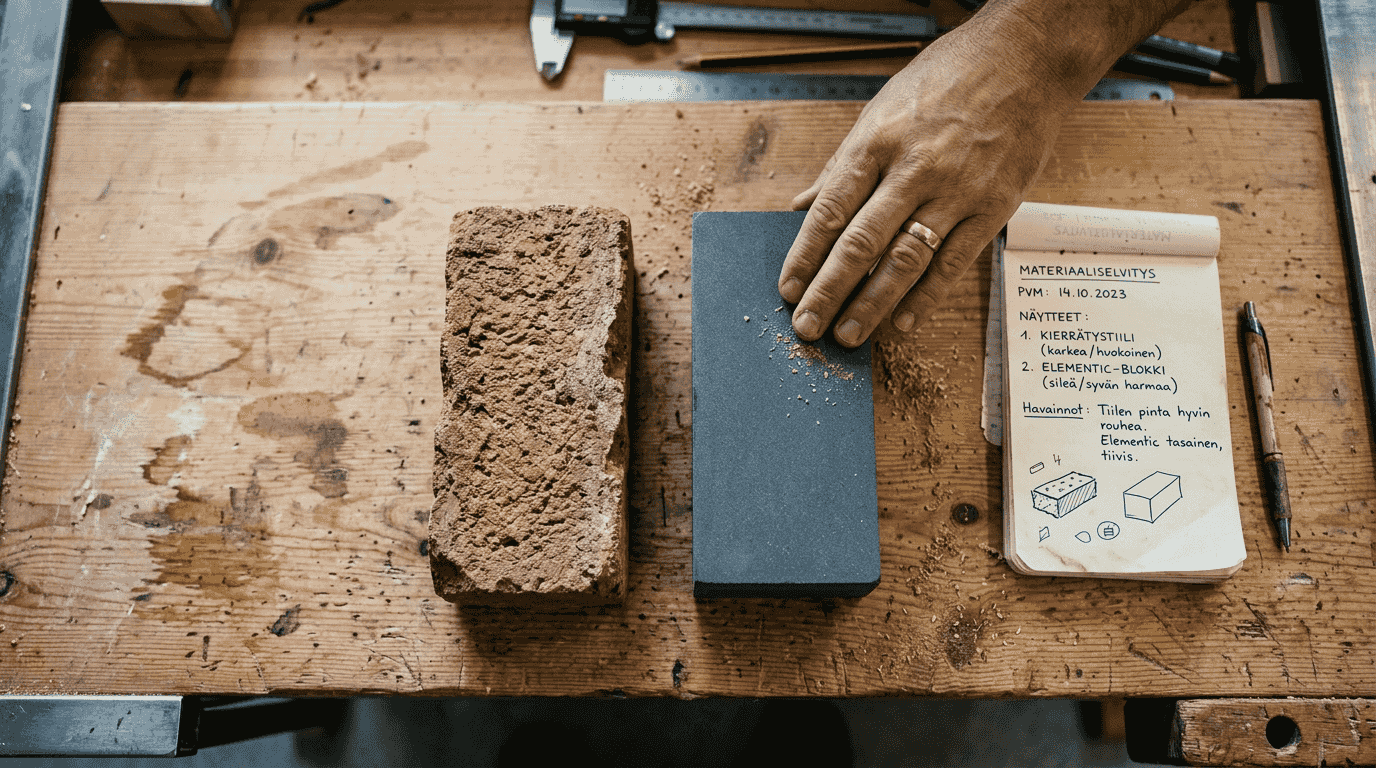
Both materials support aesthetic architecture. The rugged surface of circular economy brick creates a contrast with smooth surfaces, while Elementic's neutral look suits a variety of interior styles. Architects can utilize these materials to create spaces that not only look good but also tell a story of sustainability. Customers increasingly value transparency in material choices, and these innovations offer concrete answers.
Professional tip: Combine circular economy brick and Elementic in the same project to create layering. For example, in a restaurant's entrance hall, circular economy brick can serve as flooring, while Elementic is suitable for acoustic wall panels. This combination maximizes both ecological and aesthetic benefits.
| Material | Recycled Materials | Carbon Footprint | Applications | Visual Appearance |
|---|---|---|---|---|
| Circular Economy Brick | 40% | Neutral | Facades, floors, interiors | Rough, crystalline surface |
| Elementic | Varies | Negative (binds 3 kg CO2/kg) | Interior walls, acoustic panels | Smooth, neutral |
Both materials are available in Finland, which shortens delivery times and reduces emissions from transportation. Material selection directly impacts project success, and these innovations offer architects new opportunities to achieve ambitious sustainability goals without compromising on aesthetics.
- Circular economy brick supports the upcycling concept and offers a unique visual appearance.
- Elementic binds carbon dioxide and improves the acoustics of spaces.
- Both materials are available in Finland, reducing transport emissions.
- The combination creates layering and maximizes ecological benefits.
The Architect's Role in Renovation and Transformations
Renovation requires new creativity from designers, as many healthcare buildings in Finland are becoming vacant and are excellently suited for restaurant and accommodation use when properly designed. The architect plays a key role in this process, combining the potential of the old structure with new uses. For example, a former hospital can be transformed into a boutique hotel, where original architectural details are preserved and combined with modern amenities.
In the transformation of old buildings, laser scanning is an indispensable tool. It produces precise 3D models of existing structures, enabling design without guesswork. Building Information Modeling (BIM), in turn, helps visualize changes before implementation, reducing errors and costs. In restaurant and hospitality projects, this means that customer spaces can be optimally designed, and technical systems seamlessly integrated into the old structure.
Circular economy principles guide renovation in many ways. Original materials, such as brick, wood, and metal, are sought to be preserved and refurbished for reuse. This not only saves resources but also preserves the building's history and cultural heritage. For example, in an old factory building, original beams and brick walls can serve as an atmospheric backdrop for a restaurant, telling the story of the building's past.
Transformations also support resource efficiency in terms of energy consumption. Old buildings can be equipped with modern insulation, energy-efficient windows, and heating systems that significantly reduce operating costs. The architect's task is to find a balance between preserving the original appearance and meeting modern requirements. The benefits of restaurant interior design show how the right material choices and design solutions create spaces that work well for both customers and the environment.
Renovation is the construction of the future. It combines respect for history with modern technology in a way that saves resources and creates unique spaces.
- Map the building's original materials and structures using laser scanning.
- Assess which parts can be preserved and refurbished for reuse.
- Design technical systems to integrate seamlessly into the old structure.
- Ensure that energy efficiency improves without losing the original appearance.
- Document all changes for future renovations.
Visual Effects and Sustainable Materials in Restaurant and Hospitality Spaces
Wood composite has become a popular material in hospitality projects due to its durability and natural aesthetic. VALO Hotel uses Woodio washbasins made of wood composite, as the material is antibacterial, waterproof, and resistant to heavy use. This combination makes it an ideal choice for hotel rooms where hygiene and aesthetics are equally important. Wood composite brings warmth and naturalness to spaces, creating a pleasant and calming atmosphere for guests.
Visual effects, such as the crystalline surfaces of circular economy bricks, offer a rugged, modern look that stands out from traditional materials. These details are not just aesthetic; they also tell a story of sustainability and innovation. Customers in the restaurant and hospitality industry increasingly appreciate authentic materials and transparency, and these choices strengthen brand identity. For example, at a restaurant bar, circular economy brick can serve as a key visual element that sparks conversation and interest.
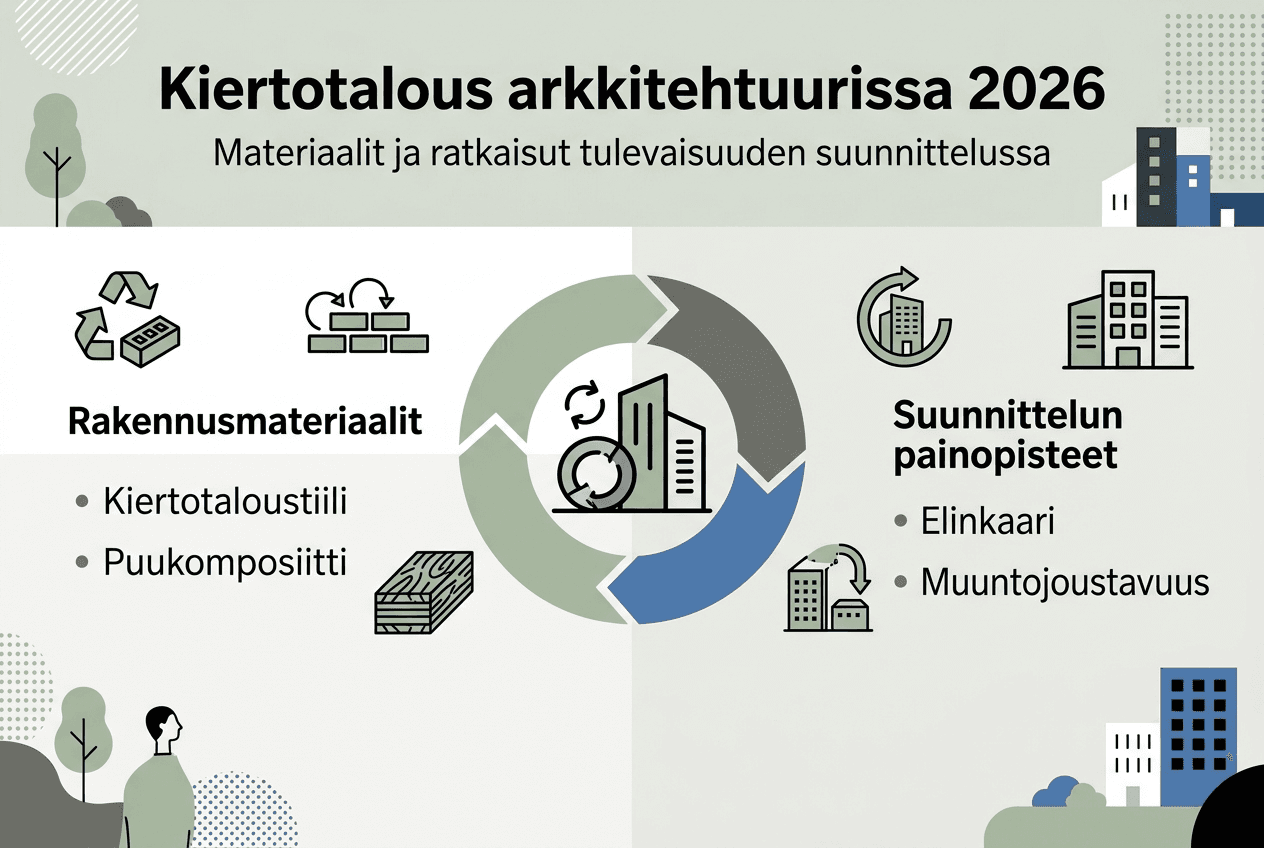
Sustainable materials such as oak and granite are popular in restaurant furniture for their longevity and comfort. Oak withstands wear and ages beautifully, while granite is almost indestructible and easy to maintain. These materials support versatility, as they are suitable for both customer areas and kitchens. The architect's task is to select materials that meet both functional and aesthetic requirements.
Versatility is a key design principle. For example, restaurant tables can also serve as workspaces during the day, and hotel lobby areas can be transformed into meeting rooms as needed. This flexibility extends the lifespan of spaces and maximizes their utilization. The choice of materials in space design directly affects how well the spaces serve their users in the long term.
Professional tip: Choose materials that age beautifully and withstand heavy use. For example, oak tables and granite counters will retain their appearance for decades, reducing the need for replacements. Combine these durable basic materials with visual effects, such as circular economy brick, to create layering and depth.
| Material | Uses | Durability | Visual Impact | Maintenance Requirements |
|---|---|---|---|---|
| Wood Composite | Washbasins, countertops | High, antibacterial | Warm, natural | Minimal |
| Oak | Tables, furniture | Very high | Classic, ages beautifully | Regular oiling |
| Granite | Counters, floors | Virtually indestructible | Modern, stylish | Minimal |
| Circular Economy Brick | Walls, floors | High | Rough, crystalline | Normal |
- Wood composite combines durability with a natural aesthetic.
- The crystalline surfaces of circular economy bricks create unique visual effects.
- Oak and granite are long-lasting materials that age beautifully.
- Versatility extends the lifespan of spaces and maximizes utilization.
Explore Innovative Materials and Space Design Solutions
The architect's role in the circular economy and the utilization of innovative materials is a key part of future construction. You have now learned how circular economy bricks, Elementic, and other sustainable materials are transforming the Finnish construction industry. The next step is to apply these learnings to your own projects.
Dekoja.net offers innovative material solutions that support sustainable development and create unique spatial experiences in restaurant and hospitality projects. We specialize in solutions that others do not offer: super black surfaces, non-reflective materials, and visual effect surfaces that evoke emotions and stand out from everything else. On our website, you will find practical tips for material selection in space design and aesthetic space planning, which will help you achieve the ambitious goals of your project. Fast 1-3 business day deliveries from Finland and expert assistance throughout the project.
Frequently Asked Questions about the Architect's Role
What makes the architect's role central in the circular economy?
The architect guides material choices, life cycle thinking, and the adaptability of buildings already in the initial design phase. They ensure that building components can be dismantled and recycled in the future. This holistic approach makes the architect a key enabler of the circular economy.
How does circular economy brick differ from traditional materials?
Circular economy brick contains 40% recycled materials and utilizes the upcycling concept, where waste materials are transformed into valuable building products. Visually, its surface features small crystals and irregularities, creating a rugged, modern look. Compared to traditional bricks, it offers a more ecological alternative without compromising durability or aesthetics.
What are the benefits of renovation for the restaurant and accommodation sectors?
Renovation saves resources and preserves cultural heritage by repurposing old buildings. For instance, former factories or hospitals can be transformed into unique restaurant or hotel spaces, where original architectural details create an atmospheric backdrop. This approach reduces the need for new construction and offers authentic spaces to customers.
How do visual effects impact customer experience?
Visual effects, such as the crystalline surfaces of circular economy brick or the warm appearance of wood composite, create unique spatial experiences that leave a lasting impression. They tell a story of sustainability and innovation, strengthening brand identity. Customers appreciate authentic materials and transparency, and these details differentiate spaces from competitors.
Which materials are preferred for sustainability reasons in 2026?
Oak, granite, wood composite, and circular economy brick are popular due to their longevity and ecological properties. Elementic is a carbon-negative material that sequesters carbon dioxide, making it a particularly attractive option. These materials combine durability, aesthetics, and functionality in a way that meets the demands of 2026.
How do laser scanning and information modeling enhance design?
Laser scanning produces accurate 3D models of existing structures, enabling design without guesswork. Information modeling helps visualize changes before implementation, reducing errors and costs. These technologies are especially useful in renovation, where precise measurements of old buildings are essential.