

Garden Design Styles: A Guide to Finding Your Style
TL;DR:
- Garden design styles form the foundation of landscape planning and help avoid a chaotic outcome. The choice begins with clarifying space usage and needs, not a plant list, and the style is built in layers, considering naturalness and seasonal changes. Different styles can be combined using clear boundaries and material logic, and trends like naturalness will be a strong direction in 2026.
Garden design styles are the foundation upon which all landscape planning is built. Without a clear style, a yard can easily become a jumbled collection of good ideas that don't coalesce. But how do you choose the right style for you, with options ranging from the romance of an English garden to the tranquility of Japanese minimalism? In this article, we'll go through the most important garden design styles, the trends for 2026, and practical criteria to help you find your own style.
Table of Contents
- Key Learnings
- 1. Garden Design Styles and Selection Criteria
- 2. Naturalistic Garden Style 2026
- 3. Traditional Garden Design Styles
- 4. Modern Garden Design in Practice
- 5. Comparison of Garden Design Styles and Suitability for Different Situations
- 6. Garden Color Themes as Building Blocks of Style
- 7. Garden Style Ideas for Small Yards
- My Perspective: What I Wish I Had Known Sooner
- Dekoja Helps with Garden Design
- FAQ
Key Learnings
| Point | Details |
|---|---|
| Start with space, not plants | First, design the use and proportions of the space; plant choices come only after that. |
| Seasons guide choices | Choose at least one striking plant for each season, so the yard functions year-round. |
| Style emerges from layers | Layered plant choices and structural spatial division create a cohesive style. |
| Naturalness is the 2026 trend | Biodiversity, pollinator plants, and reducing lawn area are this year's strongest directions. |
| Mix thoughtfully | Different styles can be combined when they share the same color theme or material logic. |
1. Garden Design Styles and Selection Criteria
Choosing a garden style begins with an honest assessment of your own yard and needs. Is the yard a small urban plot or a vast rural area? Do you actively use the garden, or do you primarily want it to look good when viewed from a window?
The design process should start with sizing the space and the rhythm of its use, not with a plant list. Once you know how the space will be used, it's easier to choose structures and materials before making any plant selections. This order saves both money and frustration.
A few key criteria help navigate the jungle of options:
- Seasons. In Finland, all four seasons are present. Choose at least one striking plant for each season so the yard doesn't look barren from October to April.
- Sightlines. What views open up from the living room or kitchen? Design planting areas so they also serve as views from indoors.
- Spatial division. Dividing the garden into separate "rooms" with a pergola, hedge, or planting area increases both privacy and functionality.
- Users. Are there children, dogs, or large groups of guests in the yard? Style is always also about daily life.
- Maintenance time. A realistic estimate of available time directly influences how much maintenance the style requires.
Professional tip: Before consulting any style guide, photograph your yard at different times of day and in different months. Photos reveal light conditions, shadow patterns, and problem areas better than any measurement.
2. Naturalistic Garden Style 2026
The strongest garden trend for 2026 is naturalness in all its forms. Biodiversity, varied plant species, and bold color combinations are key features that distinguish a modern naturalistic garden from the old "meadow-like" garden style.
The so-called "wild garden" has gained popularity as an aesthetic, not merely as laziness. The idea is simple: allow certain areas to develop naturally, resulting in a diverse, pollinator-attracting ecosystem. This doesn't mean neglecting maintenance, but rather making conscious choices about where order is maintained and where nature is given more space.
In practical terms, the naturalistic style is reflected as follows:
- Partially replacing lawn with meadow or rock garden areas
- Favoring perennial flowering plants over annuals
- A riot of colors, boldly combining different shades without a strict color palette
- Layering tall and short plants to achieve a natural look
- Sustainable landscape construction with materials that require little maintenance
Naturalness is a strong value that is more than just a trend. It directly addresses the need to build gardens that live and thrive without constant intervention.
3. Traditional Garden Design Styles
Classical styles have an enduring appeal for a reason. They are tested, visually cohesive, and have a clear internal logic. Here are four key traditional styles to draw from.
English Garden
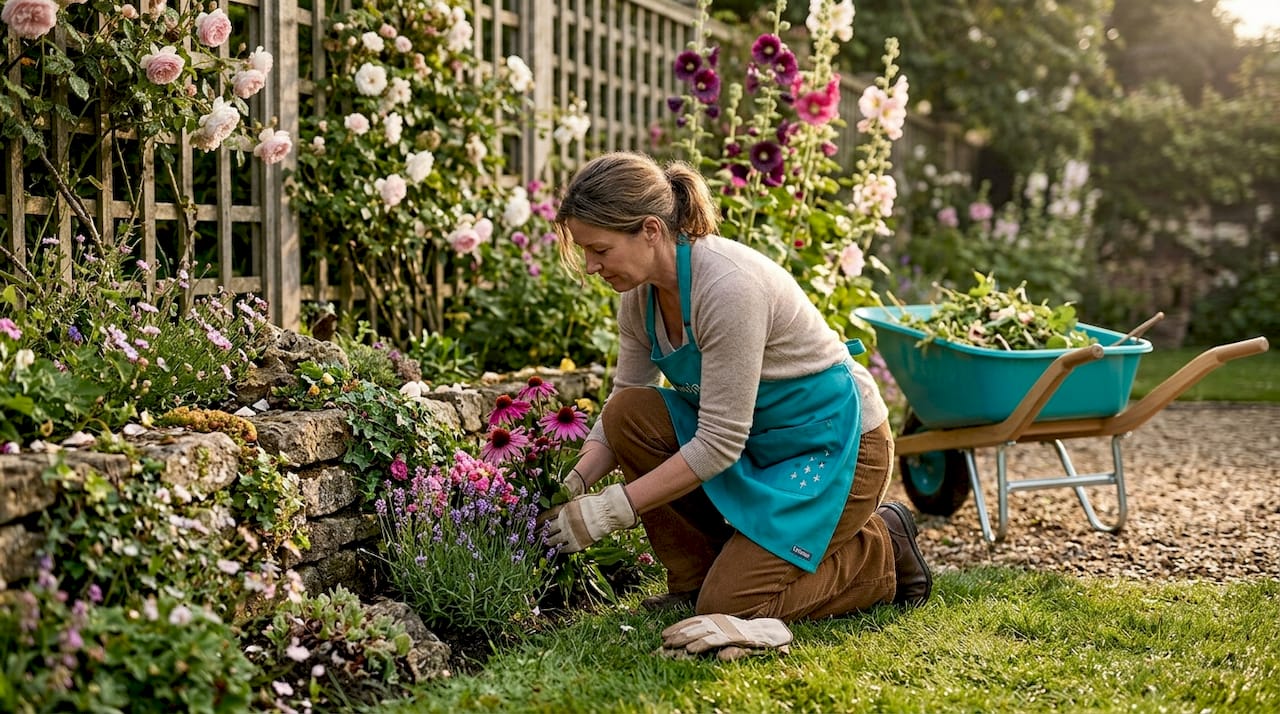
The English garden is romantic, abundant, and intentionally informal. Characteristic features include lush perennial flowerbeds, winding paths, hedges, and often container gardening. Color themes range from pastels to vibrant, but the overall effect works best when colors are repeated in several different planting areas.
Japanese Garden
The Japanese garden is based on principles of harmony and naturalness. Asymmetry is intentional, the rhythm of paths guides the eye, and meditative quality is the core of the entire style. Too many elements disrupt the atmosphere. One carefully shaped conifer, a few stones, and a stone lantern can be sufficient.
Mediterranean Garden
The Mediterranean style brings warm colors, abundant pots, and edible plants, such as a combination of herbs and vegetables, to the garden. Material choices emphasize terracotta, natural stone, and linen. In the Finnish climate, this style works best on sunny south-facing slopes or in terrace environments where heat accumulates.
Modern Garden
Modern garden design is based on clear lines, minimalist structures, and limited color palettes. Plants are used architecturally, meaning their form and texture are more important than the abundance of blooms. Natural stone, steel, and wood combine into geometric compositions.
| Style | Color Themes | Maintenance Requirement | Best Suited For |
|---|---|---|---|
| English | Pastel and romantic | Medium | Spacious yards, countryside |
| Japanese | Green, gray, stone tones | Low | Smaller yards, peaceful corners |
| Mediterranean | Ochre, terracotta, white | Medium | Sunny terrace or south-facing slope |
| Modern | Gray, black, white | Low | Urban yards, new buildings |
4. Modern Garden Design in Practice
Modern garden design doesn't mean coldness or impersonality. It signifies a thoughtful relationship between space, structures, and plants. The layering of plant choices is built from taller trees down to lower plantings, and structures like pergolas or concrete pavers tie the whole together.
Material choices are the most important tool of modern style. Heat-treated wood, galvanized steel, and cut stone slabs create a foundation upon which plants are set. When materials are chosen consistently, the garden looks designed even when the plants are still small.
Practical tips for implementing a modern style:
- Choose two or three main materials and stick to them throughout the yard
- Use plants in pairs or rows instead of asymmetrical growth
- Spatial planning should begin with a scale drawing before any purchases are made
- Consider lighting, as modern garden structures look best under evening illumination
- Keep maintenance requirements low by choosing durable perennial plants
Professional tip: The biggest mistake in modern style is using too many materials. If a yard has stone slabs, concrete curbs, a wooden terrace, brick walls, and metal structures, none of them will truly stand out. Choose one main structural material and repeat it consistently.
5. Comparison of Garden Design Styles and Suitability for Different Situations
Different styles work in different situations, and there isn't one universally correct answer. The following comparison helps find a starting point for your own situation.
| Criterion | English | Japanese | Modern | Naturalistic |
|---|---|---|---|---|
| Small yard | Challenging | Excellent | Good | Good |
| Families with children | Good | More challenging | Good | Excellent |
| Low budget | Good | Good | More challenging | Excellent |
| Year-round appearance | More challenging | Excellent | Good | Good |
| Biodiversity | Good | Good | Weak | Excellent |
Dividing the garden into distinct areas allows for stylistic diversity without clutter. In practice, this means one corner can be a Japanese-style meditation spot, while the area next to the terrace follows a modern minimalist line. Clear demarcation of spaces with hedges, paving, or structures makes the combination functional.
From a budget perspective, the naturalistic style is often the most affordable to start with. Seeds and perennial cuttings are inexpensive, and reducing lawn area saves both on materials and ongoing maintenance. The modern style requires a larger initial investment in structures, but in the long run, maintenance costs remain low.
Combining works best when styles share the same color theme or material logic. Japanese and modern styles blend well because both emphasize a minimalist color palette and thoughtful use of space. English and naturalistic styles find common ground through their abundant floral plantings.
6. Garden Color Themes as Building Blocks of Style
Color themes are the most visible dimension of garden design styles, but they are often managed incorrectly. The biggest mistake is choosing colors based on individual plants instead of building a cohesive whole.
An effective color strategy starts with two or three main colors that are repeated throughout the yard in different plants. If you choose lilac, blue, and white, these shades can appear in spring with bulbs, in summer with a combination of lavender and delphiniums, and in autumn with asters. The garden feels unified, even as it changes throughout the growing season.
Light and dark conifers and diverse leaf shapes bring visual interest even in winter, when flower colors are absent. Conifers, ornamental grasses, and berry-producing plants are the most valuable elements of a winter garden.
7. Garden Style Ideas for Small Yards
Designing a small yard is often more challenging than a large one, as every square meter is utilized and mistakes are clearly visible. With the right choices, even a small space can achieve a distinct style.
Japanese miniaturism is the most natural choice for a small yard. A minimalist Japanese garden is based on simple and deliberate elements that also work on a Finnish scale. A single shaped Japanese maple, gravel paving, and a bamboo fence can create a perfect small garden ensemble.
Verticality is a small yard's best friend. A pergola, climbing plants, and wall plantings draw the eye upwards, making a small space appear optically larger. Material selection is particularly important in a small yard, as even one wrong surface material dominates the entire view.
Efficient use of space in a small yard: plant along the borders, not in the middle. When plants line the edges of fences and structures, the center remains open, making the yard feel larger.
My Perspective: What I Wish I Had Known Sooner
I've followed garden design for years and repeatedly encounter the same mistake. People start the style selection process from a Pinterest board or a garden fair visit, get excited about some visual aesthetic, and buy plants based on that. The result is a garden with elements from many styles but no clear direction.
What truly works? A ten-minute session with pen and paper, where you write down three words that describe how the garden should feel, not what it should look like. Peaceful. Playful. Lively. Once you have these three words, the style choice begins to guide itself.
Another thing I wish I had known sooner: be cautious with trends. Garden trends for 2026 are in many respects timeless, because naturalness and biodiversity are values that don't age. But if a trend is based on a specific material or color, think twice. A garden is an investment that lives for decades.
— Mikko
Dekoja Helps with Garden Design
The choice of garden style directly influences the materials, structures, and surfaces used in the yard. Dekoja is a Finnish supplier of specialized materials that helps interior designers and designers find solutions not available in ordinary stores.

If you're planning striking contrasting surfaces, visually impactful structures, or materials that differentiate your garden from the ordinary, Dekoja supplies solutions quickly directly from its Finnish warehouse. Explore the material guide and see how the right material choice elevates garden design style to a new level. B2B service is also available for design agencies and construction projects.
FAQ
Which garden style is suitable for a small yard?
Japanese style is excellent for a small yard because it is based on carefully chosen individual elements and open use of space. A modern minimalist style also works well when materials are chosen consistently.
How to combine different garden design styles?
Different styles can be combined by dividing the yard into distinct areas, with each area following its own style. Cohesion can be maintained by using the same color palette or main building material throughout the yard.
What are the garden trends for 2026?
The key garden trends for 2026 are naturalness, biodiversity, and pollinator-friendly choices. Wild gardens, replacing lawns with meadow areas, and bold color combinations will be prominent.
Where to start garden planning?
Planning should begin with the dimensions of the space and the rhythm of its use, not with a plant list. Once you know how the yard will be used and what it needs in different seasons, the structures and plant choices will become much clearer.
How much does it cost to create a garden style?
Costs vary greatly depending on the style. A naturalistic style is the most affordable to start, while a modern style requires more initial investment in structures. In the long run, low-maintenance styles are the most economical.