

Black surface materials in the restaurant's visual identity
TL;DR:
- Black surfaces in restaurant design can create a luxurious and clear atmosphere, but their use requires careful planning. When combined and lit correctly, black materials strengthen the brand and enhance the impact of the customer experience. Attention should be paid to lighting, textures, and safety to optimize their effects.
Black surface materials divide opinions in restaurant design. Some see them as a risk, others as an opportunity. The truth is that material choices and visuality determine whether the customer perceives the space as gloomy or elegant. Black surfaces are not just a color choice; they are a means to build a recognizable brand, direct attention, and create a lasting impression. This article explores how black materials work in practice, what pitfalls to avoid, and how to get the most out of them.
Table of Contents
- Why are Black Materials Fascinating in Restaurant Design?
- Benefits and Pitfalls of Black Surface Materials in Restaurants
- Combining Black Surfaces: Colors, Textures, and Lighting
- Black as Part of a Restaurant's Brand and Customer Experience
- What Most People Overlook When Utilizing Black Surface Materials?
- Find Solutions for a Renewed Restaurant Look
- Frequently Asked Questions
Key Observations
| Point | Details |
|---|---|
| Black's Strong Atmosphere | Black surface materials bring depth and distinction to a restaurant's appearance. |
| Combining Creates Balance | Warm lighting and various textures complement the appeal of dark materials. |
| Design Requires Precision | Careful material selection and lighting optimization are the core of a successful outcome. |
| Memorable Brand | The restaurant's image and customer experience are strengthened when the interior is bold and thoughtful. |
Why are Black Materials Fascinating in Restaurant Design?
The color black has carried the same symbolism for decades. It conveys luxury, determination, and self-confidence. In fashion, design, and architecture, black is a means of distinction. This holds particularly true for restaurants, as competition for customer attention is fierce, and the first impression is formed as soon as one steps through the door.
Psychologically, black creates a calming, clear foundation. It doesn't compete with other elements but highlights them. When a black wall serves as a backdrop for a light artwork or a golden lamp, the eye is drawn precisely where the designer intends. This is a visual tool, not just an aesthetic choice.
Using black surfaces can deepen the atmosphere and make a space unique. The same color works completely differently when matte, glossy, or textured. A matte finish absorbs light and creates intimacy. A glossy finish reflects the space and makes it optically larger.
However, using black requires balance. Without counterbalance, the space can feel heavy or cramped. Warm materials like wood, leather, or linen fabrics serve as a perfect contrast to black. They bring humanity to the space and prevent it from becoming cold or sterile. Various themes in interior design show how combining color and material builds an overall atmosphere, not just a visual detail.
Black's appeal is also linked to its timelessness. Trends change, but black endures. A restaurant that thoughtfully builds its look around black surfaces won't age as quickly as a space that slavishly follows seasonal color palette recommendations.
Key reasons for black's popularity in restaurant design:
- Black creates an immediate atmosphere and an impression of seriousness.
- It serves as a neutral backdrop for other colors and materials.
- Black effectively highlights lighting, art, and details.
- It communicates a brand consistently without explanation.
- Matte black surfaces can make a space more intimate and peaceful.
“Black surfaces are not just an interior design choice. They are a brand message that the customer senses even before sitting down.”
Once the significance of black in a restaurant's appearance is understood, it's time to examine the concrete benefits and challenges of black surfaces.
Benefits and Pitfalls of Black Surface Materials in Restaurants
The choice of surface materials plays a crucial role in creating an aesthetic and functional space. This is even more pronounced with black surfaces, as the intensity of the color makes both successes and mistakes more visible.
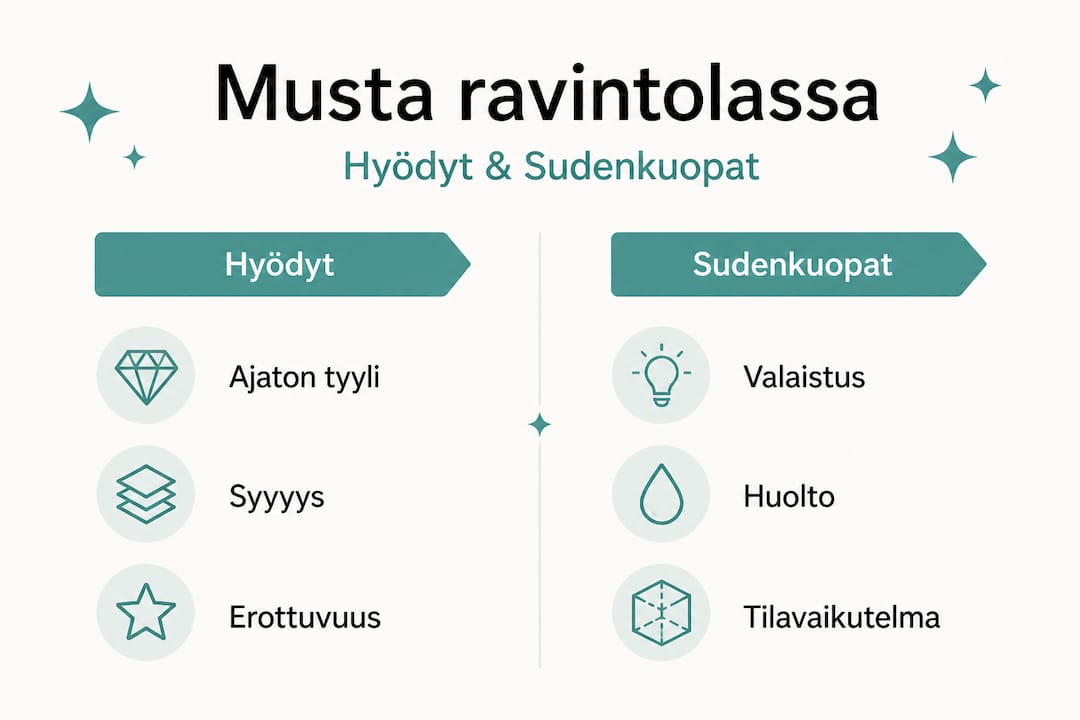
The clearest advantages of black surface materials in restaurant spaces are:
- Style and timelessness. Black doesn't belong to one season. It remains relevant year after year without the need for constant renovation.
- Hiding stains and wear. Dark surfaces, especially walls and floors, don't reveal minor bumps or scratches in the same way lighter surfaces do.
- Visual impact. A black wall or ceiling is in itself a design solution that instantly makes the space look more significant.
- Brand reinforcement. A consistent color scheme makes the restaurant recognizable and creates an image of professionalism.
- Photographic quality. A black background makes food and drinks visually appealing, which supports social media marketing.
However, pitfalls should be identified before starting a project:
- Excessive darkness. If black is used too much and lighting is insufficient, the space feels cramped and even oppressive.
- Underestimating lighting. Black absorbs light strongly. Without proper lighting for black surfaces, the space remains dark, and comfort suffers.
- Visibility of dust and fingerprints. Especially on glossy black surfaces, stains are easily visible.
- Lack of textures. Black as a uniform mass without surface variations is dull and flat.
- Safety risks. In dark spaces, customers might bump into furniture or stairs if contrasts are too small.
| Pros of using black | Cons of using black |
|---|---|
| Timeless and stylish look | Requires more lighting design |
| Hides minor wear and tear | Glossy surfaces collect fingerprints |
| Highlights other colors | Excessive use makes the space feel heavy |
| Supports brand communication | Dust is clearly visible on dark surfaces |
| Works well in photography | Can affect the customer's spatial experience |
Professional tip: Test the effect of black surfaces in a small area first, such as an accent wall or bar counter. Observe how the lighting behaves at different times of the day before expanding the concept to the entire restaurant.
Correct lighting is absolutely critical for the success of black. LED lighting with a color temperature between 2700 and 3000 Kelvin creates a warm atmosphere alongside black surfaces. Spotlighting and targeted lamps highlight details without the space feeling burned out or clinical. General ambient lighting alone is not enough. Black surfaces need layering: ambient light, accent light, and mood lighting. Also, explore creating an atmospheric space from the perspective of material choices.
Once you understand the effects of black surfaces, the next step is to comprehend how to combine them with other materials and colors.
Combining Black Surfaces: Colors, Textures, and Lighting
Diverse surface materials enable the design of a unique atmosphere and experience. For black, this means that color alone is not enough. The surface pattern, gloss level, and combinable materials determine the overall look.
Black naturally combines with many colors and materials, but not all combinations work equally well. Below is an illustrative table of the most common combinations:
| Black's Pair | Atmosphere | Suitable for Restaurant |
|---|---|---|
| Black and gold | Luxury, festive | Fine dining, cocktail bars |
| Black and wood | Warm, rustic | Casual dining, lounges |
| Black and white | Modern, clear | Cafes, bistros |
| Black and green | Natural, fresh | Health restaurants, vegetarian restaurants |
| Black and gray | Urban, neutral | Brunch spots, city restaurants |
| Black and copper | Industrial, vintage | Craft bars, burger places |
Textures are the secret weapon of using black. When a black surface is not flat, it arouses interest and prevents the space from feeling monotonous. Utilizing textures in black surfaces:
- Concrete surface brings an industrial and modern atmosphere without extra elements.
- Wood paneling painted black combines naturalness and style.
- Black brick wall creates depth and a raw material touch.
- Matte black acoustic wall panels also serve as acoustics in restaurant spaces.
- Velvet surface material brings luxury, especially to private cabinet walls.
Lighting completely transforms the nature of black surfaces. The same black wall looks entirely different under spotlighting compared to ambient lighting. Restaurant lighting design should start with the placement of black surfaces: where you want to draw attention and from which point the space opens up.
The most visible effects are achieved when black is paired with either very dark or very light elements. Contrasts are key to visual tension. Using intermediate shades of gray alongside black flattens the look and removes its power. Instead, bright light fixtures, light wooden floors, or light textiles make black an element that stands out positively.
Professional tip: Alongside black surfaces, add at least one glossy or reflective material, such as glossy ceramic tile, polished steel, or a mirror. These break up the heaviness of black and make the space more dynamic without losing the dominance of black.
Warm tones, such as wood, ochre, terracotta, and cream, balance the coolness of black and prevent the space from feeling clinical. Also, see the most popular interior design solutions for restaurants for more inspiration on combinations.
After practical combination tips, it's time to look at how black surfaces affect a restaurant's brand and customer experience.
Black as Part of a Restaurant's Brand and Customer Experience
The interior design is one of the first things a customer assesses upon entering a restaurant. They don't consciously evaluate it, but the brain registers messages related to the space in a fraction of a second. Black communicates certain things: consistency, seriousness, and style. When these messages match the promise of the food, service, and price level, the customer perceives the situation as credible and coherent.
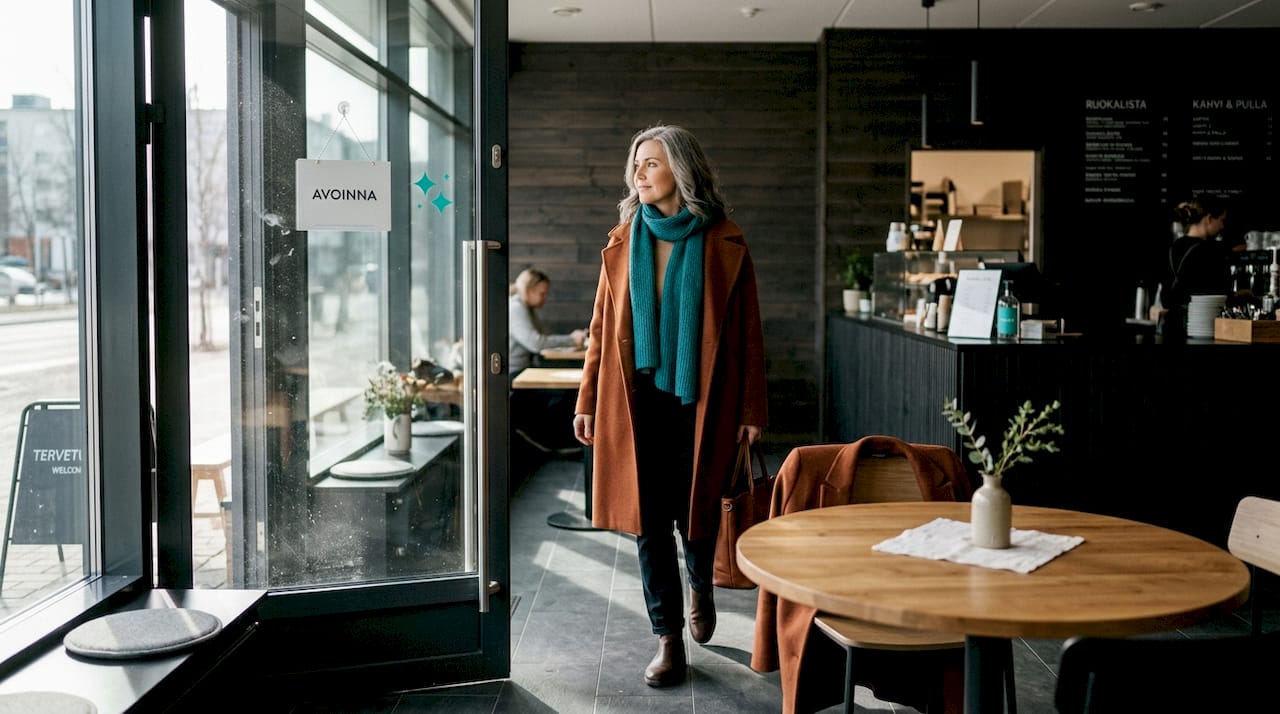
An atmospheric and consistent interior stands out in the competition. This doesn't mean everything has to be black. Brand consistency arises from all elements—colors, materials, lighting, tableware, and tablecloth choices—supporting the same atmosphere. Black is a strong starting point because it serves as a visual framework for almost all other design choices.
In spaces where black has been thoughtfully used, customers:
- Spend more time in the restaurant because the space feels inviting and intimate.
- Take more photos and share them on social media, generating organic visibility.
- Perceive the food quality as better because the environment communicates a premium level.
- Recommend the restaurant more often because the experience feels distinctive.
- Return again because the space left a positive impression.
Statistic: According to studies, over 70 percent of restaurant customers cite the interior design as one reason for returning to the same place. The visual appearance of a space is not just an aesthetic question; it's a business-critical choice.
Digital customer experiences are now part of a restaurant visit. When a space is photographable and Instagrammable, it also serves as a marketing channel. Black surfaces create a perfect contrast for colorful food dishes, cocktails, and mood photos. This makes the space not only a customer experience but also a marketing tool.
Aligning the brand and interior design should be done systematically. First, define what values the restaurant wants to convey. If the answer is luxury, exclusivity, and tranquility, black is a natural choice as the main color or a strong accent element. If the message is more casual and inviting, black should be kept to accents and balanced with warm wood surfaces or textiles. A competitive edge in interior design is not accidental; it is built through conscious choices.
When a customer remembers the restaurant's interior and tells others about it, the interior design has done its job as a marketer. A black space, skillfully executed, is precisely this kind of lasting impression. It doesn't get lost in the crowd or forgotten by the next restaurant visit.
What Most People Overlook When Utilizing Black Surface Materials?
Years of experience with specialized materials have taught one thing clearly: many designers use black color but do not understand how it truly works in a space. The result is often disappointing. The space looks great in visualizations, but when finished, it feels heavy, monotonous, or even unpleasant. This is not due to the color black. It's due to what is overlooked.
The most common mistake is underestimating lighting. A black surface material, whether paint, tile, or panel, absorbs light in a way that cannot be fully anticipated from material samples alone. The actual light conditions of the space, the placement of windows, the amount of natural light at different times of the day, and the color temperature of artificial light determine how black appears to the customer at dinner time. The correct utilization of materials always begins with an assessment of the space's light conditions before material selection.
Another often overlooked aspect is the role of textures. A designer chooses black but forgets that a smooth, non-glossy black surface is visually flat. The eye finds nothing to latch onto. The result is monotonous and easily boring. When texture is added to a black surface, such as a brushed finish, concrete imitation, wood-patterned panel, or uneven plaster, the space comes alive. Texture creates shadows and light within the surface itself, making it interesting to look at from different angles.
The third thing that should not be forgotten is customer movement and safety. Dark spaces require clear contrasts for walkways, stairs, and level differences. The boundary between the floor and wall can completely disappear if both are black. This is not only an aesthetic problem but also a safety risk. There are simple solutions for this: contrasting baseboards, LED strips embedded in floor edges, or light-colored furniture against dark walls.
The fourth perspective is long-term maintenance. Black surfaces, especially matte textured ones, collect dust in a way that can be surprising. A restaurant is a demanding environment, and the cleanability of the material is an important criterion. Before choosing a special black material, it is worth finding out how to maintain it and whether it is realistic for daily restaurant operations.
Professional tip: Always test the chosen black surface material in a physical space under different lighting conditions: in the morning sun, on a cloudy day, and with artificial lighting in the evening. Visualizations and small material samples do not tell the whole truth. A physical test is the only way to ensure that the final result meets expectations.
Utilizing black in a restaurant is therefore more than just choosing a color. It is about managing the entire package of material, lighting, texture, safety, and maintenance. When all these components are in order, black works and creates a space that customers will remember.
Find solutions for a renewed restaurant look
Your restaurant's visual appearance is a continuous process, not a one-time event. Finding the right materials can feel challenging when there are many options and information is scattered.
Dekoja.net is a Finnish specialized materials store that offers restaurants and designers solutions for utilizing black surfaces. The selection includes super black Musou Black surfaces, non-reflective materials, contrast wall materials, and visual effect surfaces. The site also provides practical material selection tips and unique atmosphere guides to help plan projects from start to finish. Deliveries from Finland take between 1 and 3 business days, and B2B service for projects is available directly from experts.
Frequently asked questions
How can I make black surface materials look elegant, not gloomy?
Combine black with warm tones, different textures, and effective lighting to keep the overall look fresh and inviting. Diverse surface materials allow for building a unique atmosphere without the space feeling heavy.
What kind of surfaces are most durable for restaurant use?
Hard-wearing, easy-to-clean materials such as laminate, stone, and powder-coated metal are well-suited for heavy use. The choice of surface materials plays a key role in both aesthetic appeal and practical functionality.
Is the use of black in restaurants still trendy in 2026?
Yes, black remains a popular choice in modern restaurant interiors, but it is used more thoughtfully to create impact and contrast. An atmospheric and cohesive interior will stand out in the competition in 2026 as well.
Does the color black affect the customer experience in a restaurant?
The color black can enhance the impression of coziness and attractiveness when balanced with other elements. Using black surfaces can deepen the atmosphere and make the space unique in the eyes of customers.