

Why minimalist interior design for maximum experience
Over 60% of restaurants and hotels in Central Europe use minimalist elements in their interior design. This interior design style offers clarity and space, but requires careful consideration of materials and contrasts. When executed correctly, minimalist interior design can bring a unique depth and peace to a room, taking both the customer experience and visual impact to a new level.
Table of contents
- The basic idea and history of minimalist interior design
- Minimalist space types and visual contrast
- Material choices and the effects of musou black
- The impact of minimal design on the restaurant experience
- The most common mistakes and how to avoid them
- Comparison of classic and rich interior design
Key considerations
| Paragraph | Detail |
|---|---|
| Minimalism emphasizes simplicity | Minimalist interior design focuses on the essentials, creating a peaceful environment where every object is thoughtfully chosen. |
| Material choices are key factors | High-quality and natural materials, such as wood and glass, are central to minimalist interior design. |
| Lighting is important in design | Thoughtful lighting creates depth and emphasizes the shapes of the space, which is essential in a minimalist environment. |
| Avoiding mistakes is essential | The most common mistakes are related to controlling proportions and choosing the wrong materials, which can ruin the harmonious atmosphere of the space. |
The basic idea and history of minimalist interior design
Minimalist interior design is a philosophical approach that emerged in response to the excess and ornamentation of the early 20th century. Rooted in the tradition of modernism, the principles of this style emphasize simplicity and purpose.
The style is based on the idea that less is more. Minimalist interior design strips away everything unnecessary and focuses on the essentials: space, form and functionality. It creates a peaceful environment where every object is thoughtfully chosen and has a clear purpose. The importance of light, openness and empty space is emphasized in these spaces.
Historically, minimalism has its roots in Japanese Zen philosophy and 1920s modernist architecture, which emphasized a minimalist aesthetic. Designers began to see beauty in clean lines, clear shapes, and the true nature of materials, rather than ornamentation.
Pro tips: When starting a minimalist interior, it's a good idea to focus on high-quality, multi-purpose furniture and eliminate anything superfluous.
Minimalist space types and visual contrast
There are several recognizable types of minimalist spaces, based on different design principles. The geometric shapes of the space often define the nature of minimalist interior design. These types include completely open, spacious spaces as well as small, carefully designed intimate spaces.
Visual contrast is a key element in minimalist interior design. It is created through carefully selected colors, materials and shapes. Combining black and light colors creates a dramatic and clear look, where every detail is emphasized. Contrast can also be created by combining different textures, such as glossy and matte materials or wood and metal.
Minimal spaces can be roughly divided into two main types: open, limitless spaces and compact, functional ones. Both emphasize the same basic idea: every element should be considered and necessary. The functionality and aesthetic clarity of the space are more important than abundant decoration.
Pro tips: When creating contrast, it's best to focus on a few controlled colors and materials, don't try to please everyone with colors.
Material choices and Musou Black's effects
In minimalist interior design, material choices are extremely important, as every element carries meaning. Creating visual contrast requires careful consideration of materials, colors, and surfaces.
Musou Black is a revolutionary material in minimalist design, as it absorbs up to 99.4% of light. This means it creates the perfect backdrop where light and shadow take on a whole new meaning. The material allows for dramatic depth and contrast to be created in spaces in a way that traditional white or matte surfaces fail to achieve.
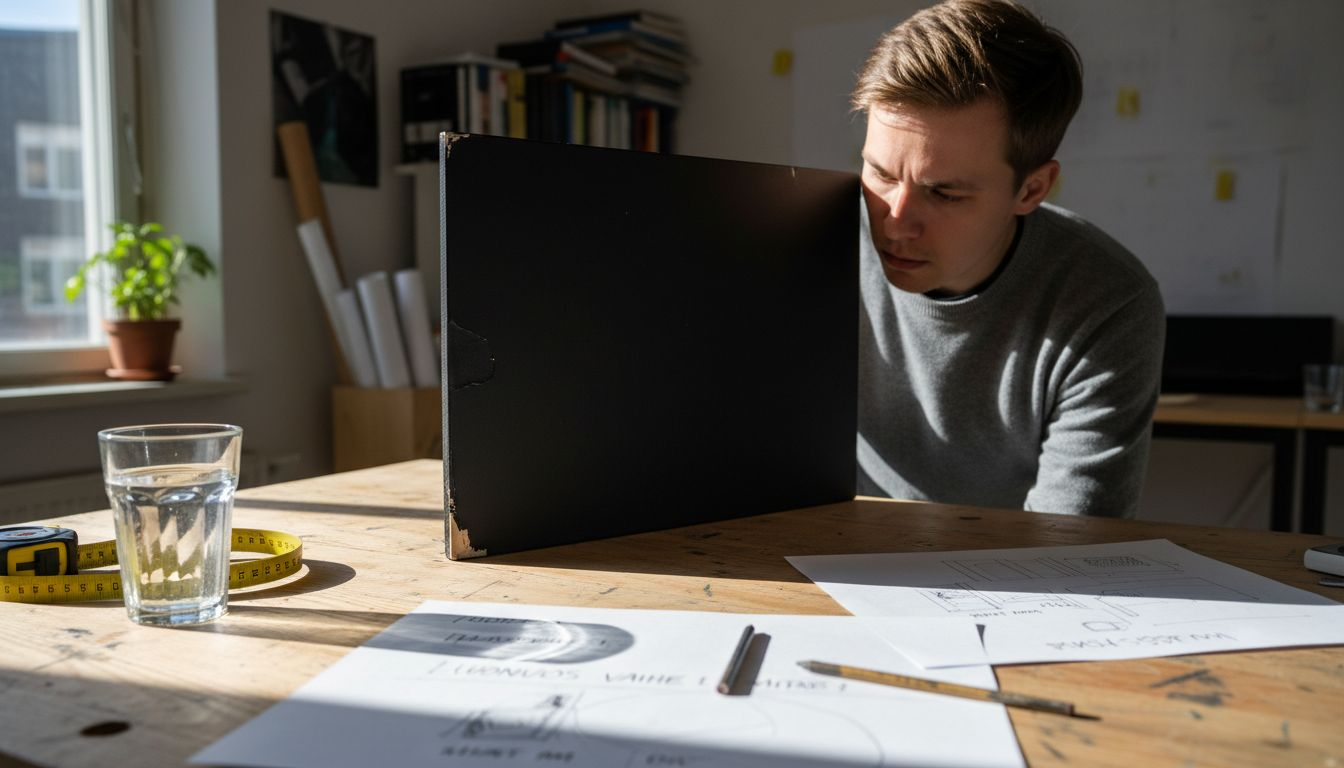
In minimalist interiors, the emphasis is on clean, natural materials such as wood, glass, steel and concrete. Combining these materials with special materials such as Musou Black creates a space that is both aesthetically and functionally intelligent. The key is to choose materials that communicate with each other and create a harmonious, yet exciting whole.
Pro tips: Choose materials that work both visually and practically, and don't be afraid to use bold contrasts in the right places.
The impact of minimal design on the restaurant experience
Minimal design in a restaurant is much more than just a visual statement – it’s a philosophy that shapes the entire customer experience. This design approach focuses on what’s essential: the food, the atmosphere, and the interaction.
Minimalist restaurant design directly influences the customer's perception and behavior. Restaurant space design directs attention to the food by eliminating unnecessary visual stimuli. This means simple colors, clean lines, and carefully considered details that create a harmonious and peaceful environment.
In a minimalist restaurant, every element is intentional. Lighting, furnishings, and material choices are designed to support the dining experience. By stripping away the excess, the customer’s attention is focused on the taste, textures, and service of the food. This philosophy combines aesthetics, functionality, and sustainability in a way that makes the dining experience unique.
Pro tips: In minimalist restaurant design, focus on quality simplicity and remember that empty space is just as important as filled space.
The most common mistakes and how to avoid them
The most common mistakes in minimalist interior design are often related to the control of proportions . Many designers fall into excessive emptying or, conversely, cramped arrangements, which destroys the harmonious feel of the space.
A typical mistake is also the wrong choice of materials. In a minimalist interior, each material should communicate with each other, creating a unified whole. The mistake occurs when choosing too many different materials or using poor-quality surfaces that violate the aesthetic purity of the space. Consider the dialogue between materials and their ability to reflect light or create shadows.
The third major mistake is neglecting lighting. A minimalist space needs carefully designed lighting that emphasizes the shapes of the space and creates depth. Lighting that is too flat or completely dazzling will ruin the minimalist look. The goal is to create layered lighting that highlights the different elements of the space in a controlled and interesting way.
Material and lighting choices have a decisive impact on the functionality of a minimalist space:
| Selection category | Successful solution | Common mistake |
|---|---|---|
| Materials | Uniform and high quality | Too many different materials |
| Lighting | Layered, thoughtful | Smooth and dazzling |
| Furniture | Multi-purpose, clean-lined | Cramped and too small furniture |
| Contrast | Clear differences in color and material | Too much neutrality, missing colors |
Pro tip: Remember that in minimalist interior design, less is more – every element should be considered and necessary.
Comparison of classic and rich interior design
Classic interior design and minimalism represent completely different philosophies when it comes to visualizing space. Classic interior design is full of details, decorations, and heavy materials, while minimalist style reduces everything to the essentials, creating an open and peaceful environment.
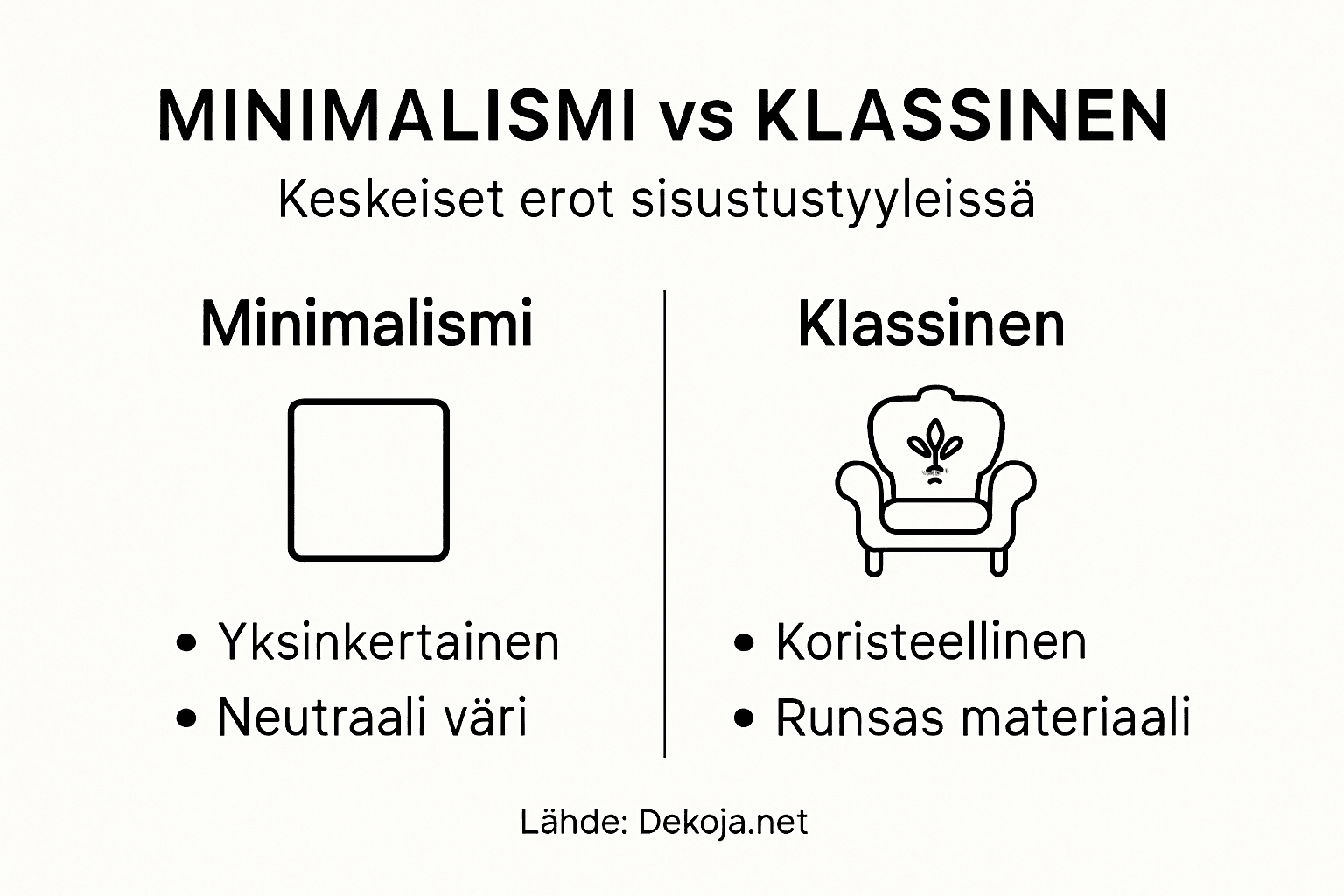
In a rich interior, every corner is filled with different objects, colors and textures. This creates a cozy and lively atmosphere, but at the same time can create an oppressive and confusing impression. Minimalist interior design, on the other hand, emphasizes space, light and shapes. Modern office design shows how minimalism can increase efficiency and well-being by creating clear, harmonious spaces.
The biggest difference between the two styles lies in their philosophy: classic interior design tells stories of the past through decorative elements, while minimalism communicates the present, functionality, and space-respecting design. Where classic interior design oozes, minimalism breathes.
Below is a comparison of the key features of minimalist and classic interior design:
| Feature | Minimalist interior design | Classic interior |
|---|---|---|
| Space solutions | Open, airy, clear | Compact, multiple rooms |
| Color scheme | Neutrals, few shades | Rich, diverse colors |
| Materials | Natural, simple | Decorative, rich |
| Atmosphere | Peaceful and serene | Warm, historically rich |
| Ornamentation | Small, deliberate | Rich, detailed |
Pro tips: Choose your interior design style based on how you want the space to function and what kind of emotions you want to evoke.
Minimalism meets maximum experience with Dekoja.net's solutions
Minimalist interior design challenges designers and restaurant professionals to find the perfect balance between simplicity and impact. The article highlights the importance of visual contrast and carefully considered materials, which are key to creating a space’s atmosphere. The extreme blackness of Musou Black gives the space the depth and drama that ordinary surfaces cannot provide. At the same time, careful selection of lighting and decor ensures that each element supports the whole and does not distract from the essentials.
Discover solutions that will take your minimalist interior to the next level by visiting our selection, which combines lighting and visually powerful materials. Each material and light has been chosen to facilitate the functionality and aesthetic clarity of your spaces. Also discover high-quality sound and lighting solutions to complement your moments through Lemus audio and electronics .
Make your minimalist interior a truly unforgettable experience. Visit Dekoja.net and utilize materials and products that will make your space the complete opposite of opulence. Now is the time to give the space the role it deserves and create maximum impact with minimal effort.
Frequently asked questions
Why is minimalist interior design important?
Minimalist interior design emphasizes simplicity and the idea that less is more. It promotes a peaceful environment where every object has a clear purpose.
How can I start a minimalist interior design?
Start by choosing high-quality, multi-purpose furniture and eliminating unnecessary items. Focus on space, light and form.
What are the key colors and materials in minimalist interior design?
Minimalist interiors often use neutral colors and natural materials such as wood, glass, and concrete. It is also important to create visual contrast between these elements.
How does lighting affect minimalist interior design?
Lighting is a key part of minimalist interior design, as it can accentuate the shapes of a space and create depth. Carefully considered lighting helps maintain a minimalist look and adds to the aesthetic value of the space.
Recommendation
- Experiential design in interior design – Experiential spaces for restaurants – Dekoja.net
- Experiential design in interior design – Experiential spaces for restaurants – Dekoja.net
- Experiential design in interior design – Experiential spaces for restaurants – Dekoja.net
- Experiential design in interior design – Experiential spaces for restaurants – Dekoja.net
- 6 Inspiring Examples of Custom Homes for Ontario Homeowners
- Role of Fragrance in Interior Design – Enhancing Home Atmosphere – Aromel