

The importance of microstructure in interior design – Adding depth and contrast to spaces
Many Central European restaurants and galleries stand out precisely because of their non-reflective surfaces. Over 60 percent of architects estimate that surface structures have a decisive impact on the experience of space, especially in modern public spaces. Controlling microstructures and surface structures offers the opportunity to play with light, highlight contrasts and create immersive spaces where every detail builds the customer experience.
Table of contents
- What does microstructure mean in interior design?
- Different surface structures and their aesthetic effect
- Mastering light and shadow: creating depth in space
- Microstructures in special solutions for restaurants and galleries
- Anti-reflection, contrasts and most common errors
Key considerations
| Paragraph | Detail |
|---|---|
| The importance of microstructure | Microstructure adds depth and visual interest to a space. It affects the mood of a space and can calm or activate an environment. |
| Surface structures and categorization | Surface structures can be divided into smooth, rough and composite surfaces, and their correct combination creates harmony and dynamism. |
| Use of light and shadow | Controlling light creates layering and depth in a space, which enhances the visual impact of the space. |
| The importance of contrasts | Carefully used contrasts enliven the space and highlight details, making the design more interesting. |
What does microstructure mean in interior design?
Microstructure is a small but significant detail in interior design, formed by the fine grain of the surface structure of materials. It refers to those small textural elements that bring depth and visual interest to a space. In minimalist interior design, microstructure especially refers to the subtle textures of surfaces that create a multidimensional and lively atmosphere in a space.
These micro-structures affect how light reflects and how different materials look and feel. In home decor, microstructure can add personality and create contrasts between different surfaces, creating interesting visual layers. For example, rough wood next to smooth glass or satin metal furniture combined with a rough wall surface create an interesting dialogue.
Microstructure is not just about aesthetics, it also affects the atmosphere and functionality of a space. Different surface structures can either calm or activate a space. Soft, gentle microstructures create a relaxing atmosphere, while sharp and angular textures bring energy and dynamism to the space.
Pro tip: Feel free to experiment with combining different microstructures – don’t be afraid to mix glossy and matte materials in the same space.
Different surface structures and their aesthetic effect
Surface textures are a multidimensional tool in interior design that affects the mood and visual appearance of a space. Different surface forms, such as the visibility of wood grain and slatted elements, bring contrast and rhythm to a space , which awaken the senses and create interesting visual layers.
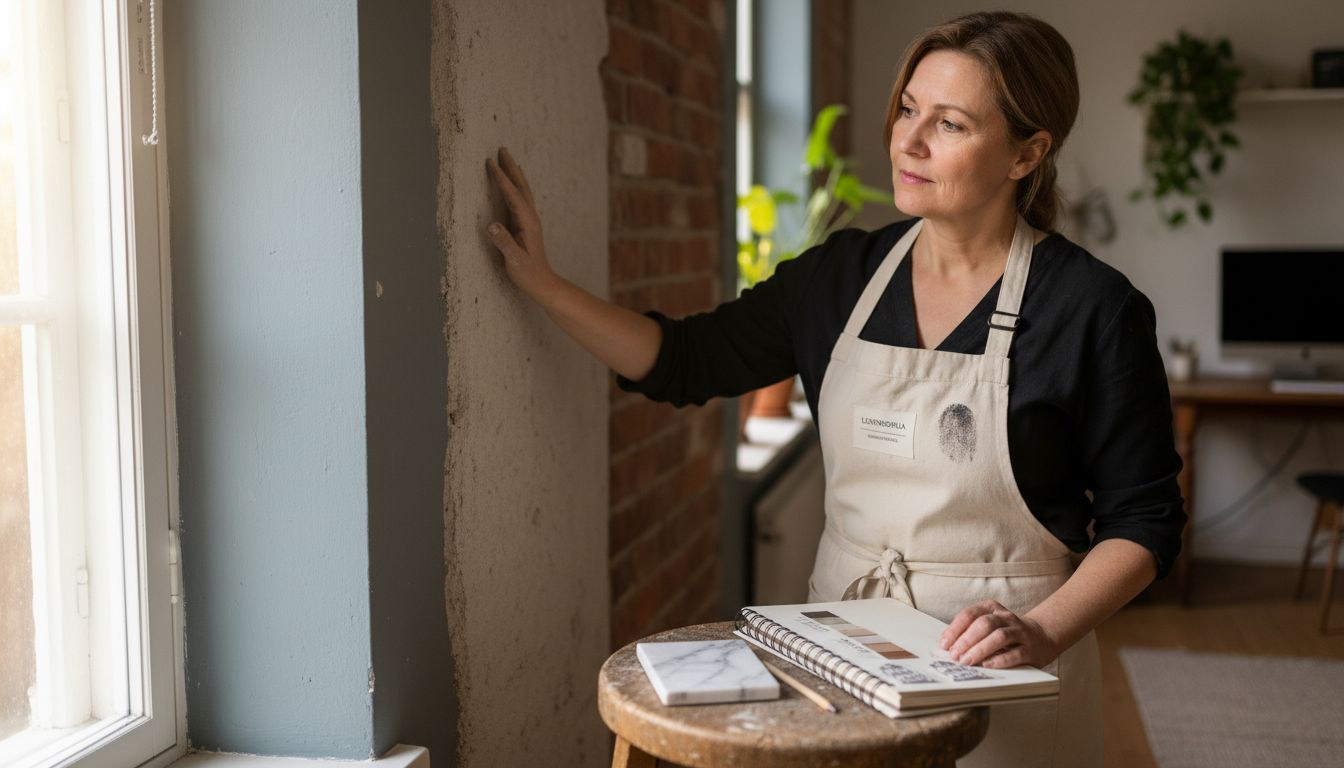
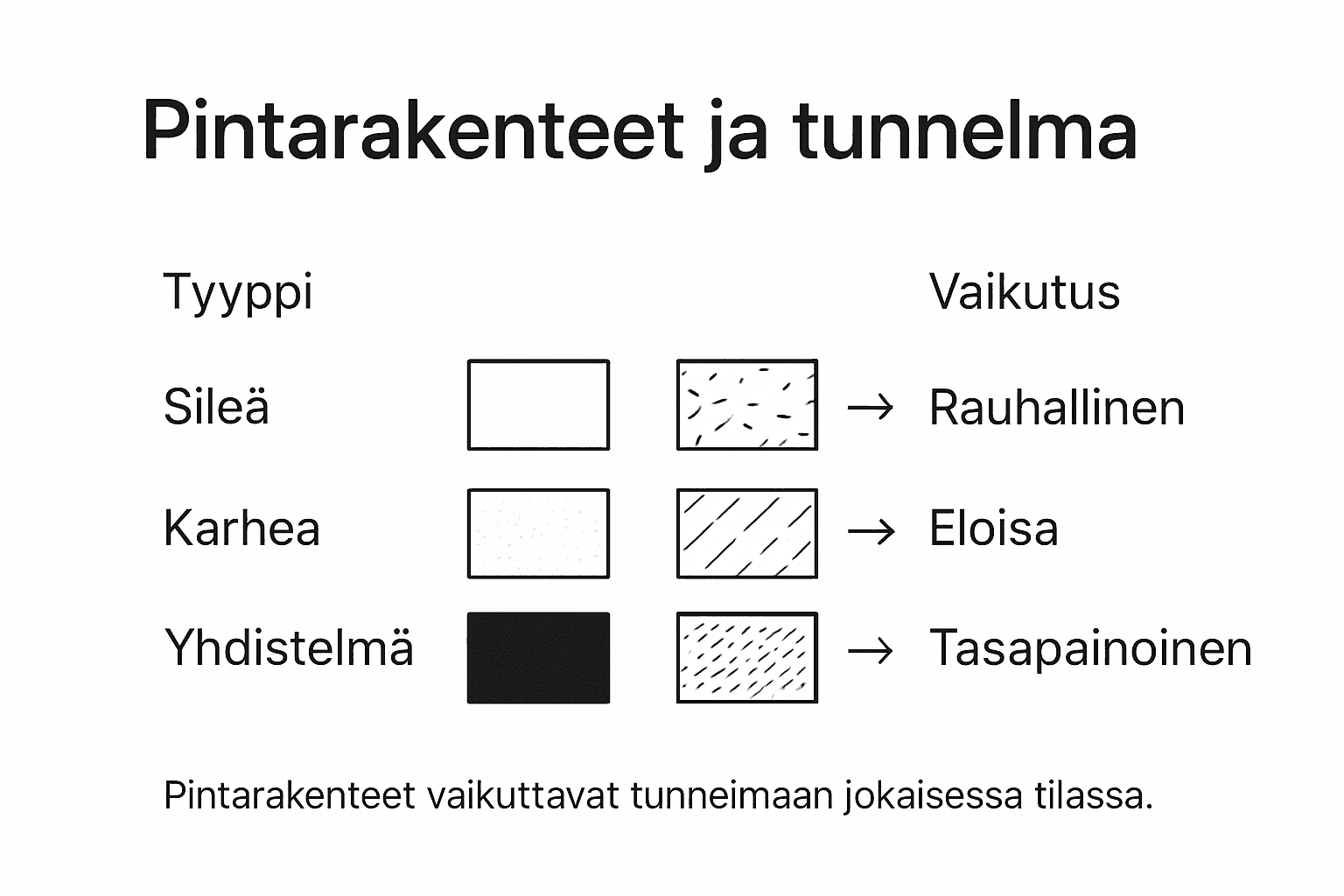
In interior design, surface textures can be roughly divided into three categories: smooth, rough and composite surfaces. Smooth surfaces, such as shiny glass or satin metal, create a modern and clean atmosphere. Rough surfaces, such as stone or treated wood, bring warmth and organicity to the space. Composite surfaces, on the other hand, play between these extremes, creating diverse and surprising visual ensembles.
Each surface texture acts as a dialogue between light and shadow. Smooth surfaces reflect light brightly, while rough surfaces absorb light and create a sense of depth. This optical play can change the character of an entire space: the same color looks completely different depending on its surface texture. For example, a matte dark gray wall looks different than a glossy or structured one in the same shade.
The following table summarizes the effects of different surface textures on the atmosphere of the interior:
| Surface structure | Mood effect | Usage example |
|---|---|---|
| Smooth surface | Modern and clear | Glossy glass, satin metal |
| Rough surface | Warm and organic | Shaped wood, natural stone |
| Composite surface | Dynamic and surprising | Concrete and metal together |
| Matte surface | Soft and calm | Matte paint on the walls |
| Glossy surface | Vibrant and bright | Glossy tile in the kitchen |
Pro tip: Don't be afraid to boldly combine different surface textures – contrast is the spice of interior design.
Mastering light and shadow: creating depth in space
Light is an invisible but powerful tool in interior design that shapes the mood and experience of a space. The deliberate use of light and shadow can create strong contrasts in a space that support the experience of three-dimensionality and depth , transforming a mere space into a living and multidimensional environment.
The controlled combination of natural and artificial light allows you to highlight the best aspects of a space , so that the light not only illuminates, but also shapes the architecture of the space. Strategic placement of different light sources, such as indirect light, spotlights and mood lights, can create depth effects and direct the eye to desired points.
The alternation of shadows and light acts like an invisible brushstroke, painting a space with layers and dramaturgical tension. The more diverse the light that travels along the surfaces, the more alive and interesting the space is. Fixed objects, such as furniture or works of art, take on a completely different character depending on how the light hits them.
Pro tip: Use at least three different light sources in a space to create depth and multidimensionality.
Microstructures in special solutions for restaurants and galleries
Microstructures are extremely important in professional spaces where visual experience is key. The 7 steps to an architect's interior design checklist for restaurants show that with the right surface structures, a completely unique experience can be created in a space.
In restaurants, microstructures can serve both aesthetic and functional purposes. Walls with a deep, structured surface can dampen sound while creating a dramatic visual element. In galleries, microstructures can guide the eye, highlight artworks, and create a layered space that makes the exhibition experience more multidimensional.
Of particular interest are contrasting microstructures that combine completely different surfaces. For example, a rough concrete wall can be combined with shiny metal surfaces or a structured wooden surface. Such solutions create tension and visual dynamics in the space, which arouses the interest of visitors.
Pro tip: Don't be afraid to use microstructures boldly – when implemented correctly, they transform a space from a mere physical space into an experiential environment.
Anti-reflection, contrasts and most common errors
Contrast is the lifeblood of interior design, making a space either dazzling or completely bland. Well-executed contrast is not limited to colors, but includes a dynamic interplay of materials, textures, and shapes that bring a space to life.
The most common mistakes in interior design are often related to poorly thought-out color choices and too little contrast, which make the space look flat and impersonal. Non-reflectiveness does not mean just a dark surface, but the deliberate control of light and shadow that creates depth and interest.
The successful use of contrasts requires courage and planning. It means consciously combining different material worlds – shiny and matte, rough and smooth, dark and light. For example, a shiny metallic detail can liven up an otherwise matte wall, or a rough wooden surface can bring warmth to a completely smooth environment.
The comparison table below illustrates the combined effect of light, microstructure and contrasts on the experience of space:
| Factor | Impact on the space | Typical use |
|---|---|---|
| Light | Emphasizes texture | Different light sources together |
| Microstructure | Create depth and layers | Alternating different surfaces |
| Contrast | Brings out details | Smooth and rough side by side |
Pro tip: Remember that effective contrasts come from thoughtful oppositions, not random color or material combinations.
Add depth and contrast to your spaces with Musou Black
The article highlighted the importance of microstructure and lighting in interior design in creating a sense of space and visual interest. The challenge is often to find solutions that bring out contrast and depth in a way that traditional surface treatments cannot. Don't settle for a flat or reflective surface, but choose solutions that make your space truly alive and multidimensional.

Dekoja.net offers a unique Musou Black material family that absorbs up to 99.4% of visible light and creates a completely non-reflective, dramatic surface. This makes the contrast vivid and the depth rich, while allowing you to emphasize the microstructure of the interior exactly the way you want. Also, discover high-quality lighting fixtures that complement the creation of visual layering and balance of light and shadow. Let the professionals help you take your restaurant or home interior to the next level. Find more inspiration and solutions at Dekoja.net and start your journey towards a more impressive spatial experience today.
Frequently asked questions
What does microstructure mean in interior design?
Microstructure refers to the fine-grained surface structure of materials, which creates depth and visual interest in a space.
How do microstructures affect the atmosphere of a space?
Different surface textures can either calm or activate a space, so they are important mood creators in interior design.
What are the common types of surface textures and their effects?
Surface textures can be divided into three categories: smooth, rough and combination surfaces. Smooth surfaces create a modern feel, while rough surfaces bring warmth and organicity.
How do light and shadow affect microstructures?
Light and shadow create an optical play with surface textures, and their combination can completely change the character of a space, bringing out different details and depths.