

What is super black – The secrets of visual depth
Wondering how to bring unprecedented depth and drama to a space? In interior design and architecture, the choice of materials plays a huge role in the success of the visual experience. Super black's unique ability to absorb over 99 percent of light offers a completely new dimension to building the look of restaurants and showrooms. This content will help you understand the core concepts of super black and its possibilities in spatial design.
Table of contents
- Superblack – definition and core concepts
- Musou Black's structure and light absorption
- Types and differences of super black materials
- Interior design, design and art applications
- Risks, costs and limitations of use
- Super black vs. matte black – concrete differences
Key considerations
| Paragraph | Detail |
|---|---|
| Super black properties | Super black is capable of absorbing up to 99.4% of light, creating impressive visual depth. |
| Materials and uses | There are various types of superblack materials, such as nanofibrous surface layers and optically absorbing coatings, that serve different needs. |
| Applications in interior design | The use of material in interior design can revolutionize the visual experience of spaces and create the illusion of depth. |
| Risks and costs | The use of super black materials involves high costs and special expertise in installation, as well as potential health risks. |
Superblack – definition and core concepts
Super black is an extremely dark surface material that is capable of absorbing almost all visible light. It differs significantly from a regular black surface layer in its ability to manipulate light. The contrast of black in spatial design is completely in a class of its own, creating a sense of depth and mystery.
The basic properties of this material are:
- Light-absorbing surface structure
- Up to 99.4% light absorption capacity
- Completely non-reflective
- Extreme contrast capability
Superblack is not just a color, but a technological solution that transforms the visual experience of a space. It acts like an optical black hole, absorbing light and creating a seemingly infinite depth. The material is developed using nanotechnology, where the surface structure is designed to maximize light absorption.
The physical properties make super black unique. Not only is it dark, but it completely changes the visual dynamics of a space. While a regular black surface reflects some light, super black absorbs virtually all light.
Pro tip: Use super black to design spaces that challenge traditional views of visual depth.
Musou Black's structure and light absorption
Musou Black is a nanotechnology-based surface material with a structure designed to maximize extreme light absorption. Musou's depth of field technical solutions are based on microstructures that act as optical traps to capture light.
The material structure consists of several key elements:
- Nano-level fiber-structured surface
- Multi-level absorption mechanism
- Special microgeometry
- Complex surface tension structure
These microstructures are designed to minimize light reflection and maximize absorption. Each surface layer is designed to consume the light energy internally, converting it into heat or absorbing it completely. This means that light rays travel deeper and deeper into the material, gradually losing their energy.
Light absorption in Musou Black works completely differently than in traditional paints. A regular black surface reflects some light, but Musou Black absorbs virtually all light, creating a near-perfect optical black hole.
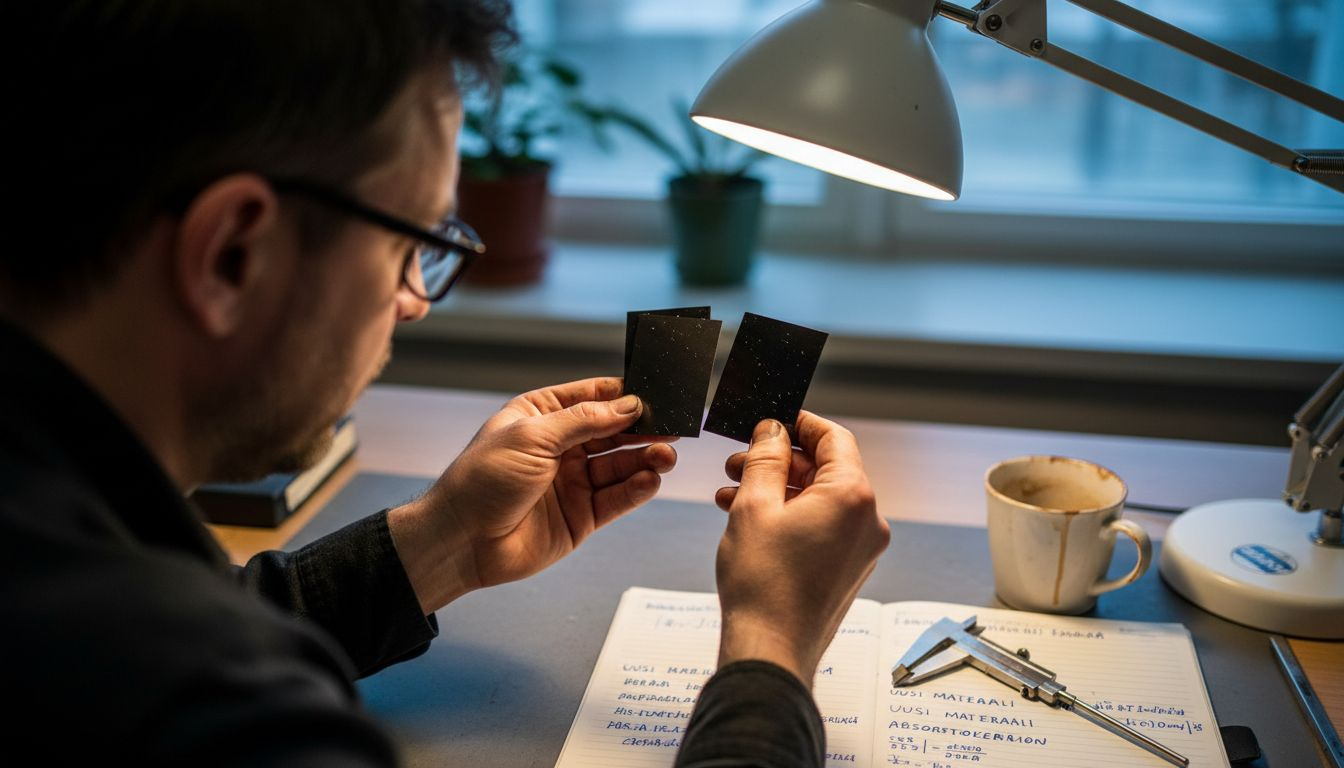
Pro tip: Use Musou Black in spaces where you want to create dramatic shadows and a sense of boundless depth.
Types and differences of super black materials
Superblack materials can be divided into several different types, each with its own characteristics and applications. Comparing the materials in question reveals interesting differences between the different technologies.
The main types of super black materials are:
- Nanofibrous surface layers
- Optically absorbing coatings
- Microstructured black surfaces
- Chemically treated absorption surfaces
Each type of material has its own strengths and weaknesses. Nanofiber coatings are often the most efficient at absorbing light, capable of absorbing up to 99.965% of visible light. Optically absorbing coatings are easier to manufacture and less expensive, but their performance is somewhat more limited.
A comparison of the materials reveals that superblack surface materials differ from each other mainly based on their structural properties. Microstructured black surfaces utilize complex geometric shapes to capture light, while chemically treated surfaces operate at the molecular level.

The table below compares the structural and functional properties of different super black materials:
| Material type | Special feature of the structure | Application area | Performance |
|---|---|---|---|
| Nanofiber surface | Very dense fiber structure | Industrial optics | Maximum light absorption |
| Optical coating | Thin, easy to apply | Interior design, exhibitions | Moderate absorption |
| Microstructured | Complex geometry | Art, architecture | Very high contrast |
| Chemically treated | Molecular level processing | Electronic devices | High light absorption |
Pro tip: Always choose a super black material based on the intended use and desired optical effect.
Interior design, design and art applications
Super black material offers interior designers and artists a unique tool to create depth and drama. The depth elements of visual art allow for the construction of entirely new types of aesthetic experiences.
The main application areas are:
- Home theater backstages
- Dramatizing the exhibition space
- Background structures of art installations
- Photography background materials
- Depth elements of architectural spaces
In art in particular, super black is used to create three-dimensional illusions and highlight details in works. It acts like an optical void, absorbing all light and creating a seemingly limitless depth. In photography and videography, the material allows for a perfect background that blurs out anything superfluous.
In interior design, super black material is a revolutionary element. It can completely change the experience of a space, creating optical illusions and blurring the boundaries between traditional walls. Modern restaurants, showrooms and home theaters are increasingly utilizing these materials to create startling visual experiences.
Pro tip: Use spotlights with super black material to create dramatic shadows and emphasize the depth of the space.
Risks, costs and limitations of use
Super black materials are complex technical solutions that involve both economic and practical challenges. The limitations of the use of chemical materials require careful consideration of safety aspects.
Key risks and cost factors:
- High purchase price
- Demanding installation conditions
- Deployment requiring specialized expertise
- Possible health and environmental restrictions
- Limited lifespan
Economically, the use of super black materials requires significant investments. The manufacturing costs of nanotechnology-based surface materials are significantly higher compared to traditional solutions. In addition, the installation of the materials requires special skills and precision.
Environmental and health risks are significant factors. Nanomaterials may have unknown long-term effects and require special safety precautions when handling them. Professionals recommend a thorough risk assessment before large-scale deployment.
Pro tip: Always consult an industry expert before implementing super black material and find out the exact safety requirements.
Super black vs. matte black – concrete differences
Black is not just black – its different forms differ significantly from each other. The surface properties of black reveal interesting details about the color's behavior.
The main differences between super black and matte black are:
- Light absorption capacity
- Amount of reflection
- Optical depth
- Surface structure
- Visual impression
What makes super black unique is its ability to absorb up to 99.4 percent of light, effectively making it an optical black hole. Matte black, on the other hand, is just a matte surface layer that reflects some light. This means that matte black appears dark, but doesn't create the same illusion of depth as super black.
The visual experience is completely different: matte black provides a soft and neutral dark surface, while super black creates an almost incomprehensible sense of depth and optical emptiness. The surface structure of super black is designed using nanotechnology to absorb light rays so completely that the human eye perceives it as an almost limitless opening.
The following table illustrates the concrete differences between super black and matte black in practice:
| Feature | Super black | Matte black |
|---|---|---|
| Light absorption | Up to 99.4% | Approximately 85–95% |
| Reflection | Almost non-existent | Visible, soft |
| Visual depth | Infinite optical aperture | Subtle, even surface |
| Usage context | High-tech, art | Home decor, cars |
Pro tip: Always choose the surface material according to the atmosphere of the space and the desired visual impression.
Create incredible visual depth in your space with super black
The article “What is Super Black – The Secrets of Visual Depth” reveals how super black material changes the overall experience of a space by absorbing almost all light and creating the illusion of infinite depth. If your goal is to maximize contrast and create dramatic shadows in a space, Musou Black is the perfect choice. It allows you to bring a unique visual impact to your spaces that ordinary matte black cannot provide.
Musou Black fabrics – super black fabric | Dekoja offers this technology as a Finnish design and materials store. We offer solutions for restaurants, art events and exhibition spaces, where visual impact is at the center of everything. Also explore our wider Interior design selection and let the experiential nature of your space grow with light control.
Don't settle for plain black when you can choose a super black surface with a depth that will capture the eye and completely transform the environment. Visit https://dekoja.net and start transforming your space today. Together we will design solutions that suit your visual needs and bring your space to life.
Frequently Asked Questions
What is super black and how is it different from regular black?
Superblack is an extremely dark material that absorbs up to 99.4% of visible light, unlike a regular black surface that reflects some of the light. Superblack creates a sense of depth and optical emptiness in a space.
How is super black material used in interior design or art?
Super black material offers interior designers and artists the opportunity to create dramatic visual experiences. It is often used as backdrops, in exhibition spaces and in art installations where three-dimensional illusions are desired.
What are the different super black materials and how do they differ from each other?
Superblack materials can be divided into several types, such as nanofibrous surface layers and optically absorbing coatings. The differences include, for example, light absorption and reflection behavior, and applications.
Are there any risks or limitations when using super black material?
Yes, there are risks associated with using super black materials, such as high purchase prices and demanding installation conditions. In addition, nanomaterials may pose health and environmental risk assessments, so it is important to consult experts before use.