

Material Choices for Restaurants: A Practical Guide 2026
In a nutshell:
- Choosing suitable materials for restaurants emphasizes durability, hygiene, and safety. The right choices last for years and support a visual aesthetic that attracts customers. Materials also impact safety, cleanliness, and ambiance.
Material choices for restaurants simultaneously determine the space's durability, hygiene, and ambiance. The wrong surface material in the kitchen will break down under cleaning agents in months. The wrong flooring in the dining area creates a safety risk and impairs acoustics. The right choices, on the other hand, last for years, meet HACCP standards, and build the visual aesthetic that keeps customers coming back. This guide covers technical requirements, the best material options for different spaces, and a sustainability perspective that has become an essential part of design in the industry.
What properties do material choices require for restaurants?
Restaurant materials must meet several requirements simultaneously. Durability, hygiene, safety, and aesthetics are not alternative priorities. They are all mandatory.
Durability and Cleanability
In a restaurant, surfaces are cleaned daily with strong agents. A material that cannot withstand this stress will wear out quickly and require expensive repairs. Underestimating material durability is the most common and costly mistake restaurants make in material selection. Premature wear of surfaces directly impacts maintenance costs.
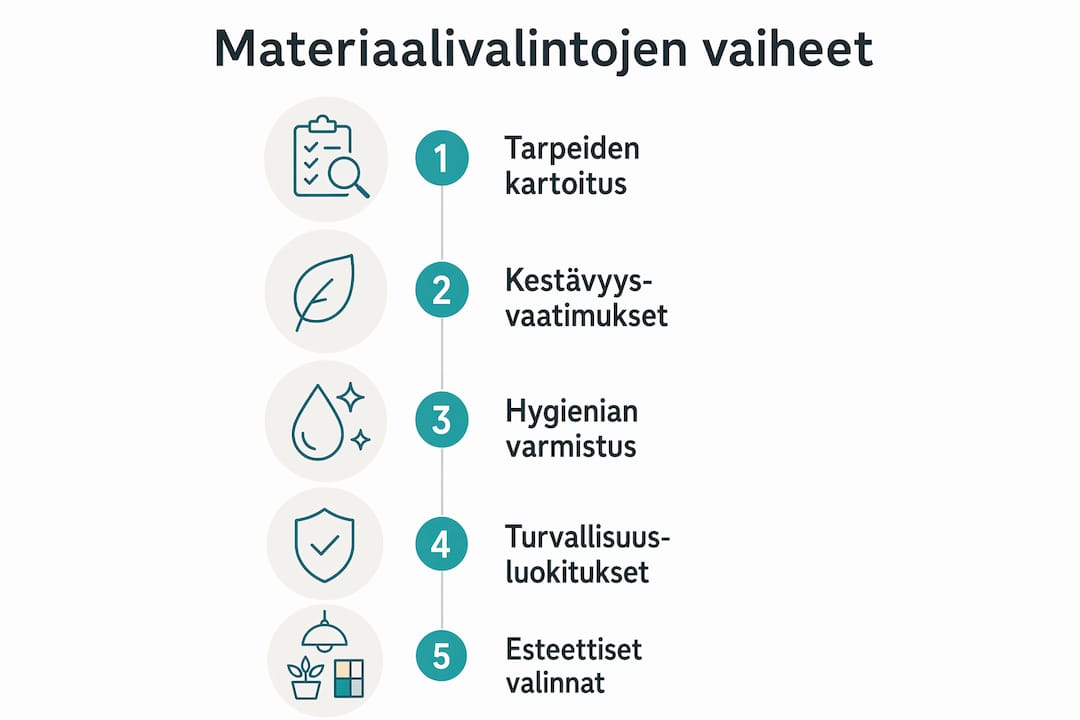
Safety Classifications
The slip resistance rating of flooring material is a statutory requirement. European commercial kitchens require R10–R13 ratings, corresponding to slip prevention in greasy and wet environments. Incorrect classification is a common and costly error that can lead to accidents and legal consequences.
Fire Safety and Acoustics
Surface materials also affect fire safety classifications. Materials used in public spaces must meet national fire rating requirements. Acoustics are often an underestimated factor. Hard surfaces reflect sound and increase noise levels, significantly impairing the customer experience.
Key properties required of materials:
- Chemical resistance: surface material withstands restaurant cleaning agents without fading or becoming brittle
- Seamlessness or rounded edges: no hiding places for bacteria
- Slip resistance rating: R11–R13 for the kitchen, R10 for the customer area
- Fire rating: compliant with public space requirements
- Aesthetic suitability: material supports the restaurant's visual concept
Professional tip: Always ask the material supplier for written documentation of slip resistance and fire ratings. A verbal assurance is not sufficient for authorities or insurance companies.
Best Material Options for Different Restaurant Areas
Different areas require different materials. The requirements for the kitchen and the customer area differ significantly. Below are concrete recommendations per area.
Commercial Kitchen: Stainless Steel and Seamless Floors
In commercial kitchens, stainless steel is the best countertop material. It is heat-resistant, does not absorb odors or flavors, and is easy to clean. Steel surfaces meet HACCP requirements without additional measures. Epoxy-based seamless floors and ceramic tiles effectively prevent bacterial growth on kitchen floor surfaces.
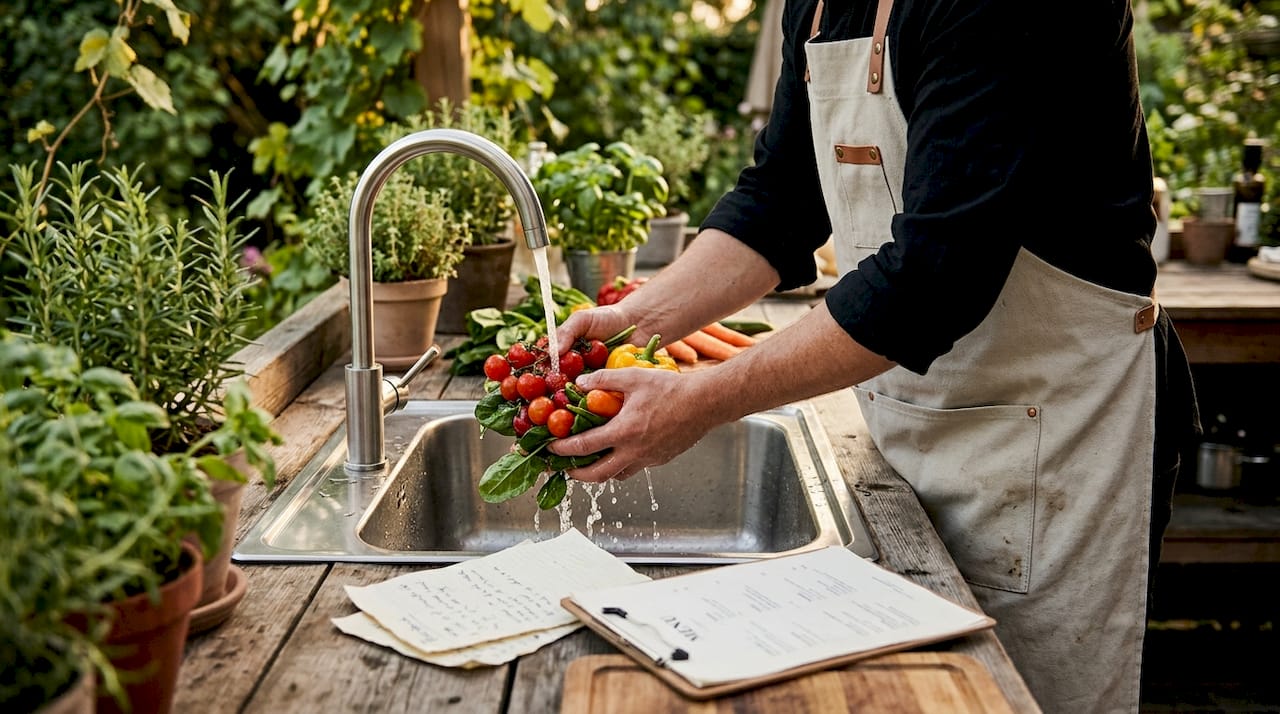
Table Surfaces: Sintered Stone and Phenolic Resin Board
European restaurants favor sintered stone tables due to their durability and ease of maintenance. Sintered stone does not scratch, does not absorb liquids, and withstands hot dishes. It helps manage rising operating costs in the long run.
Phenolic resin board (phenolic laminate) is another durable option for table surfaces. Phenolic resin board surpasses traditional wood and thin veneers in durability due to its chemical resistance. It reduces long-term replacement costs and is suitable for busy restaurant environments.
Customer Area: Natural Materials and Textiles
In the customer area, the role of materials is to create ambiance and enhance comfort. Wood and natural stone bring warmth and homeliness. Multi-sensory interiors combining natural materials and soft acoustically effective solutions improve customer comfort and the sound environment. Textiles, such as upholstery and acoustic panels, absorb sound and soften the space's atmosphere.
Area-specific material guide:
| Area | Recommended Material | Key Feature |
|---|---|---|
| Commercial Kitchen, Work Surfaces | Stainless Steel | Hygiene, heat resistance |
| Kitchen Floor | Epoxy or ceramic tile R11–R13 | Slip resistance, cleanability |
| Table Surfaces | Sintered stone or phenolic resin board | Durability, chemical resistance |
| Customer Dining Area Floor | Natural stone or tile R10 | Aesthetics, durability |
| Customer Area, Walls | Wood, acoustic panels | Ambiance, sound environment |
| Furniture | Upholstered fabric or leather | Comfort, acoustics |
When choosing flooring material, it is also advisable to consult a comprehensive kitchen renovation checklist, which systematically covers hygiene and durability requirements.
Professional tip: Choose the dining area flooring material before furniture. The floor determines the space's acoustics and visual foundation, to which everything else must adapt.
In creating comfort, material combinations are more critical than individual choices. A balance of materials according to the space's purpose ensures optimal durability and cleanliness. More insights into the impact of materials on ambiance can be found in the guide to light accentuation, which practically addresses the interaction of surfaces and light.
How Does Sustainability Guide Material Choices in Restaurants?
Sustainability is no longer a marketing claim. Commercial designers emphasize that sustainability is an economic necessity that guides material choices in addition to responsibility. In practice, this means that a long-lasting material is often also a more environmentally friendly option.
Regional and Honest Materials
Local materials shorten the transport chain and reduce the carbon footprint. Successful restaurants use honest, regional materials that age well. This means materials that look good even after wear, such as natural stone or solid wood.
Life Cycle Thinking in Material Choices
A cheap material that requires replacement every three years is more expensive than a quality material that lasts ten years. Life cycle thinking means that the total cost of a material is calculated over its lifespan instead of just the purchase price. Sintered stone and stainless steel are good examples of materials whose long lifespan compensates for a higher acquisition cost.
Ecological material options for restaurants:
- Recycled plastic: durable and easy-care option for furniture and coatings
- Bamboo: rapidly renewable natural material for floors and furniture
- Recycled glass: for decorative surfaces and counters
- Cork: acoustically functional and renewable flooring material for less trafficked areas
- Coffee grounds composite: a new material used in coatings and furniture
When choosing eco-materials, it is important to ensure that the material also meets technical requirements. A natural material does not automatically mean a durable or easy-care material for restaurant use.
How Do Material Choices Support Hygiene and Safety in Kitchens?
Material choices in a commercial kitchen are directly linked to food safety. The HACCP (Hazard Analysis and Critical Control Points) system sets strict requirements for the cleanability and durability of surfaces.
HACCP Requirements Guide Material Choices
HACCP requires that all surfaces that come into contact with food are easily cleanable and resistant to disinfectants. This excludes porous materials such as untreated wood or cracked plastic. Stainless steel is practically the only material that meets all HACCP requirements without compromise.
Seamless Surfaces Prevent Bacterial Growth
Joints and crevices are points of risk for bacterial growth. Seamless epoxy floors and rounded corners prevent dirt accumulation in places where brushes cannot reach. The EN 16511 standard update from 2025 sets strict requirements for moisture resistance, lightfastness, and chemical resistance for floor panels in commercial dining areas. The standard ensures that flooring materials withstand the stresses of commercial use.
Common Mistakes in Choosing Hygiene Materials
- Using porous materials in the kitchen. Untreated wood, cracking plastic, and porous stones collect bacteria. They are not suitable for a commercial kitchen.
- Incorrect slip resistance rating. According to DIN 51130, kitchens require an R11–R13 rating. R9 or R10 is not sufficient for a greasy kitchen environment.
- Neglecting joints. Tile joints without proper grout are a hygiene problem. Use epoxy grout in kitchen areas.
- Incompatibility of materials with cleaning agents. Always check that the chosen material withstands the cleaning agents you use. The manufacturer's technical data sheet provides chemical resistance information.
- Neglecting surfaces during renovation. A new appliance or piece of furniture does not help if surfaces are worn and cracked. Surfaces are renewed before equipment.
Professional tip: Test new flooring material before installation with your own cleaning agent. Pour a small amount of the agent onto a material sample and let it act for 30 minutes. If the surface changes, the material is not suitable for the kitchen.
Material choices for a commercial kitchen should be planned in cooperation with a kitchen renovation professional who understands both hygiene standards and the technical properties of materials.
Key Considerations
Restaurant material choices are successful when technical requirements, hygiene, and aesthetics are designed together from the outset.
| Point | Details |
|---|---|
| Kitchen floor requires an R11–R13 rating | Incorrect rating leads to accidents and legal consequences in commercial kitchens. |
| Stainless steel is the best countertop material for the kitchen | It meets HACCP requirements and withstands heat and strong cleaning agents. |
| Sintered stone is best suited for table surfaces | It does not scratch, does not absorb liquids, and lasts for years in busy restaurant use. |
| Durability is an economic choice | A long-lasting material costs more to acquire but less over its entire life cycle. |
| Natural materials improve the acoustics of the customer area | Wood and textiles absorb sound and create a more comfortable environment for customers. |
Material Choices Matter More Than You Think
I have seen restaurant renovations where the budget was almost entirely spent on equipment and furniture surface treatments. Surfaces were chosen based on catalog images. Six months later, the floor is worn, table surfaces are scratched, and kitchen corners are blackened. This is not bad luck. It is a design flaw.
Material choices are not interior design decisions. They are operational decisions that directly impact cleaning costs, staff safety, and customer experience. A restaurant with poor acoustics loses customers. A restaurant with a slippery kitchen floor loses staff to accidents.
One thing that is rarely said aloud: aesthetics and durability are not opposites. Sintered stone looks good and lasts. Stainless steel is beautiful and hygienic. Natural stone in the dining area is atmospheric and easy to maintain. The best material choice is always one that performs well both practically and visually.
I recommend exploring the impact of material choices on space planning before making final decisions. The overall picture matters more than individual choices.
— Mikko
Dekoja and Restaurant Visual Material Solutions
A restaurant's visual identity is built on surfaces, lights, and contrast. Dekoja specializes in materials not found in an ordinary building supply store.

Dekoja supplies Musou Black paint and the world's blackest effect surfaces directly from a domestic warehouse. These materials are suitable for restaurants that want to create strong visual contrast, optical illusions, or completely non-reflective surfaces. Deliveries take 1–3 business days from Finland. B2B service is available for projects and design offices. Explore Dekoja's selection and find materials that set your restaurant apart.
Frequently Asked Questions
What floor rating is required for a restaurant kitchen?
Commercial kitchens require an R11–R13 rating according to the DIN 51130 standard. R10 is not sufficient for greasy and wet kitchen environments.
Why is stainless steel the best countertop material for the kitchen?
Stainless steel withstands heat, does not absorb odors or flavors, and meets HACCP requirements. It is easy to clean and resistant to disinfectants.
Is sintered stone suitable for restaurant table surfaces?
Sintered stone is an excellent choice for tabletop surfaces. It is scratch-resistant, non-absorbent, withstands hot dishes, and is easy to maintain in a busy restaurant environment.
How do material choices affect restaurant acoustics?
Hard surfaces, such as stone and tile, reflect sound and increase noise levels. Textiles, acoustic panels, and wood absorb sound and significantly improve the customer experience.
What does the EN 16511 standard mean for flooring materials?
EN 16511 sets requirements for moisture resistance, lightfastness, and chemical resistance for floor panels in commercial spaces. The standard ensures that the material can withstand the stresses of commercial use.