

Material choices for experiential spaces 2026
Designers of restaurants and visual spaces constantly face a challenge: how to choose materials that combine aesthetics, durability, and functionality? Wrong choices can lead to poor acoustics, rapid wear, or a space that fails to evoke desired emotions. This guide offers a practical approach to material selection, based on recent research and expert experience. You'll receive concrete tools to create spaces that stand out and function flawlessly.
Table of Contents
- Summary
- Material Selection Based on Space Function
- Acoustic Materials and Soundscape Management in Spaces
- Innovative Materials and Sustainable Design Trends
- Material Testing and Practical Implementation
- Explore Dekoja.net's Material and Interior Solutions
- Frequently Asked Questions
Summary
| Key Issue | Details |
|---|---|
| Material choice affects acoustics | Right materials reduce echo and enhance customer experience in restaurants |
| Test materials iteratively | 3D modeling helps ensure suitability before final implementation |
| Natural fibers control sound | Wood fiber and acoustic panels absorb sound more effectively than synthetic alternatives |
| Balance between aesthetics and functionality | Durability and hygiene are as important as visual appeal |
| Innovative materials add value | Sustainable solutions improve user experience and reduce environmental impact |
Material Selection Based on Space Function
The primary purpose of a space determines which materials work best. In a restaurant with continuous customer flow, durability takes precedence. Flooring materials must withstand wear, stains, and moisture without losing their visual appeal. At the same time, hygienic requirements are strict, as cleanliness in dining areas is critical for both health safety and reputation.
Acoustics form another key element. In restaurants where customers spend time conversing, excessive reverberation spoils the experience. Material choices directly influence how sound behaves in a space. Choose materials based on space function, considering durability, hygiene, and acoustics, and test them iteratively with 3D modeling before making a final decision. This approach saves time and money by identifying errors in the design phase.
In visual spaces, such as galleries or themed areas, aesthetics and contrasts are emphasized. Materials must support the content presented in the space rather than compete for attention. The use of dark surfaces can create dramatic contrasts that guide the eye and highlight selected elements. The reflective properties of materials affect how light behaves in a space, which in turn defines the atmosphere.
In high-traffic areas, such as entrances or bar counters, materials must be exceptionally durable. Soft materials can wear out quickly, while hard surfaces may cause noise. A balance between these is found by choosing materials that combine durability with sound absorption. For example, dense wood fiber panels offer both structural strength and acoustic benefits.
3D modeling is an indispensable tool for testing materials. By simulating the visual and acoustic impact of different materials in a virtual environment, you can make informed decisions before physical implementation. This process reveals potential problems, such as unwanted reflections or insufficient sound absorption, and allows for adjustments to the plan.
Professional tip: Create material samples in a real use environment before making a final decision. Test them under different lighting conditions and loads to get a realistic understanding of how they will withstand time. This simple step can reveal issues that virtual modeling does not show. Also, explore smart homes and material choices for additional perspectives on modern space design.
Acoustic Materials and Soundscape Management in Spaces
Controlling reverberation time is essential for creating a pleasant dining environment. The ideal reverberation time in a dining area is 1.2 seconds or less. When this limit is exceeded, customers find it difficult to hear each other, which detracts from the experience and shortens their visit. Material choices determine whether this goal is achieved or not.
Porous materials like Lumir Comfort, made from wood fiber, and acoustic panels effectively reduce reverberation time in dining areas. These materials absorb sound energy instead of reflecting it back into the space. Natural fibers, especially wood, perform better than synthetic alternatives due to their porous structure offering a wider frequency response.
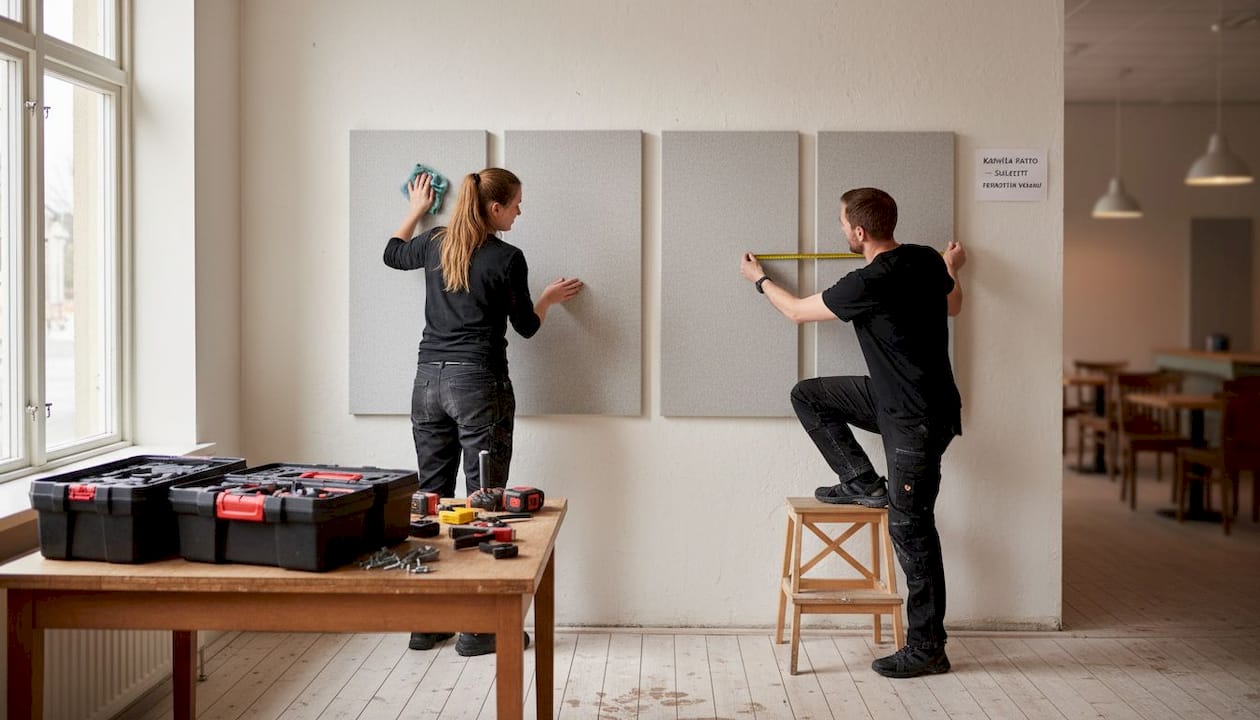
Acoustic coatings offer measurable results. Measurements across over 400 Woodio basins show that acoustic coating significantly reduces reverberation. This empirical data confirms that properly selected materials are not just an aesthetic choice, but a functional solution to measurable problems. When the acoustic properties of materials have been tested in real conditions, you can trust their performance in your own project.
Soft furnishings complement fixed acoustic solutions. Curtains, cushions, and upholstered seating absorb sound and soften the space. A combination of these with fixed acoustic panels creates a balanced sound environment where customers can converse effortlessly. However, do not rely solely on soft furnishings, as they alone are not enough to control reverberation time in large or echoing spaces.
Treating ceilings and walls is often the most effective way to control acoustics. Ceilings are particularly important because sound reflects directly down from them to customer level. Acoustic panels or suspended elements below the ceiling significantly reduce this reflection. On walls, the choice of materials depends on whether absorption or diffusion is desired. Absorption removes sound energy, while diffusion distributes it evenly throughout the space.
“Acoustic management is not just a matter of comfort, but directly affects how long customers stay and whether they return.”
Professional tip: Combine different types of acoustic materials to achieve optimal results. For example, use wood fiber panels on the ceiling, soft upholstery on the walls, and carpets on the floor. This layered approach ensures that sound is absorbed at multiple frequencies, making the space comfortable. Also, check out aesthetic space design tips to seamlessly combine acoustics and visual appearance.
Innovative Materials and Sustainable Design Trends
New materials offer solutions that combine durability, aesthetics, and environmental friendliness. Richlite, made from recycled papers and resin, provides exceptional dimensional stability and durability. Floating structures require dimensionally stable materials like Richlite, which does not expand or contract due to moisture. This makes it an ideal choice for challenging environments where traditional materials would fail.
Woodio products represent another innovative approach. These wood composite materials combine the warm aesthetics of wood with modern durability. Over 400 Woodio basins have not been replaced in five years, demonstrating the material's longevity in real use conditions. This empirical data is valuable as it confirms that the material withstands daily use without significant wear or maintenance needs.
A comparison of natural and synthetic materials reveals clear differences in performance and environmental impact. Natural fibers, such as wood and linen, offer better breathability and acoustic properties. They also age more beautifully, developing a patina that adds to their visual interest. Synthetic materials, such as laminate, are often more affordable and easier to install, but they do not offer the same depth or warmth.
| Material | Durability | Acoustics | Maintenance | Sustainability (environmental) |
|---|---|---|---|---|
| Wood fiber | Excellent | Excellent | Low | High |
| Richlite | Exceptional | Good | Very Low | High |
| Laminate | Moderate | Poor | Moderate | Low |
| Woodio | Excellent | Good | Low | High |
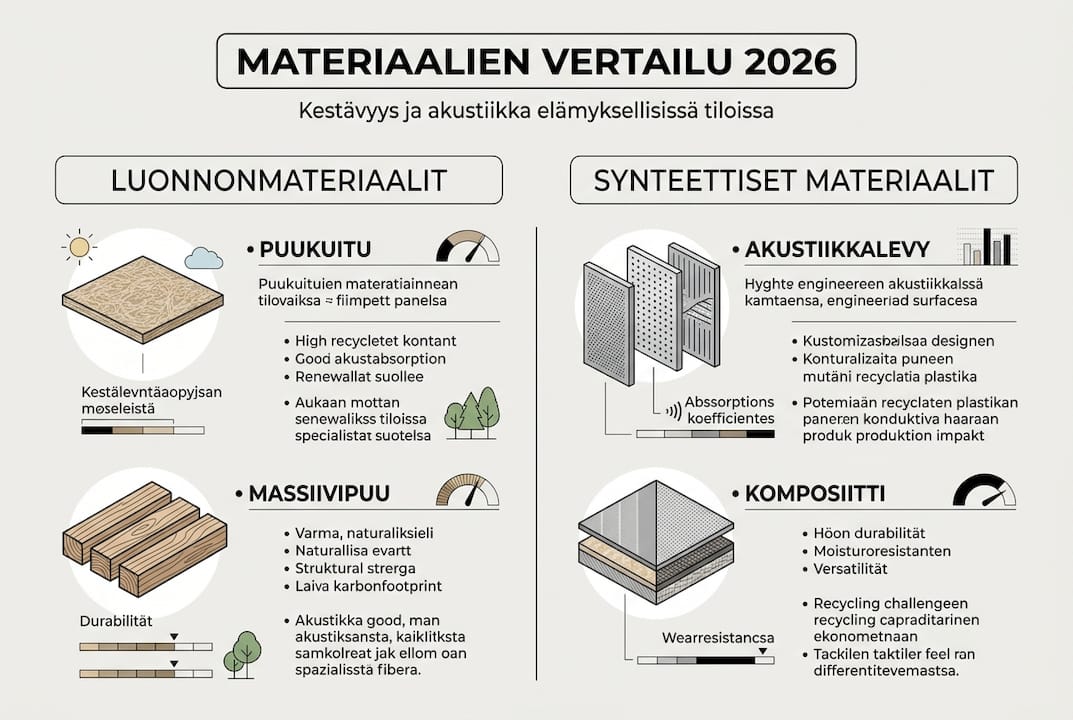
Sustainable design trends emphasize materials that can be recycled or are sourced from renewable resources. Customers increasingly value eco-friendly choices, and this influences their perception of a brand. Material choices are no longer just a technical decision; they communicate your values and commitment to sustainability.
Aesthetic contrasts are another area where innovative materials shine. Super-black surfaces, such as Musou Black, create dramatic juxtapositions that highlight selected elements. These materials absorb almost all light, creating an illusion of depth and infinity. When you combine these with more traditional materials, such as wood or stone, you create visual tension that captures attention.
Professional tip: Don't be afraid to mix traditional and modern materials. For example, combining wood fiber ceilings with Richlite countertops creates an interesting contrast that feels both warm and contemporary. Test different combinations with samples to see how they work together. Explore trendy interior materials for more ideas on using innovative materials.
Material Testing and Practical Implementation
Iterative testing is key to successful material selection. The process begins with digital modeling, where you simulate the visual and acoustic impact of materials. This gives a quick overview of which options deserve closer inspection. Iterative testing with 3D modeling helps ensure the suitability of materials for the space before costly physical implementations.
Creating physical prototypes is the next step. Order samples of selected materials and install them in a real environment or similar conditions. Test them under different lighting conditions, humidity levels, and loads. This reveals how materials behave in real use, not just in laboratory conditions. Pay attention to how they feel, look, and sound.
Common pitfalls include material incompatibility, underestimated maintenance needs, and inadequate acoustic design. For example, hard surfaces may look stunning, but if they reflect too much sound, the space becomes uncomfortable. Another mistake is to choose materials purely based on aesthetics without considering their practical durability. In busy restaurants, cheap material may need replacing within the first year.
Feedback is a critical part of the testing process. Gather comments from staff and, if possible, customers. They will notice things that designers might not, such as awkward surfaces or materials that get dirty easily. Use this feedback to adjust your choices before final implementation. Don't assume that the first choice is always the best.
Collaboration with suppliers and installers ensures smooth execution. Discuss material availability, delivery times, and installation requirements with them. Some innovative materials require specialized expertise in installation, so ensure that installers have the necessary experience. Ask for references and review their previous projects to assess their competence.
- Start with digital 3D modeling to simulate the impact of materials.
- Order physical samples and test them in a real environment.
- Gather feedback from staff and customers on material functionality.
- Adjust your choices based on testing results before making a final decision.
- Coordinate with suppliers and installers to ensure smooth implementation.
Professional tip: Create a testing plan that includes clear criteria for material evaluation. For example, define acceptable reverberation time, wear resistance, and maintenance requirements in advance. This makes comparisons objective and facilitates decision-making. Explore material testing with 3D modeling for more practical tips on the testing process.
Explore Dekoja.net's Material and Interior Solutions
Now that you have an understanding of the complexity of material choices, the next step is to find a reliable partner to support your vision. Dekoja.net offers a curated selection of innovative materials designed to create experiential spaces. Here you will find specialized materials that others don't offer, such as super-black surfaces and light-absorbing materials that create dramatic contrasts and direct attention.

We help restaurants, interior designers, and architects find solutions that combine aesthetics and functionality. We offer expert assistance at every stage of the project, from design to implementation. Fast deliveries from our Finnish warehouse ensure that your project stays on schedule. Explore our material solutions and find inspiration for your next project.
Our blog constantly provides updated tips and trends to help you stay abreast of industry developments. Read more about material choices and visuality or delve into aesthetic space design and materials for a deeper understanding of how to create spaces that evoke emotions.
Frequently Asked Questions
What are the most important factors in material selection for experiential spaces?
The primary use of the space determines material choices. In restaurants, durability, hygiene, and acoustics are critical. In visual spaces, aesthetics and contrasts are emphasized. Test your choices with 3D modeling and physical samples before making a final decision.
How do I balance appearance and durability in material choices?
Choose materials that combine both properties. For example, Woodio products offer the warm aesthetics of wood and modern durability. Prioritize durability in high-traffic areas and use aesthetic materials strategically to highlight specific areas.
What sustainable material options are available in 2026?
Richlite, made from recycled papers, and wood-fiber-based materials are excellent sustainable options. They offer longevity and are from renewable sources. Customers increasingly value eco-friendly choices, which also makes these materials a brand choice.
How are acoustic materials used in practice in restaurants?
Install acoustic panels on ceilings and walls to absorb sound energy. Combine solid panels with soft furnishings such as curtains and upholstered seating. Aim for a reverberation time of 1.2 seconds or less so customers can converse comfortably.
What testing methods do you recommend before final installation of materials?
Start with 3D modeling to simulate the effect of the materials. Order physical samples and test them in a real environment under different lighting conditions and loads. Gather feedback from staff and customers. Adjust your choices based on testing results before large-scale implementation.