

Material Selection for Gardens 2026: A Professional's Guide
Material choices in garden design are not just an aesthetic matter. They determine whether your garden can withstand Finland's varied weather conditions, how much maintenance it requires, and what ecological footprint your project will have. When designing a garden or green space in Finland, your materials must cope with frost, meltwater, humidity, and intensive UV exposure during the summer months. The right choices save your clients time and money for years to come.
Table of Contents
- The Importance of Material Selection in Finnish Gardens
- Durable and Ecological Material Options for Gardens
- Combine Aesthetics and Functionality in Garden Materials
- Material Types According to Microclimate and Purpose
- Bio-based Garden Mulch and Innovative Materials 2026
- Explore dekoja.net's Materials and Services
- Frequently Asked Questions About Material Selection for Gardens
Key Learnings
| Point | Summary |
|---|---|
| Climate Impact | Finnish weather conditions stress materials, so durability and weather resistance are primary selection criteria. |
| Ecological Aspect | Using local and recycled materials reduces the carbon footprint and supports sustainable development. |
| Microclimate | Each garden area requires its own material selection based on humidity, sun, and wear conditions. |
| Life Cycle | Balancing functionality, aesthetics, and longevity is the foundation of successful design. |
| Water Management | Bio-based and permeable materials promote natural stormwater management and soil health. |
The Importance of Material Selection in Finnish Gardens
Finland's climate conditions place stringent demands on garden materials. Frost penetrates deep into the soil, spring meltwater causes moisture stress, and summer UV radiation rapidly degrades untreated surfaces. Materials that perform well in Central Europe may not withstand Finnish conditions.
Material choices influence microclimate, water management, and the garden's longevity. When you select locally sourced and durable materials, they fare considerably better in Finland's varied conditions than imported alternatives. Local materials have a smaller carbon footprint, and their suitability for the domestic climate is already proven.
Microclimate characteristics vary significantly within the same garden. A shaded wall area requires different solutions than an open, sunny lawn. Material selections must meet these local requirements to ensure the end result is both functional and durable.
Durability requirements for Finnish garden materials:
- Weather resistance: the material must withstand freeze-thaw cycles year after year
- Maintenance needs: low-maintenance materials save the client time and resources
- Longevity: a minimum lifespan of 15-20 years in professional projects
- Ecological aspect: material recyclability and environmental impacts must be considered during selection
- Safety: non-slip and non-toxic properties, especially in family gardens
Also, read about material choices from a microclimate perspective, which deepens your understanding of the importance of local conditions. VTT's research materials provide further information on material testing in Finnish conditions.
Durable and Ecological Material Options for Gardens
Durable materials reduce the garden's environmental impact and improve its long-term functionality. Recycled materials and responsibly sourced wood have grown in popularity in professional design, as clients increasingly value ecological solutions.
Recycled plastic is suitable for garden furniture, edging, and decking. It is excellent at resisting moisture, requires little maintenance, and reduces the need for virgin raw materials. Responsibly sourced wood, such as FSC-certified pine or spruce, brings natural warmth and is suitable for fences and cozy gardens.
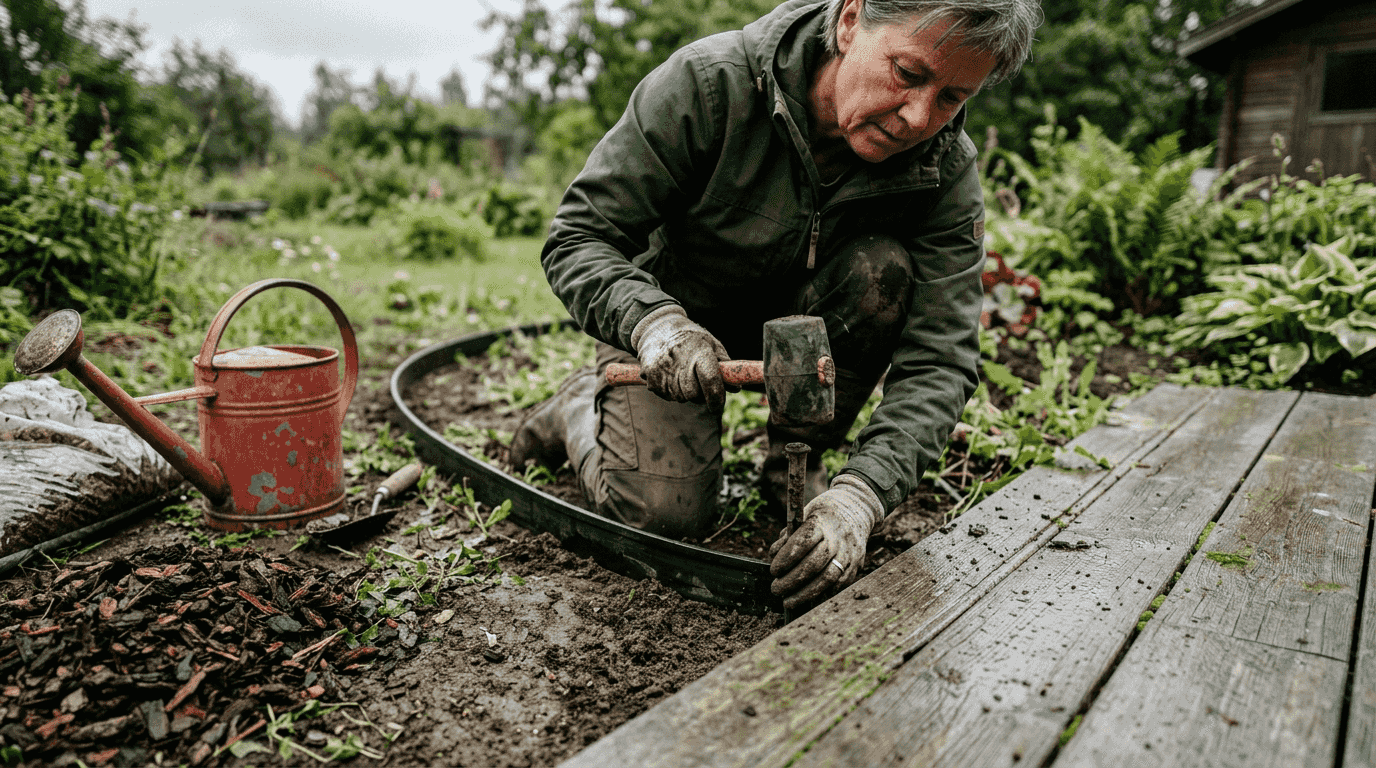
Permeable pavements manage stormwater naturally and reduce flood risks. They allow water to infiltrate the soil, supporting plant health and preventing surface runoff. Natural stone is a traditional choice that ages beautifully and is especially suitable for pathways and patios.
| Material | Durability | Maintenance Needs | Ecological Aspect | Suitability for Finland |
|---|---|---|---|---|
| Recycled plastic | Excellent | Low | Good | High |
| FSC wood | Good | Medium | Excellent | High |
| Permeable concrete | Excellent | Low | Moderate | High |
| Natural stone | Excellent | Low | Good | Very High |
| Composite | Excellent | Low | Moderate | High |
| Traditional concrete | Excellent | Low | Poor | Medium |
Composite materials combine the best properties of plastic and wood. They are lightweight, easy to maintain, and last for decades without treatment. Traditional concrete works for structural elements, but its environmental impacts are significant, and it is not water-permeable.
Professional tip: Choose a material whose life cycle matches the garden's maintenance plan. Longer durability saves time and the environment. Life cycle assessments show that materials with low embodied energy and a long service life significantly reduce overall environmental impacts.
Explore durable and aesthetic materials that combine ecological soundness and visual impact. SYKE's sustainable development reports provide in-depth information on the environmental impacts of materials.
Combine Aesthetics and Functionality in Garden Materials
Materials play a dual role: they must serve both the user's needs and the visual identity of the space. Natural materials create harmonious spaces when integrated with the surrounding architecture and vegetation.
Natural stone brings timelessness and serenity to the garden. Slate, granite, and fieldstones serve as materials for paths, patios, and walls. They are particularly suited to traditional and Scandinavian garden styles.
Modern composites offer clean lines and a cohesive look. They are suitable for urban gardens, rooftop terraces, and minimalist sites. Their color range is extensive, and the surface remains uniform year after year.
Most commonly used material combinations:
- Natural stone and wood create a warm, natural ambiance
- Concrete and steel bring industrial elegance to modern sites
- Recycled plastic and vegetation combine ecological aspects with soft visual elements
- Composite and glass are suitable for designer gardens and architectural sites
Professional tip: Consider the surrounding environment and users' needs when selecting materials. In public spaces, durability and safety are emphasized, while in private gardens, you can prioritize aesthetics more.
“Material selection is not just a technical decision. Every surface, texture, and color builds a story of how the space is perceived and used. The best gardens are created when functionality and beauty go hand in hand.”
Explore trendy materials and design tips that inspire professional projects. The Finnish Architecture Museum's design guidelines offer perspectives on historical and modern Finnish design.
Material Types According to Microclimate and Purpose
Every garden area creates its own microclimate. A shaded, moisture-prone corner requires a different material solution than an open, sunny terrace. Considering microclimate conditions is essential for material performance and durability.
Moist areas, such as pond edges or shaded walls, require non-slip and mold-resistant materials. Permeable concrete, stone dust, or sand-surfaced natural stones work well. Avoid untreated wood, which rots quickly.
Sun exposure degrades plastic-based materials due to UV radiation. Choose UV-stabilized composites or treated wood materials. Natural stone and concrete are excellent at withstanding sunlight and store heat, which can be beneficial on cool evenings.
Pathways require a wear-resistant surface that does not crumble or crack. Granite, concrete pavers, and compacted gravel are proven options. On patios and seating areas, you can use softer materials like wood or composite, which feel pleasant underfoot.
Guide to material selection for different microclimates:
- Map the garden's humidity, sun, and wind conditions by area
- Identify high-traffic areas such as entrances and paths
- Select materials that meet both functional and aesthetic requirements
- Test material slipperiness when wet and in frosty conditions
- Plan a maintenance program to extend the life cycle of materials
| Purpose | Moist Area | Sunny Area | Shaded Area | High-Traffic Area |
|---|---|---|---|---|
| Paths | Permeable concrete | Natural stone | Stone dust | Granite |
| Patios | Composite | UV-treated wood | Slate | Concrete slabs |
| Decorative areas | Fieldstones | Light-colored stones | Dark stones | Mulch layer |
| Planting beds | Wood mulch | Bark mulch | Biodegradable mulch | Stone chips |
Learn about material selection by microclimate, which delves deeper into the topic. VEVIRA's guidelines provide additional information on the effects of microclimate conditions on vegetation and structures.
Bio-based Garden Mulch and Innovative Materials 2026
New bio-based materials offer ecological alternatives to traditional solutions. Bio-based garden mulch replaces plastic films and chemical herbicides with a natural, compostable option.

Liquid-applied bio-mulch forms a protective layer on the growing medium surface. It prevents weed growth by suppressing their development, but as it decomposes, it enriches the soil and improves its structure. In nursery cultivation and green areas, it has proven to be an effective and environmentally friendly solution.
Applications for bio-based mulch:
- Weed control in nurseries and plant farms without chemical herbicides
- Sustainable maintenance of public green areas
- Planting beds in private gardens where reduced weeding is desired
- Growing media for ecological garden projects where naturalness is emphasized
As it composts, the bio-mulch transforms into nutrients that support plant health. It eliminates the need to remove and dispose of plastic films, reducing waste and maintenance work.
“Innovations in bio-based materials are changing the way we care for gardens. They are not just environmentally friendly alternatives, but often functionally superior to traditional materials.”
Explore specialty materials such as bio-based mulch, which offer new possibilities for ecological garden design. Bio-based garden mulch innovation projects provide more information on product development and practical experiences.
Explore Dekoja.net's Materials and Services
When you design a space that stands out, you need materials not found in standard retail chains. Dekoja.net supplies specialized materials directly from a domestic warehouse, so you get the solutions you need quickly for your project schedule.
Explore our selection, which includes super black surfaces, anti-reflective materials, and visual effect finishes. These are excellent for gardens where dramatic contrasts are desired, vegetation is to be highlighted, or optical illusions are to be created. Our professional team assists with material selection and design support from start to finish.
Frequently Asked Questions About Material Selection for Gardens
What material is best suited for the different microclimates of a Finnish garden?
For moist areas, choose permeable concrete or natural stone; for sunny locations, UV-stabilized composite or granite; and for shaded areas, slate or biodegradable mulch. Each microclimate requires its own assessment.
How to choose the most durable and environmentally friendly material for garden paths?
Recycled plastic, FSC-certified wood, and permeable concrete are the most ecological options. Compare the life cycle assessments of materials and choose a long-lasting solution that reduces the need for replacement.
When should natural stone be chosen over composite materials?
Natural stone is suitable for traditional, timeless sites and withstands wear excellently. Composite is a better choice for modern gardens where a uniform surface and low maintenance are desired.
How does bio-based garden mulch work in weed control?
Liquid bio-mulch is applied to the surface of the growing medium, where it forms a protective layer. It suppresses weed growth and, as it decomposes, turns into nutrients that enrich the soil.
Why is the use of local materials recommended in garden design?
Local materials have been tested for Finnish climatic conditions, have a smaller carbon footprint than imported products, and support the domestic economy. They also fit aesthetically into the Finnish environment.