

The role of creativity in interior design – Experiential spaces in Europe
Over 85 percent of Central European restaurant and art installation projects emphasize the importance of creativity and visual contrast in creating a unique spatial experience. The designer's task is to combine materials, colors, and shapes in a way that makes the space an experience and speaks to an international audience. This article explores how bold creative thinking and contrasts build the personality and impact of spaces in Central European interior design.
Table of contents
- What does creativity mean in interior design?
- Forms of creativity in restaurant and art environments
- Visual contrast and choice of materials
- The practical benefits and risks of creativity
- Musou black and innovations in European interior design
Key findings
| Paragraph | Detail |
|---|---|
| Creativity in interior design | Creativity means developing innovative design solutions that challenge traditional perceptions of space. |
| Cultural narrative | In interior design, it is important to combine cultural heritage and modern design solutions to create an atmosphere. |
| Visual contrast | Contrast is key to creating atmosphere, and it comes from a careful combination of materials and colors. |
| Risks of innovation | Creativity brings opportunities, but requires caution to avoid excessive technology focus and feasibility issues. |
What does creativity mean in interior design?
Creativity in interior design is much more than just arranging beautiful objects or applying surface decoration. It means developing innovative design solutions that transcend conventional notions of space and functionality.
In interior design, creativity means the ability to see a space holistically, understanding both the aesthetic and the practical aspects. It requires the courage to break traditional models and create spaces that evoke emotions and tell stories. Developing a concept requires a systematic approach , where intuition and technical expertise go hand in hand.
Creative interior design is not just a visual art, but a deep understanding of human psychology and behavior. It means designing spaces that shape the user's experience, evoke emotions, and create unique interactive environments. This requires the designer to be able to combine elements in a way that goes beyond the ordinary.
Pro tip: Develop your creativity in interior design by exploring different cultural expressions and dare to boldly combine unusual materials and shapes.
Forms of creativity in restaurant and art environments
In restaurant and art environments, creativity manifests itself in multi-level design solutions that go beyond mere visual aesthetics. Spatial composition forms the core of creativity , where each element is intentionally chosen to evoke emotions and tell a story.
In modern restaurant design, creativity means combining cultural heritage with innovative design solutions. Cultural narrative shapes spatial experiences where food, architecture and atmosphere merge into a unified experience. This requires the ability to combine traditional elements in new, surprising ways.
Creativity in art environments means the courage to break the mold and create spaces that provoke, inspire and challenge the viewer's thinking. It is a dialogue between space, art and experiencer, where every detail is a thoughtful part of a larger whole. This requires a deep understanding of human psychology, aesthetics and cultural meanings.
Pro tip: Develop spatial creativity by exploring different cultural forms of expression and dare to boldly combine unusual materials and shapes.
Visual contrast and choice of materials
Visual contrast is the most powerful tool in interior design, shaping the experience and atmosphere of a space. Combinations of colors and materials create depth and meaning in a space, where every detail tells its own story.
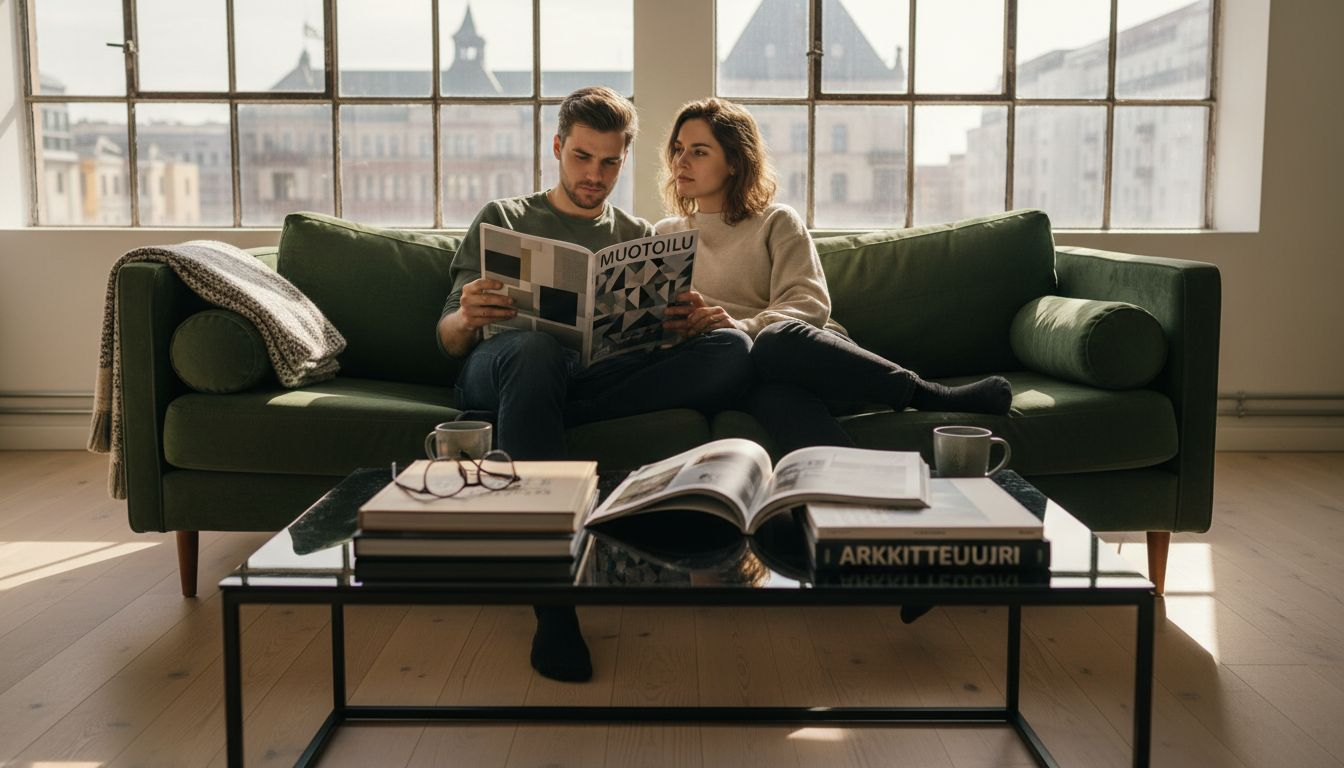
When choosing materials, it is important to understand that contrast is created by more than just colors. The criteria for selecting materials go beyond mere aesthetics , taking into account functionality, technicality and environmental impact. Successful contrast is created by the dialogue between the surfaces, textures and reflection properties of the materials.
A deep understanding of visual contrast means the ability to create spaces that evoke emotions and stimulate the senses. This requires the courage to combine seemingly incompatible materials in a way that creates tension and interest. In European interior design, contrast is more than an aesthetic choice - it is a way to communicate, provoke and inspire.
Pro tip: Experiment with material contrast by combining glossy and matte materials and studying their behavior in different lighting conditions.
The following table presents the effects of contrasts between different materials on the atmosphere of the interior:
| Combination of materials | Sensation and atmosphere | Application |
|---|---|---|
| Glossy + matte | Depth, voltage | Modern living room, gallery |
| Wood feel + metal | Heat vs. coolness | Restaurant, cafe |
| Concrete + colored fabric | Brutality alongside softness | Contemporary art exhibitions, lounge spaces |
| Musou Black + clear glass | Maximum contrast, drama | Theaters, exhibition spaces |
The practical benefits and risks of creativity
Creativity in interior design brings with it both significant opportunities and challenging risks . Innovative solutions can revolutionize the functionality and user experience of a space in a way that goes beyond traditional design norms.
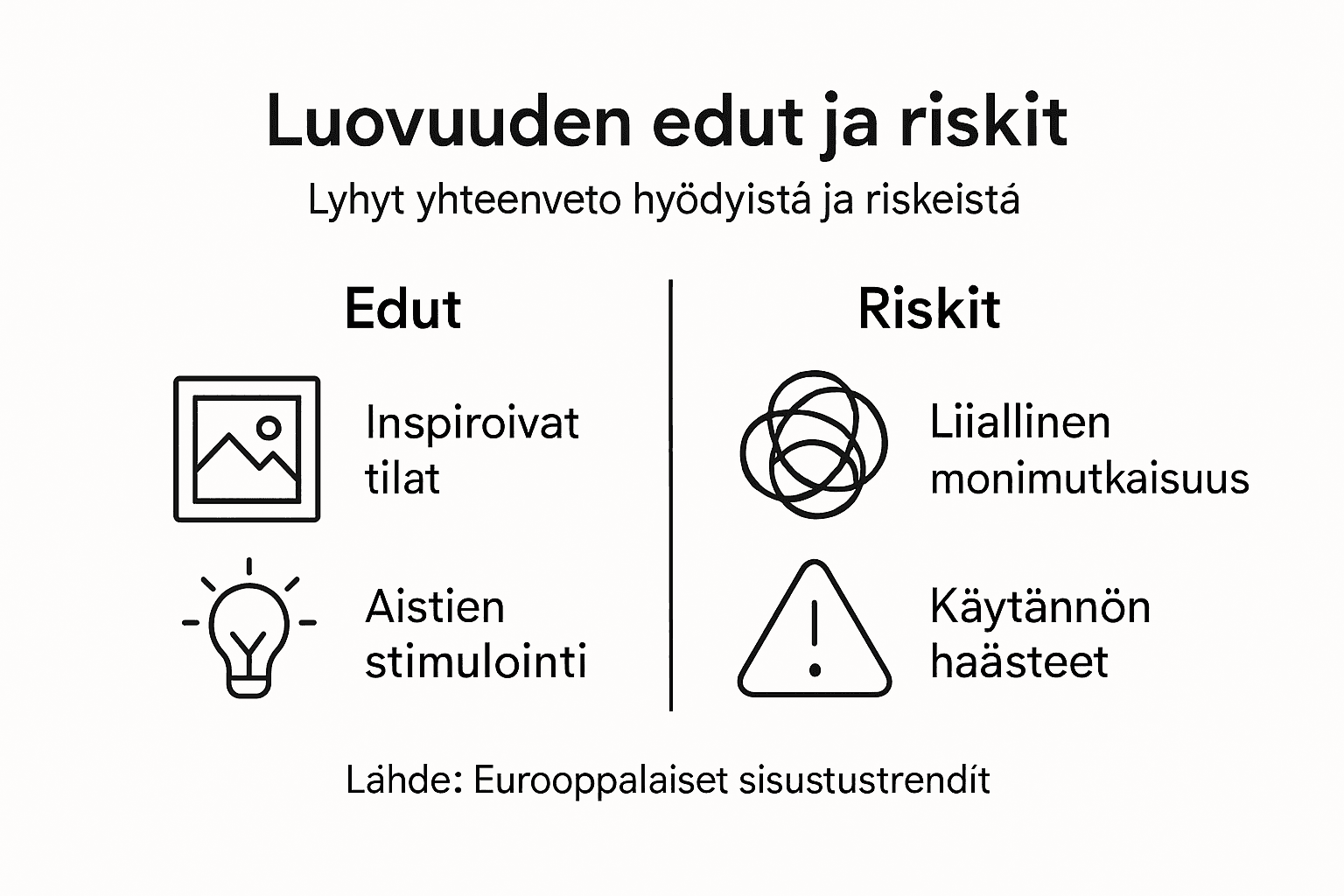
Combining technology and creativity in interior design opens up new dimensions, but at the same time requires careful ethical consideration. Balancing innovation with a human touch is critical for design to maintain its authenticity and relevance. The risk is that too much technology-centricity can distance design from its original human purpose.
The practical benefits of creative design are best seen in spaces that stimulate the senses, evoke emotions and adapt to the needs of their users. At the same time, risks such as excessive complexity, increased costs and challenges of feasibility must be recognized. A successful creative solution requires both intuition and a systematic approach.
Pro tip: Always evaluate your creative solutions from both an aesthetic and practical perspective, ensuring that the innovation serves real user needs.
The table below summarizes the benefits and risks of creativity in interior design:
| Perspective | Benefits | Risks |
|---|---|---|
| User experience | Experiential and arousing emotions | Excessive complexity |
| Functionality | Flexibility of spaces | Implementation challenge |
| Economy | Differentiation from competitors | Cost increase |
| Use of technology | Enabling new solutions | Technocentricity, inhumanity |
Musou Black and innovations in European interior design
Musou Black represents a new generation of material innovation in European interior design. It is a breakthrough in material technology that challenges traditional concepts of surfaces and colors, offering designers completely new possibilities for creative expression.
Ultra-black material is not just a color, but a philosophical choice. It signifies a deep understanding of the interplay of light, space and contrast. In a European context, Musou Black represents a minimalist aesthetic, where emptiness and darkness are seen as active design elements – not just a background color, but a spatial experience.
The innovation is particularly evident in the dramatic takeover of space. The material absorbs up to 99.4% of light, enabling unique visual solutions for theaters, exhibition spaces and restaurant environments. It is more than a surface material – it is a way to shape people's perception and experience of space.
Pro tip: Use Musou Black judiciously to create depth, contrast, and unexpected visual tension in your interior design.
Create European Experiences with the Power of Creativity
Creativity in interior design challenges traditional boundaries and helps you build spaces that evoke emotions and are memorable. With visual contrast, like Musou Black, you can create depth and drama that will elevate your restaurant or art space to a new level. If you want to combine theatrical atmosphere, innovative materials and functionality, we have the solutions to your creative challenges.
Discover our selection of lighting products and new generation materials like Musou Black. Dekoja.net is your trusted partner in implementing creative solutions. Visit our website today at Dekoja.net and let our professionals help you bring unique visual contrast and atmosphere to your project. Take the first step towards inspiring interior design now.
Frequently asked questions
What does creativity mean in interior design?
Creativity in interior design means developing innovative design solutions that go beyond conventional notions of space usage and aesthetics.
How does visual contrast affect interior design?
Visual contrast, such as combinations of colors and materials, creates depth and meaning in a space, influencing its mood and experience.
What is Musou Black and how is it used in interior design?
Musou Black is an ultra-black material that absorbs almost all light, enabling unique visual solutions in spaces. It can be used to create depth and excitement in interiors.
How can I develop my creativity in interior design?
To develop creativity, it is worth exploring different cultural forms of expression and boldly combining unusual materials and shapes.
Recommendation
- Experiential design in interior design – Experiential spaces for restaurants – Dekoja.net
- Experiential design in interior design – Experiential spaces for restaurants – Dekoja.net
- Experiential design in interior design – Experiential spaces for restaurants – Dekoja.net
- Experiential design in interior design – Experiential spaces for restaurants – Dekoja.net
- La Guida Definitive all'Innovazione Esperienziale: Transformare il Business nell'Era delle Esperienze - Corrado Manenti