

Creative material solutions: inspiration and sustainability for spatial design
TL;DR:
- Material selection combines aesthetics, durability, and environmental responsibility.
- Circular economy and life-cycle thinking aid in material reuse and save costs.
- Safety, maintainability, and functionality are central in specialized environments such as restaurants and galleries.
The success of restaurants and galleries is often determined by material choices that combine creativity, sustainable development, and practicality. Many designers face the same challenge: where to find materials that are both visually appealing and durable in demanding daily use? This article will explore how creative material solutions work in demanding environments, what circular economy and life-cycle thinking mean in practice, and how safety and maintainability guide choices. You'll get concrete tips and examples to directly support your design work.
Table of Contents
- Characteristics and Significance of Creative Material Solutions
- Sustainability, Circular Economy, and Material Passports to Support Design
- Functionality, Safety, and Maintainability in Specialized Environments
- Inspiration and New Directions: Creative Utilization of Materials
- What Many Designers Overlook – Practical Observations on Creative Material Solutions
- Learn More About Creative Material Solutions at Dekoja.net
- Frequently Asked Questions
Key Takeaways
| Point | Details |
|---|---|
| Durability and Aesthetics | Creative material solutions combine practicality and visual appeal in everyday use. |
| Circular Economy Solves | Material passports and life-cycle thinking support ecological and resource-efficient design. |
| Safety and Cleanliness | Properly chosen materials facilitate space maintenance and ensure user safety. |
| Innovations in Everyday Life | Boldly try new materials and utilize recycling, as creative solutions give spaces a unique look and story. |
Characteristics and Significance of Creative Material Solutions
First, let's explore why and how material solutions are at the core of design.
Creative material solutions do not just mean striking surfaces or trendy colors. They combine aesthetics, functionality, and environmental responsibility into one whole. This means that the designer evaluates the entire life cycle of a material already at the selection stage: how it behaves in daily use, how it is cleaned, and what happens to it when the space changes or is removed from use.
Practical innovations can be surprisingly mundane. New surface treatments, recycled materials, and versatile solutions are all creative material solutions. For example, an acoustic panel made from recycled plastic is both functional and environmentally friendly. Modular wall solutions that can be adapted to the needs of the space offer flexibility without extensive renovations.
Different types of spaces place very different demands on materials. In a restaurant, the floor must withstand continuous wear and tear, slip resistance and easy cleanability are mandatory features. In a gallery, acoustics, lighting reflections, and adaptability take precedence. In specialized spaces, such as studios or pop-up shops, materials often require quick installation and reusability.
A restaurant's specific needs cover several different areas:
- Flooring: wear resistance, non-slip properties, easy cleaning
- Walls: moisture resistance, hygiene requirements, acoustic properties
- Bar and counter areas: surface hardness, chemical resistance, aesthetics
- Kitchen: fire protection, hygiene regulations, heat resistance
- Washrooms: watertightness, mold resistance, safety
Tengbom emphasizes that materials must be chosen according to space utilization, durability, and cleanability. This applies equally to restaurants as it does to galleries and other specialized spaces.
The impact of material selection on the appeal of a space is significant. A well-chosen material creates atmosphere, supports the brand, and makes the space memorable. A poorly chosen material, on the other hand, can cause ongoing maintenance problems, safety risks, or visual inconsistencies.
Sustainability, Circular Economy, and Material Passports to Support Design
Now that the role of creative material solutions has been introduced, let's delve into how sustainable design and the circular economy are changing the industry.
A material passport is a document or digital tool that stores all information about the materials used in a space. It includes data on the material's origin, composition, installation method, and suitability for reuse. In practice, a material passport acts as a "notebook" for the space, which can be utilized in renovations, sales, or demolition.
In the circular economy, material documentation and the use of a material passport enable efficient demolition and reuse. This means that materials do not end up in landfills, but can be moved to another site or recycled as raw material. In Finland, this is particularly relevant, as the construction sector produces a significant portion of all waste.
Life-cycle thinking means considering the entire path of a material: acquisition, installation, use, maintenance, and finally recycling or reuse. When a designer incorporates life-cycle thinking from the early stages of a project, many later problems are avoided. For example, a seemingly cheap material can turn out to be expensive if it requires frequent replacement or specialized cleaning.
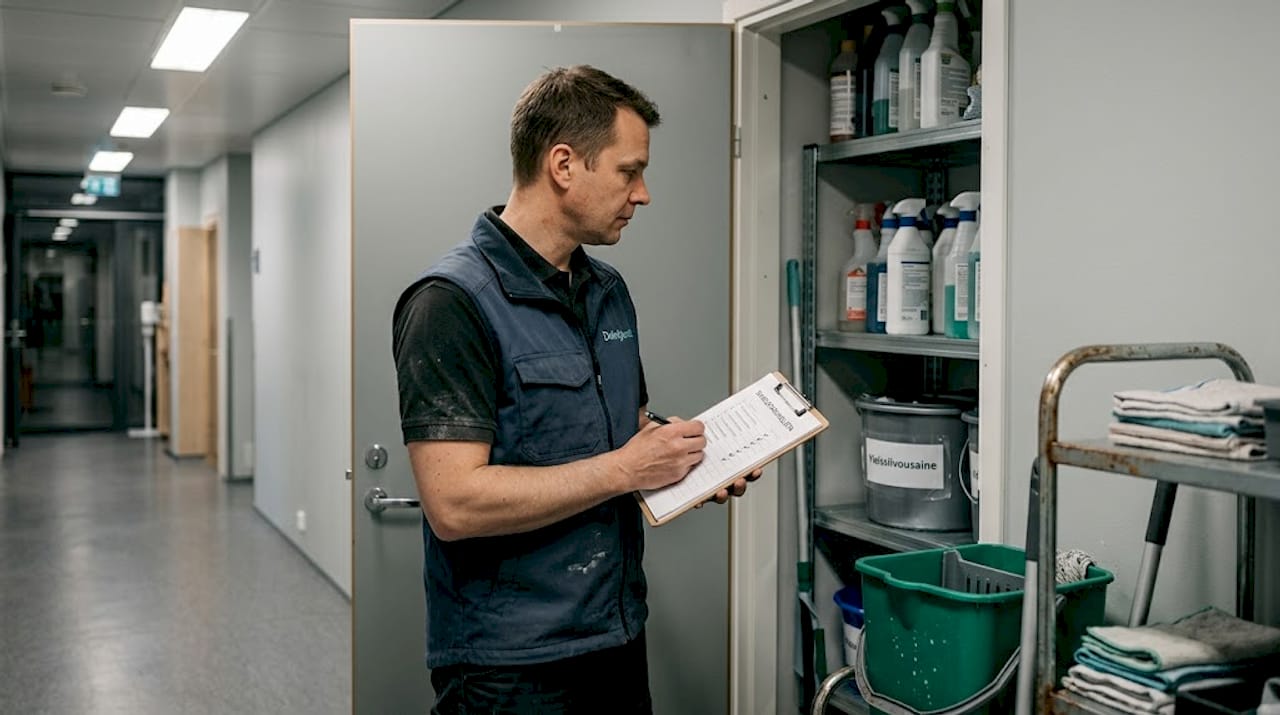
The importance of documentation in the circular economy is concrete. When it is precisely known what materials have been used in a space, better decisions can be made during renovation or demolition. This saves both time and money, and strengthens the designer's expert image in the eyes of the client.
| Material Passport Component | Content | Benefit |
|---|---|---|
| Material Identification | Name, manufacturer, composition | Easy identification later on |
| Origin and Certifications | Country of origin, environmental certifications | Verification of responsibility |
| Installation Information | Installation method, adhesives, fasteners | Facilitates demolition and reuse |
| Maintenance Instructions | Cleaning agents, maintenance intervals | Longevity and quality preservation |
| Reuse Potential | Recyclability, reusability | Realization of circular economy |
The benefits are clear: resource efficiency increases, costs decrease in the long run, and environmental values improve. Customers increasingly value responsible choices, and a material passport is a concrete way to demonstrate commitment to sustainable design.
Professional tip: Fill out the material passport during the design phase, not just after construction. This way, all information is available immediately, and there is no need to search for information from manufacturers or contractors afterwards. This significantly saves time in later modifications and strengthens the importance of the circular economy in architecture at a practical level.
It is also important to identify risks at the design stage. Risks associated with material choices, such as allergens, fire safety, or moisture resistance, are easier to manage when they are identified at the beginning of the project rather than after construction.
Functionality, Safety, and Maintainability in Specialized Environments
Next, let's focus on how practicality and safety determine material selection in various spaces.
Functionality is the basic starting point for material selection. A material can be as beautiful as it wants, but if it cannot withstand the daily stresses of the space, it is the wrong choice. In a restaurant, the floor is exposed to constant traffic, moisture, and stains. In a gallery, wall surfaces may change frequently, so they must be easily adaptable and installable.
Materials must withstand heavy use and be easy to clean, as well as meet the requirements of the space's intended use. This does not mean that materials have to be boring or impersonal. On the contrary, many durable materials are also visually interesting.
Safety is particularly important in public spaces. Non-slip floors are mandatory in wet areas and areas with high traffic. Fire-retardant wall panels are a requirement in restaurants and other public spaces. Acoustic materials also indirectly affect safety: excessive noise can cause stress and communication problems.
Galleries have their own specific requirements. Adaptability is crucial because exhibitions change regularly. Wall surfaces must withstand repeated attachment and detachment without damage. Acoustic solutions improve the spatial experience and allow for different events to be held in the same space.
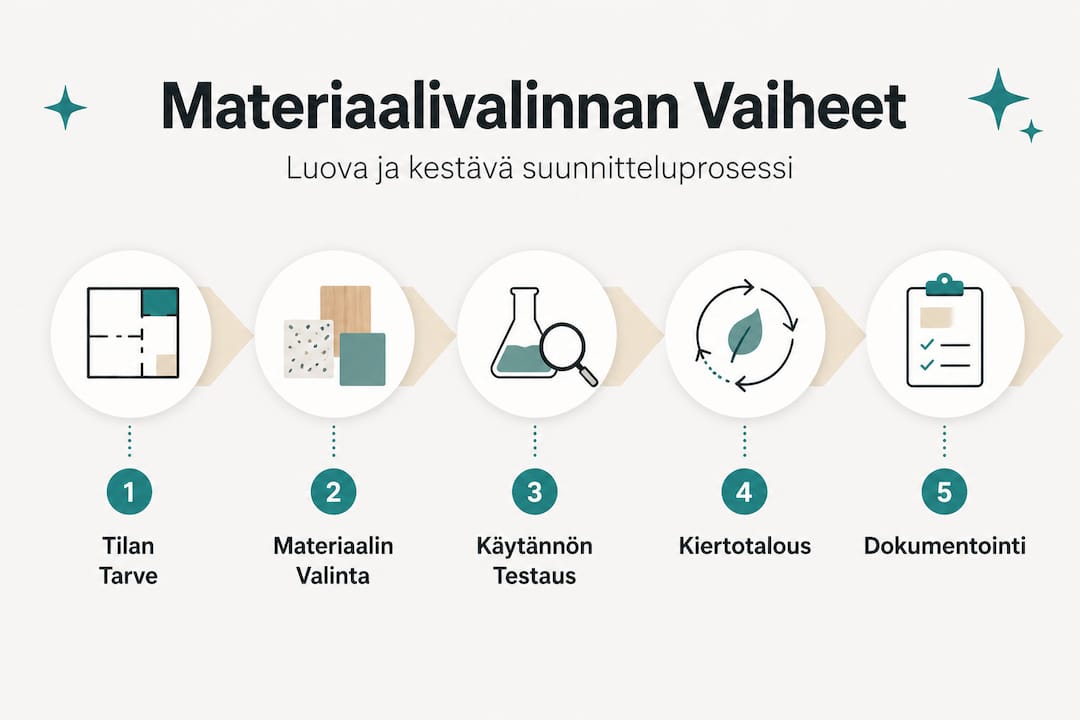
The material selection process should be phased:
- Define the intended use and stress level of the space precisely before comparing materials.
- Map out safety requirements such as fire protection, non-slip properties, and hygiene regulations.
- Evaluate maintainability, i.e., cleaning frequency, necessary agents, and repair possibilities.
- Compare life-cycle costs, not just the acquisition price.
- Test the material in practice in a small test area before widespread adoption.
- Document the choices in a material passport for future use.
| Material | Application | Durability | Maintainability | Special Features |
|---|---|---|---|---|
| Porcelain tile | Restaurant floor | Excellent | Easy | Non-slip surface available |
| Acoustic panel | Gallery, restaurant | Good | Moderate | Sound absorption |
| Recycled plastic | Wall panel, furniture | Good | Easy | Environmentally friendly |
| Steel | Bar, kitchen | Excellent | Easy | Hygienic, chemical resistant |
| Concrete floor | Special space, gallery | Excellent | Moderate | Customizable, durable |
| Reclaimed wood | Wall, floor, furniture | Good | Moderate | Warm atmosphere, unique |
The use of aluminum in green building is a good example of how a traditional material takes on a new role in sustainable design. Aluminum is lightweight, durable, and fully recyclable, making it an excellent choice for many specialized spaces.
Material tips for aesthetic spaces help combine visual impact with practical functionality. This balance is precisely what a professional designer seeks in every project.
Inspiration and New Directions: Creative Utilization of Materials
Once the technical requirements and safety have been covered, it's time to get inspired: how can creativity be used to add value to a space?
Innovative material solutions often emerge from where they are least expected. Acoustic panels made from recycled plastic are a good example: they solve sound problems, reduce plastic waste, and can be visually very interesting. The same material that would otherwise end up in a landfill gets a new life as a functional and beautiful surface.
A DIY art floor is another concrete idea. Concrete flooring can be patterned, colored, or treated with various techniques to become a unique work of art. This is especially suitable for galleries and specialized spaces where a strong visual identity is desired. Innovations in concrete technology now enable very precise surface treatment and patterning.
Modular wall solutions are a flexible way to change the look of a space without significant investments. Modules can be swapped, added, or removed as needed. This is particularly useful for restaurants that want to update their look regularly, or for galleries whose exhibitions change frequently.
Life-cycle thinking supports reuse, and material waste can be avoided with creative solutions. Old industrial materials, such as used steel pipes or old brick structures, can get a new life in a modern space. They bring with them history and uniqueness that new materials struggle to replicate.
The possibilities for creative reuse are extensive:
- Old furniture made new: Old industrial shelves or metal structures serve as striking room dividers or artworks.
- Industrial materials in a new role: Concrete pipe elements as bar stools or table legs.
- Recycled glass: Wall panels or floor elements made from bottle bottoms.
- Textile waste: Acoustic panels made from industrial textile waste.
- Wood waste: Wood collected from construction sites as new floor or wall elements.
Testing new materials with a low threshold is wise before widespread adoption. In practice, this means implementing a small test area, for example, a single wall or floor square. This provides a realistic picture of the material's behavior in that environment before investing in a larger whole.
Checklist for combining style and practicality:
- Is the material visually harmonious with other elements of the space?
- Can it withstand the daily stresses of the space without constant maintenance?
- Is it safe for all users of the space?
- Can it be installed and removed easily?
- Does it have an environmental certification or documented recyclability?
- Is a spare part or repair material available if needed?
Material ideas for an aesthetic space offer more concrete examples of how innovative solutions work in the Finnish design context. Inspiration is often found nearby when one knows how to look at materials with new eyes.
What Many Designers Overlook – Practical Observations on Creative Material Solutions
To conclude, it is worth pausing for a moment to consider practical lessons learned.
The most common mistake in material selection is that aesthetics guide decision-making too much. An impressive material is enticing, but if its maintainability is poor or it does not suit the actual purpose of the space, problems quickly arise. In a restaurant, this can mean fading surfaces, persistent stains, or even safety risks.
The best solution arises when the designer returns to the user experience. Who uses the space? How and when? What happens in the space in different daily situations? These questions often lead to better material choices than mere visual assessment. For example, a gallery wall surface that looks great in photos can prove difficult in practice if it cannot withstand repeated attachments or requires specialized cleaning.
Piloting is an underrated tool in the daily lives of designers. A small test area, product demonstration, or collecting user feedback before widespread implementation can save significant sums and prevent costly mistakes. This is especially true for new or unusual materials for which there is not much practical experience in similar environments.
The impact of material selection on a space extends far beyond mere visual aesthetics. It affects the acoustics, energy efficiency, user comfort, and even staff productivity. These effects should be considered during the design phase.
Professional tip: Investigate the life cycle and environmental impacts of materials already in your design portfolio. Customers are asking about these issues more and more often, and a ready answer will significantly strengthen your credibility. Furthermore, it helps to avoid unpleasant surprises, such as materials being removed from the market or changes in environmental legislation that could affect project implementation.
Another often overlooked perspective is the future availability of materials. If the chosen material is rare or imported from afar, obtaining spare parts or additional orders may prove difficult later on. Domestic or easily available materials are often a better long-term choice, even if they are not always the first visual choice.
Learn more about creative material solutions on Dekoja.net
If you want to expand your material expertise and get practical tools, continue reading on Dekoja.net.
Dekoja.net is a Finnish specialty material store specializing in solutions not found elsewhere. The selection includes super black surfaces, non-reflective materials, optical illusions, and visual effect surfaces for restaurants and galleries. All are delivered from a domestic warehouse within 1-3 business days.
On the Dekoja.net blog, you will find more tips and information on innovative materials. You can deepen your expertise, especially in combining circular economy and materials, which is an increasingly central part of professional space design. B2B service is available for projects and design offices, and our experts help with the project from start to finish.
Frequently asked questions
What is a material passport and how does it help a designer?
A material passport is a tool that documents the materials used in a space and facilitates their identification, maintenance, and reuse. In the circular economy, documentation enables efficient dismantling and recycling of materials.
Why is material durability important in restaurant or gallery spaces?
Durable materials minimize maintenance needs, improve safety, and save costs in heavy use. Materials must withstand heavy wear and tear, be easy to clean, and suit the purpose of the space.
How is life cycle thinking reflected in material choices?
Life cycle thinking considers the entire journey of a material from procurement to reuse, which reduces waste and saves resources. Life cycle thinking covers procurement, use, maintenance, and recycling or reuse as a complete whole.
What kind of materials are recommended for different types of spaces?
Durable and easy-to-clean materials such as porcelain tile or steel are suitable for restaurants, while galleries benefit from flexible and acoustic solutions such as modular panels or acoustic elements made from recycled plastic.