

How to Create an Art Installation at Home: A Practical Guide
In brief:
- An art installation comprehensively transforms the atmosphere of a home and is often built from recycled materials. It requires planning, the right materials, and layered lighting to highlight the artwork. Start small and gradually add elements to create a personalized whole.
An art installation is a spatial and object ensemble that creates an atmosphere and experience rather than just a single artwork. How to create an art installation for your home is a question to which every resident can find their own answer. An installation differs from a traditional painting or sculpture in that it takes over the space as a whole. It can consist of recycled materials, plants, lighting elements, or ready-made construction kits. A personalized installation changes the everyday aesthetics of the home and makes the space unique. The best home art installations arise from planning, courage, and the right materials.
What materials do you need to create an art installation at home?
Building an art installation suitable for a home doesn't require expensive supplies. Basic materials can often be found at recycling centers, hardware stores, or even from your own storage.
The most common supplies are:
- Chicken wire as structural support for forms and plant installations
- LED lights to create atmosphere and highlight elements
- Baskets and containers made from recycled materials, which can be used to build flower or plant arrangements
- Wooden construction kits as pre-designed ensembles
- Plastic lining for moisture protection when the installation includes plants or water
A flower arrangement built into a basket can be created for a few euros from recycled materials. A plastic-lined basket and chicken wire keep the structure together and protect the home from moisture.
Ready-made construction kits are a quick way to get started. For example, wooden 3D dioramas, such as Rowood The Starry Night TH003, consist of 163–238 parts and can be assembled in 2–3 hours without glue. An integrated LED lighting system is included, so the lighting is ready immediately.
Using recycled materials is both affordable and ecological. The utilization of circular economy materials in construction and interior design is constantly growing, and the same principle applies to home art projects.
Professional tip: Start with one material and gradually add elements. Too many materials combined at the beginning will make the whole messy.
| Material | Purpose |
|---|---|
| Chicken wire | Structural support, maintaining shape |
| LED lights | Atmosphere, highlighting, finishing |
| Recycled basket | Base structure for plant or object installation |
| Wooden construction kit | Ready-made ensemble for quick implementation |
| Plastic lining | Moisture protection for home surfaces |
How do you design a composition that fits a home environment?
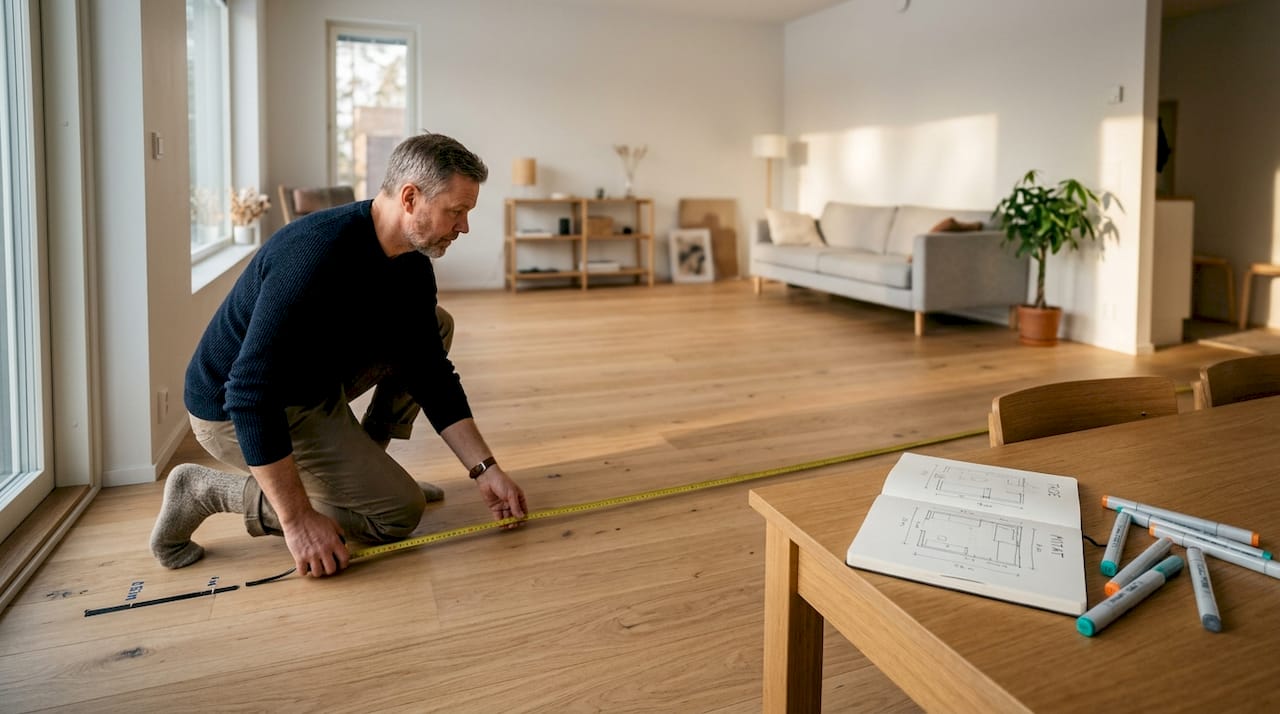
Composition determines whether an installation looks deliberate or random. Start by measuring the space where the installation will be placed. The width, height, and distance from the viewing point determine the appropriate size.
In color composition, complementary colors create the strongest visual contrast. A dark background highlights light elements, and vice versa. An interior designer emphasizes that art creates personality for a home more effectively than renovations or mass-produced items. Yet, budgeting for art is often overlooked.
Elements placed at different heights make the installation dynamic. Combining floor level, eye level, and upper sections creates depth. A composition limited to only one height appears flat.
Personal elements make the installation unique. Courage and one's own story make an art installation meaningful. In Finnish homes, safe choices are favored, but personality comes from choices that reflect emotions and life.
The most common composition mistakes are:
- Elements that are too small in a large space, causing the installation to get lost
- All elements at the same height without rhythm
- Excessive variegation of colors and materials without a unifying factor
- Too little contrast between the background and the installation
Professional tip: Take a photo of the space before you start building. From the photo, you can see the balance of the composition much more clearly than when standing on site.
What is the role of lighting in highlighting an art installation?
Lighting is a critical part of a successful art installation. One of the most common mistakes is relying solely on general lighting. A general light fixture fills the space evenly, but it doesn't highlight the details of the installation or create an atmosphere.
Layered lighting refers to a combination of three light sources: general light, targeted spotlight, and ambient lights. Each layer performs a different job. Layered lighting significantly improves the functionality and atmosphere of a space.
The time of day affects how the installation appears. Daylight changes colors and shadows differently than artificial light in the evening. Design lighting primarily for the time when the space is used most.
| Light type | Function | Example |
|---|---|---|
| General light | Basic level of the space, even brightness | Ceiling light, LED panel |
| Spotlight | Highlighting details of the installation | Directional spot, track light |
| Ambient light | Soft supplementary light, depth | LED strip, table lamp |
The most common lighting mistakes are excessive brightness, incorrect color temperature, and light sources being directly visible to the viewer. Warm light (2,700–3,000 K) is suitable for most material types in home art installations. Cool light makes organic materials, such as wood and fabric, look sterile.
Professional tip: Install dimmers on spotlights. This allows you to adjust the mood according to the situation without additional investment.
How to create your own art installation step-by-step?
Your own home art project is best accomplished when divided into clear steps. Rushing is the most common reason for failure.
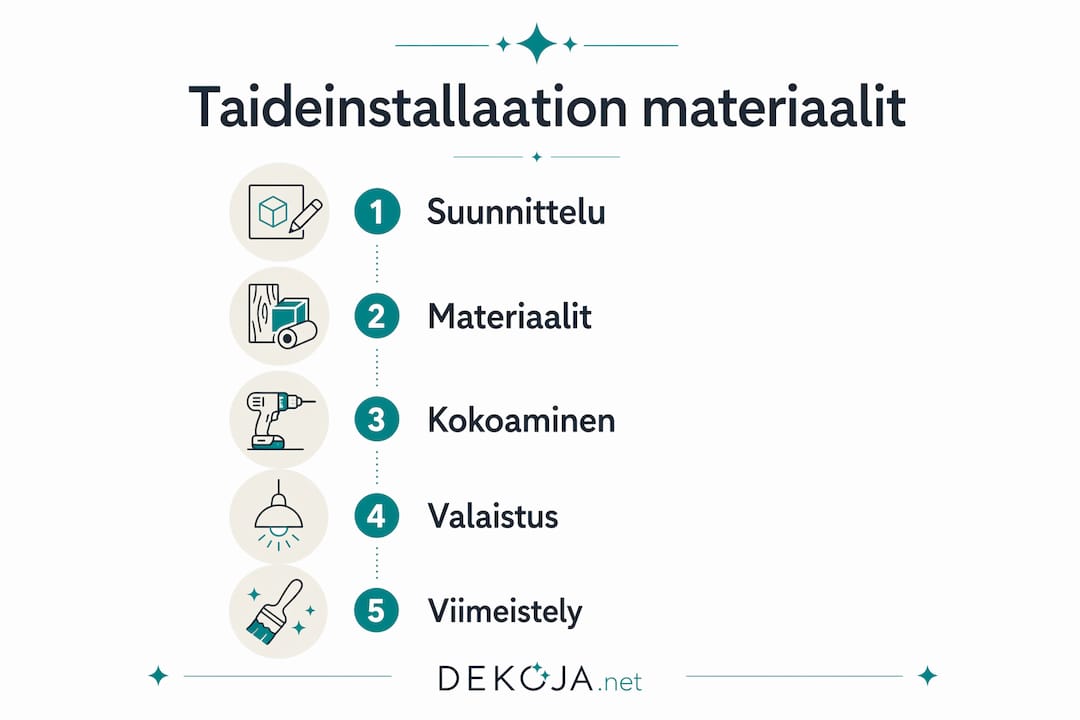
Step 1: Planning and scheduling
First, decide where the installation will be placed and what its main theme will be. Draw a sketch on paper or take reference photos. Allocate a realistic amount of time for the implementation. Art projects can be supported by weekly programs that help proceed in a structured manner. For example, the Kuvis kotiin (Art Home) remote education program publishes 6-week thematic packages with regular video instructions. The same structure also works for your own project.
Step 2: Material acquisition and pre-preparation
Gather all materials before you start assembling. Cut, paint, or modify the parts in advance. Using chicken wire as structural support keeps the installation in shape and protects the home from moisture. Check that the fastening methods are suitable for the wall material.
Step 3: Assembly and composition
Start with the largest elements and add small details last. Arrange the parts first without fastening and view the whole from a distance. Change the order if necessary before final fastening. Ready-made installations assemble step-by-step with clear instructions, making DIY creation easy even without prior experience.
Step 4: Adding lighting and finishing touches
Add lighting only when the structure is in place. Test different angles and distances before final installation. Tidy up the wires and secure them so they are not visible.
Common problems and solutions:
- Installation doesn't stay in place: add support points or use stronger fastening
- Colors look different than you planned: check the color temperature of the lighting
- The whole feels chaotic: remove one element at a time until balance is found
- Materials are not durable: replace organic materials with more durable ones or add a protective layer
Professional tip: Leave the installation in place overnight before making a final decision. The next morning, you'll see it with fresh eyes and notice any potential problems clearly.
A home art project is a process where timing, tools, and motivation determine success. Don't expect perfection the first time. Every project teaches something new.
Key observations
A successful home art installation requires planning, the right materials, and layered lighting that together make the space a personal and finished whole.
| Aspect | Details |
|---|---|
| Materials | Recycled materials, chicken wire, and LED lights are sufficient for most home installations. |
| Composition | Place elements at different heights and use complementary colors to create contrast. |
| Lighting | Combine general light, spotlight, and ambient light. General light alone is not enough. |
| Implementation | Divide the project into stages and test the composition before final fastening. |
| Personality | Personal elements and bold choices make the installation unique. |
Mikko: art is not decoration, it is the identity of a space
I've seen hundreds of homes with paintings on the walls but no art. The difference is whether the choice was made or bought. A painting from a store shelf fills a wall. An installation built from one's own memories, found objects, or meaningful materials completely changes the character of a space.
I best remember a small hallway where the resident had built a plant wall from recycled garden pots, chicken wire, and a few LED strips. The total cost was less than €30. The space felt alive as soon as you stepped through the door. No purchased artwork could have done the same.
Transforming a home into an art performance venue changes the meaning of the space. It requires a new kind of role from the resident but rewards by making the home truly feel like one's own. This is something that a superficial renovation cannot achieve.
Courage is the only material that cannot be bought. Everything else can be found at a recycling center, hardware store, or from your own storage. Start small, but start.
— Mikko
Dekoja and special materials for art installations
When ordinary paint or fabric is no longer enough, Dekoja offers solutions that cannot be found elsewhere.

Dekoja supplies Musou Black paint and the world's blackest effect surfaces directly from a domestic warehouse. These materials are suitable for contrast walls, optical illusions, and visual effects that elevate home art installations to a whole new level. Dekoja.net's interior design tips and professional guides help with planning from start to finish. Deliveries take place within 1–3 business days from Finland. Explore the selection at dekoja.net.
Frequently asked questions
What does an art installation mean at home?
An art installation at home is a spatial and object ensemble that creates an atmosphere and experience. It differs from a single painting in that it takes over the space as a whole.
How much does it cost to build an art installation?
A simple installation from recycled materials can be done for a few euros. Ready-made construction kits, such as wooden 3D dioramas, cost more but include everything needed, including LED lighting.
Does building an art installation require special skills?
No, it does not. Ready-made construction kits can be assembled without glue with clear instructions. Building from recycled materials can be done with basic supplies and patience.
How does lighting affect an art installation?
Lighting determines how an installation looks. General lighting alone is not enough. Layered lighting, which combines spotlight and ambient light, brings out details and creates the right atmosphere.
Where can I get inspiration to start my own art project?
Remote learning programs, such as Kuvis kotiin (Art Home), offer 6-week thematic packages with video instructions. Dekoja.net's interior design tips and professional guides provide practical support for planning and implementation.