

High-contrast lighting guide for spaces and experiences
When it comes to creating a space that is memorable and impressive, small details matter a lot more than first glance suggests. Contrast ratios determine how well different elements, such as colors and surfaces, stand out from each other, which is especially important in demanding public spaces in European cities. The choice of high-contrast materials, combined with matte and anti-reflective solutions, helps to achieve a clear, experiential and practical end result, where every detail is highlighted in the right way.
Table of contents
- Step 1: Choose suitable high-contrast materials
- Step 2: Plan the visual contrast and lighting of the space
- Step 3: Install non-reflective surfaces and light sources
- Step 4: Adjust the lighting intensity and direction
- Step 5: Check the contrast and vibrancy of the final result
Quick Summary
| Important Message | Explanation |
|---|---|
| 1. Choose materials carefully | High-contrast materials support the visual appearance and atmosphere of the space. |
| 2. Plan lighting in a multifaceted way | Multi-stage lighting design creates a functional and aesthetic space. |
| 3. Use non-reflective surfaces | Matte materials reduce distracting reflections and improve comfort. |
| 4. Adjust the lighting intensity | The adjustability of light is crucial for the use of space and the atmosphere. |
| 5. Evaluate the visual experience of the final result | Evaluating experience helps ensure the success of the lighting plan. |
Step 1: Choose suitable high-contrast materials
Choosing high-contrast materials for a space is crucial to creating a visual identity. The goal is to find surfaces and materials that complement each other and create an interesting, dynamic environment.
There are several key factors to consider when choosing materials. The contrast ratio is particularly important, as it determines how well different elements stand out from each other. Good contrast is created by:
- On the different reflection properties of surfaces
- From the strong contrast of colors
- Differences in the textures of materials
- On the variations of light and shadow
In practice, this means, for example, combining shiny metal with a matte wooden surface or creating an effect pattern created by a dark wall and light furniture. The contrast concept familiar from photography also works brilliantly in interior design.
When choosing surface materials, it is worth choosing matte and non-reflective materials that reduce stray light and create a calm, harmonious whole.
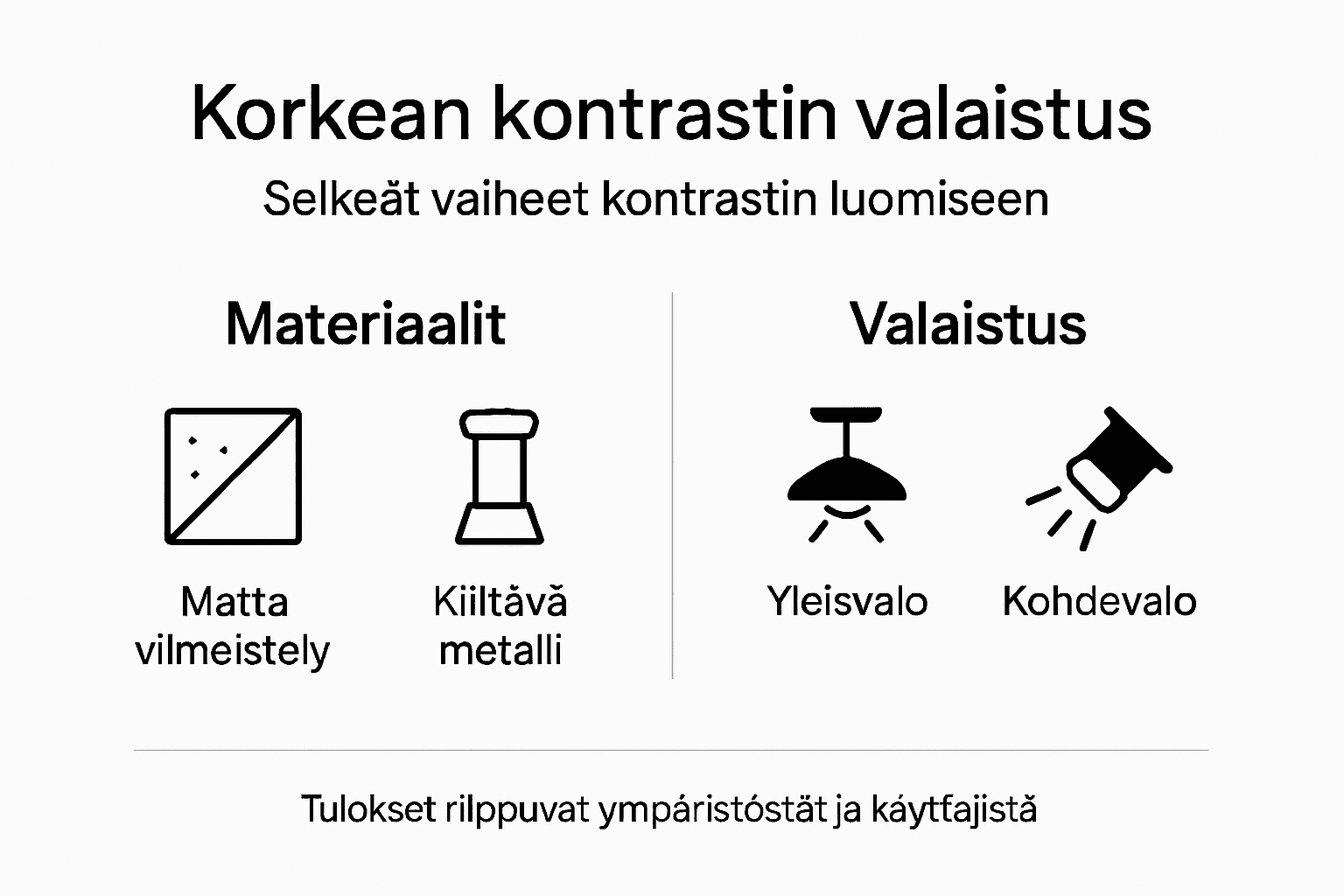
Below is a close comparison of the contrast and lighting properties of different surface materials:
| Material | Light reflection | Contrast effect | Best suited |
|---|---|---|---|
| Shiny metal | High | Strong | Effect surfaces |
| Matte wood | Low | Soft | Backgrounds |
| Glass surface | Variable | Emphasizes light | Decorative parts |
| Textured concrete | Low | Deep | Floors/walls |
Pro tip: Try different contrasting materials in small batches before making a final choice to see how they work together in different lighting.
Step 2: Plan the visual contrast and lighting of the space
Visual contrast and lighting design is a multi-step process that requires careful consideration and creativity. The goal is to create a functional, aesthetic and atmospheric whole that awakens the senses and supports the purpose of the space.
Urban lighting design has increasingly shifted from simply increasing the quantity of light to managing the quality and contrast of light. In practice, this means considering the following factors:
- Step-by-step adjustment of light intensity
- Directing different light sources
- Controlling the interaction of shadows and light
- Matching color temperatures
Creating visual contrast requires a multi-dimensional approach. A functional lighting solution comes from understanding the purpose of the space and creating lighting that serves both practical needs and evokes emotion.
In practical implementation, it is worth paying attention to the layering of light. In addition to general lighting, you need spotlights, indirect lighting and mood lighting that create depth and interest in the space.
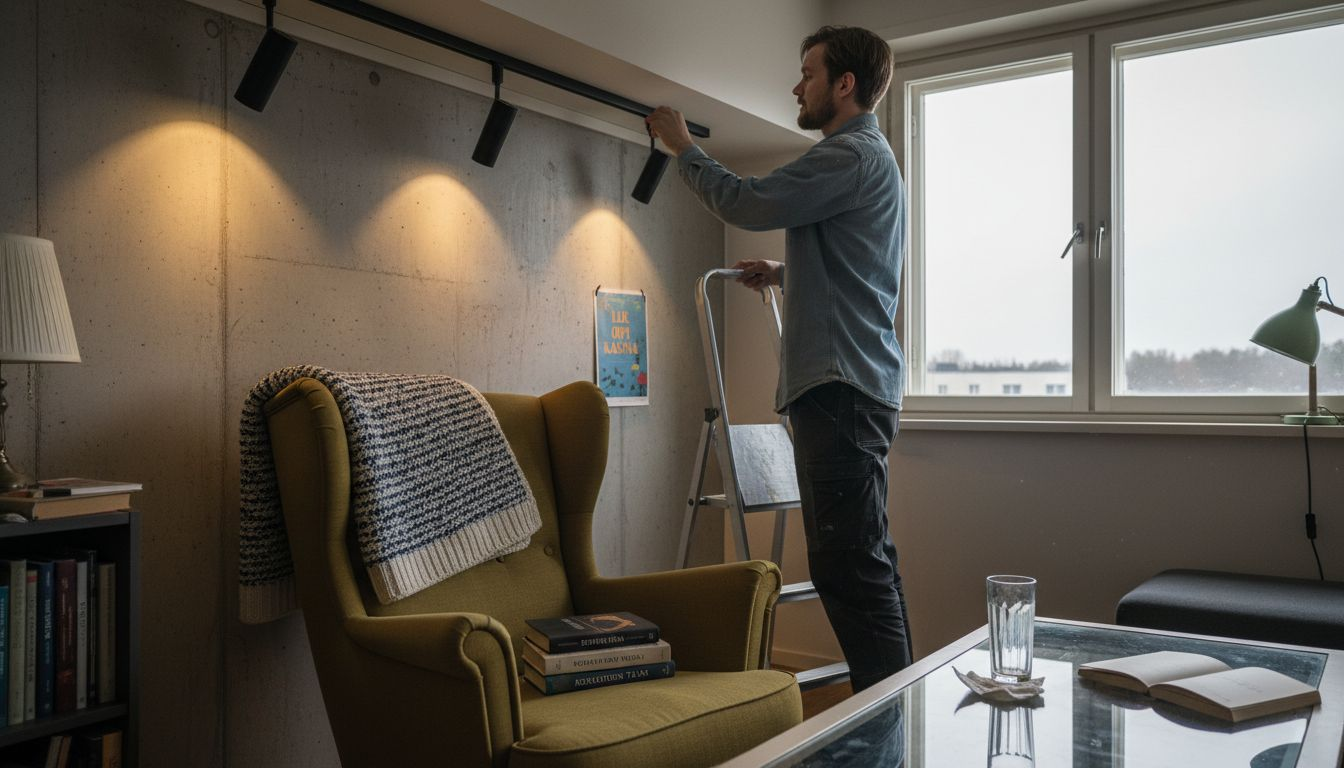
The following table describes the basic lighting design options and their usage situations:
| Lighting solution | Effect on the mood | Most suitable mode |
|---|---|---|
| General light | Uniform brightness | Kitchen, lobby |
| Spotlight | Bring out the details | Reading corner, workstation |
| Indirect lighting | Soft, diffused | Living room, bedroom |
| Mood lighting | Creative, intimate | Lounge areas, nightlife |
Pro tip: Use digital lighting design tools to help you experiment with different lighting solutions before making final choices.
Step 3: Install non-reflective surfaces and light sources
Non-reflective surfaces and properly positioned light sources are key to creating visual contrast. The goal is to minimize distracting reflections and create a harmonious, controlled lighting ensemble in the space.
Avoiding reflections requires careful planning and the right choice of materials. In practice, this means adhering to the following principles:
- Choose matte and non-reflective materials
- Use anti-glare coatings
- Pay attention to the installation angles of the light sources
- Diffuse light with textured surfaces
When positioning light sources, it is important to understand the dynamics of light travel . Orient the luminaires so that the light spreads evenly and does not create dazzling reflection points. Indirect lighting and layered lighting solutions are an excellent way to control the behavior of light.
Non-reflective surfaces prevent direct light reflection and improve the visual comfort of the space.
Pro tip: Use digital meters and lighting design software to help you simulate the optimal installation angles of light sources in advance.
Step 4: Adjust the lighting intensity and direction
Controlling the intensity and direction of lighting is key to creating a functional and atmospheric space. The goal is to find a balance between practicality and aesthetics that serves the purpose of the space.
An intelligent lighting system allows for precise control of light intensity and direction. In practice, this means adhering to the following principles:
- Analyze the purpose of the space
- Determine the lighting needs of different operational areas
- Adjust the light intensity steplessly
- Make use of directional lighting
Dynamic lighting control is key. Choose fixtures that allow for easy dimming and direction. Different parts of a space may have different lighting needs, so flexibility is important.
Properly directed light emphasizes the character of a space and improves the user experience.
Pro tip: Use digital lighting simulation software to test lighting solutions before final installation.
Step 5: Check the contrast and vibrancy of the final result
Evaluating the final result is a critical step in lighting design. The goal is to ensure that the created lighting ensemble matches the original plans and produces the desired visual experience.
The lighting assessment is based on both technical measurements and user experiences. Check the following areas:
- Light contrast performance in different areas
- Minimizing glare
- Creating a successful atmosphere in a space
- User experience and comfort
Evaluating visual experience requires a multidimensional approach. Don't rely solely on technical metrics, but gather feedback from users of the space and observe their reactions.
The true success of lighting is reflected in the well-being of users and the experience of the space.
Pro tip: Document your lighting solutions by photographing the space at different times of day so you can assess changes in contrast.
Create an unforgettable visual experience in your space with high-contrast lighting
The article highlighted how the right materials and lighting can determine the contrast and mood of a space. The challenge is to combine non-reflective surfaces, dynamic lighting and carefully controlled light sources to bring the space to life and provide an intense experience without distractions. This is where Dekoja.net comes into the picture – we offer Musou Black paint and other inspiring materials that absorb over 99 percent of light, maximizing contrast and depth.

Take a step towards perfect lighting and material combinations by exploring our wide selection of Lighting . Let's build a space together where visual contrast is the competitive advantage of the new era. Also visit our website Dekoja.net and benefit from our expert support in planning. Now is the time to make your space an impressive experience that will remain in the minds of visitors.
Frequently Asked Questions
What does high contrast lighting mean?
High contrast lighting means emphasizing the difference between light and shadow in a space to create a visually interesting and functional environment. Choose different light sources and surface materials to achieve the desired contrast.
How do I choose the right materials to achieve high contrast?
Choose surface materials that offer different reflectivity and textures. For example, combining shiny metal with matte wood can create an effective visual contrast.
How can I design the lighting of a space to highlight high contrast?
Design your lighting to use different light sources, such as general and spot lighting, to reduce glare and highlight details in the space. Utilize different lighting types in different areas, such as according to usage situations.
How to check lighting contrast and user experience?
Evaluate the lighting in the space by measuring the performance of the contrast and collect feedback from users. You can even ask users about their feelings about the space 30 days after the lighting was installed.
What is the best way to minimize glare in high-contrast lighting?
Minimize glare by choosing matte materials and orienting light sources so they don't cause direct reflections. Also, try using indirect lighting and testing different mounting angles before making final choices.
How can I adjust the lighting intensity to suit my practical needs?
Adjust the lighting intensity according to the characteristics of the luminaires to adapt the lighting needs of different functional areas. For example, use infinitely adjustable luminaires so that you can quickly adjust the light when needed.
Recommendation
- Emphasizing lighting in interior design: Create an impressive result – Dekoja.net
- Emphasizing lighting in interior design: Create an impressive result – Dekoja.net
- Emphasizing lighting in interior design: Create an impressive result – Dekoja.net
- Emphasizing lighting in interior design: Create an impressive result – Dekoja.net