

Hotels' best design solutions: innovative materials
TL;DR:
- Material selection affects durability, maintenance, and the guest experience.
- New materials such as microcement and reclaimed wood offer innovative and sustainable options.
- Responsibility and circular economy are central to sustainable hotel design choices.
In hotel design, material selection is one of the most demanding decisions. The space must withstand intensive use, look good for years, and simultaneously communicate the brand's values to every guest. Traditional solutions are no longer sufficient as competition for customer experience intensifies and sustainability demands grow. This article reviews concrete selection criteria, the most innovative materials by application, and a clear comparison to help you make better decisions for your next project.
Table of Contents
- How to Choose Successful Materials for Hotel Design Solutions
- The Most Inspiring Special Materials and Their Applications in Hotels
- Comparison of Design Solutions: Material Properties and Applications
- Solutions for Different Hotel Types: How to Choose the Right Material for the Location
- What Most People Overlook in Hotel Material Solutions
- Learn More and Find the Right Material Solutions for Your Hotel
- Frequently Asked Questions
Key Takeaways
| Point | Details |
|---|---|
| Durability is key | Long material lifespan and low maintenance result in savings and reduced environmental impact. |
| The right material for the right space | Each hotel type has its own ideal material solutions and combinations. |
| Eco-friendliness adds quality | FSC-certified and recycled materials support both environmental values and the hotel's brand. |
| Atmosphere is created by details | Contrasts, light management, and acoustics are part of functional and experiential hotel design. |
How to Choose Successful Materials for Hotel Design Solutions
Material selection is not merely an aesthetic issue. It directly impacts maintenance costs, energy consumption, acoustics, and how a guest perceives a space within the first few seconds. The effects of material selection extend far beyond mere appearance.
Successful selection is based on five key criteria:
- Durability and wear resistance. In public hotel spaces, materials are exposed daily to thousands of touches, wheelchairs, luggage, and cleaning agents. The material must withstand this stress without quickly losing its appearance.
- Maintainability. Easy maintenance practically means that cleaning can be done quickly and surfaces do not need frequent replacement. This directly reflects in operational costs.
- Aesthetics and atmosphere. Material creates atmosphere. Rough concrete communicates something different from warm wood or shiny steel. The choice is always also a message about the brand.
- Purpose and space. A material suitable for a bathroom may not work in a lobby and vice versa. Humidity, lighting, and acoustics vary by space.
- Sustainability and certifications. An example of sustainable design shows that FSC-certified wood, reclaimed wood, microcement, and acoustic panels improve both comfort and sustainability.
New materials clearly offer more than traditional options. For example, microcement enables a seamless surface that looks modern but is also easier to keep clean than traditional tiles. Reclaimed wood brings history and uniqueness that cannot be bought with new materials.
Circular economy in hotel design has become a central part of material selection. Life cycle thinking means that the entire journey of a material, from raw material to recycling or reuse, is considered already in the design phase. This is not only an environmental act but also an economically sound choice in the long run.
Pro tip: Prioritize materials that combine appeal and energy savings. For example, acoustic panels that absorb sound can also act as thermal insulation, significantly reducing heating costs.
The Most Inspiring Special Materials and Their Applications in Hotels
Once the selection criteria are clear, it's time to look at concrete materials. Below is a list of the most innovative options currently used by professionals in demanding hotel projects.
-
FSC-certified wood. FSC (Forest Stewardship Council) certification means that the wood comes from responsibly managed forests. This is an ecological choice that is excellent for lobbies, restaurants, and corridors. Wood brings warmth and naturalness, and it is easy to combine with other materials. Certified wood is durable when properly treated.
-
Reclaimed wood. Reclaimed wood is a material with a history. It can be old factory flooring, shipbuilding timber, or dismantled logs. The carbon footprint is reduced by 20 to 40 percent compared to using new wood. Each plank is unique, making the space distinctive. In boutique hotels, this is a particularly effective way to create a lasting impression.
-
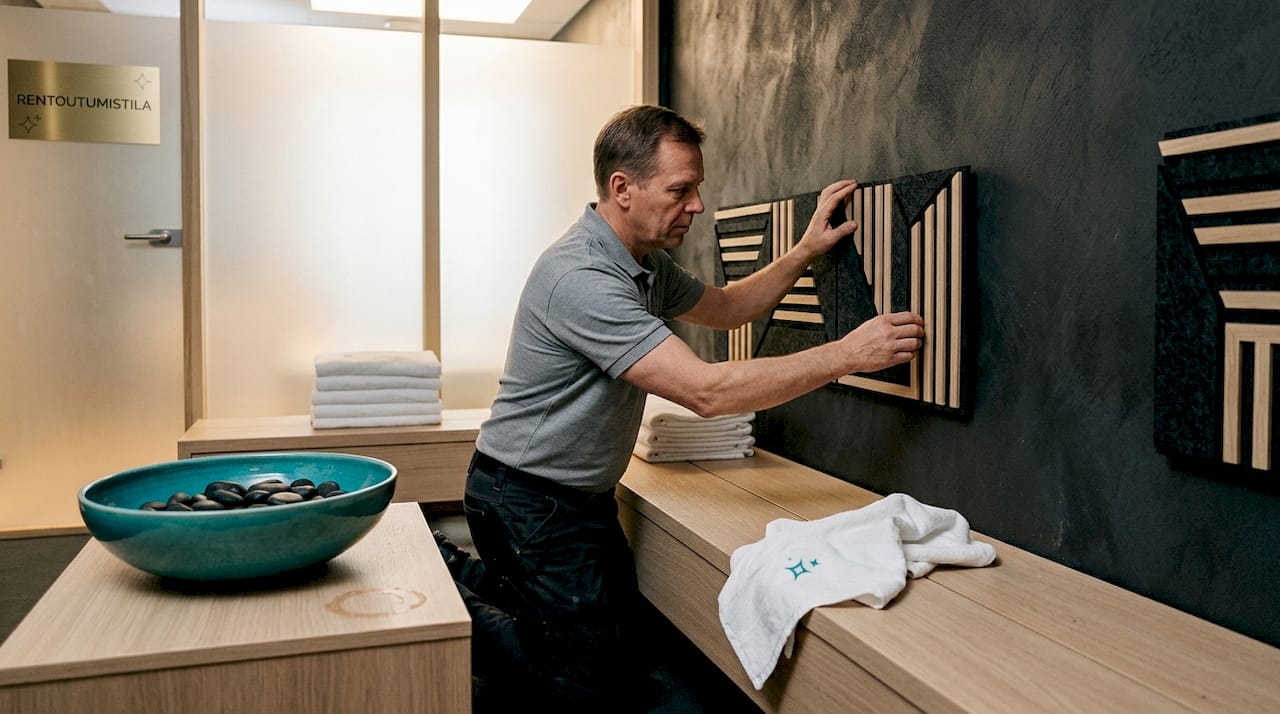
Microcement. Microcement is a thin, seamless coating that can be applied to almost any surface: walls, floors, and furniture. It is especially suitable for bathrooms and spa areas because it is moisture-resistant and easy to clean. Microcement creates a modern, industrial look and works well in dark color shades. However, the use of dark surfaces requires careful light management so that the space does not feel cramped.
-
Acoustic panels. In hotels, noise is one of the most common causes of customer complaints. Acoustic panels reduce sound reflection and significantly improve the comfort of spaces. They are also adaptable: panels can be changed or rearranged as needed. Materials vary from recycled textiles to wood-based solutions.
-
Super black surfaces and light absorption. Special black surfaces, such as Musou Black, absorb up to 99.4 percent of light. This creates dramatic visual effects and contrasts, suitable for galleries, restaurants, and experiential hotel spaces. When used correctly, these surfaces make a space memorable and distinctive.
-
Recycled glass and metals. Partition walls or light fixtures made from recycled glass bring visual lightness to the space. Recycled steel or copper is suitable for furniture and details, and they develop beautifully over time.
“The lifecycle and ease of maintenance of materials are prioritized. Reclaimed and FSC wood reduce the carbon footprint by 20 to 40 percent with energy savings.”
Pro tip: Combine materials and contrasting surfaces. For example, a dark microcement wall against a light wood surface creates depth and atmosphere without the need for expensive furniture or special lighting.
Comparison of Design Solutions: Material Properties and Applications
After individual material presentations, it is useful to see the options side by side. The table below summarizes the most important materials, their properties, and suitable applications.
| Material | Durability | Maintainability | Suitable spaces | Special considerations |
|---|---|---|---|---|
| FSC-certified wood | Good | Moderate | Lobby, restaurant, corridors | Requires surface treatment |
| Reclaimed wood | Good | Moderate | Boutique spaces, bars | Each surface is unique |
| Microcement | Excellent | Excellent | Bathroom, spa, floors | Requires light management in spaces |
| Acoustic panels | Good | Easy | Meeting rooms, restaurant, lobby | Significantly improves acoustics |
| Super black surfaces | Excellent | Easy | Gallery, restaurant, experiential spaces | Requires contrast lighting |
| Recycled glass | Moderate | Easy | Partitions, light fixtures | Visual lightness |
| Recycled metal | Excellent | Easy | Furniture, details | Develops beautifully over time |
Material choices for spa areas are a particular challenge. References from fell hotels show that dark tones in spa areas create atmosphere, but require careful light management so that the space does not feel small or gloomy.
Utilizing contrast is an effective method. When a light surface and a dark surface are placed side by side, a visual tension is created that makes the space interesting. This applies especially to lobbies and restaurants, where the first impression is crucial. Contrasts in colors and materials also guide the guest's gaze and movement within the space.
Energy efficiency is often an overlooked aspect of material selection. Good acoustic materials also act as thermal insulation. Dark surfaces can absorb heat, which is beneficial in northern locations in winter. These factors directly affect the energy bill annually.
Solutions for Different Hotel Types: How to Choose the Right Material for the Location
The properties of materials have now been presented. Next, we will concretize how these choices work in different hotel settings. Each hotel type sets different requirements for materials.
Boutique hotels benefit most from materials that provide distinctiveness and tell a story. Reclaimed wood, recycled metals, and special black surfaces are perfect for this. Durable and functional materials like FSC wood and acoustic panels support the boutique hotel's brand when chosen thoughtfully. In a boutique hotel, every detail is a message to the guest.
City hotels operate with high occupancy rates. Here, ease of maintenance and wear resistance are paramount. Microcement on floors and walls is an excellent choice because it withstands intensive use and is quick to clean. Acoustic panels are essential in a city hotel, where ambient noise is a constant challenge.
- City: Microcement, acoustic panels, recycled metal
- Boutique: Reclaimed wood, FSC wood, super black surfaces, recycled glass
- Spa and resort: Microcement, acoustic panels, dark tones with contrast lighting
- Luxury hotel: Combination of FSC wood, recycled metal, and special surfaces
Spa and resort hotels need materials that create a calming atmosphere. Acoustics are critical: excessive noise immediately breaks the spa experience. Microcement is excellent for wet areas, and the use of dark tones creates a luxurious ambiance. Contrast lighting is key here.
| Hotel type | Recommended materials | Key criteria |
|---|---|---|
| Boutique | Reclaimed wood, special black surfaces | Distinctiveness, storytelling |
| City | Microcement, acoustic panels | Durability, ease of maintenance |
| Spa and resort | Microcement, acoustics, dark tones | Atmosphere, acoustics, humidity |
| Luxury | FSC wood, recycled metal, special surfaces | Quality, sustainability, aesthetic |
| Budget | Acoustic panels, durable laminates | Cost-effectiveness, durability |
Material combinations are often better than individual choices. For example, reclaimed wood combined with microcement and acoustic panels creates a space that is both visually interesting and practical. This combination works particularly well in a boutique hotel's restaurant or bar.
It's also important to note that materials affect each other. Dark surfaces require more lighting, which increases energy consumption. On the other hand, good acoustics can compensate for other shortcomings in the guest experience. The designer's task is to find a balance between these factors.
What Most People Overlook in Hotel Material Solutions
In most hotel design projects, the focus is on the material's appearance and price. These are important, but they are only part of the picture. Two factors are consistently given too little attention: everyday ease of maintenance and long-term maintenance costs.
Cleaning staff spend more time with the material than any single guest. If a surface is difficult to clean or requires special products, it means additional costs and staff workload every single day. This adds up to significant sums annually. Material selection is therefore also a matter of personnel policy.
Even small material choices have a big impact on the overall perception. Studies show that guests evaluate a hotel's quality within the first 90 seconds. During this time, they sense the quality of materials, acoustics, and lighting. A cheap material that looks good in pictures but feels cheap to the touch quickly undermines credibility.
Eco-friendliness does not mean compromising on appearance. This is perhaps the most common misconception in the industry. The importance of material selection in space design is also evident in the fact that sustainable materials are often visually more interesting than ordinary options. Reclaimed wood is more beautiful than new cheap laminate. Microcement is more striking than ordinary tile. Sustainability and aesthetics go hand in hand when choices are made thoughtfully.
Circular economy thinking also brings practical benefits for staff. When spaces are designed so that materials can be easily replaced or reused, renovations are faster and cheaper. Acoustic panels that can be detached and reinstalled are a good example of this. The space adapts to changing needs without a complete overhaul.
Experience shows that material choices that support circularity and acoustics yield longer-term benefits. Staff are happier when spaces function well. Guests return when the experience is consistent and high-quality. These effects are directly reflected in business results, even if they are difficult to measure from a single material choice.
One concrete example: a hotel that chooses acoustic panels for its restaurant immediately receives better reviews for the dining experience. Noise is one of the most common complaints in restaurants, and eliminating it improves customer satisfaction without changes to food or service. This is the power of material selection at its best.
Learn More and Find the Right Material Solutions for Your Hotel
Hotel material choices are a complex whole, where every detail affects the outcome. Finding the right material requires both technical knowledge and a visual eye.
By exploring Dekoja.net's material solutions, you'll discover special materials not available elsewhere in Finland. Our selection includes super matte surfaces, non-reflective materials, and visual effect surfaces suitable for demanding hotel projects. Our experts assist throughout the project from start to finish, whether it's individual spaces or a complete hotel renovation. Deliveries take 1 to 3 business days directly from our domestic warehouse, and our B2B service is designed to meet the needs of design agencies and professionals.
Frequently Asked Questions
What material is best suited for a hotel spa area?
Microcement and dark shades create a spa atmosphere but require careful lighting design and moisture resistance. In spa areas, dark surfaces create ambiance, but light management is critical.
How does the use of recycled wood affect a hotel's climate impact?
The use of reclaimed wood reduces a hotel's carbon footprint by 20 to 40 percent and brings a unique look to the space. FSC and reclaimed wood are currently the most effective ways to reduce the climate impact of construction.
Why are acoustic panels an essential part of hotel design?
Acoustic panels improve comfort by reducing noise and allow for flexible space arrangements. Acoustic panels enhance both comfort and durability, making them one of the most cost-effective investments in hotel design.
How can sustainability be ensured in material choices?
Choose green-certified, long-lasting materials and invest in circular economy solutions. Green certifications and a life-cycle approach are the most concrete ways to ensure that material choices support sustainable development.