

Examples of non-reflective surfaces in interior design
TL;DR:
- Non-reflective surfaces reduce glare and improve visual control of a space in interior design. Materials such as matte glass, furniture, and textiles are chosen based on their purpose, lighting, and maintenance. Experts recommend testing and proper cleaning methods to ensure the durability of the surface.
Examples of non-reflective surfaces are increasingly of interest to interior design professionals, as reflective surfaces cause glare, disrupt spatial harmony, and make visual control of a space difficult. Non-reflectivity can mean either light absorption or diffusion, and these should not be confused. This article reviews concrete materials and solutions for achieving non-reflectivity in different spaces, including examples of frosted glass, matte furniture, textiles, and technical solutions.
Table of Contents
- Key Considerations
- 1. Examples of Non-Reflective Surfaces: Selection Criteria for Professionals
- 2. Frosted Glass: Applications and Special Features
- 3. Matte Kitchen Cabinets and Furniture
- 4. Rugs as Non-Reflective Surfaces
- 5. Acoustic Panels and Textured Walls
- 6. Non-Reflective Flooring Solutions
- 7. Paints and Coatings for Walls and Ceilings
- 8. Textiles in Curtains and Upholstery
- 9. Technical and Safety Solutions
- Expert's Perspective on Non-Reflective Surfaces
- Dekoja Helps in Choosing Non-Reflective Surfaces
- FAQ
Key Considerations
| Aspect | Details |
|---|---|
| Definition of Non-Reflectivity | Light absorption and diffusion are different. Choose the material according to its intended use. |
| Frosted Glass for Privacy | Acid-etched and sandblasted glass diffuse light evenly and are suitable for shower areas and room dividers. |
| Rugs for Acoustic Support | Textured and woven rugs reduce light reflection from hard floors and improve the room's sound environment. |
| Matte Furniture for Ambiance | Matte cabinets soften the space and minimize reflections compared to glossy surfaces. |
| Maintenance Determines Longevity | Frosted and matte materials require proper cleaning methods. Incorrect care can permanently damage the surface. |
1. Examples of Non-Reflective Surfaces: Selection Criteria for Professionals
Before comparing non-reflective materials, it is worth establishing a clear evaluation framework. A professional does not choose a surface solely based on aesthetics. The purpose of the space, lighting, maintenance needs, and acoustics all affect the final result.
The key selection criteria are:
- Light diffusion vs. absorption. A matte surface diffuses light, but an absorptive surface soaks it up. An absorptive surface is suitable for a gallery, a diffusive one for an office.
- Durability and maintainability. Matte materials are often more susceptible to dirt than glossy ones. This is particularly significant in public spaces.
- Intended use. A restaurant wall and a home bedroom have entirely different surface requirements.
- Environmental lighting. Abundant natural light accentuates reflective surfaces. In ambient lighting, a matte surface behaves differently than in bright daylight.
- Color shade and texture. The 2026 interior trends emphasize softness and earthy colors in matte finishes, so color choice is also a trend question.
Professional tip: Always test the surface material in the space with its own lighting before making a final decision. A sample piece tested under office lighting may behave completely differently in the dim ambient lighting of a restaurant.
Reflective versus non-reflective surfaces is not just an aesthetic choice. It is a functional decision that affects how a space is perceived and how it functions in practice.
2. Frosted Glass: Applications and Special Features
Frosted glass is one of the clearest examples of a non-reflective material with extensive applications in architecture and interior design. Frosted glass diffuses light evenly from all viewing angles, unlike patterned glass, whose visual effect changes with the viewing angle.
The main types of frosted glass in interior design:
- Acid-etched glass. Produces a smooth, silky surface. Widely used in high-quality shower areas and office partitions.
- Sandblasted glass. Coarser texture than acid-etched. Suitable for spaces where a stronger visual effect is desired.
- Laminated frosted glass. A more durable option in structure, used in room dividers and architectural elements.
| Application | Type of Frosted Glass | Note |
|---|---|---|
| Shower area | Acid-etched | Smooth surface, privacy from all angles |
| Office divider | Laminated frosted | Sound dampening and visual tranquility |
| Exterior door | Sandblasted | More weather-resistant |
| Cabinet doors | Acid-etched | Adds lightness without high gloss |
Frosted glass is susceptible to scratches and mineral deposits, and incorrect cleaning can permanently damage the surface. This is critical for maintenance, especially in public spaces.
Professional tip: Never use abrasive cleaners or steel wool pads when cleaning frosted glass. A soft microfiber cloth and mild neutral cleaning agents are the only safe options.
3. Matte Kitchen Cabinets and Furniture
Matte-finish furniture is one of the most widely used examples of non-reflective solutions in homes and restaurants. Matte-finish furniture offers a softer visual appearance and minimizes reflections compared to glossy surfaces, making it a popular choice especially for kitchens.
In the kitchen, a matte finish works excellently because it hides fingerprints and small scratches more effectively than a glossy surface. There is also more freedom in lighting design, as the surface does not create harsh reflections from overhead cabinet lighting.
Different color shades behave completely differently on a matte surface than on a glossy one. A dark anthracite matte cabinet looks deep and dramatic without an aggressive sheen. A light sand shade, on the other hand, creates a calm, even atmosphere without making the space feel clinical.
The choice of matte finishes should be based on the intended use of the space and the desired style. In high-traffic kitchens, a glossy surface might be more practical to clean, even if matte is aesthetically more pleasing. This is a compromise that a professional helps the client make consciously.
Professional tip: When designing matte kitchen cabinets for restaurant use, always ensure that the manufacturer provides written care instructions. The greasy air of a professional kitchen is a challenging environment for a matte surface, and the wrong cleaning agent can alter the surface's sheen.
4. Rugs as Non-Reflective Surfaces
Rugs are in many ways an underutilized category when discussing examples of surface materials as part of non-reflective solutions. Rugs act as non-reflective surfaces that improve acoustics and reduce light reflection from hard flooring materials.
Hard-surfaced flooring, such as polished concrete or lacquered wood, reflects a significant amount of light. A well-chosen rug not only acoustically softens the space but also breaks up the light's bounce. This is especially important in spaces with abundant natural light from below.
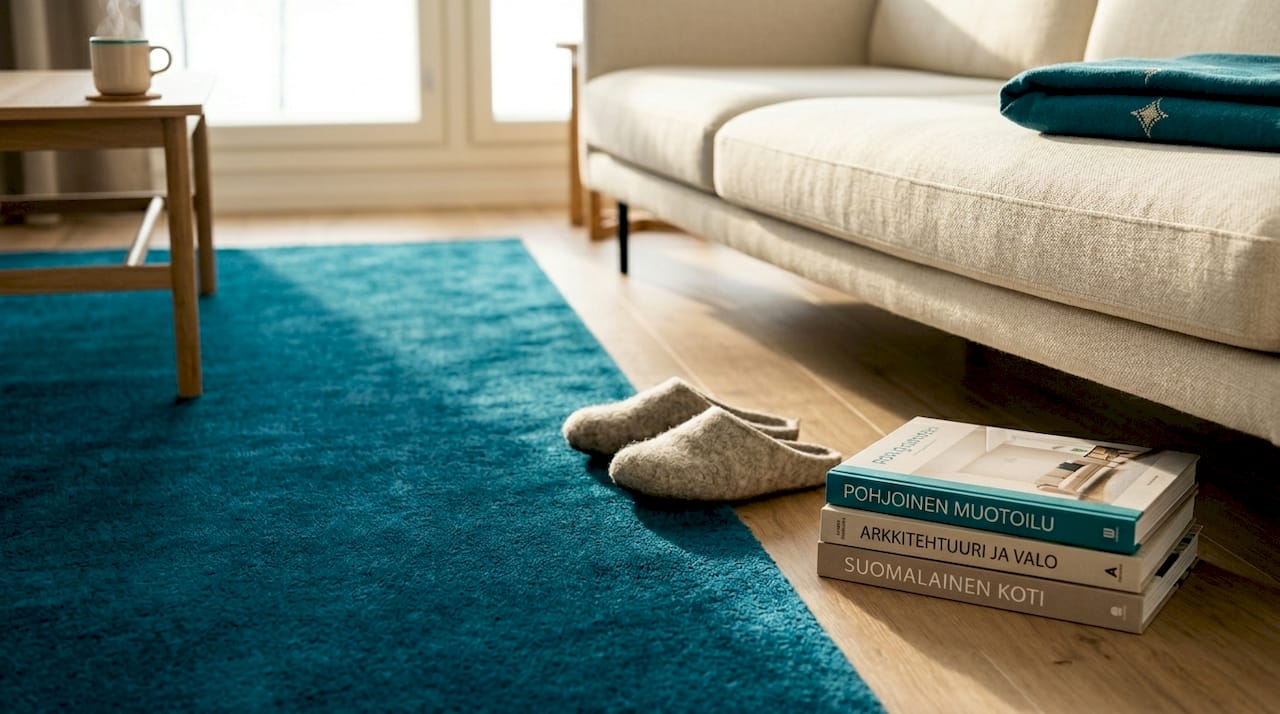
In 2026, textured, woven, and embossed rugs that create visual depth without gloss will be most popular.
Material choices for rugs:
- Polypropylene. Smoothly woven polypropylene is easy to maintain and durable, especially in kitchens and moisture-prone areas.
- Wool. A natural material that absorbs light and works excellently in living rooms. Requires more maintenance than synthetic alternatives.
- Woven viscose or cotton. Creates a soft, matte surface. Not suitable for high-traffic areas.
Professional tip: A dark, tightly woven rug can absorb up to 80% of the light that strikes it. Use this to your advantage in spaces where you seek dramatic contrast with lighter surfaces.
5. Acoustic Panels and Textured Walls
Acoustic panels are one of the clearest examples of a situation where a non-reflective surface is primarily a functional solution. In recording studios, home theaters, and conference rooms, the wall surface not only appears matte but also absorbs or diffuses sound and light simultaneously.
Textured wall panels, felt and fiber surfaces, and special materials such as porous acoustic panels are examples of non-reflective materials that serve two purposes at once.
Here is a comparison between different surface options:
| Material | Light Reflection | Sound Absorption | Application |
|---|---|---|---|
| Gypsum board, matte painted | Low | Very low | Homes, offices |
| Acoustic felt | Very low | High | Studios, home theaters |
| Textured wall panel | Low | Moderate | Restaurants, conference rooms |
| Musou Black paint | Nearly zero | Not significant | Galleries, effect walls |
Non-reflectivity in interior design relates to visual softness and glare elimination, but in technical solutions, it is about more controlled light transformation and absorption. Both originate from the micro-structure of the surface.
6. Non-Reflective Flooring Solutions
Floor surfaces represent the largest single surface area in a space, and their reflective properties influence the overall atmosphere of the room. Polished marble or lacquered wood can make a space feel cool and distant. Matte concrete or oiled oak, on the other hand, creates an entirely different presence.
Examples of non-reflective flooring in use:
- Matte concrete floor. A very popular material choice for 2026 in restaurants and galleries. It does not reflect ceiling lighting and fits an industrial aesthetic.
- Oiled or brushed wooden floor. Oil penetrates the wood and does not form a glossy surface layer. The result is warm and natural.
- Microcement with a matte finish. A continuous surface solution that allows for seamless floor-to-wall combinations.
- Vinyl tile with a matte texture. A practical and cost-effective option for wet areas. Non-slip, durable.
For flooring, the choice between a reflective and non-reflective surface is particularly concrete, as the floor is constantly exposed to direct light, both from artificial overhead light and natural light from windows.
7. Paints and Coatings for Walls and Ceilings
Wall paint is the simplest way to change the reflective properties of a space. Matte paint and glossy paint in the same color shade can make a room feel completely different.
Professionals typically use the following levels:
- Full matte (0–5% sheen). Best for glare prevention. Most susceptible to dirt and abrasion.
- Matte (5–20% sheen). A practical compromise. Suitable for living rooms and bedrooms.
- Eggshell (20–40% sheen). Resistant to wiping. A good choice for kitchens and children's rooms.
The use of specialized products, such as Musou Black paint, is a separate category. Here, the goal is not merely a matte surface but maximum light absorption. The result is an optical illusion where the surface feels almost dimensionless. Dekoja supplies products in this category directly from domestic stock.
An ambiance without glare is created when light reflection is controlled on every surface—walls, ceiling, and floor—simultaneously.
8. Textiles in Curtains and Upholstery
Curtains and furniture upholstery are often an overlooked part of the overall non-reflective surface solution. Glossy silk or satin lining in curtains can ruin an otherwise successful matte surface design.
Non-reflective textile choices:
- Linen and linen-type fabrics. Naturally matte, allowing soft light to pass through.
- Velours and velvet. In dark colors, absorbs light effectively. Suitable for theatrical interiors.
- Cotton fabric with a matte finish. Easy-care and versatile basic solution.
In upholstery, the direction of the texture affects how the surface behaves in light. A pattern woven into velvet can look entirely different as the direction of light changes. This is an advantage when used consciously. It is a drawback if not considered in the design.
9. Technical and Safety Solutions
In functional spaces, non-reflective materials are primarily a safety issue. Non-slip floors, glare-free markings, and matte-finished safety fixtures fall into this category.
Incorrect installation of non-reflective products can render them unusable. In warning triangles and technical materials, the installation direction and light path must be considered at the design stage. This is a detail that distinguishes a technical professional from a casual installer.
Stairs are one of the clearest examples: a matte stair tile or stair surface material significantly reduces the risk of slipping compared to a polished surface. In spaces with children or the elderly, this is a direct safety solution, not just an aesthetic choice.
Expert's Perspective on Non-Reflective Surfaces
I've seen many projects where the choice of non-reflective surfaces is primarily trend-driven. This is understandable, as 2026 interior design trends strongly emphasize matte finishes and earthy tones. However, a trend does not replace an analysis of the space.
I've learned that the biggest mistake is to treat non-reflectivity as a single characteristic applied uniformly throughout a space. In reality, each surface requires its own assessment. A gallery wall, a restaurant ceiling, and kitchen cabinets in a home are all completely different contexts, even if the goal in all of them is a matte finish.
Maintenance is the issue you'll encounter most in practice. Frosted glass, matte paint, and woven textiles all require their own maintenance program, and maintaining matte surfaces is the professional's responsibility to ensure the surface remains uniformly matte. The client chooses the surface, but the professional chooses what will last in use.
One thing I've learned the hard way: never promise a matte-finished piece of furniture a perfectly fingerprint-free surface. All matte surfaces collect marks, just in different ways than glossy ones.
— Mikko
Dekoja Helps in Choosing Non-Reflective Surfaces
Examples of non-reflective surfaces provide direction, but finding the right material for your project requires expertise. Dekoja is the only Finnish supplier of special materials that offers non-reflective surface solutions to professionals directly from a domestic warehouse.
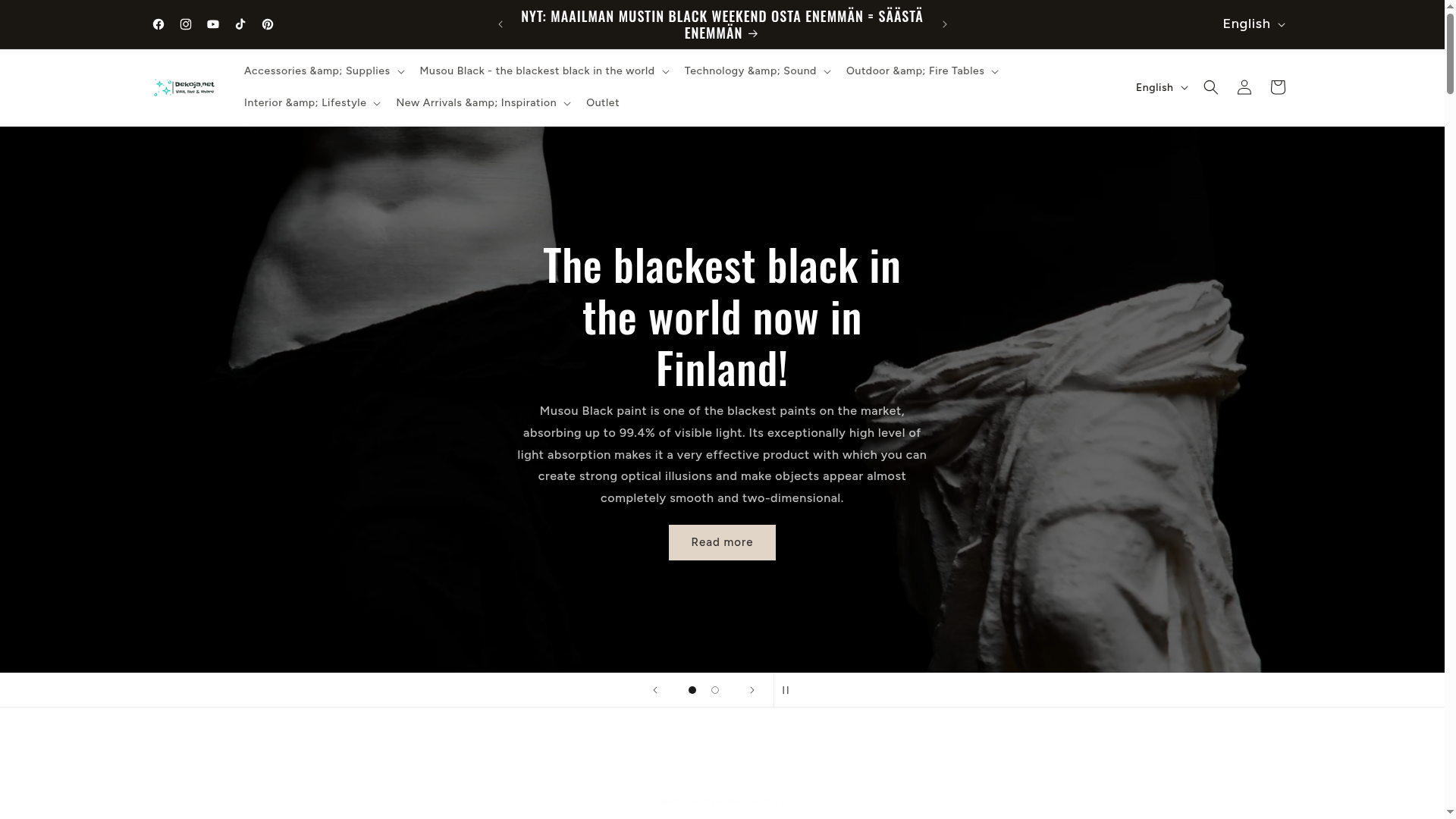
The selection includes Musou Black paint and other super black effect surfaces that take light absorption to an entirely new level. It’s not just about matte paints, but optical illusions, contrast walls, and spaces that leave a lasting impression. Dekoja serves restaurants, interior designers, architects, and AV professionals. B2B orders are processed quickly, and deliveries ship within 1–3 business days from Finland. Contact us and tell us about your project.
FAQ
What are some examples of non-reflective surfaces in interior design?
Typical examples of non-reflective surfaces include matte-painted walls, frosted glass, textured carpets, matte kitchen cabinets, and acoustic panels. Each material is suitable for different spaces depending on its intended use and lighting.
What is the difference between a reflective and a non-reflective surface?
A reflective surface returns almost all light, while a non-reflective surface diffuses or absorbs light. In interior design, reflective surfaces increase glare and highlight imperfections, while matte surfaces soften the space.
Is frosted glass suitable for wet rooms?
Acid-etched frosted glass is suitable for shower areas but requires a strict maintenance program. Mineral deposits and incorrect cleaning agents can permanently damage the surface, so proper care methods are essential.
Which material should I choose for an easy-to-maintain non-reflective floor?
Smooth-woven polypropylene carpets or matte vinyl tiles are the most practical choices for high-traffic areas. They are moisture-resistant, easy to clean, and provide good slip resistance.
Can a carpet improve room acoustics and reduce reflection at the same time?
Yes. A densely woven wool or polypropylene carpet both absorbs sound and breaks up light reflection from hard floor surfaces. This makes the carpet doubly useful in open spaces.