

Advantages of Anti-Reflective Surfaces in Modern Interior Design
Glossy surfaces have dominated interior design for decades, but the trend is now shifting. In restaurants, hotels, and design projects, non-reflective surfaces offer a solution to the problems caused by glossy materials: glare, visible fingerprints, and the constant need for cleaning. Non-reflective surfaces not only look better but also support practicality and create a more tranquil atmosphere. This article explains how non-reflective surfaces are transforming the interior design and maintenance of restaurants and design projects, and why their popularity is rapidly growing in professional environments.
Table of Contents
- What are non-reflective surfaces and how do they work?
- Key benefits in restaurants and design projects
- Inspiration and trends: The role of non-reflective surfaces in modern design
- How to choose the right non-reflective material: Practical tips
- Summary: Why the popularity of non-reflective surfaces is growing
- Support and next steps for your project
- Frequently asked questions about non-reflective surfaces
Key Takeaways
| Point | Details |
|---|---|
| Clearer and softer spaces | Non-reflective surfaces reduce glare, making the space calm and inviting. |
| Easy maintenance | Matte surfaces hide fingerprints and dirt, saving time on cleaning. |
| Current trends | Modern restaurant and interior design favors non-reflective materials that support a calm aesthetic. |
| Versatile use | Non-reflective materials can be used in public spaces as well as for details, such as display cases or tables. |
What are non-reflective surfaces and how do they work?
Non-reflective surfaces refer to matte or specially treated surfaces that minimize light reflection. While a regular glossy glass or surface reflects light back to the viewer, a non-reflective surface diffuses light through its micro-structure. This technique is based on roughening the surface, coating, or a special matte treatment that alters the behavior of light.
The difference from traditional glass or glossy surfaces is significant. Non-reflective surfaces reduce reflections and improve light transmission compared to traditional reflective surfaces. Super non-reflective glass can allow up to 99 percent of light to pass through, while ordinary glass remains at 90 percent. This difference is crucial, especially in display cases and shop windows where product visibility is paramount.
The most common techniques for creating non-reflective surfaces are:
- Matting, where the surface is chemically or mechanically treated
- Special coating, which includes several thin layers
- Micro-roughening, which creates small irregularities in the surface structure
- Nano-structures that direct light in a desired way
Common applications cover a wide range of professional spaces. Display cases and shop windows benefit from improved visibility without distracting reflections. Table surfaces in dining areas stay cleaner looking for longer. Back walls create a calm backdrop for artworks or products. A non-reflective surface makes spaces clearer and less distracting, significantly improving the customer experience.
Non-reflective surfaces reduce glare and improve light transmission compared to ordinary reflective surfaces.
In practice, this means that products in a restaurant display case are clearly visible even in bright sunlight. In a hotel lobby, guests can view art without lighting creating distracting reflections. In design projects, materials support the overall concept instead of competing for attention. When designing a space where lighting plays a central role, non-reflective surfaces give you full control over the atmosphere. You can explore material design tips for more ideas on building the overall concept.
Key benefits in restaurants and design projects
Non-reflective surfaces not only look beautiful but also support practicality, especially in spaces where hygiene and ease of use are key. In restaurants and hotels, the efficiency of cleaning directly affects profitability and customer satisfaction. Matte finishes hide fingerprints, scratches, and dirt better than glossy surfaces. This means less frequent cleaning and fewer working hours for staff.

Light distribution in a space significantly improves when reflections are reduced. Less glare means a higher quality atmosphere and a more comfortable stay for customers. Restaurant diners can focus on their food and company instead of having to change seats due to glare. Tables, windows, and display cases with non-reflective surfaces improve the customer experience and facilitate maintenance simultaneously.
The light transmission of super non-reflective glass can reach almost 100 percent, making it an ideal choice for spaces where natural light is an important part of the atmosphere. When comparing matte and glossy surfaces, the differences become clear:
| Feature | Matte surface | Glossy surface |
|---|---|---|
| Visibility of fingerprints | Low | Very high |
| Cleaning frequency | Infrequent | Constant |
| Glare | Minimal | Significant |
| Atmosphere | Calm, soft | Dynamic, cold |
| Maintenance costs | Low | High |
| Suitability for lighting | Excellent | Challenging |
Applications vary according to the needs of the space. Restaurant serving tables benefit from a matte finish because they withstand daily use without constant polishing. Exhibition spaces require non-reflective surfaces so that artworks stand out without distracting reflections. Hotel lounge windows let light in without creating uncomfortable reflections for seated guests.
Professional tip: Choose matting especially for spaces where lighting emphasizes surfaces, such as restaurant serving tables and exhibition spaces. Test the material in different lighting conditions before making a final decision. Ask the supplier for sample material and place it in the space at different times of the day. This ensures that the choice works with both natural and artificial lighting.
When designing a restaurant or design project, consider non-reflective surfaces as part of the overall concept. They are not just an aesthetic choice but a strategic decision that affects both the customer experience and operational costs. Explore the main benefits of restaurant design to get a broader picture of how material choices affect business.
Inspiration and trends: The role of non-reflective surfaces in modern design
Modern design is moving towards a calmer and more considered aesthetic. Matte surfaces create a softer, more tranquil aesthetic and support the quiet luxury trend. This trend emphasizes quality over ostentation, and non-reflective surfaces fit perfectly with this philosophy. They do not demand attention but create a harmonious backdrop where other elements can shine.
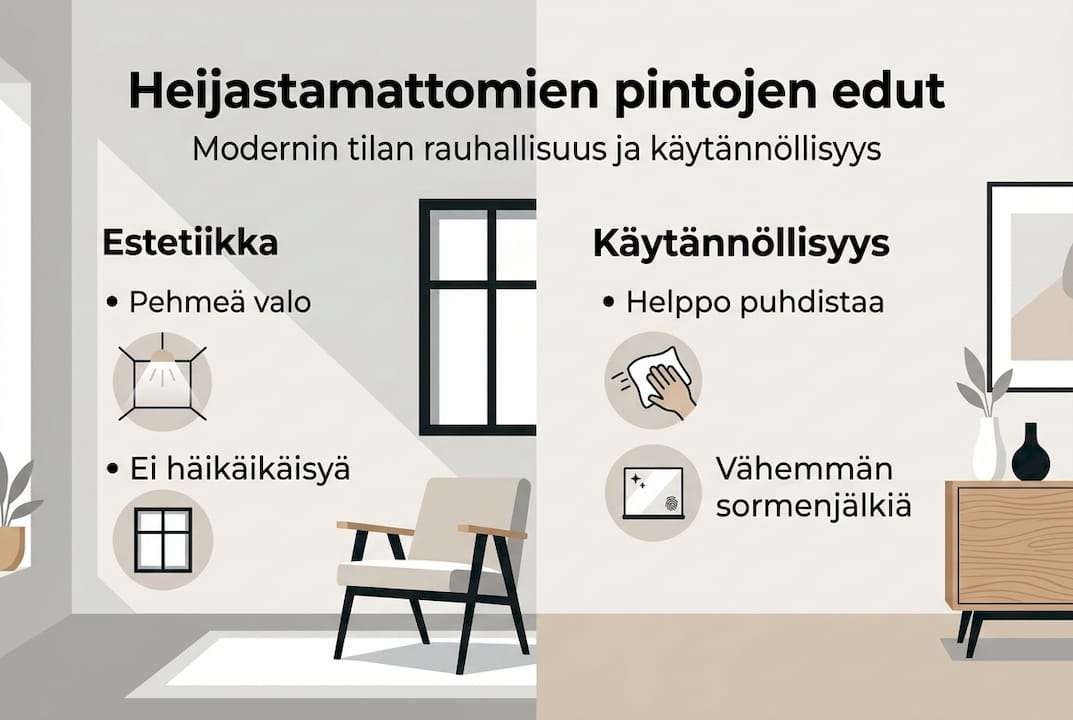
Biophilic design and quiet luxury combine in non-reflective surfaces. When a space is calm and undisturbed, people's well-being improves. Less visual clutter means less stress and better concentration. In restaurants, this manifests as longer dining times and higher customer satisfaction. In hotels, guests perceive the space as calmer and higher quality.
Examples of locations where non-reflective surfaces excel:
- Restaurant dining rooms where large windows let in natural light without glare
- Hotel lounges where matte tables and walls create a peaceful atmosphere
- Integrated sinks and bathrooms where cleaning is easy
- Display cases and exhibition spaces where products or artworks are clearly visible
- Reception desks where fingerprints are not constantly visible
A growing trend in kitchens and public spaces is honed and matte-finished surfaces. The popularity of matte and honed surfaces is growing in kitchens, especially according to the NKBA 2026 report. This trend is not limited to homes but is rapidly spreading to professional kitchens and restaurants. The reason is clear: practicality combines with aesthetics in a way that supports the experience of both employees and customers.
| Trend | Description | Applicability |
|---|---|---|
| Quiet luxury | Understated luxury without ostentation | Hotels, restaurants, lounges |
| Biophilic design | Integration of natural elements into interior spaces | All public spaces |
| Matte kitchens | Honed surfaces and matte appliances | Restaurant kitchens, bars |
| Minimalism | Less is more | Design projects, galleries |
The benefits from a designer and business perspective are manifold. Increased well-being is reflected in the experience of both customers and staff. Ease of maintenance reduces costs and frees up resources for other development. Aesthetic consistency strengthens the brand and creates a recognizable image. When a space is carefully designed, it communicates quality and professionalism.
Non-reflective surfaces create a softer, more tranquil aesthetic that suits modern design.
Modern materials also enable versatility. The same non-reflective surface can work on both walls and tables, creating a cohesive look. This simplifies the design process and reduces the number of material choices. When you want to create a space that feels complete, non-reflective surfaces provide a consistent foundation. Explore current material choices and how materials affect the look of a space to gain a deeper understanding of how materials shape the spatial experience.
How to choose the right non-reflective material: Practical tips
Material selection is not a straightforward process. Avoid using the same material for all spaces; instead, tailor the surface choice according to the purpose of the space. A restaurant kitchen needs different surfaces than a dining hall. A hotel lobby requires a different approach than the rooms. When you understand the specific needs of each space, you can make better choices.
Consider lighting conditions and customer experience. Brightly lit areas benefit most from non-reflectivity. If the space has large south-facing windows, non-reflective glass in display cases is essential. If the lighting is primarily artificial, matte surfaces even out the light and reduce contrasts. Test materials in different lighting before making a final decision.
Favor materials with high light transmission but a matte finish for display cases and windows. This combination yields the best results: maximum natural light without distracting reflections. Check the ease of cleaning when selecting a product. A matte finish is often superior, but not all matte surfaces are equal. Ask the supplier for specific cleaning and maintenance instructions.
Professional tip: Request sample materials before ordering a large quantity. Place the sample in the actual environment and test it for at least a week. Observe how it behaves in different lighting conditions, how easy it is to clean, and how it ages. This small investment can save thousands of euros from wrong choices.
A design checklist helps ensure that all important aspects are considered:
- Purpose of use: Is the surface subject to continuous contact or primarily a visual element?
- Cleaning: How often does the surface need cleaning and by what methods?
- Aesthetic goals: What kind of atmosphere do you want to create and how does the material support it?
- Durability: Will the material withstand the demands of the space in the long term?
- Acoustic properties: Does the surface affect the acoustics of the space and is that desirable?
- Budget: Does the material fit the project budget for both acquisition and maintenance?
- Availability: Is the material readily available or does it require a long delivery time?
Non-reflective materials support well-being and reduce noise according to the biophilic design philosophy. When designing a space where human well-being is central, non-reflective surfaces are a natural choice. They reduce visual stress and create a calmer environment. Combined with other biophilic elements, such as natural light and vegetation, they reinforce the overall impression.
When making material choices, remember that they will affect the space for years to come. A good choice pays for itself in a better customer experience, lower maintenance costs, and longer lifespan. A poor choice can lead to continuous problems and costly repairs. Explore the impact of material selection to gain a deeper understanding of how materials shape the spatial experience in the long term.
Summary: Why the popularity of non-reflective surfaces is growing
The demand for non-reflective surfaces is growing because they improve comfort and ease of maintenance simultaneously. This combination is rare and valuable in professional environments where both customer experience and operational efficiency are critical success factors. When a material supports both goals, it is a clear choice.
New materials enable aesthetically impressive and practical solutions in both restaurants and design projects. Technology is constantly evolving, and new options are entering the market that better combine beauty and functionality. Non-reflective surfaces offer innovative solutions for distinctive interiors by reducing distractions and facilitating maintenance.
A non-reflective surface reduces the distracting nature of a space and enhances the customer experience. When customers can focus on what matters, their experience improves. In a restaurant, this means a better dining experience. In a hotel, a more peaceful stay. In a gallery, a deeper art experience. Designers should include this option in every concept.
Key reasons for the growing popularity of non-reflective surfaces:
- Better customer experience due to less glare and distractions
- Lower maintenance costs and less frequent cleaning
- Compatibility with modern design trends
- Better light management and atmosphere creation
- Longer lifespan and better aging
When planning your next project, consider non-reflective surfaces as part of the overall solution. They are not just a fad but a justified choice that supports both aesthetics and practicality. As a professional, your task is to find solutions that work long-term and bring value to the client. Non-reflective surfaces meet both criteria.
Support and next steps for your project
When you're ready to take your project to the next level, you need a partner who understands the potential of specialized materials. Dekoja.net's experts offer material and idea support for every project, whether it's a restaurant renovation, a hotel lobby, or a gallery space. We help you choose the right materials that support both aesthetic and practical goals.
Special materials require special expertise. With us, you get more than just products; you get an expert who assists you throughout the project, from start to finish. Fast 1-3 business day deliveries from Finland ensure that your project stays on schedule. Our B2B service for projects and design agencies offers flexible solutions for even larger entities.
You can find article tips and inspiration compiled in one place. Explore Dekoja.net's services and find materials that will make your project stand out. When you need help with material selection or want to discuss project details, we are here to assist. Read more about design tips for materials and contact us to get the best solutions for your project.
Frequently Asked Questions about Anti-Reflective Surfaces
In which spaces is the use of anti-reflective surfaces most effective?
They work especially well in restaurants, display cases, and hotel lobbies, where glare and fingerprints are an issue. Galleries and exhibition spaces also benefit significantly.
How do anti-reflective surfaces make maintenance easier?
A matte surface hides fingerprints and dirt, so cleaning is required less often than with glossy surfaces. This significantly reduces labor hours and costs.
Do anti-reflective surfaces support modern design trends?
Yes, they are excellently suited for modern, calm, and sustainable interiors, as well as the quiet luxury trend. They create a harmonious background for other elements.
Can anti-reflective surfaces be combined with other materials?
Yes, they can be combined with both glossy and natural materials, which enhances the contrast and depth of the space. The combination creates an interesting and balanced overall look.
How do I choose the right anti-reflective material for my project?
Consider the intended use of the space, lighting conditions, and maintenance needs. Request samples and test them in a real environment before making a final decision.