

The Importance of Aesthetics in Interior Design: A Complete Guide
For most interior designers, the pursuit of harmony feels both inspiring and challenging. An aesthetically successful space evokes strong emotions in up to 80 percent of people upon entering. Therefore, aesthetics are not just a surface, but a holistic experience that affects comfort, functionality and building identity. This topic opens up insights into how aesthetics shape the atmosphere of a home and enables spaces to take on a completely new meaning.
Table of contents
- What does aesthetics mean in interior design?
- Visual contrast and spatial experience
- Material choices and the role of technology
- Creating an experience in restaurants and public spaces
- Aesthetic pitfalls to avoid and alternatives
Key perspectives
| Paragraph | Detail |
|---|---|
| Aesthetics are profound | Aesthetics is about the interaction between spaces, forms and the user, which goes beyond mere beauty.* |
| Visual contrast is important | Contrast creates depth and atmosphere, directs the eye and influences the psychological experience of a space.* |
| Material choices affect the experience | Technological and sustainable materials shape the atmosphere and user experience of the spaces.* |
| Experientialism is the number one goal of modern design | When designing a space, the holistic nature of the topic and the interplay of the senses must be taken into account.* |
What does aesthetics mean in interior design?
Aesthetics is much more than just superficial beauty. It is a profound way of understanding spaces, forms and interactions, where every element tells a story and evokes emotions. Visual experience is not limited to the sense of sight, but touches all senses, creating a multidimensional emotional experience.
In the context of interior design, aesthetics refers to a harmonious composition in which colors, shapes, materials, and light come together in a way that evokes the spirit of the space. It is an artistic balance in which every detail is considered and intentional. An aesthetic experience is created when a space speaks to the viewer emotionally and intellectually.
Aesthetics is not just about external decoration, but about the profound interaction between the space and the user. It means that the interior design not only looks good, but also feels right, serves its purpose and creates positive feelings. At its best, an aesthetic space inspires, calms or activates – depending on the mood it is intended to create.
In practice, aesthetics in interior design means:
- Creating harmony between colors and shapes
- Appropriate selection of materials
- Balancing light and shadow
- Considering the functionality of the space
- Expressing personal story and identity
Visual contrast and spatial experience
Visual contrast is an effective way to create depth, interest and emotional impact in a space. Architectural elements can guide the eye, evoke emotions and significantly shape the experience of space. Contrast does not only mean the opposition of colors, but also the broader interaction between shapes, lights, surface materials and proportions.

Contrast plays a key role in creating the atmosphere of a space. With the help of colors and lighting, completely different psychological states can be created: bright and strong contrasts evoke energy and enthusiasm, while soft and harmonious contrasts bring peace and tranquility. The dialogue between light and shadow creates depth that makes the space lively and interesting.
Visual contrast is also a powerful design tool. It can be used to highlight desired elements, direct the eye, and create hierarchy in a space. For example, a dark wall in a light room immediately draws the eye, while a bright spotlight in a dark space creates a dramatic effect. Managing contrast requires careful consideration and an understanding of how different elements interact with each other.
Practical tips for utilizing visual contrast in interior design:
- Use contrasting colors to create interest
- Play with the intensity of light and shadow
- Combine different surface materials
- Take advantage of scale variations
- Pay attention to the psychological effects of colors
Material choices and the role of technology
Material choices are at the heart of the aesthetic and technical realization of an interior, where traditional craftsmanship meets modern technology. In contemporary interior design, materials are not just surfaces, but act as active, interactive elements that shape the atmosphere and user experience of a space. Technological perspectives such as contrast polarity show how even small choices can significantly affect the perception of a space and the user experience.
Technology has completely revolutionized the possibilities of materials. From smart materials to intelligent lighting and interactive surfaces, interior design has become a dynamic experience that responds to its user. For example, surfaces that change temperature or light, sound-absorbing materials and self-cleaning textiles are no longer a sci-fi dream, but everyday life. These materials combine aesthetics, functionality and technological innovation.
Modern material selection is not just a matter of appearance, but a holistic solution that takes into account sustainability, recyclability, origin and environmental impact. Technology enables increasingly intelligent and responsible choices: 3D printing, recycled materials and biomaterials offer new, ecological alternatives to traditional materials. Space designers can now create environments that are both visually stunning and responsibly implemented.
Practical tips for technological material choices:
- Find out the origin and recyclability of materials
- Research the technical properties of materials
- Take advantage of smart material solutions
- Combine traditional and innovative materials
- Consider the long-term durability and maintenance of materials
Creating an experience in restaurants and public spaces
Experientialism is the main goal of modern interior design, where space is transformed from a mere physical environment into a holistic emotional experience. Architectural elements such as curved shapes, color schemes and spatial solutions act as tools that guide the guest's emotions and sensory experience. In restaurants and public spaces, this means strategic design, where every detail is considered to evoke the desired emotional states.
Visual identity is much more than just aesthetic surface decoration. A brand’s emotional imprint is created by a holistic spatial experience, where light, colors, materials and shapes tell a coherent story. For example, a restaurant or public space can create a calming atmosphere with soft green tones and natural materials, or set an energetic atmosphere with bright colors and sharp shapes.
Building an experiential experience requires a deep understanding of how different senses work together. Visual design alone is not enough, but also includes consideration of sounds, smells, temperature and even the acoustics of the space. The goal is to create a holistic experience that speaks to the guest both physically and emotionally. At its best, a space evokes feelings, memories and associations that make the visit unforgettable.
Practical tips for creating an experiential space:
- Design the space to tell a story
- Take advantage of the psychological effects of colors
- Pay attention to the mood of the lighting
- Choose materials that evoke emotions
- Create a layered and multi-sensory experience
Aesthetic pitfalls to avoid and alternatives
Aesthetic design is a delicate balancing act, where even the smallest mistakes can ruin the harmonious feel of the entire space. Controlling the contrast ratio is critical – too little contrast makes the space feel blurry, while too much contrast can create an uneasy and aggressive atmosphere. Pitfalls often arise from ill-considered choices where aesthetics forget about functionality and user experience.
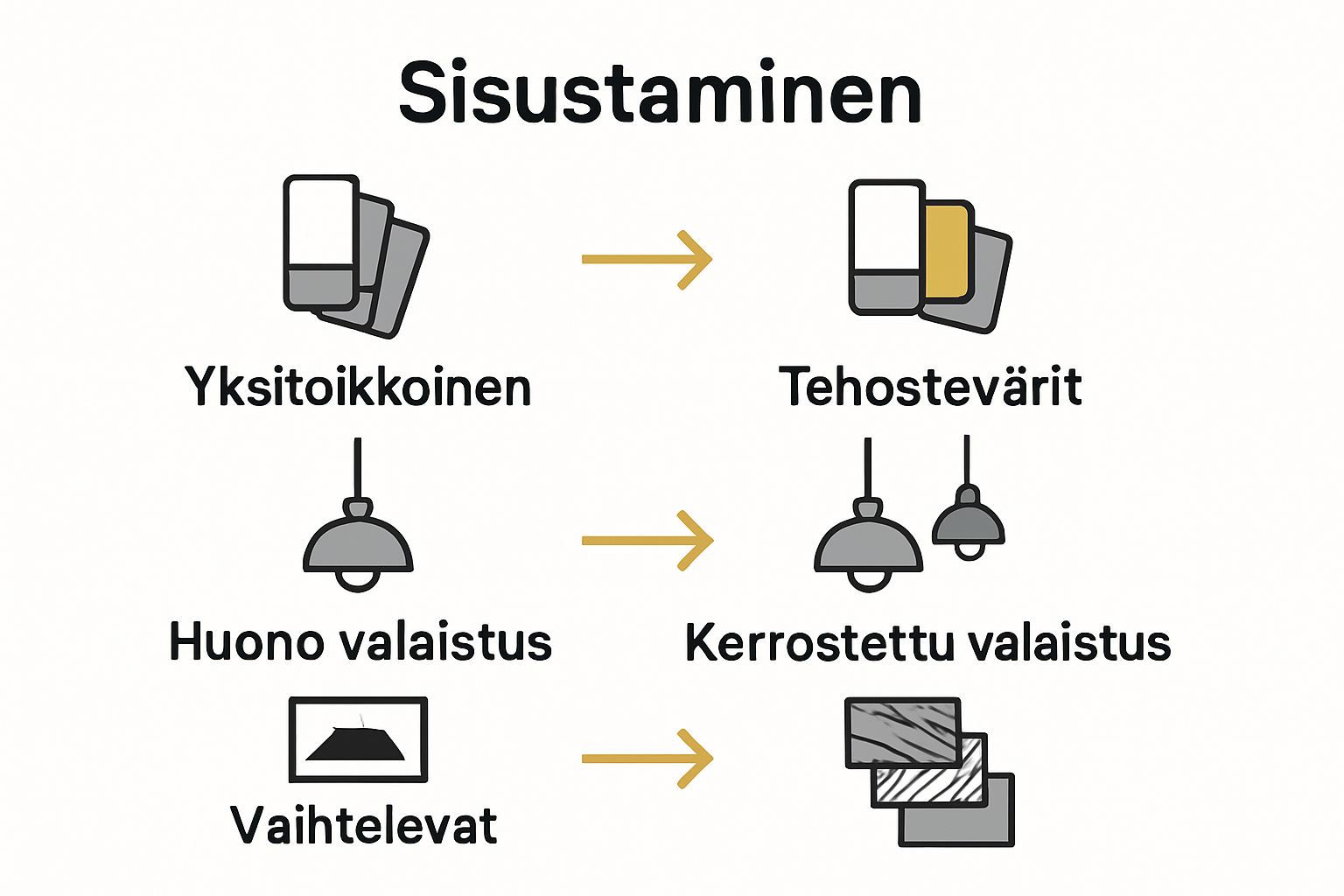
The correct use of colors and contrasts is the key to successful interior design. The most common mistakes are too monotonous color schemes that kill the energy of the space, or, conversely, too colorful ensembles that scatter the eye. Also, don't be tempted to superficially copy trends - authentic aesthetics come from bold, personal choices that respect the nature and purpose of the space.
Every aesthetic choice has consequences that go beyond the visual. Incorrectly chosen materials can cause reduced comfort, while poorly designed lighting can strain the eyes or create unpleasant shadows. Also, don’t underestimate ergonomics – even a beautiful space needs to be practical and comfortable. Remember that true aesthetics come from balance: aesthetic elements should serve both the eye and the user.
Avoid these common pitfalls:
- Contrast-free color worlds
- Impractical furniture choices
- Too cramped or overcrowded spaces
- Ill-considered material choices
- Poorly designed lighting
Take Your Interior Aesthetics to the Next Level with Musou Black
The challenges of aesthetics and visual contrast require solutions that not only look great but also evoke experiences and emotions in your space. Musou Black paint offers a unique opportunity to maximize contrast and create dramatic spaces where light almost completely disappears. This is a solution especially for restaurants and public spaces, where the depth and atmosphere of the spatial experience affect the emotions and memory of visitors.
Discover the lighting – Dekoja.net selection and combine the right lighting with Musou Black surfaces to capture the eyes perfectly. Take the first step towards visually captivating and functional spaces. Find more solutions for creating aesthetic interior design at Dekoja.net . Now is the time to make your space unforgettable and full of experience.
Frequently Asked Questions
What is the importance of aesthetics in interior design?
Aesthetics refers to a harmonious composition where colors, shapes, materials, and light combine to create a space that evokes emotions and inspires users.
How does visual contrast affect interior design?
Visual contrast creates depth and interest in a space. When used correctly, it can guide the eye and significantly affect the mood of a space.
How to choose the right materials for interior decoration?
Material choices should be aesthetic and functional. It is important to consider the durability, recyclability, and responsiveness of materials to the user experience.
What are common aesthetic pitfalls in interior design?
The most common pitfalls are color schemes without contrast, impractical furniture, and poorly designed lighting, which can impair the functionality and aesthetics of the space.
Recommendation
- Interior design tips for different environments – Lifestyle & Deco – Dekoja.net
- Interior design tips for different environments – Lifestyle & Deco – Dekoja.net
- Interior design tips for different environments – Lifestyle & Deco – Dekoja.net
- Interior design tips for different environments – Lifestyle & Deco – Dekoja.net
- Cottage Construction Explained: Benefits, Options and Tips - Huvila Seppälä