

Examples of black surfaces in Finnish gardens
Choosing black surfaces for a garden is a surprisingly versatile and challenging process that requires careful consideration from both aesthetic and practical perspectives. Interior designers, restaurant owners, and artists are increasingly seeking visually distinctive solutions that create contrast and depth in outdoor spaces. The selection of the right material depends on the intended use, budget, and desired appearance. In this article, we present concrete examples of various materials suitable for visually striking and durable outdoor spaces. We outline the selection criteria that guide the choice of the correct black surface material and help you find the best black surface for your project's needs.
Table of Contents
- Key Considerations
- Selection Criteria for Black Garden Surfaces
- Natural Stones: Finnish Black Slate as a Garden Surface
- Crushed Stone and Asphalt: Affordable and Practical Black Surfaces
- Black Concrete and Surface Finishes: A Modern and Customer-Oriented Option
- Comparison: Black Surface Options for Gardens and Outdoor Spaces
- Recommendations and Usage Tips for Choosing Black Surfaces in the Garden
- Explore Dekojas Materials and Tips
- Frequently Asked Questions
Key Considerations
| Item | Details |
|---|---|
| Durability in weather conditions | Check for frost resistance and wear tolerance to ensure the surface remains intact year after year. |
| Safety on wet surfaces | On wet surfaces, it is important that the surface provides sufficient slip resistance and roughness for safety. |
| Aesthetics and finishing | Aesthetics define the look of the space through depth of shine and surface texture. |
| Testing and costs | Test samples when wet and dry, and consider acquisition costs, installation, and long-term maintenance costs. |
Selection Criteria for Black Garden Surfaces
Choosing the right black surface material begins with defining key criteria. Durability is a primary factor in Finland's variable weather conditions. Frost resistance and wear tolerance are essential properties to ensure the surface remains intact year after year. The material must withstand freezing and thawing cycles without cracking or crumbling.
Safety is another critical aspect, especially on wet surfaces. Preventing slips is vital on walkways and seating areas. In restaurant terraces and public spaces, safety requirements are even more emphasized. The surface texture and roughness directly affect comfort of use and the risk of accidents.
Aesthetics defines the visual identity of the space. The depth of the black shade, the gloss of the surface, and its texture create atmosphere and contrast with surrounding elements. In modern garden design, the impact of material selection is particularly emphasized in artistic and commercial projects aiming to create an unforgettable visual experience.
Maintenance varies significantly between different materials. Some surfaces require regular cleaning and upkeep, while others remain almost maintenance-free for years. Moss removal, washing, and potential repairs should be considered in long-term costs. Cost-effectiveness combines the purchase price, installation costs, and maintenance into a whole. In addition to the budget, material availability and delivery times affect the project schedule.
Professional tip: Test material samples when wet and dry before making a final decision. The depth of the black shade and the behavior of the surface change significantly due to moisture, affecting the final visual appearance.
Once the criteria are clear, we will examine typical black surface options through concrete examples.
Natural Stones: Finnish Black Slate as a Garden Surface
Domestic black slates offer a chemical-free, durable, and frost-resistant surface that is excellently suited for demanding outdoor areas. Sisu Black and Varpaisjärvi black are the most commonly used varieties, suitable for terraces, paths, and retaining walls. These stones represent Finnish quality and provide an authentic, natural surface without artificial pigments.
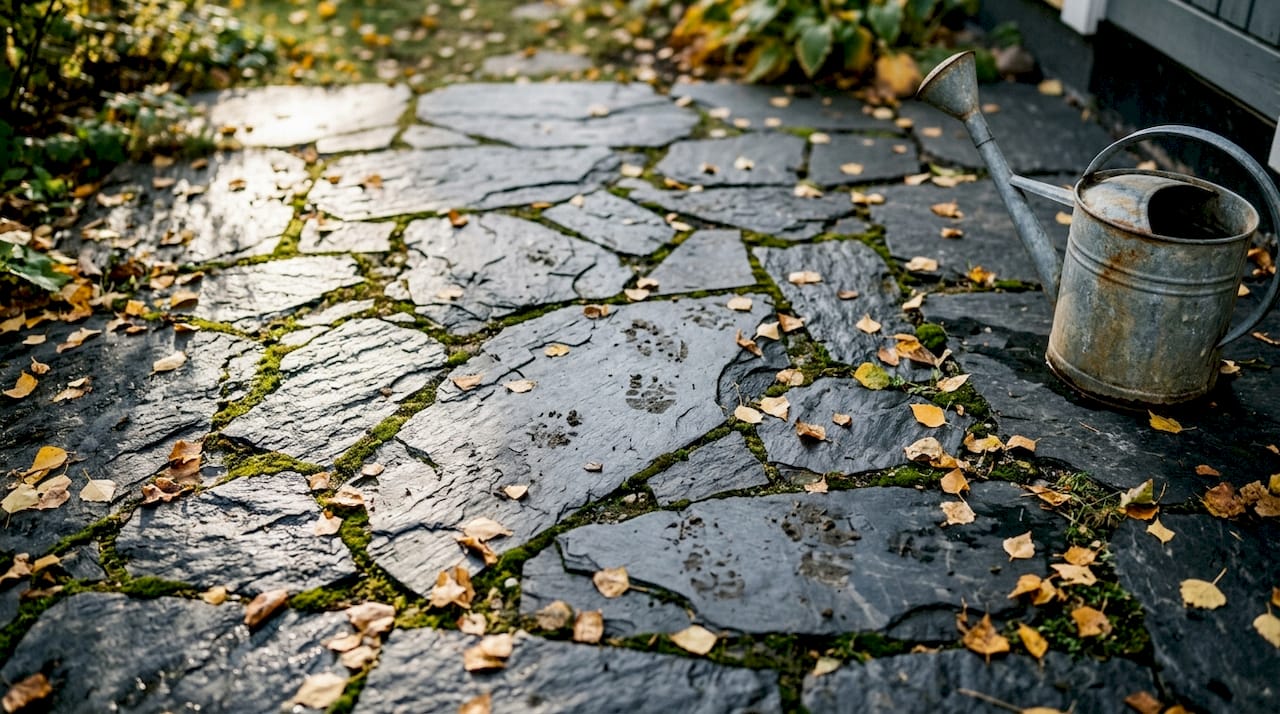
The structure of slate provides natural slip resistance, which is particularly useful in wet conditions. The roughness and uneven texture of the surface significantly improve grip compared to smooth materials. This makes slate a safe choice for walkways and stairs. On restaurant outdoor terraces and in public spaces, safety is a primary priority.
Applications are diverse. On terraces, slate creates a rugged elegance and withstands heavy use. On paths, it guides movement naturally and blends into the environment. In retaining walls and decorative elements, slate offers visual contrast against the greenery of plants. Aesthetic materials like black slates are ideally suited for projects seeking a timeless and durable solution.
Professional tip: Choose the thickness of the slate according to its intended use. For walkways, a thickness of 30-40 mm is sufficient, but for drivable surfaces, at least 50 mm thickness is required to ensure durability.
| Slate Type | Shade Darkness | Best Application | Estimated Price |
|---|---|---|---|
| Sisu Black | Deep black | Terraces, paths | High |
| Varpaisjärvi black | Medium dark | Retaining walls, edges | Medium-high |
| Korpilahti black | Dark, slightly gray | Decorative use | Medium-high |
For a broader overview, we will now compare slates with other black surface options.
Crushed Stone and Asphalt: Affordable and Practical Black Surfaces
Crushed stone forms a dense, weed-preventing surface that is a cost-effective and easy-to-install option for garden pathways. Black crushed stone with a grain size of 0-5 mm compacts into a tight layer, effectively preventing weed growth and providing an even walking surface. It is ideal for temporary or budget-friendly solutions where a quick and functional result is desired.
Asphalt withstands heavy use and is easy to clean, but requires regular moss removal and washing. Due to its practicality, asphalt is a common choice for yard areas where vehicles move or where a durable, waterproof surface is needed. However, maintenance is regular, as moss and dirt accumulate over time, especially in shady areas.
The following table outlines the key differences between crushed stone and asphalt in terms of properties, maintenance requirements, and costs:
| Feature | Crushed Stone | Asphalt |
|---|---|---|
| Acquisition Cost | Affordable | Medium-high |
| Ease of Installation | Easy, DIY | Requires professional |
| Maintenance Requirement | Low, compaction needed | Regular washing |
| Durability in heavy use | Moderate | Excellent |
| Visual Appearance | Natural, rough | Smooth, modern |
Crushed stone installation can be done with the following steps:
- Remove vegetation and level the base carefully
- Lay geotextile to prevent weeds
- Spread crushed stone in a 5-10 cm layer
- Compact several times with a plate compactor or vibratory plate
- Lightly water the surface during compaction
Professional tip: When selecting crushed stone, consider the grain size and compaction techniques to achieve an optimal surface. Smaller grains compact better, but too fine a material can turn to mud when wet. An optimal grain size is a 0-5 mm mix.
Finally, we will examine the possibilities of black concrete in creative garden projects.
Black Concrete and Surface Finishes: A Modern and Customer-Oriented Option
The pigmentation of black concrete allows for a dark, deep shade customized to the project's requirements. Pigmented black concrete is made by mixing charcoal gray and brown pigment into the concrete mix, producing a uniform black shade. This method is suitable for both new pours and overlaying existing surfaces.
Concrete is also suitable for sophisticated applications and can be finished with spray paint to achieve the desired outcome. Old concrete surfaces can be painted black with special paints that withstand outdoor conditions and wear. This offers a flexible option for renovating existing structures without complete demolition.
Black concrete is particularly popular in innovative restaurant and art projects that seek a striking surface and a distinctive appearance. It can be used to create continuous surfaces from walls to floors and planters. Considering the circular economy of materials, concrete is a long-lasting and recyclable material.
Professional tip: The proportion of pigments and mixing method affect the evenness and depth of the shade. Use at least 5% pigment of the concrete's weight to achieve a consistent dark shade. Mix the mass thoroughly to avoid uneven patches.
“Finishing black concrete requires precision and patience. When executed correctly, it creates a unique surface that ages beautifully and develops a patina over time. The quality of pigments and mixing technique determine the success of the outcome.” – Concrete professional
Next, we will compare all discussed materials in a single table to facilitate decision-making.
Comparison: Black Surface Options for Gardens and Outdoor Spaces
The following comprehensive comparison table summarizes the strengths, weaknesses, and applications of each black surface material. The table helps identify the best option for your project's needs.
| Material | Durability | Maintenance Requirements | Costs | Aesthetics | Safety |
|---|---|---|---|---|---|
| Slate | Excellent | Low | High | Natural, rugged | Good grip |
| Crushed stone | Moderate | Moderate | Affordable | Rough, informal | Good when dry |
| Asphalt | Good | Regular | Medium-high | Smooth, modern | Slippery when wet |
| Black concrete | Excellent | Low | Medium-high | Customizable, modern | Depends on finish |
Slate offers the best durability and natural aesthetics, but the acquisition cost is the highest. Crushed stone is the most affordable option for quick implementations but requires compaction and is best suited for less trafficked areas. Asphalt is a practical choice for vehicles but requires active maintenance. Black concrete combines durability and design freedom, making it a popular choice for creative projects.
The most visually distinctive results are achieved by combining different materials. For example, slate borders around a crushed stone path or black concrete slabs among natural stones create interesting contrasts and surface textures. The material guide offers more ideas for combining materials.
Based on this comparison, the next section provides practical recommendations for different uses and projects.
Recommendations and Usage Tips for Choosing Black Surfaces in the Garden
For restaurants and artists, black concrete is recommended for a dramatic and easily customizable appearance. Concrete allows for a continuous surface from the terrace to the interiors, which strengthens the concept and creates visual continuity. It can also be used to create unusual shapes and integrate lighting elements directly into the surface.
For home gardens and natural environments, slate brings durability and natural aesthetics that blend harmoniously with the surrounding vegetation. They are excellent for traditional garden styles and create a timeless look that doesn't require chasing trends. Slates also act as heat accumulators, which can be an advantage on cooler evenings.
For affordable solutions and quickly implemented coverings, crushed stone and asphalt offer practicality without major investments. These materials are suitable for temporary arrangements or situations where the budget is tight. They enable quick changes and, if necessary, easy redesign.
Maintenance instructions for different materials:
- Slate: sweep loose dirt regularly, remove moss with a pressure washer if necessary
- Crushed stone: re-compact annually, fill worn areas
- Asphalt: wash at least twice a year, remove moss with special cleaning agents
- Concrete: protect with a surface treatment, repair cracks immediately
Professional tip: Combine different materials to create contrasts and surface textures in an interesting outdoor space. For example, a black concrete slab in the middle of light stones or a slate path through crushed stone creates visual rhythm and guides the eye. Material recommendations help find effective combinations.
Following the usage tips, we naturally lead the reader to consider how to apply the lessons from the article and where to find further assistance.
Explore Dekojas Materials and Tips
The selection and implementation of black surfaces require careful planning and finding the right materials. Dekoja.net offers a comprehensive selection of special materials and expert support for the successful execution of your project. Although we specialize in super black surfaces and effect materials for interiors, on our pages you will find more in-depth information on material selection in spatial design, which also supports outdoor space design.
Inspiration and practical guidance can be found in our aesthetic space design tips, which help to understand the role of materials in the overall scheme. We help restaurants, interior designers, and artists create spaces that evoke emotions and stand out from everything else. Explore our accessible articles and materials to support your choices.
Next, we answer readers' most common questions about black garden surfaces.
Frequently Asked Questions
How to choose the right black surface for different areas of the garden?
The choice primarily depends on the intended use and load. For living areas, such as terraces and balconies, slate or black concrete are best suited, as they can withstand heavy use and provide a comfortable surface for bare feet. For walkways and paths, crushed stone or asphalt are practical options that can withstand regular traffic. Safety and maintenance requirements should always be considered in the selection, especially in public spaces and restaurant terraces.
How much maintenance do black surfaces require with different materials?
Stone and concrete require minimal maintenance, mainly occasional washing and moss removal in shaded areas. These materials last for years with little to no maintenance, provided the initial installation is done correctly. Asphalt and crushed stone require more regular attention: asphalt needs washing at least twice a year and moss removal, while crushed stone requires annual compaction and refilling of worn areas. Maintenance costs should be factored into the long-term budget.
Can I also use black concrete for walls or planters?
Yes, pigmented black concrete can be used versatilely in vertical structures and planters. It offers a consistent and modern look to various elements of the garden, creating visual continuity and strengthening the overall aesthetic. However, using concrete in walls requires proper reinforcement and waterproofing to ensure the structures withstand moisture and frost. In planters, concrete is a durable option, but the pH balance must be considered to ensure the well-being of the plants.
How does the installation of black crushed stone differ from ordinary gravel?
Black crushed stone compacts into a significantly denser layer than coarse gravel, which inhibits weeds more effectively and creates a smoother walking surface. Installation emphasizes careful compaction in several stages to achieve optimal load-bearing capacity and evenness. Ordinary gravel remains looser and requires a thicker layer, whereas crushed stone forms an almost solid surface from a layer of just 5-8 cm when properly compacted. Geotextile is important for both, but with crushed stone, it is almost essential for preventing weeds.