

Visual Elements of Brand Space: A Guide for Professionals
In brief:
- The visual elements of a brand space include colors, typography, materials, lighting, and graphic elements, which together form the space's aesthetic. Together, these elements support brand recognition and communication, influencing customer experience and trust.
The visual elements of a brand space are all the physical and graphic components that together create a space's recognizable brand identity. These include colors, typography, materials, lighting, and graphic elements such as a logo. The visual identity consists of these parts, which together support brand recognition and communication. When these elements work together consistently, the space not only looks good, but it also clearly communicates the brand's values to every visitor. This guide is written for photographers, interior designers, and small business owners who want to create a distinctive and experiential space.
What are the fundamental visual elements of a brand space?
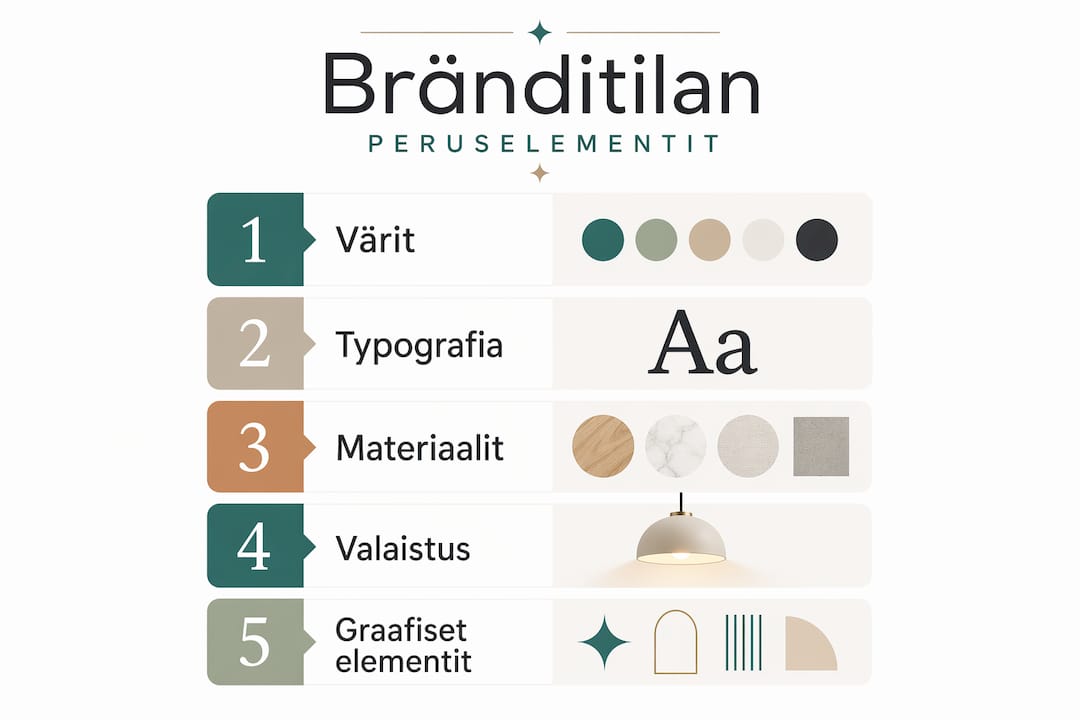
A color palette, typography, materials, and lighting are the five key elements of a brand space's visual identity, which are documented in graphic guidelines. Each of these plays its own role, but only together do they form a cohesive whole.
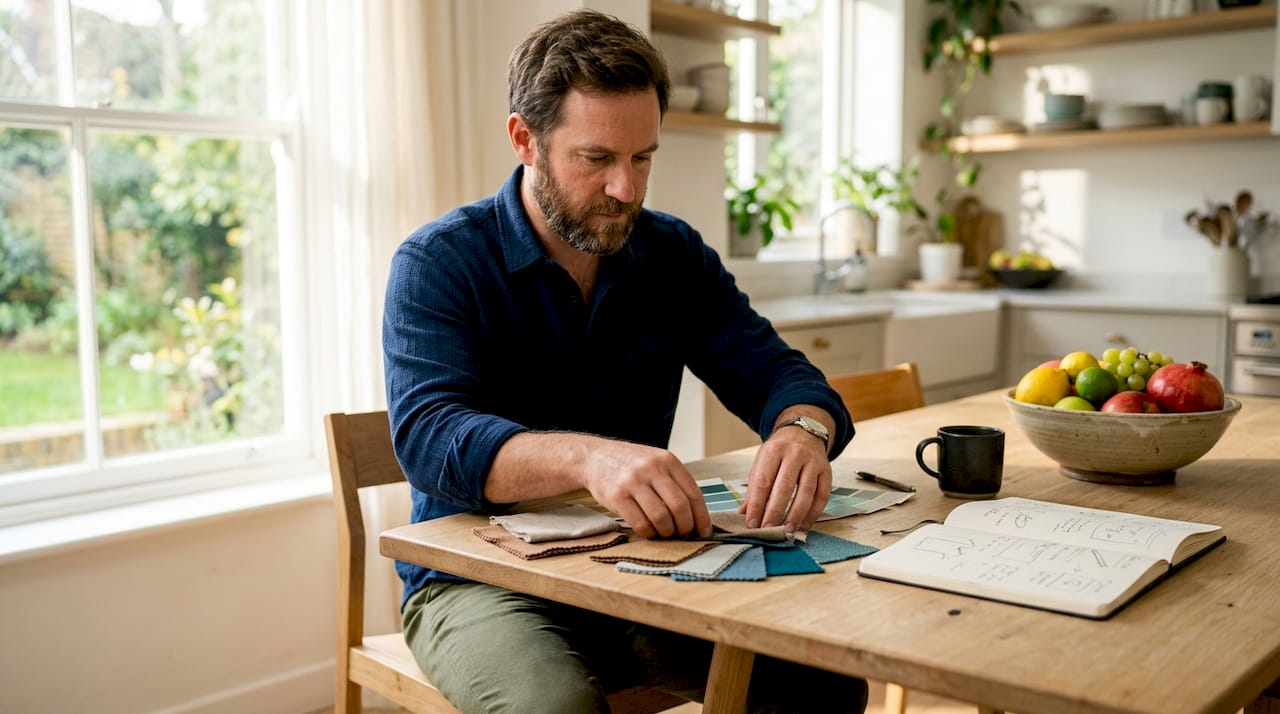
Colors are a strategic choice. Blue communicates trustworthiness, green responsibility, and yellow energy. Color is not just a wall surface; it's an emotional message that recurs in furniture, signage, and textiles. The color palette should be chosen according to the brand's story and customer expectations, not merely based on aesthetic preferences.
Typography defines the space's personality. The brand font is repeated in signage, menus, window decals, and digital displays. The font choice communicates whether the brand is playful or formal, modern or traditional. Consistent use of the brand font strengthens recognition in both physical spaces and digital channels.
Materials concretely express quality and atmosphere. Concrete conveys an industrial feel, wood warmth and a connection to nature, metal modernity. Material choices should be made according to guidelines for professionals to ensure the result is both visually cohesive and practical.
Lighting is an underestimated brand element. Dim lighting creates an intimate atmosphere, while bright lighting is suitable for open and more casual spaces. Lighting is not just a functional solution; it shapes the entire mood of the space and emphasizes other visual elements.
Graphic elements and the logo tie the whole together. The logo is the brand's visual anchor, appearing at the entrance, on packaging, and in marketing materials. Graphic patterns, such as repeating shapes or textures, create rhythm and depth in the space.
- Colors: emotional message and brand story
- Typography: personality and recognition
- Materials: quality and atmosphere
- Lighting: mood and functionality
- Graphic elements: rhythm and coherence
Professional tip: Test your color palette in both natural and artificial light before making a final decision. Colors behave differently under various lighting conditions, and surprises usually only emerge during the construction phase.
How to integrate visual elements into space design?
Integrating visual elements into space design begins with the brand strategy, not individual design trends. Visual identity and space design should stem from the brand strategy to achieve a long-term impact. This means that design decisions are justified by brand values, not merely aesthetics.
In practice, integration proceeds as follows:
- Define the brand's core message. What feeling or image do you want the customer to experience in the space? This guides all subsequent choices from colors to materials.
- Create or update graphic guidelines. Brand guidelines are a vital tool in a spatial project. They save time and budget and ensure that all stakeholders work according to the same vision.
- Design with a zone-based approach. The entrance communicates the brand's essence, and other areas follow the same visual language, regardless of their purpose. In a restaurant, this means that the visual language of the bar, dining area, and restrooms is recognizably the same.
- Select materials in line with the brand story. A luxury restaurant chooses natural stone and matte metals, while a youthful cafe might use recycled materials and bold colors. Material choice is always a message.
- Design lighting in layers. Layered lighting improves the functionality and atmosphere of the space. General lighting, accent lighting, and ambient lighting serve different purposes and allow the space to adapt to various situations.
A successful example of zone-based thinking is a gallery where the entrance is strongly branded with a logo and a contrasting surface, the exhibition hall is neutral to highlight the artworks, and the cafe nook repeats the brand's colors in textiles and furniture. Each zone is different, but all clearly belong to the same whole.
Professional tip: 3D visualization before construction reveals wasted space and incorrect dimensions in time. It's an investment that pays for itself in the very first design modification.
How photographers and interior design professionals build brand spaces?
For a photographer and an interior designer, a brand space is both a tool and a final product. The visual identity of the space is directly reflected in the images, and a poorly designed space makes even a good photographer appear weak. The following practices help create a space that is photogenic and supports the brand.
- Plan the photoshoot day in advance. Consider which details of the space best tell the brand story. Textures, color contrasts, and lighting direction matter more than expensive props.
- Harmonize materials and lighting. Glossy surfaces reflect light differently than matte surfaces. Authentic surfaces and thoughtful lighting emphasize the quality and authenticity of the space better than excessive staging.
- Use graphic elements to support the images. A repeating pattern on a wall or floor creates rhythm in the image. A logo or brand color in the background ties the image to the space without needing a separate explanation.
- Highlight the client's brand's visual story. The photographer's job is not just to document the space, but to reinforce the image the brand wants to convey. This requires prior discussion with the client about brand values and goals.
- Avoid over-designing. Excessive staging and inauthentic visual material undermine the brand's credibility. Natural materials and quality lighting work more effectively than an overly cluttered space.
From an interior designer's perspective, a brand space is successful when the customer recognizes the brand in the space without a logo. This requires that colors, materials, and lighting tell the same story consistently in every corner.
How do visual elements affect customer experience?
A consistent visual identity increases trust and customer loyalty. This is not just an aesthetic claim but a business reality. A customer who recognizes the brand in a space trusts it more and is more likely to return.
Visual consistency impacts customer experience on several levels:
| Element | Impact on customer experience |
|---|---|
| Colors | Evoke desired emotions and support the brand's story |
| Materials | Concretely communicate quality and authenticity |
| Lighting | Determines the atmosphere and guides customer movement in the space |
| Typography | Strengthens recognition in signage and marketing materials |
| Graphic elements | Create a memorable impression and differentiate the brand from competitors |
Experiential value is a competitive advantage that cannot be copied by price. A customer remembers a space where they experienced something special and tells others about it. This is the true value of a brand space's visual elements: they build an experience that lingers in the mind.
Professional brand identity design typically costs around 4,900 euros, including the logo, typography, image guidelines, and graphic guidelines. This is an investment that pays for itself through improved recognition and customer loyalty.
Key takeaways
The visual elements of a brand space, such as colors, materials, lighting, and typography, together form the space's identity and directly affect customer experience and brand recognition.
| Point | Details |
|---|---|
| Five fundamental elements | Colors, typography, materials, lighting, and graphic elements form the visual entirety of a brand space. |
| Graphic guidelines | Guidelines ensure consistency and save time and budget in all spatial projects. |
| Zone-based thinking | The entrance communicates the brand's essence, while other areas follow the same visual language regardless of their purpose. |
| Role of lighting | Layered lighting improves atmosphere and functionality more than any single interior design element. |
| Business value | A consistent visual identity measurably increases customer trust, recognition, and loyalty. |
Mikko: Why the visuality of a brand space often goes wrong
I’ve seen many brand spaces where every individual element is high-quality, but the overall result doesn’t work. The reason is almost always the same: elements are chosen separately without a unified visual strategy. A color is chosen based on a mood image, a material from a hardware store, and lighting on an electrician’s recommendation. The outcome is a space that conveys nothing.
Another common mistake is over-design. When too many visual messages are crammed into a space, the customer registers none of them. The best brand space is one where one or two elements do all the work. An extreme surface material like Musou Black paint can be that single element that makes a space unforgettable without other decorations.
I've also noticed that photographers and interior designers too rarely communicate with each other before a project begins. A photographer knows what works in a picture. An interior designer knows what works in a space. When these two perspectives are combined in the design phase, the result is both a visually functional space and a photogenic environment. This collaboration is an underestimated competitive advantage.
The long-term value of a visual identity comes from consistency. A space that looks the same a year after its opening as it did at the launch is successful. A space that requires constant updates was already a failure in the design phase. Choose elements that stand the test of time, not trends.
— Mikko
Dekoja helps build a distinctive brand space
A brand space needs elements that cannot be found in an ordinary hardware store. Dekoja supplies Musou Black paint, non-reflective fabrics, and the world's blackest effect surfaces directly from its domestic warehouse, within 1–3 business days.
Dekoja serves restaurants, galleries, interior designers, and architects in projects where visual distinctiveness is crucial. The products are suitable for contrast walls, optics-based illusions, and studio spaces. The B2B service covers the entire project from design to implementation. Explore Dekoja.net's selection and request a quote for your project.
Frequently Asked Questions
What are the fundamental visual elements of a brand space?
The fundamental visual elements of a brand space are colors, typography, materials, lighting, and graphic elements such as a logo. These are documented in graphic guidelines that guide all space design decisions.
Why are graphic guidelines important in space design?
Graphic guidelines ensure that all visual elements are in line with the brand. They save time and budget and prevent conflicting choices between different stakeholders in a construction project.
How does lighting affect the atmosphere of a brand space?
Dim lighting creates an intimate atmosphere, while bright lighting is suitable for open spaces. Layered lighting, combining general, accent, and ambient lighting, provides flexibility for the space's various uses.
How can a photographer utilize the visual elements of a brand space?
A photographer utilizes the space's textures, color contrasts, and lighting direction to create images that tell the brand's story without needing separate explanation. Prior planning with the client is a crucial step.
How much does professional brand identity design cost?
Professional brand identity design typically costs around 4,900 euros, including the logo, typography, image guidelines, and graphic guidelines. The price varies depending on the scope of the project.