

Lighting for AV environments – The power of visual contrast
Over 80 percent of spatial design depends on successful lighting , as light shapes the experience more than any other element. In restaurants and art installations, light control makes the space an experience and directs the customer's attention. In this article, you will learn how lighting design for AV environments combines artistry, technology and user experience to create impressive and memorable wholes.
Table of contents
- The basics and purpose of lighting in AV environments
- Types of lighting solutions and their differences
- The effect of materials on visual contrast
- The role of lighting in spatial design
- Most common errors and solution options
Key considerations
| Paragraph | Details |
|---|---|
| Lighting design for AV environments | Lighting should be dynamic and adaptive to create an immersive experience. The design should take into account the purpose of the space and lighting techniques. |
| Lighting solutions | Different lighting types, such as general, accent and mood lighting, serve specific purposes and requirements. LED technology enables more energy-efficient solutions. |
| The effect of materials | The reflection and absorption properties of materials have a significant impact on visual contrast and the experience of space. Choices such as glossy or matte surfaces control lighting effects. |
| The most common mistakes in lighting design | Common mistakes, such as insufficient light and poor lighting placement, can reduce the functionality of a space. Multi-level lighting design helps minimize these problems. |
The basics and purpose of lighting in AV environments
Lighting in AV environments is much more than just illuminating a space. It is a multi-level design process where light becomes a key element in communication and mood-building. Theatre lighting practices demonstrate how carefully designed lighting can guide the viewer's gaze, create emotional spaces, and emphasize the core content of a performance.
The main task of lighting in AV environments is to create an interactive and immersive experience. This means that lighting must be dynamic and adaptive. Sound, image and light come together to form a whole, where each element supports the other. AV systems in meeting rooms show how lighting can enhance visual communication and help participants focus on what is essential.
In practice, lighting design for AV environments requires multidisciplinary expertise. It requires a technical understanding of light sources, color temperatures, and lighting techniques, as well as an artistic vision for building the atmosphere of the space. Key elements in the design include:
- Utilizing LED technology
- Creating dynamic lighting effects
- Considering the intended use of the space
- Directing the attention of participants
Pro tip: Always start lighting design for an AV environment with a deep understanding of the intended use of the space, not just with technical solutions.
Types of lighting solutions and their differences
Lighting solutions are a diverse entity, divided into different types according to their intended use and technical implementation. LED lighting solutions differ significantly in different environments, such as offices, industry, parking lots and shops. Each area has its own specific needs in terms of light intensity, directionality and energy efficiency.
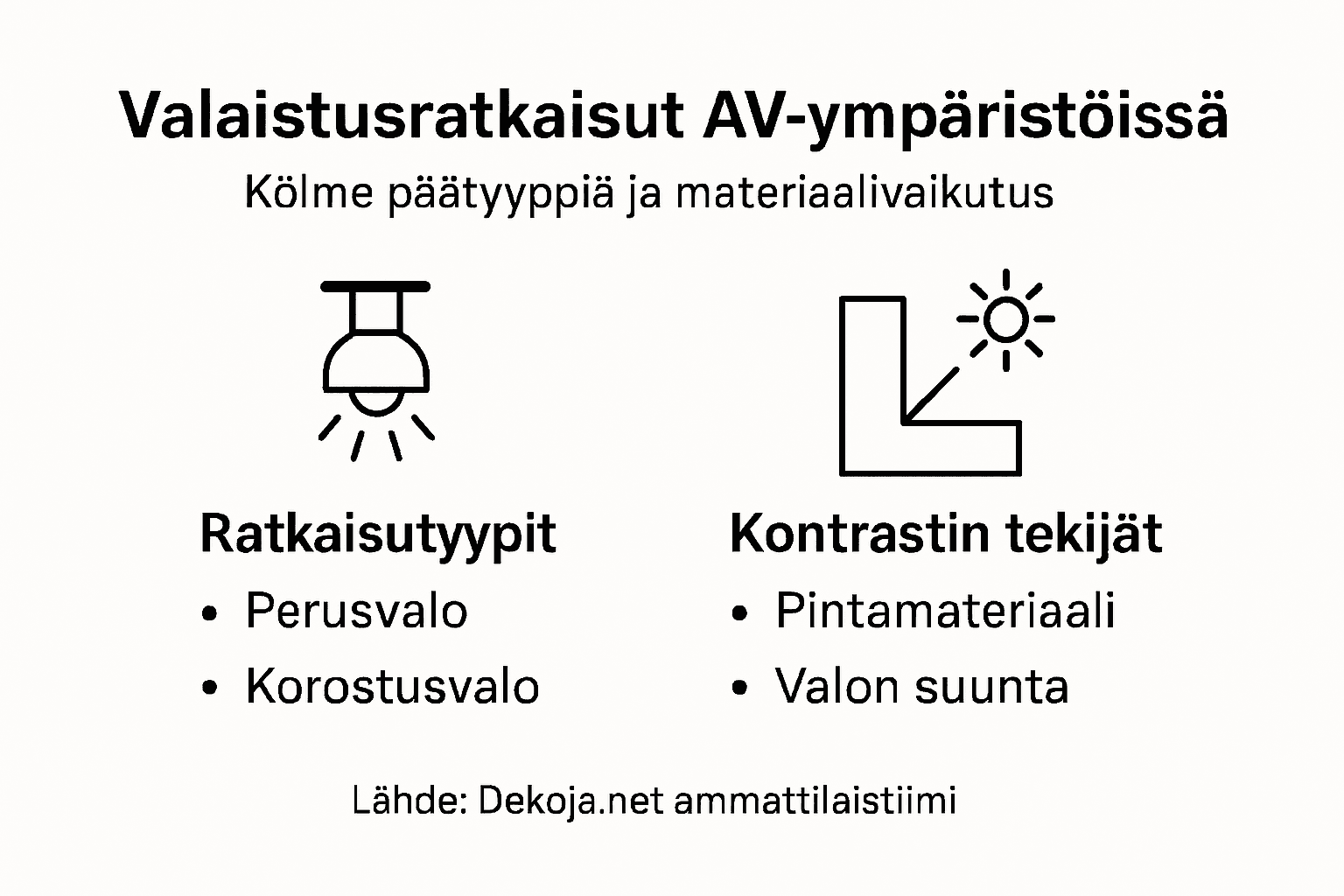
Typically, lighting solutions can be divided into three main types: general lighting, accent lighting and mood lighting . General lighting provides general brightness to a space, accent lighting focuses on functional areas and mood lighting creates depth and visual interest in a space. LED technology has revolutionized the implementation of these solutions, enabling smarter and more energy-efficient lighting solutions.
Key criteria when choosing different lighting types include:
- Purpose of the space
- Energy efficiency
- Light color temperature
- Light source controllability
- Glare-free
Modern lighting solutions enable increasingly diverse and flexible implementation methods, where light is no longer just a technical solution, but a central part of creating the atmosphere and user experience of a space.
The table below compares the three types of lighting in AV environments and their specific tasks:
| Lighting type | Purpose in space | Typical application range |
|---|---|---|
| Basic lighting | Ensuring public visibility | Offices, meeting rooms |
| Accent lighting | Highlighting specific items | Exhibitions, stores |
| Mood lighting | Creating an atmosphere and experience | Restaurants, events |
Pro tip: Always choose a lighting solution based on the actual purpose of the space, not just aesthetic preferences.
The effect of materials on visual contrast
Visual contrast is created by the interaction of materials and light, where surface properties determine the final visual experience. Light and reflective surfaces enhance the spread of light, creating depth and multidimensionality in a space. Material choices are a key element that directly affects how light behaves and is experienced on different surfaces.
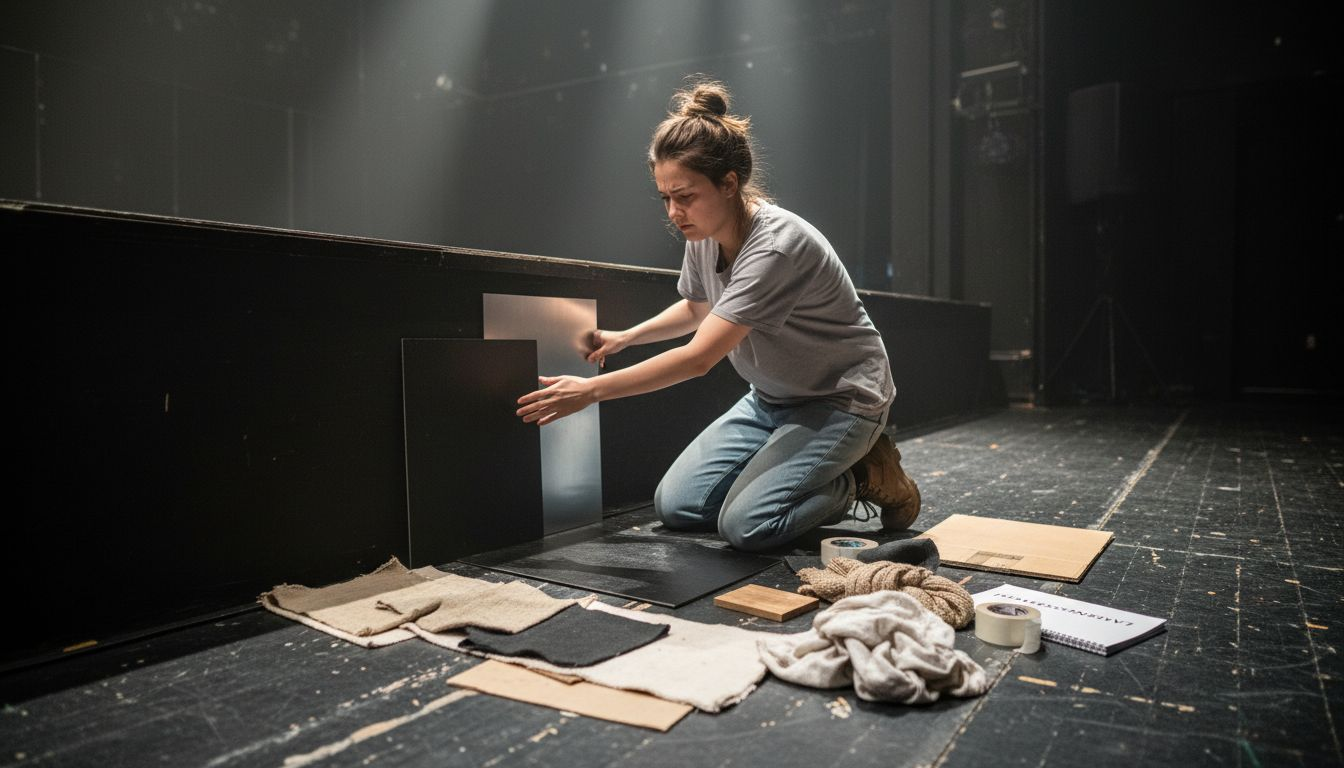
The reflective properties of different materials create completely different contrast possibilities. Shiny metallic surfaces reflect light sharply, while matte surfaces absorb light and create softer transitions. Ultra black material is an extreme example of contrast control, where light practically disappears into the surface.
The contrast properties of materials can be divided into the following categories:
- Reflectance
- Color absorption
- Surface microstructure
- Penetration
- Light diffusion
In artistic execution, material choices are a strategic tool that can be used to create startling visual ensembles. With the right materials, you can emphasize, fade, or modify the perception of space in a completely new way.
Pro tip: Experiment with different materials when lighting and observe how they behave in different lighting conditions.
The role of lighting in spatial design
In spatial design, lighting is no longer just a technical solution, but a strategic element that shapes the user experience and atmosphere of a space. The quality and controllability of light are central to comfort, safety and functionality. Designers today see light as an active tool that can guide people's movements, create visual paths and shape the perception of a space.
Daylight optimization and heat load management are important elements of space design. The size, placement, and light filtering of windows directly affect the energy efficiency and comfort of a space. Intelligent lighting design combines natural and artificial light in a way that supports the intended use of the space.
Strategic aspects of lighting in spatial design include:
- Ensuring operational visibility
- Creating the atmosphere
- Visual organization of space
- Improving energy efficiency
- Supporting user well-being
Modern spatial design sees lighting as a multi-sensory experience, where light not only illuminates, but also communicates, guides and shapes spatial experiences.
Pro tip: Always design lighting from the perspective of the user of the space, not just according to aesthetic ideals.
Most common errors and solution options
Lighting design for AV environments often faces similar challenges that can impair the functionality and user experience of the space. The most common mistakes in lighting design are most often related to insufficient light, incorrect color temperatures, and unsuccessful placement of luminaires. These mistakes can create unpleasant, functionally inadequate spaces.
Safety is paramount when installing lighting . The most common technical errors are related to improper electrical connections, poor fixture mounting, and ignoring safety requirements. Professional installation and design are key to achieving a successful outcome.
The most important mistakes to avoid and their solutions:
-
Amount of light : Use a three-level lighting strategy
- Basic light
- Area light
- Accent light
- Color temperature : Choose a color tone that suits your purpose
- Lighting placement : Consider the functionality of the space
- Technical implementation : Ensure professional installation
Smart lighting can help avoid traditional pitfalls and create a space that is both functional and pleasant. It is essential to understand the multidimensionality of light and its impact on the user experience.
The following table summarizes the most common lighting design mistakes and effective solutions to avoid them:
| Common mistake | Possible consequence | Solution method |
|---|---|---|
| Too little light | Poor visibility, fatigue | Use multi-level lighting |
| Inappropriate color temperature | Disturbs concentration | Choose a shade that suits the activity |
| Poor lighting placement | Shadows, uneven light | Plan the location carefully |
| Careless installation | Security risk, damage | Professional implementation |
Pro tip: Don't design lighting solely based on aesthetic considerations, but always put the user's needs first.
Enhance the lighting of your AV environments with visual contrast
The main challenge in lighting AV environments is to achieve perfect visual contrast and a space where light not only illuminates but also creates depth and atmosphere. The lessons learned in this article show that materials and light control are key to successful lighting design. If you want to enhance the dynamics of your lighting and make your spaces truly captivating, for example in theaters, events or restaurants, you need solutions that maximize the power of light and shadow.
Dekoja.net offers lighting solutions that support bold visual design. Discover in particular the Musou Black material family, the world's blackest paint that absorbs up to 99.4 percent of visible light. With this, you can create a dramatic and non-reflective surface that takes contrast to a new level. You will also find interior design elements that emphasize the impact of lighting in your spaces and make them visually exceptional.
Don't settle for ordinary lighting and don't waste the potential of your space. Start building experiences today and explore our comprehensive solutions at Dekoja.net . Find inspiration and support to help you improve the lighting of your AV environments holistically.
Frequently asked questions
What is the purpose of lighting in AV environments?
Lighting in AV environments is not just about illuminating the space, but its purpose is to create a dynamic and immersive experience that supports communication and atmosphere.
How do materials affect visual contrast?
Materials affect the behavior and contrast of light on different surfaces. Bright and reflective surfaces improve light diffusion, while matte surfaces absorb light and create softer transitions.
What are the three main types of lighting solutions?
Lighting solutions can be divided into three main types: general lighting, accent lighting and mood lighting. Each type has its own specific tasks in a space.
What is the most important thing to consider when designing lighting solutions?
The most important consideration when designing lighting solutions is the intended use of the space. Lighting should enhance the user experience and functionality, and not be based solely on aesthetic preferences.
Recommendation
- Research light control – Depth, contrast and impact – Dekoja.net
- Research light control – Depth, contrast and impact – Dekoja.net
- Research light control – Depth, contrast and impact – Dekoja.net
- Research light control – Depth, contrast and impact – Dekoja.net
- 7 Essential Energy-Saving Lighting Tips for Healthcare Facilities