

Smart Lighting: Taking Space Mood and Control to a New Level
More than 60 percent of Finns are looking for ways to improve the comfort and energy efficiency of their homes. Smart lighting is of interest because it offers an easy way to control the color, brightness and mood of the light directly from your phone. When lighting adapts to different moments of everyday life, the possibilities for improving well-being increase. For this reason, many want to know how modern technologies are changing our perception of home lighting.
Table of contents
- What does smart lighting mean and why is it interesting?
- Different smart lighting systems and their differences
- Control methods: applications, automation and integrations
- The role of smart lighting in creating interior design and experience
- Common problems, costs and mistakes to avoid
Key Findings
| Paragraph | Detail |
|---|---|
| The versatility of smart lighting | Smart lighting allows light to be adjusted and adapted to the user's needs using smart devices. |
| Different systems and their differences | There are several smart lighting systems on the market, such as Ikea Trådfri and Philips Hue, which have their own strengths. |
| Control methods | Mobile apps, voice assistants or automation systems can be used to control lighting. |
| Challenges and mistakes | When implementing smart lighting, system compatibility, budgeting, and user-friendliness must be taken into account. |
What does smart lighting mean and why is it interesting?
Smart lighting is a technological solution that completely changes the way lighting is managed in a space. It means intelligent lighting solutions that allow light to be perfectly adapted to the needs and desires of the user. The automation and control of lighting opens up completely new possibilities for creating the atmosphere of a space.
The key idea behind smart lighting is its versatility. You can adjust the color temperature, brightness and even the color of the light completely freely via a smart device or app. For example, the system enables optimal lighting for working during the day and relaxing ambient lighting in the evening. Smart lighting directly affects our well-being by adapting the properties of light to our mood and level of alertness.
In practice, smart lighting means the following functions:
- Automatic lighting adjustment according to the time of day
- Infinitely variable light brightness and color temperature
- Energy saving with smart sensors
- Creating mood lighting for different situations
- Improving security with motion and presence detectors
Smart lighting is no longer just a technical detail, but a holistic way to control the atmosphere and user experience of a space. It combines technology, aesthetics and well-being in a way that is reshaping our understanding of modern lighting.
Different smart lighting systems and their differences
Smart lighting systems have evolved significantly in recent years, offering consumers increasingly diverse options for lighting control. There are several different wireless smart lighting systems on the market , each with its own strengths and unique features.

The four most popular systems are Ikea's Trådfri, Philips Hue, Casambi and KNX. When comparing smart bulbs, brightness control, color temperature changes and compatibility with other smart home devices are particularly emphasized . There are significant differences between these systems that affect the user experience and suitability for different spaces.
The key differentiators of the systems are:
- Compatibility with other devices
- Range and connection methods
- Versatility of control methods
- Value for money
- Ease of installation
When choosing a suitable smart lighting system, it is worth considering your own purpose, budget and technical expertise. The system should meet both technical and aesthetic needs to get the best possible benefit from the lighting.
Control methods: Applications, automation and integrations
Smart lighting control systems have revolutionized the way we manage lighting in our homes and workplaces. With smartphone apps, voice assistants, and automation, we can now control lights remotely , offering a whole new level of flexibility in lighting management.
Smart lighting systems allow for the customization of lighting without heavy structural changes , making them a very attractive option for both new and old spaces. Control methods can be divided into three main types:
Main categories of control methods:
- Mobile applications
- Smartphone applications
- Fully remote controlled
- Enables precise adjustment
- Voice assistant control
- Compatibility with Alexa, Siri or Google Assistant
- Hands-free control
- Fast and easy to use
- Automatic lighting control
- Motion detectors
- Lighting changes depending on the time of day
- Energy-saving solutions
Modern smart lighting systems are virtually infinitely customizable, allowing you to create the perfect lighting experience for your needs.
The role of smart lighting in creating interior design and experience
Smart lighting has revolutionized the way we think about interior design and the atmosphere of a space. Shaping the atmosphere of your home by adjusting the color temperature and color of the light opens up a whole new range of possibilities to create a space that is just like you.
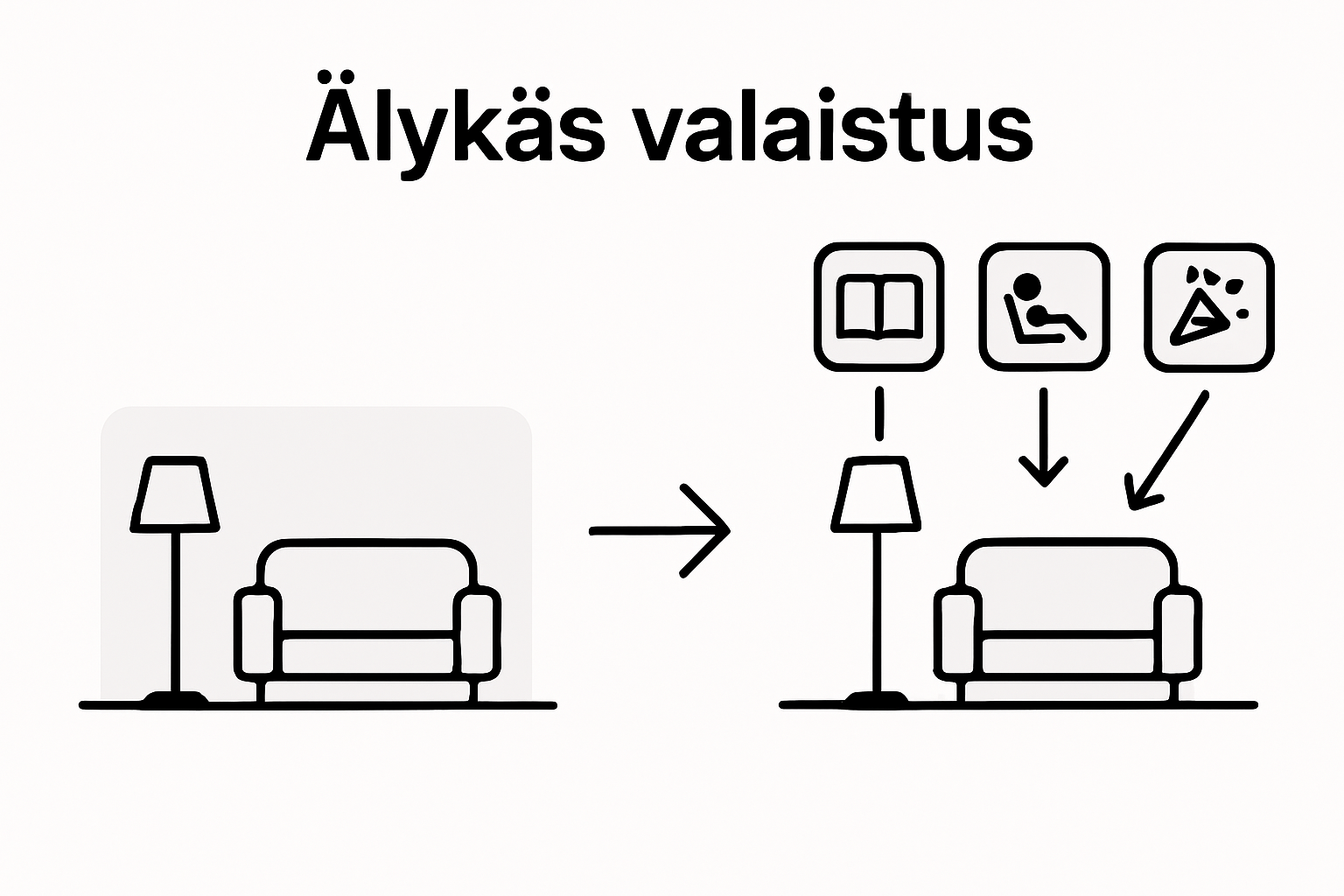
Smart lighting allows you to tailor different moods completely to the user's needs, making interior design a more personal experience. Light is no longer just a functional element, but an active part of interior design.
Interior dimensions of smart lighting:
- Creating a mood at different times of the day
- Emphasizing the purpose of the space
- Enlivening colors and materials
- Highlighting architectural details
- Controlling mood and alertness
Modern smart lighting is like a painting that you can change however you want – it's a dynamic tool that shapes space and experience in a whole new way.
Common problems, costs and mistakes to avoid
Implementing smart lighting requires careful planning and an understanding of the potential challenges. Compatibility with other smart devices can be a major stumbling block that you should prepare for in advance.
When choosing a smart lighting system, you need to carefully consider your budget, desired features, and compatibility to avoid costly mistakes. Costs can be surprisingly high without careful advance planning.
The most common pitfalls when considering smart lighting:
- Compatibility issues with other devices
- Too complicated system
- Solutions that are oversized for the budget
- Forgetting about user-friendliness
- Neglect of information security
A successful smart lighting project requires patience, research, and careful planning. Don't skimp on the wrong things – invest in a high-quality, easy-to-manage system that serves your real needs.
Take Your Smart Lighting Experience to the Next Level with Dekoja.net
Smart lighting offers a unique opportunity to customize the atmosphere and control of a space completely according to the user's wishes. The well-known article highlights challenges such as lighting compatibility with different devices, easy control and functional automation. Meeting these challenges requires careful planning and the selection of the right materials so that the lighting palette works seamlessly and creates an impressive experience.
Discover, among other things, the Dekoja.net lighting selection, which combines the best aspects of aesthetics and technology. You get a solution for complex smart lighting when you also utilize the world-famous Musou Black material, which absorbs light and deepens contrast in an unprecedented way. This way, your space gets the desired atmosphere that will be strongly remembered.

Don't let lighting control remain just a dream. Get top-notch solutions today and customize your space to your liking. Check out the comprehensive selection at Dekoja.net and take the first step towards complete control of smart lighting.
Frequently Asked Questions
What does smart lighting mean?
Smart lighting refers to intelligent lighting solutions that allow light to be adjusted according to the user's needs and desires.
How does smart lighting affect well-being?
Smart lighting can improve well-being by adapting the properties of light to your mood and state of alertness, for example, creating calming or energizing atmospheres.
What are the key differentiators of smart lighting systems?
The key differentiating factors of smart lighting systems are compatibility with other devices, versatility of control methods, price-performance ratio, and ease of installation.
How can smart lighting be controlled?
Smart lighting can be controlled using mobile apps, voice assistants, or automated control solutions, providing a flexible way to manage lighting remotely.
Recommendation
- 7 examples of lighting solutions to support interior design – Dekoja.net
- 7 examples of lighting solutions to support interior design – Dekoja.net
- 7 examples of lighting solutions to support interior design – Dekoja.net
- 7 examples of lighting solutions to support interior design – Dekoja.net
- Setting Up Smart Lights for Ultimate Convenience - Projector Display