

Restaurant lighting design tips 2026
Restaurant lighting design is one of the most critical factors influencing customer experience and the time spent in the space. Properly implemented lighting not only creates ambiance but also highlights the decor, guides customer movement, and differentiates the restaurant from competitors. Yet, many designers struggle with coordinating different lighting layers or make mistakes regarding color temperature and light distribution. In this article, we'll go through key design tips to help you create a visually distinctive and functional restaurant lighting scheme.
Table of Contents
- Key Lighting Design Tips for Restaurants
- Key Criteria for Successful Restaurant Lighting
- Lighting Options and Their Benefits in Restaurants
- Comparison of Lighting Solutions and Common Mistakes
- Recommendations for Situations and Choosing a Lighting Solution
- Explore Our Lighting Design Expert Services
- What Lighting Design Tips for Restaurants Do Professionals Often Ask?
Key Considerations
| Point | Details |
|---|---|
| Layered lighting | Use general lighting, accent lighting, and ambient lighting in conjunction to cover the space. |
| Impact of color temperature | Color temperature has a significant impact on the ambiance of the space and customer comfort. |
| Adjustability and energy efficiency | Dimming allows adjusting light intensity for different situations and improves energy efficiency. |
| LED lighting | LED lighting saves energy and reduces maintenance costs compared to traditional halogen luminaires. |
| Avoiding errors | Avoid excessive or uneven lighting, incorrect color temperature, and lack of accent lighting. |
Key Criteria for Successful Restaurant Lighting
Restaurant lighting design requires considering several key criteria that together form a functional whole. The first and most important of these is layered lighting, where general lighting, accent lighting, and ambient lighting are used in conjunction. General lighting ensures an adequate level of light throughout the space, accent lighting highlights specific areas such as a bar counter or artworks, and ambient lighting creates depth and intimacy.
Color temperature significantly affects the atmosphere of the space and customer comfort. Fine dining restaurants benefit from warm light (2700-3000K), which creates a relaxing and inviting ambiance. Modern cafes and fast-food places, on the other hand, can use cooler light (3500-4000K), which supports an energetic and efficient atmosphere. The choice of color temperature should always be based on the restaurant's concept and the desired customer experience.
Adjustability is a third critical factor that allows fine-tuning the lighting for different situations. Dimming enables adjusting the light intensity from bright lunch lighting to a more atmospheric setting for dinner. This flexibility improves both customer satisfaction and energy efficiency, as light is used only when needed.
Energy efficiency with LED solutions is nowadays an indispensable part of responsible business. LED luminaires consume up to 80 percent less energy than traditional halogens, and their lifespan is significantly longer. This means significant savings in both electricity bills and maintenance costs.
Avoidable mistakes include:
- Too intense or uneven lighting, causing glare and shadows
- Choosing the wrong color temperature that does not support the space's concept
- Insufficient accent lighting, leaving important areas overlooked
- Lack of adjustment possibilities, limiting flexibility
When these criteria are taken into account during the design phase, the result is a professional and functional lighting solution that supports the restaurant's business objectives.
Next, we will examine the key lighting options and their features.
Lighting Options and Their Benefits in Restaurants
The lighting solutions used in restaurants range from traditional pendant lights to modern LED strips and smart systems. LED strips and track lights are energy-efficient and modular solutions, excellent for both general and accent lighting. Their advantages include easy installation and the ability to create uniform lighting for long areas, such as bar counters or corridors.
Recessed lights offer a minimalist and modern look, especially suitable for spaces where the goal is to emphasize architecture without visible fixtures. They create accent lighting that draws attention to specific objects, such as artworks, plants, or special materials. Recessed lights work best when combined with other layers of lighting.
Ambient lights deepen the feel of the space and separate different functional areas. For example, table lamps or wall sconces create intimate nooks where customers can enjoy their meal in peace. Ambient lighting is particularly important in romantic restaurants and cocktail bars, where lighting is an essential part of the brand identity.
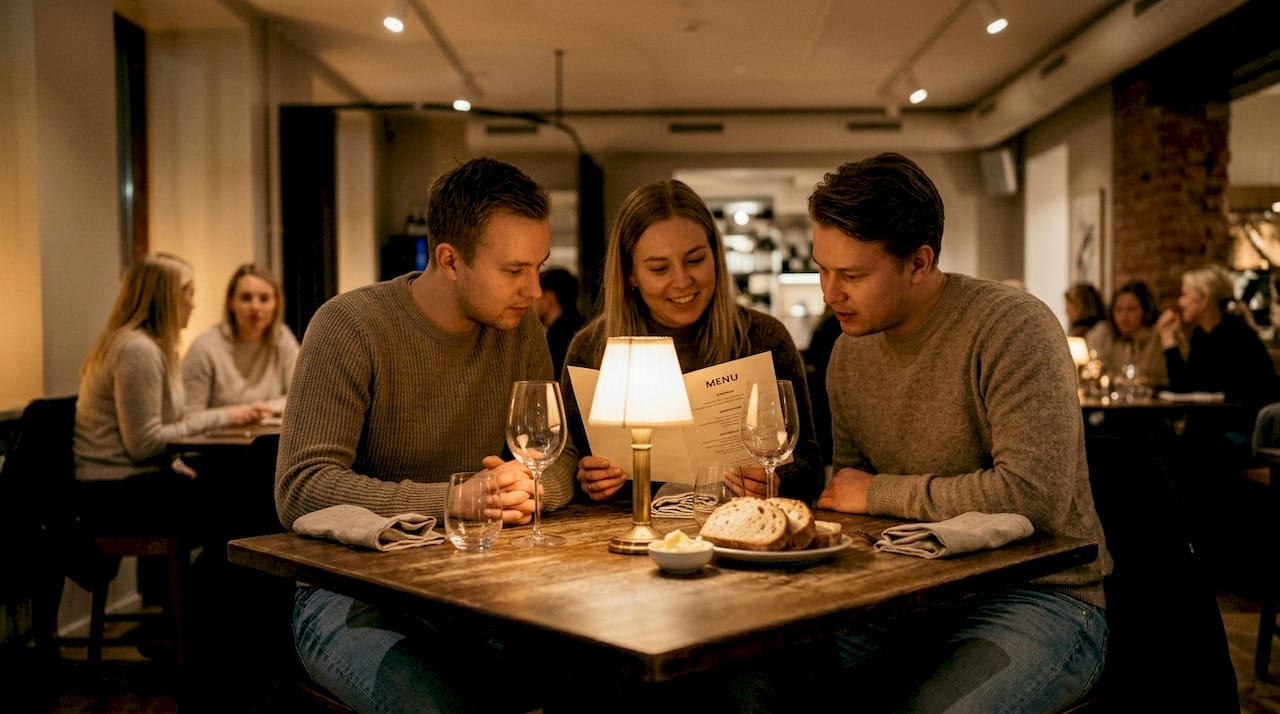
Adjustable lights allow for flexible use of the space at different times of the day and for various events. Brighter settings can be used for breakfast, while dimmer lighting creates a more intimate atmosphere for dinner. This adaptability improves customer experience and makes the space more versatile.
Smart control systems like Casambi and DALI offer professional-level control over lighting. These systems allow for creating predefined lighting profiles for different situations and central control of all luminaires. This not only facilitates daily use but also automatically optimizes energy consumption.
Professional tip: Combine different lighting solutions in layers. Start with general lighting using LED strips or track lights, add accent lighting with recessed fixtures, and complement with ambient lighting. Smart control should be integrated during the design phase so that wiring and control are ready.
Once different solutions have been presented, let's compare them using key metrics.
Comparison of Lighting Solutions and Common Mistakes
Comparing different lighting solutions helps in choosing the right options for the needs of each space. General lighting, accent lighting, and ambient lighting differ in several key characteristics that affect both functionality and customer experience.
| Lighting Type | Purpose | Adjustability | Energy Efficiency | Impact on Atmosphere |
|---|---|---|---|---|
| General Lighting | Ensures sufficient light throughout the space | Medium | High with LED solutions | Neutral, functional |
| Accent Lighting | Highlights specific areas and elements | High | High | Creates visual focal points |
| Ambient Lighting | Deepens the atmosphere and creates intimacy | Very High | Varies | Strong atmosphere creator |
Adjustability is a critical factor that distinguishes good lighting from excellent. Dimming allows light intensity to be adapted to different times of day and events, improving both customer comfort and energy efficiency. Without dimming capabilities, a space is tied to one lighting setting, limiting its use.
Energy efficiency varies significantly between different solutions. LED-based systems consume the least energy and offer the longest lifespan, while traditional halogen and incandescent lamps are both more expensive to operate and require more frequent maintenance. In the long run, an LED investment pays for itself in savings.
Uneven lighting and incorrect color temperature are the most common mistakes that spoil the atmosphere and customer experience. Too bright light creates an unpleasant, clinical atmosphere, while too dim light makes it difficult to enjoy food and drinks. The wrong color temperature can make food look unappetizing or the space feel uncomfortable.
Other mistakes to avoid include:
- Glare from direct light in customers' eyes
- Shadows created by poorly placed luminaires
- Too uniform lighting that does not create depth or interest
- Conflict between lighting and interior design
Professional tip: Test your lighting design with 3D visualization before implementation. This will reveal potential issues with glare, shadows, and light distribution. Also, use mock-up installations in critical areas to ensure the final result matches the design.
By understanding the strengths and weaknesses of different solutions and avoiding common mistakes, you can create lighting that highlights the uniqueness of your restaurant and supports business goals.
Finally, we will provide tips for choosing the right solution and summarize the content as recommendations.
Recommendations for Situations and Choosing a Lighting Solution
Different restaurant types require different lighting solutions depending on their concept and clientele. Fine dining restaurants benefit from warm, dim lighting (2700-3000K), which creates a romantic and exclusive atmosphere. Casual dining places can use slightly brighter and more neutral settings (3000-3500K), balancing comfort and functionality.
Cafes and breakfast spots need more energetic lighting (3500-4000K) to support the lively morning atmosphere and help customers wake up. Bars and nightclubs, on the other hand, benefit from dramatic lighting, combining dim general light, accent lighting, and colorful effect lights.
| Restaurant Type | Recommended Color Temperature | Main Lighting Products | Special Features |
|---|---|---|---|
| Fine Dining | 2700-3000K | Pendant lights, table lamps, recessed lights | Dimming, layered lighting |
| Casual Dining | 3000-3500K | Track lights, LED strips, wall sconces | Even general light, flexibility |
| Cafe | 3500-4000K | Pendant lights, spotlights, natural light | Bright, energetic atmosphere |
| Bar/Nightclub | 2700-3000K + RGB effects | LED strips, effect lights, accent lights | Dramatic, customizable |
Customer satisfaction and sales improve when lighting supports the restaurant's concept and creates the right atmosphere. Warm lights encourage customers to stay longer and increase spending, while overly bright or cool lights can drive customers away faster.
Choosing the right lighting solution step-by-step:
- Clearly define the restaurant's concept and desired atmosphere.
- Assess the space's architecture, height, and natural light levels.
- Design layered lighting: general, accent, and ambient lighting.
- Select color temperature according to the concept and test it with samples.
- Ensure adjustability with dimming and smart control.
- Prioritize energy efficiency with LED solutions.
- Test the design with 3D visualization before implementation.
- Have a professional carry out the installation and test all scenarios.
A comprehensive experience design considers not only lighting but also interior design, acoustics, and material choices. Lighting works best when integrated into a broader design where all elements support each other. For example, the benefits of restaurant interior design are multiplied when lighting highlights its best features.
In the next section, we will introduce our services that can support the implementation of these tips.
Explore Our Lighting Design Expert Services
Once you've learned the key principles of lighting design, the next step is to put them into practice. Dekoja.net offers customized solutions for restaurants and space designers who want to create visually distinctive spaces. Specializing in supplying super black surfaces and non-reflective materials, we help create dramatic contrasts and optical illusions that enhance the effect of lighting.
Our team of experts supports your project from start to finish: from material selection to installation instructions and optimizing the final result. We offer Musou Black paint, fabrics, and studio materials that absorb light almost completely, creating unique visual effects. These solutions are excellent for restaurants that want to emphasize light and create depth using contrast walls.
Fast deliveries from our Finnish warehouse and B2B services for projects ensure smooth implementation on schedule. Contact us and elevate your restaurant's visual appeal to a new level with solutions others don't offer.
At the end of the article, we answer frequently asked questions about lighting design.
What Lighting Design Tips for Restaurants Do Professionals Often Ask?
What is the optimal color temperature for a fine dining restaurant?
For fine dining restaurants, the optimal color temperature is 2700-3000K, which creates a warm and intimate atmosphere. This range mimics the hue of candlelight and makes food appear appealing. Dimming allows for fine-tuning at different times of day.
How important is dimming for a restaurant's atmosphere?
Dimming is a critical feature that allows lighting to be adapted to different situations and times of day. It significantly improves the customer experience and saves energy. Without dimming, the space is tied to one lighting setting, limiting flexibility and detracting from the atmosphere.
How should LED strips be placed in a space?
LED strips work best in hidden installations, such as under bar counters, behind shelves, or in ceiling coves. They create even, indirect lighting that does not glare at customers. Combine LED strips with other lighting layers for a comprehensive solution.
Is 3D visualization an essential part of the lighting design process?
3D visualization is not mandatory, but it is a highly recommended tool that reveals potential problems before implementation. It helps to realistically visualize light distribution, shadows, and glare. Visualization saves time and money by avoiding costly mistakes during the installation phase.