

Accent lighting guide: Create an impressive space easily
The magic of a space comes from the details, where the right lighting highlights the uniqueness of the architecture and materials. For designers of restaurants and designer accommodations, thoughtful lighting goals enable a distinctive spatial experience, where light both guides and inspires. In this step, you will find practical tips on how defining a visual accent goal opens the doors to creative and impactful lighting design.
Table of contents
- Step 1: Determine the visual highlight goal in the space
- Step 2: choose the right non-reflective materials and surfaces
- Step 3: Position the lighting to enhance the contrast of light and shadow
- Step 4: Master lighting control and adjustments
- Step 5: check and optimize the final result according to the space experience
Quick Summary
| Key message | Explanation |
|---|---|
| 1. Identify the lighting objective | Determine whether you want to emphasize function, atmosphere, or aesthetics in the space. |
| 2. Choose non-reflective materials | Use materials that control the behavior of light and create a softer lighting environment. |
| 3. Place the lighting correctly | Pay attention to the contrast between light and shadow to create the desired mood and depth. |
| 4. Utilize control systems | Choose a suitable control system that allows you to easily adjust the lighting to different situations. |
| 5. Test and optimize the space | Collect user feedback and adjust lighting solutions as needed to ensure the results achieved are functional. |
Step 1: Determine the visual emphasis goal in the space
The first step in designing visual accents is to clarify what you want to achieve in a space. Lighting is much more than just improving visibility – it is an effective way to create atmosphere, direct the eye, and highlight the unique features of a space.
Basically, you can divide lighting accent goals into three main types:
- Functional emphasis : Making specific work areas or functions more efficient
- Mood emphasis : Building the emotional atmosphere of a space
- Aesthetic emphasis : Highlighting architectural or artistic elements
At the beginning of your lighting plan, it is important to clearly define what you want to achieve with lighting. This will help you make the right choices regarding luminaires and lighting techniques.
Think carefully about the purpose of the space and the elements that deserve special attention. Do you want to highlight a beautiful mural, painting, or perhaps an architectural detail? Or are you aiming for a soft, inviting atmosphere?
Pro tip: Use photography or virtual modeling tools to help you plan, allowing you to try out different lighting solutions in advance.
Step 2: Choose the right non-reflective materials and surfaces
Non-reflective materials are key when it comes to creating depth in a space and controlling the behavior of light. The purpose of these materials is to minimize light reflection and create a softer, more controlled lighting experience.
Non-reflective surfaces can be divided into the following main categories:
- Absorbing surface materials : Materials that absorb light into themselves
- Structured surfaces : Surfaces that scatter light in multiple directions
- Matte-coated materials : Specially treated surfaces that prevent reflections
The High Contrast Lighting Guide goes into more detail about how to choose the right materials for different spaces. The key is to understand that each material behaves differently when it comes to light.
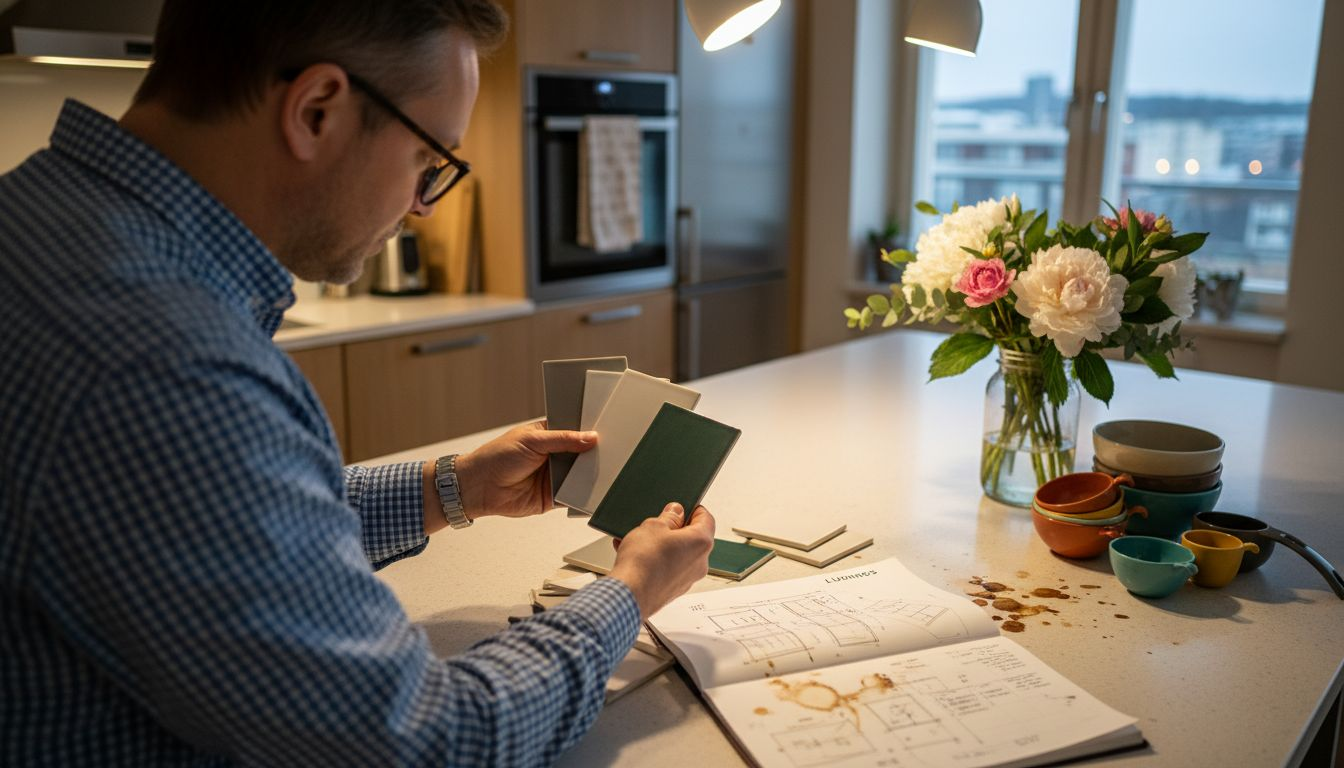
Focus on choosing materials that support your original lighting accent goal. If your goal is to create a soft and peaceful atmosphere, choose materials that don't create harsh shadows or bright reflections.
Pro tip: Always test the light reflection properties of materials before making a final choice using small sample pieces and different lighting situations.
Step 3: Position the lighting to enhance the contrast of light and shadow
Mastering the contrast of light and shadow is an art that transforms an ordinary space into a stunning visual experience. This step requires careful planning and an understanding of how light behaves on different surfaces and shapes.
When placing lighting, it is important to understand that each light source creates its own dynamics in the space. You can utilize different lighting techniques:
- Layered lighting : Creating multiple levels of light
- Spotlights : Highlighting specific elements
- Indirect lighting : Creating soft shadows and atmosphere
When placing spotlights, it is important to consider:
- Direction of light in relation to the surface to be highlighted
- Shadow formation
- Light intensity
The contrast of light and shadow guides the eye and creates depth and interest in the space.
The more control you have over the direction and intensity of the light, the better you can create the mood you want. Experiment with different angles and distances with light sources to achieve just the right effect.
This is how different lighting techniques affect the atmosphere of a space:
| Lighting method | Farm experience | Usage situation |
|---|---|---|
| Layered lighting | Depth and versatility | Living rooms, lobbies |
| Spotlights | Enhances details | Art, objects |
| Indirect lighting | Soft and calm | Bedroom, relaxation |
Pro tip: Use screens or movable lights to quickly test the effects of different lighting angles in a space.
Step 4: Manage lighting control and adjustments
Lighting control systems are at the heart of modern space design, giving you full control over the atmosphere and functionality of a space. Properly implemented lighting control takes the user experience to a whole new level.
Lighting control solutions can be divided into three main types:
- Manual control : Traditional switches and dimmers
- Automatic control : Presence and motion sensors
- Intelligent systems : Entities powered by applications and sensors
When choosing a control system, the following must be taken into account:
- Purpose of the space
- Energy efficiency
- Comfort of use
- Adaptability to different situations
Intelligent lighting control allows you to create the perfect atmosphere at the touch of a button.
The more versatile the control system, the better you can adapt the light to different activities and times of day. Don't be afraid to invest in a system that truly serves the needs of your space.
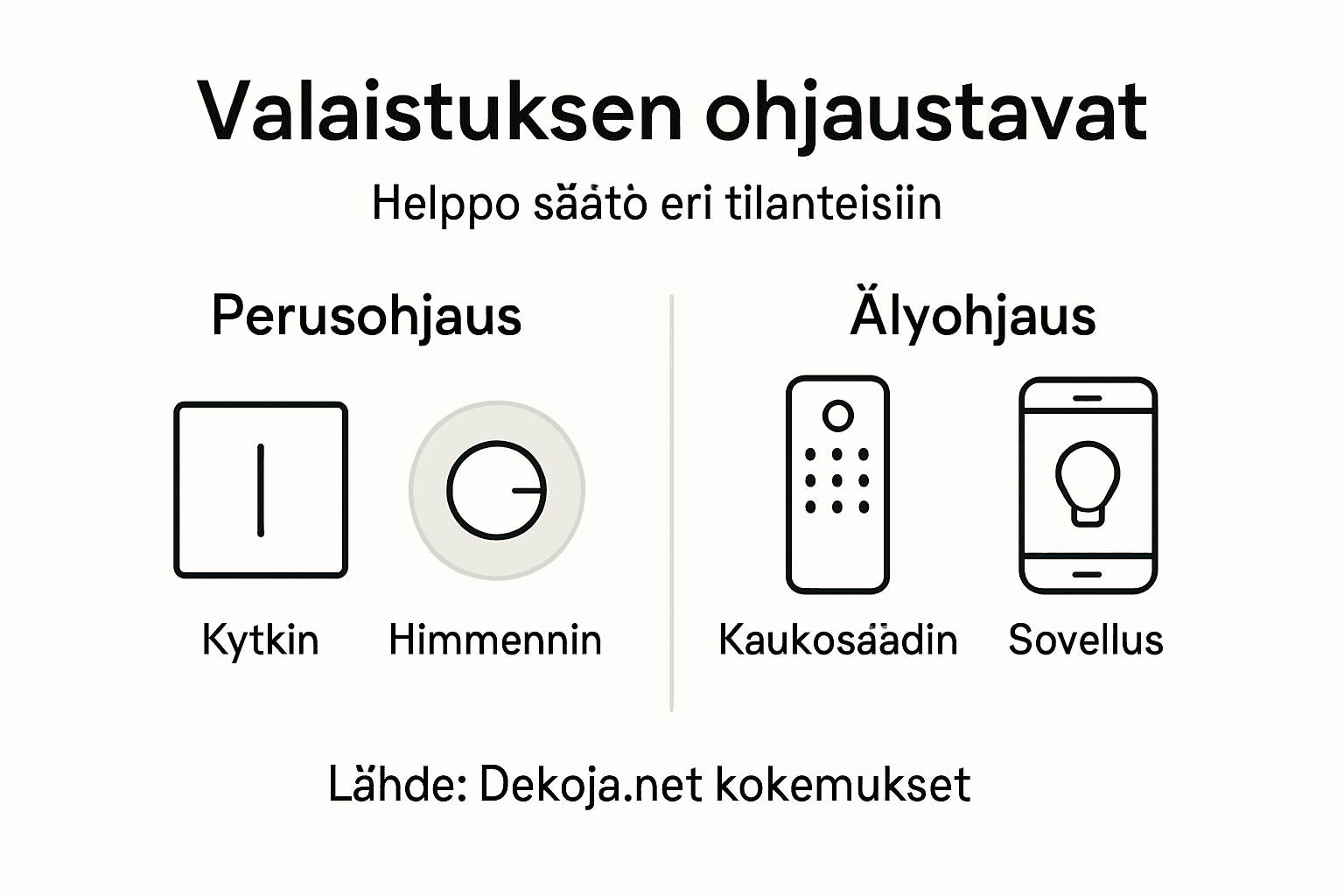
Below is a comparison of the features of lighting control systems:
| Control method | Ease of everyday use | Adaptability | Energy efficiency opportunity |
|---|---|---|---|
| Manual | Clear and fast | A little flexible | Limited |
| Automatic | Requires installation | Medium level | Good |
| Intelligent system | App-controlled | Very flexible | Excellent |
Pro tip: Choose a control system that has an easy-to-use interface and that you can expand later.
Step 5: Check and optimize the final result based on the space experience
The final step in lighting design is the most critical: ensuring that the lighting solution you’ve created actually works in practice. This means actively evaluating, testing, and fine-tuning.
Evaluating lighting quality consists of several important aspects:
- Functionality : Do the lighting conditions correspond to the intended use of the space?
- User experience : How users experience the atmosphere of the space
- Energy efficiency : Is the lighting solution economical?
It is worth dividing the optimization process into the following steps:
- Collect user feedback
- Measure the uniformity of lighting
- Test different lighting situations
- Adjust systems as needed
Continuous evaluation and fine-tuning are the key to a successful lighting solution.
Remember that lighting lives and changes with the purpose of the space. Don't stay stuck with one solution, but be ready to make changes.
Pro tip: Set aside a small portion of your budget for post-processing and testing so you can make quick improvements if needed.
Highlight the full potential of your lighting with Dekoja.net
When it comes to accent lighting, it is important to control the contrast between light and shadow and choose the right, non-reflective surfaces. According to the article, the perfect space is created when lighting design combines functionality, atmosphere and aesthetics. Dekoja.net offers unique solutions in the Lightning – Dekoja.net range, such as the Musou Black material family, which absorbs light and maximizes contrast, making your space impressive and visually clean.

Now is the time to take control of your lighting and create the exact effect you've been looking for. Explore Dekoja.net's Lightning – Dekoja.net range and discover innovative materials and solutions that are suitable for restaurants and art installations alike. Visit https://dekoja.net and take a step closer to the perfect lighting experience.
Frequently asked questions
How do I set the lighting in the highlight target mode?
Determining your lighting accent goal starts with thinking about what you want to achieve in a space. Identify whether you want to enhance functionality, create ambiance, or highlight aesthetic elements. Make decisions accordingly and document your goals.
What are the benefits of non-reflective materials in lighting?
Non-reflective materials reduce light reflection and create a softer lighting experience. Choose materials that support your lighting accent goal, such as absorbent or structured surfaces, testing materials on small sample pieces if necessary.
How do I position lighting to improve the contrast between light and shadow?
Place your light sources to guide your eye and create the depth you want in the space. Experiment with different angles and distances with your light sources to get the best effect, for example by adding spotlights or indirect lighting in different spaces.
How do I choose the right lighting control system?
Choose a lighting control system that suits the purpose of the space and offers energy efficiency. A good system allows for adaptive lighting control for different situations; consider automated or intelligent systems to achieve this.
What is an important step in optimizing lighting?
The most important step in optimizing lighting is evaluation and fine-tuning, which ensures that the lighting design works in practice. Collect user feedback and test the lighting in different situations so that you can make the necessary adjustments and improvements.
How do I prevent glare in lighting?
To prevent glare, choose matte or textured surfaces that reduce light reflection. Place light sources thoughtfully and experiment with indirect lighting, which can greatly enhance the user experience of the space.
Recommendation
- Emphasizing lighting in interior design: Create an impressive result – Dekoja.net
- Emphasizing lighting in interior design: Create an impressive result – Dekoja.net
- Emphasizing lighting in interior design: Create an impressive result – Dekoja.net
- Emphasizing lighting in interior design: Create an impressive result – Dekoja.net