

Interior materials of the future – Visual contrast and experience
More than 80 percent of architects in Central Europe are looking for materials that offer more than just looks for their projects. The competitive design field requires aesthetic solutions that create clear contrast and experientiality while meeting the requirements of sustainability and technology. In this article, you will get up-to-date insights into which materials meet the needs of creative designers now and in the coming years.
Table of contents
- What are the interior design materials of the future?
- The most important innovations in interior design materials in 2026
- How do you create contrast with material choices?
- New materials in restaurant and art spaces
- Responsibility, costs and procurement channels
Key considerations
| Paragraph | Detail |
|---|---|
| Sustainability and innovation | The interior design materials of the future combine sustainability, aesthetics and technology, reducing environmental impact. |
| Versatility | New materials should enable multiple uses and respond to user needs. |
| Responsibility in procurement | Favoring local and transparent suppliers increases responsibility and supports the local economy. |
| The importance of contrast | Combining different materials creates visual contrast that enriches the spatial experience. |
What are the interior design materials of the future?
The interior materials of the future represent a radically new approach to design, combining sustainability, aesthetics and technological innovation. They are no longer just surface materials, but intelligent design that responds to its environment and the needs of its user.
These new materials arise from the need to create more environmentally friendly and sustainable spaces that minimize environmental impact while offering exceptional aesthetic and functional properties. Key features include:
- Recyclability and reuse
- Energy efficiency
- Carbon dioxide sequestration capacity
- Innovative surface structures and textures
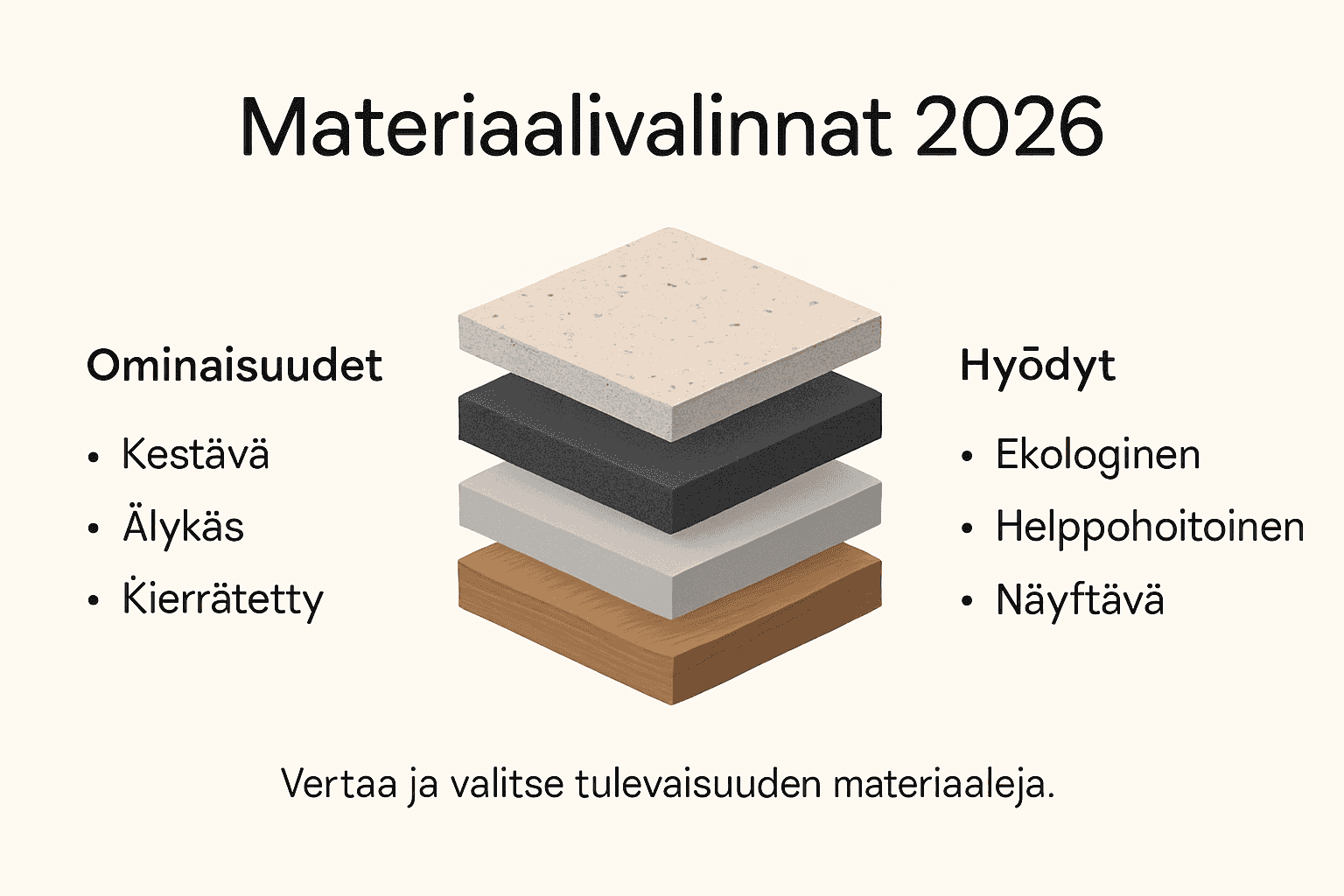
Modern interior materials are no longer focused on mere appearance, but are about intelligent design that combines traditional materials with new technologies . Terrazzo tiles, recycled materials and bio-based components are emerging as key choices that create visual contrast while respecting the environment.
Pro tip: Choose interior design materials that are both aesthetically and functionally durable and can be recycled or reused.
The most important innovations in interior design materials in 2026
Interior design innovations in 2026 are set to completely revolutionize space design and material choices. Smart and sustainable material solutions are emerging as key trends that combine technology, aesthetics, and ecological responsibility.
Circular economy principles are now guiding material choices, and innovations are particularly focused on solutions that minimize environmental impacts while increasing the versatility of materials . The most important development trends are:
- Bio-based materials
- Smart recyclable composites
- Digitally optimized material technologies
- Transformative and reactive surface materials
New interior materials are no longer just passive surfaces, but active elements that react to their environment. They contain built-in technologies that allow for automatic regulation of heat, light and user needs.
Below we examine the practical effects of three future interior design materials:
| Material type | Ecological benefit | Technological feature | Visual impact |
|---|---|---|---|
| Bio-based materials | Reducing the carbon footprint | Allows humidity control | Natural and warm |
| Recycled composites | Waste reduction | Adjustable durability and shape | Modern and durable look |
| Digitally optimized surfaces | Energy saving | Reacts to changes in light and temperature | Customizable appearance |
Pro tip: Follow developments in material technology and invest in products that are both aesthetically and technologically advanced.
How do you create contrast with material choices?
Creating visual contrast in interior design is an art form that requires careful consideration and an understanding of the properties of materials. Material choices act like stage lighting, highlighting different elements of a space and creating depth - they don't just cover the surface, they tell a story about the space.
The creation of contrast is based on the conscious combination of different material properties. The dialogue between natural materials and modern synthetic materials creates a tension that brings the space to life. The most important contrast factors are:
- Glossy vs. matte surfaces
- Rough vs. smooth textures
- Warm vs. cold color tones
- Organic vs. geometric shapes
- Combinations of soft and hard materials
The more complex the layering of materials, the more interesting and experiential the space becomes. The purpose of contrast is to evoke emotions and create a visual dialogue that invites the viewer to explore the space more deeply.
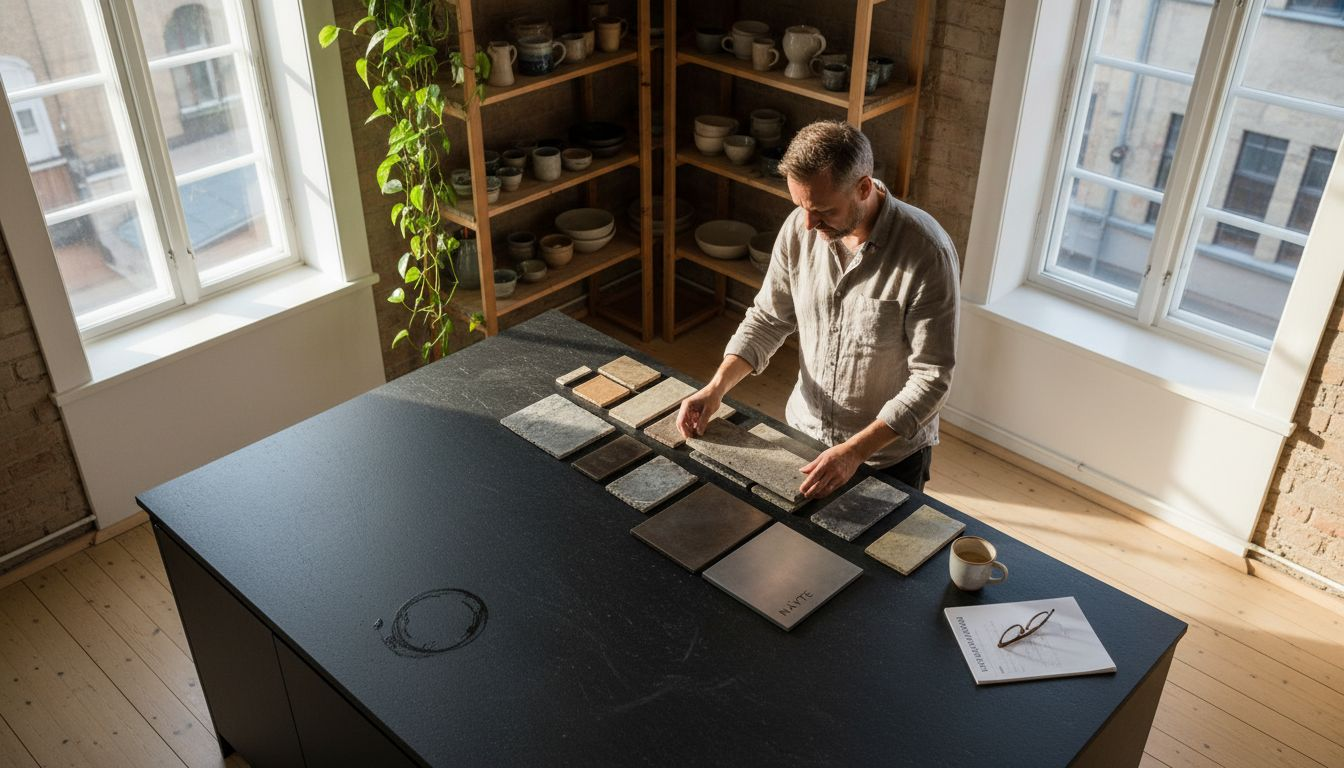
Pro tip: Don't be afraid to combine different materials – the true power of contrast lies in open-minded choices.
New materials in restaurant and art spaces
Circular economy materials are revolutionizing restaurant and art spaces, bringing a whole new aesthetic and ecological dimension. These innovative materials are not just surfaces, but entire stories and experiences that arise from the naturalness and recyclability of the materials.
The versatility and aesthetic diversity of new interior design materials enable the creation of richer spatial experiences. In restaurants and art spaces, this means material choices that combine:
- Natural bio-based materials
- Recyclable composites
- Technologically intelligent surface structures
- Organic and geometric shapes
A holistic choice of materials no longer means just appearance, but rather the profound construction of a spatial experience. Materials must communicate, evoke emotions and create connections between the user and the space.
Pro tip: When choosing materials, favor layering and surprising combinations – true art is created from bold choices.
Responsibility, costs and procurement channels
The sustainability of future interior design materials is a holistic approach that goes far beyond just material selection. It means ethical consideration at every stage of the supply chain - from the origin of materials to the end of their life cycle.
Innovative sourcing channels emphasize local and transparent suppliers that support both the environment and the local economy. Cost efficiency is increasingly sought in the following ways:
- Recycled materials
- Local supplier networks
- Long-life materials
- Recyclable components
- Energy-efficient manufacturing methods
Responsible material selection does not mean higher costs, but smart choices that produce long-term savings both financially and environmentally. Every choice is an investment in the future.
The following table helps you compare the most popular procurement channels in terms of responsibility and cost:
| Procurement channel | Responsibility assessment | Cost perspective | The impact of local support |
|---|---|---|---|
| Local suppliers | High level of ethics and transparency | Often competitive | Promotes the regional economy |
| Large chains | Varying liability criteria | Low unit price | Little regional impact |
| Distributors of recycled materials | Responsibility strongly highlighted | Savings in the long term | Enables collaboration |
Pro tip: Calculate the total cost of the material over its life cycle, not just the purchase price.
Create future spaces with visual contrast and smart materials
The interior design materials of the future are looking for the depth and contrast that will bring a space to life and provide an unforgettable experience. The article highlights the importance of smart, recyclable and bio-based materials and the power of visual contrast in shaping the look of a space. At the same time, responsibility and longevity emerge as key solutions to create sustainable and aesthetically appealing environments.
If you want to take your space design to the next level and aim for impressive contrast, take a look at our lighting solutions in particular. They help you highlight the textures of materials and deepen the atmosphere of the space. In addition, our Lemus Audio product range offers technological solutions that allow you to combine a visual experience with high-quality sound. All of these can be easily found on Dekoja.net , which combines artistic courage and technical precision.
Discover Dekoja.net's innovative solutions now and put the aesthetic and technological power of future interior design materials into practice. Don't miss your chance to harness the power of visual contrast and environmentally friendly materials – find yours at https://dekoja.net and build spaces that will be remembered.
Frequently asked questions
What are the most important properties of future interior design materials?
The interior design materials of the future emphasize recyclability, energy efficiency, carbon dioxide binding capacity, and innovative surface structures and textures.
How can I create visual contrast in my interior design?
Visual contrast can be created by combining different material properties, such as glossy and matte materials or rough and smooth textures.
What are bio-based materials and how do they benefit interior design?
Bio-based materials are materials made from natural sources that reduce the carbon footprint and provide a warm and natural look.
How do responsible sourcing channels influence material choices?
Responsible sourcing channels, such as local suppliers and recycled materials, enable ethical and environmentally friendly choices, which can lead to long-term savings and a positive impact on the local economy.
Recommendation
- Leading interior design trends 2025 – Visual contrast and technology – Dekoja.net
- Leading interior design trends 2025 – Visual contrast and technology – Dekoja.net
- Leading interior design trends 2025 – Visual contrast and technology – Dekoja.net
- Leading interior design trends 2025 – Visual contrast and technology – Dekoja.net