

Why black makes an impact in spatial design
Absorbing over 99.4 percent of visible light, Musou Black challenges the traditions of European spatial design. The exceptional depth and contrast of the black color can completely transform the visual appearance of a restaurant or interior design object. The article reveals how physics, psychology and symbolism combine to create experiential and bold entities that raise the distinctiveness of space to a new level in the Central European design market.
Table of contents
- Black as a color – physics, psychology and symbolism
- The importance of contrast and depth in space
- Musou black: a world without reflections
- Black as a tool for experientiality and identity
- Risks, misunderstandings and challenges of use
Key considerations
| Paragraph | Detail |
|---|---|
| The ambiguity of the color black | The color black is often associated with power and mystery, but its psychological and cultural meanings vary widely. |
| The importance of contrast and depth | Careful use of contrast and depth in spatial design can enhance the aesthetic and emotional experience of a space. |
| The uniqueness of Musou Black | Musou Black is an innovative material that absorbs almost all light, creating stunning visual effects without reflections. |
| Influence of different cultures | Interpretations of the color black vary from culture to culture, which should be taken into account in design and communication. |
Black as a color – physics, psychology and symbolism
The color black is much more than just a pigment - it is a complex experience that combines physics, psychology, and cultural symbolism. Color experiences arise from individual and cultural interactions , which makes black a particularly multidimensional color.
Physically, black is interesting because it absorbs all colors and light. When a surface is completely black, it absorbs up to 99.4% of visible light, creating a depth and contrast that no other color can achieve. This physical property completely changes the experience of space - black creates the illusion of infinite depth and blurs traditional visual boundaries.
Psychologically, black is strongly associated with mystery, power, and the unknown . It provides protection from external stress and creates an intense, focused atmosphere in a space. Black has the ability to evoke both fear and attraction - it symbolizes both emptiness and possibility at the same time.
Culturally, the meaning of black varies. In Western contexts, it is often associated with elegance, power, and mysticism, while in some Eastern cultures it represents deep silence and meditation. In architecture and interior design, black is used to create dramatic spaces that challenge traditional visual perceptions.
Pro tip : Use black judiciously in your space design - small details can create depth and drama without making the entire space feel heavy.
The importance of contrast and depth in space
Contrast and depth are key elements in spatial design that radically change the experience and mood of a space. The formation of a spatial experience depends on the complex interaction between different architectural elements, such as lighting, materials and shapes.
Visual contrast acts as a grammar of space, guiding eye movement and creating hierarchy. Dark and light surfaces, hard and soft shapes, and shiny and matte surfaces create tension that brings a space to life. For example, the use of black can create dramatic contrasts that highlight other colors and shapes in a completely new way.
The depth of a space is built from the totality of furniture, materials and architectural solutions , which creates the identity of the place. Depth can be created with layered surfaces, the play of shadows and light, and carefully selected materials. The color black is significant here - it can deepen the space by creating the illusion of limitlessness and blurring traditional visual boundaries.
Well-designed contrast and depth are not just an aesthetic choice, they directly affect the emotional experience of a space. Too much contrast can create discomfort, while a balanced approach can create a harmonious and inviting space.
Pro tip : Use contrast judiciously - small, strategic differences are often more effective than complete opposites.
Musou Black: A World Without Reflections
Musou Black represents the ultimate black technology that revolutionizes our perception of surfaces by absorbing over 99.4% of visible light. This Japanese coating technology is much more than just paint - it's a visual experience that completely changes the way you perceive a space.
Traditional surface materials reflect light, creating optical distortion and reducing the perception of depth. Ultra-black Musou Black does the exact opposite: it absorbs light so completely that objects appear to lose their three-dimensional shape. This unique property creates an illusion of infinity and depth that no other material can produce.

Musou Black can be compared to Vantablack, but it is much more accessible and applicable in architecture and artistic spatial design. It can be used to create amazing visual effects where traditional perspectives disappear and the experience of space becomes completely new. This material is not just a color, but a comprehensive tool for shaping space.
Technically, Musou Black works using nanotechnology, where the microstructure of the surface allows light rays to be perfectly absorbed instead of reflected. This means that when you coat a space or detail with Musou Black, it disappears almost into the void - creating a depth and mystical atmosphere that defies traditional visual perceptions.
The following table presents the properties of Musou Black, Vantablack and traditional black paint in spatial design:
| Material | Light absorption | Usability | Visual impact |
|---|---|---|---|
| Musou Black | Over 99.4% | Easy to spread, wide applications | Extreme depth and illusion |
| Vantablack | Over 99.96% | Limited availability, special processes | Maximum blackness, but difficult to use |
| Traditional black paint | 95–98% | Very accessible, common use | Traditional contrast, limited depth |
Pro tip : Use Musou Black judiciously - small details can create dramatic contrasts and depth.
Black as a tool for experientiality and identity
Black is much more than just a color - it is a powerful tool in shaping the identity and emotional experience of a space . It acts as a visual language that communicates more deeply than any words.
In spatial design, black can act as a symbolic anchor that shapes the users’ experience and feeling of the space. The choice of color can either reinforce or marginalize the identity of the space, depending on the social interpretations of the user groups . For example, in a restaurant, black can create an exclusive and sophisticated atmosphere, while in a public space it may evoke completely different images.
The use of black is psychologically ambiguous. It can symbolize depth, mystery, strength, or silence. This ambiguity makes it an extremely effective tool for creating the desired emotional resonance in a space. Black is not just a color, but an experience that shapes the user's relationship with their environment.
Cultural context strongly influences the interpretation of black. In Western aesthetics, it is often associated with elegance and minimalist design, while in some Eastern cultures it can symbolize deep silence and meditation. This multi-layeredness makes black a unique tool for building a deep and meaningful identity in a space.
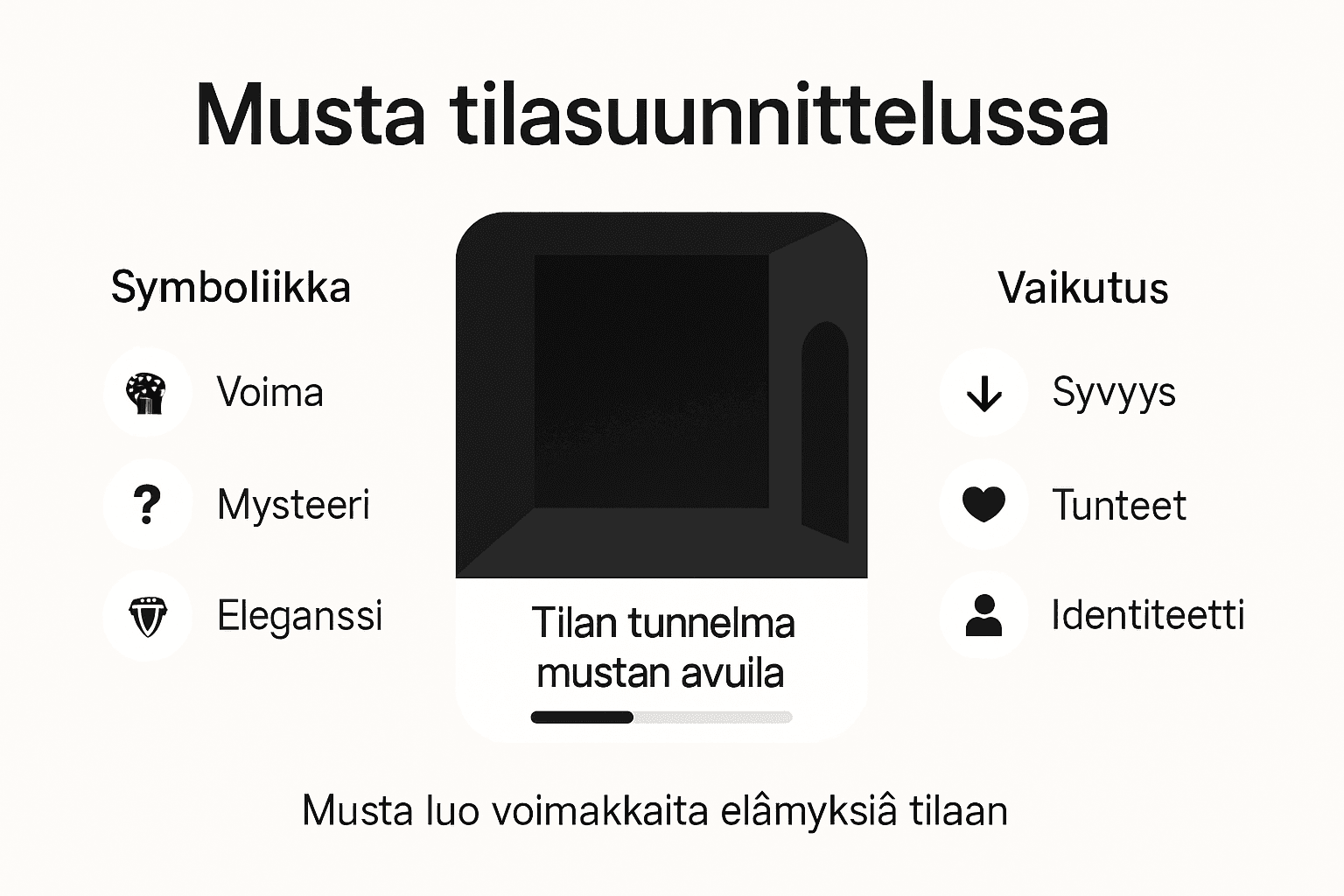
Below is a comparison table of the meaning of using black in different cultures in spatial design:
| Cultural context | Symbolism | Typical use | Emotion and mood |
|---|---|---|---|
| Western | Elegance and power | Restaurants, hotels, offices | Minimalist, precious |
| Oriental | Silence and meditation | Temples, peaceful areas | Deep, calm |
| Nordic | Clarity and contrast | Homes, public spaces | Modern, neutral |
| Latin | Intensity and drama | Theaters, art galleries | Expressive, strong |
Pro tip : Use black wisely and with an understanding of its symbolic power - even small details can change the entire feel of a space.
Risks, misunderstandings and challenges of use
The use of black in spatial design is a complex art form that requires extreme precision and understanding . Black is not just a choice, but a strategic decision with profound psychological and aesthetic implications.
Misconceptions about the use of black are common. Many designers fear that black will make a space too dark or oppressive. In reality, using black requires a careful balance of material choices, lighting, and scale. Too much black can create a sterile or threatening atmosphere, while used judiciously, it can bring depth and elegance to a space.
One of the most significant risks is the psychological dimension of black. The color can evoke strong emotions and associations that vary depending on the cultural context. In some contexts, black can be interpreted as a symbol of sadness, violence, or negativity, while in others it represents strength, mysticism, or elegance. This ambiguity requires the designer to have a deep understanding of the cultural meaning of colors.
The functionality of the space is another critical aspect when using black. Excessive light absorption can create a space that feels oppressive or uncomfortable. Therefore, it is essential to plan lighting carefully, use reflective surfaces strategically, and understand how black affects the experience of the space under different lighting conditions.
Pro tip : Always test the use of black in small batches and in different lighting before making final decisions.
Experience the Power of Black in Spatial Design
Black color creates depth, contrast and unique elegance in a space, but its effective use requires knowledge and the right materials. Musou Black is a solution that absorbs over 99.4 percent of visible light and dramatically changes the experience of a space. It brings out exactly the feeling described in the article: boundless depth and visual purity that ordinary matte surfaces do not offer.
Discover our selection and easily bring experiential contrast and depth to your spaces Interior design - home and office interior design products from us, check it out! – Dekoja.net . Our Musou Black materials in particular enable new creative solutions that capture the eye and create a strong identity for the space. Don't let the space become a gray mass, but utilize the multidimensionality and technological advantage of black at Musou Black – the world's blackest materials | Dekoja.net .
Create the impressive atmosphere you read about in your space and do it easily with the help of the Finnish design and materials store https://dekoja.net
Frequently asked questions
Why is the color black important in spatial design?
Black is associated with power, elegance and depth. It can create dramatic contrasts and evoke intense emotions, making it a powerful tool in creating a space's identity.
How can you use black in interior design without making the space feel too dark?
When using black, it's important to balance materials, lighting, and other colors. Thoughtful choices in small details can add depth and elegance without being overwhelming.
What is Musou Black and how is it different from other black colors?
Musou Black is an extreme black paint that absorbs over 99.4% of visible light. It creates the illusion of depth and three-dimensionality, making it unique compared to traditional black paints.
What are the risks of using black in spatial design?
One of the most significant risks is the psychological impact of black, which can vary depending on cultural context. Too much black can create discomfort, so it is important to plan lighting and material choices carefully.
Recommendation
- Why choose black paint – The deepest contrast for space design – Dekoja.net
- Why choose black paint – The deepest contrast for space design – Dekoja.net
- Why choose black paint – The deepest contrast for space design – Dekoja.net
- Why choose black paint – The deepest contrast for space design – Dekoja.net