

Step by step interior contrast: 40% more experience
Managing visual contrast is one of the biggest challenges in interior design. Traditional materials and lighting solutions are not always enough to create the depth and drama expected from a space. This guide provides concrete steps to achieve maximum contrast and increase the experience of a space by up to 40% with the right material and lighting choices.
Contents
- Key Lessons: Step-by-step Interior Contrast
- Preparations and required materials
- Material choices and the effect of surface on contrast
- Lighting design to maximize contrast
- Step by step building contrast in interior design
- The most common errors and their fixes
- Contrast metrics and evaluation of results
- Find the best Musou Black materials and lighting solutions
- Frequently Asked Questions: Step by Step Interior Contrast
Key Lessons: Step-by-step Interior Contrast
| Paragraph | Detail |
|---|---|
| Material choices | Musou Black absorbs 99.4% of visible light, creating a depth that ordinary matte surfaces cannot achieve |
| The role of lighting | The direction and intensity of light determine the effect of contrast, incorrect lighting takes away 35% of the effectiveness |
| Layered approach | Contrast is built in three stages: materials, lighting and finishing |
| Typical errors | Overuse of black and poor lighting design destroys contrast |
| Meters | A contrast ratio of 3:1 is the minimum for a visually effective space, test before finalizing |
Preparations and required materials
Before you can build contrast, you need the right tools and materials. Musou Black is the only material that absorbs up to 99.4% of visible light and reduces reflections to almost nothing. This property makes it superior to standard matte blacks, which still reflect 30-40% of light.
Be prepared to purchase the following tools:
- Lighting design tools: adjustable luminaires, light meters and aiming mechanisms
- Model panels for testing, where you can try out different material and lighting combinations before implementation
- Contrast meters or apps that allow you to measure the contrast ratio accurately
- Documentation tools for storing images and measurement results
Planning the balance of light and shadow before you start a project is critical. Too much even lighting will flatten the contrast, while too much direct light can create unwanted reflections. Testing with mock-up panels saves time and money by seeing in advance how Musou Black and lighting will work together .
Pro tip: Plan a small-scale experiment with a mock-up panel first. Test the interaction of the material and lighting at different angles and intensities to avoid costly mistakes in the final implementation.
| Operation | Tools needed | Time |
|---|---|---|
| Design | Model panels, light meters | 2–3 days |
| Material testing | Musou Black samples, adjustable lamps | 1–2 days |
| Contrast measurement | Contrast meter or app | 0.5 days |
Material choices and the effect of surface on contrast
Surface texture and material determine how light behaves in a space. A smooth, shiny surface reflects light strongly, creating glare and reducing contrast. A matte surface diffuses light more softly, but regular matte blacks still reflect 30–40% of the light.
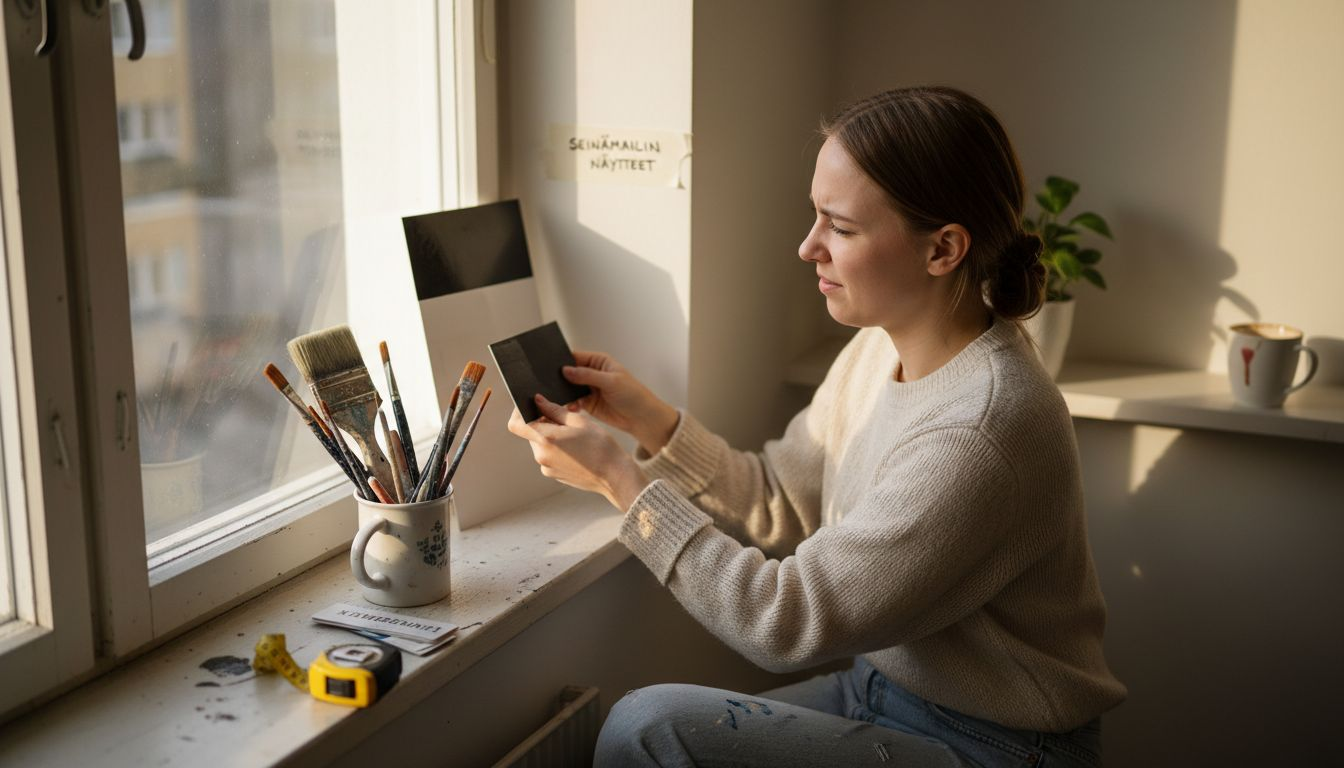
Musou Black is a radical departure from traditional matte finishes . Its 99.4% light absorption means that light practically disappears into the surface. This creates a three-dimensional impression of depth that no ordinary paint can replicate. The absence of reflections means that the viewer sees a pure black surface without distracting light spots.
| Material | Light absorption | Reflections | Depth perception |
|---|---|---|---|
| Plain matte black | 60–70% | Moderate | Low |
| High-quality matte black | 70–85% | Low | Medium level |
| Musou Black | 99.4% | Minimal | Maximal |
The choice of surface also affects the formation of shadows. A reflective surface will smooth out shadows and reduce contrast, while Musou Black will preserve the sharpness and depth of shadows. This is especially important in spaces where dramatic visual impact is desired, such as restaurants or showrooms.
Pro tip: Choose a matte finish for surfaces that diffuses light evenly without distracting reflections. Always test material samples in real lighting before large-scale use.
Lighting design to maximize contrast
Lighting is the most important element of contrast. The direction, intensity and color temperature of light directly affect how the eye perceives contrast. With the wrong lighting, you can lose up to 35% of the visual contrast and impact of a space, even if the materials are top-notch.
Direct light is most effective at highlighting contrast. When light comes from one clear direction, it creates sharp shadows and enhances the depth of black. Indirect lighting, on the other hand, spreads the light in many directions, which evens out the contrast and makes the space look more even.
To design lighting solutions, you need the following steps:
- Determine the angle of the light: A 45-degree angle from above creates natural contrast and highlights the texture of surfaces
- Adjust the intensity: strong direct light for dark surfaces, softer light for light elements
- Minimize reflections: direct light away from shiny surfaces and use dimmable lighting
- Test the formation of shadows: the shadows should not be too hard or too soft, balance is key
Too much indirect lighting is a common mistake. It evens out contrast and makes a space appear more flat, no matter how high-quality the materials. Careful planning of lighting solutions is as important as the choice of materials.
Pro tip: Use adjustable fixtures during the testing phase. Experiment with different lighting levels and directions before final installation to find the optimal balance between contrast and movement in the space.
Step by step building contrast in interior design
Building contrast requires a systematic approach. A three-step process ensures that each element supports the whole and the end result is visually effective.
Step 1: Material selection and testing
Start with sample panels. Apply Musou Black to a test surface and place it in the intended space under real lighting. Observe how the material reacts to different lighting angles and how the impression of depth is created. Compare different materials side by side to clearly see the difference.
Factors to be tested:
- Light absorption at different angles
- Absence or presence of reflections
- Sharpness and depth of shadows
- Visual harmony with surrounding elements
Step 2: Adjusting the lighting and fine-tuning the shadows
Once the materials have been selected, focus on the lighting. Adjust the direction and intensity of the lights until the contrast is optimal. Pay particular attention to the formation of shadows. Shadows that are too sharp can feel unpleasant, while shadows that are too soft will not emphasize the contrast enough.
Measure the contrast ratio with a light meter. Aim for at least a 3:1 contrast ratio between light and dark surfaces. If the ratio is lower, either adjust the lighting or add contrasting elements.
Step 3: Finishing and ensuring harmony
Finally, check the whole thing. Move around the space from different angles and distances. The contrast should not be too harsh or too weak from any angle. Document the end result with photos and measurements so you can objectively assess success.
Evaluation criteria:
- Contrast ratio of at least 3:1 in all parts of the space
- Shadows support the impression of depth without distracting sharpness
- Musou Black surfaces do not reflect light in a disturbing way
- Interior elements support contrast and do not compete for attention
The most common errors and their fixes
Creating contrast is not always possible on the first try. The most common mistakes are related to lighting and the use of materials. Recognizing these will help you avoid expensive repairs later.
Lighting shortcomings: Too much even or indirect lighting will flatten the contrast. Light floods in from all directions and not enough shadows are formed. The solution is to increase the amount of direct light and reduce the amount of indirect light. Adjust the direction of the lights so that the light clearly highlights the dark surfaces.
Excessive use of black: If all surfaces are black, the contrast disappears. The space can feel oppressive and the experience is diminished. Limit the proportion of black to 20–35% of the total area of the space. Combine dark surfaces with light elements that emphasize the contrast.
Reflections: Incorrectly chosen materials or shiny surfaces reflect light in a disturbing way. This breaks the impression of depth and makes the space feel cluttered. Use matte surfaces and test materials before large-scale use.
Lack of contrast measurement: Without metrics, it is difficult to judge whether the contrast is sufficient. Subjective judgment can be misleading. Always use a contrast meter or app to ensure that the target ratio of 3:1 is met.
Pro tip: Document the results of each test with photos and measurements. Compare different lighting settings and material combinations before final approval to avoid costly reprints.
Contrast metrics and evaluation of results
Successful contrast measurement requires both technical tools and subjective judgment. Visual inspection alone is not enough, as the human eye adapts to lighting and can give a misleading impression of the actual contrast.
Contrast ratio is the difference in light intensity between light and dark surfaces. The recommended minimum for a visually effective space is 3:1. This means that the lightest surface reflects at least three times as much light as the darkest surface. If the ratio is lower, the contrast is too weak and the drama of the space suffers.
Gathering customer feedback is just as important as technical measurements. Ask visitors or users of the space how they feel about the space. Is it visually interesting? Does the contrast feel natural or artificial? Feedback will reveal issues that metrics don’t tell you.
| Measurement method | Intended use | Target value |
|---|---|---|
| Contrast ratio | Light intensity difference | At least 3:1 |
| Light absorption testing | Ensuring the effectiveness of materials | Over 95% on Musou Black |
| Visual assessment | Subjective impression | Clear depth effect |
Good documentation practices help track progress:
- Take photos at each construction stage from the same angle and lighting
- Record the measurement results in a table where you compare the different phases.
- Save customer feedback and changes made based on it
- Create benchmarks for future projects to transfer learning forward
Continuous measurement and optimization of the space is important even after the project is completed. Lighting can change, materials wear out, and the purpose of the space evolves. Regular evaluation ensures that the contrast remains optimal in the long term.
Find the best Musou Black materials and lighting solutions
Maximizing contrast requires the right tools and materials. Musou Black is the only material that offers 99.4% light absorption, creating a depth that traditional materials cannot achieve. Dekoja.net delivers Musou Black products directly from a domestic warehouse, with expert support and reliable service.
Lighting design is just as critical as material selection. Check out our lighting guide for tips on how to maximize contrast. If you want to compare different material options, check out our comparison guide for an objective analysis of Musou Black versus other materials.
Frequently Asked Questions: Step by Step Interior Contrast
How is Musou Black different from regular black paint?
Musou Black absorbs 99.4% of visible light, while regular matte black paints reflect 30-40% of light. This makes Musou Black significantly deeper and more non-reflective, maximizing visual contrast. Regular paint cannot create the same three-dimensional depth effect.
How much does the direction of light affect the perception of contrast?
The direction of light is a critical factor in the effectiveness of contrast. Direct light from one clear direction emphasizes shadows and depth, while indirect lighting evens out contrast and reduces drama by up to 35%. The optimal angle is usually 45 degrees from above.
Can I use Musou Black in all mode types?
Musou Black is suitable for most types of spaces, but its use should be carefully planned. It works great in restaurants, theaters, showrooms and home theaters. In residential spaces, limit the proportion of black to 20-35% to avoid a feeling of oppression. Always test on sample panels before large-scale use.
What is the recommended black percentage for contrast?
Black should be limited to 20–35 percent of the total area of the space. Too much black can make the space feel oppressive and reduce the contrast, while too little black will not create enough drama. The balance between black and light elements is key to successful contrast.
How often should contrast measurement be performed?
Measure contrast at least three times: during the design phase with mock-up panels, during implementation and after final completion. Regular measurements every 6-12 months will ensure that the lighting and materials maintain their effectiveness in the long term. Document each measurement for comparison.