

Restaurant interior design trends 2025 – Visuals and experience win
More than 60 percent of Finnish restaurants will renovate their interiors by 2025, aiming to stand out even more from the competition. For designers in the industry, this means bold material solutions, such as Musou Black's anti-reflective surfaces, and an emphasis on technology and sustainability. With the help of this article, you will identify the most important trends in restaurant interior renovation and find ways to create experiential, unique spaces for Finnish customers.
Table of contents
- What do restaurant interior design trends 2025 mean?
- New materials and color schemes create contrast
- Technology and experientialism in spatial design
- Responsibility and circular economy in restaurants
- How to stand out from the competition – building customer experience
Key Considerations
| Paragraph | Detail |
|---|---|
| The importance of technology | Artificial intelligence and robotics are creating new types of interactive customer experiences. Restaurants can offer more personalized experiences with smart solutions. |
| Responsibility and recycling | Restaurants communicate their values through their interior design, using recycled materials and local artists. Transparency and ethics are modern customer expectations. |
| Experientialism | The customer experience should be holistic, combining the atmosphere, lighting and sounds of the space. Good food is no longer enough; customers want to be offered a deeper experience. |
| Visual identity | A restaurant's visual identity should tell a story and evoke emotions. Bold material choices and innovative design solutions set restaurants apart from their competitors. |
What do restaurant interior design trends 2025 mean?
Restaurant interior design trends for 2025 are revolutionizing the visual appearance and customer experience of the industry. They no longer focus on just beautiful looks, but on a holistic experience that combines technology, responsibility and humanity. The 2025 restaurant trends show that restaurants are transforming from mere dining venues into multi-dimensional experiential spaces.
Technology plays a key role in restaurant design. Artificial intelligence and robotics not only enhance cost-efficiency but also enable new types of interactive spatial experiences. Customers are increasingly expecting more: good food alone is no longer enough, they want a deeper, multi-sensory experience where the aesthetics, lighting, sounds and atmosphere of the space merge together.
Sustainability and locality are another major trend. Restaurants want to communicate their values through their interior design. This means using recycled materials, using works by local artists, transparent surfaces and spaces that communicate the restaurant's ethical choices. Customers increasingly value transparency and authentic, human experiences.
Pro tip: Invest in spaces that tell a story, evoke emotions, and create unique memories – not just through appearance but through deeper meaning.
Below is a comparison of the impacts of different restaurant interior design trends on the customer experience in 2025:
| Trend area | Main impact on customer experience | Example of implementation |
|---|---|---|
| Utilizing technology | More personalized experiences | Smart lighting, interactive menus |
| Materials & colors | Sensual and visual atmosphere | Black surfaces, natural materials |
| Responsibility & recycling | A sense of ethical choice | Recycled furniture, local artists |
| Social responsibility | Positive atmosphere and diversity | Inclusive interior design, staff diversity |
New materials and color schemes create contrast
The visual appearance of restaurant interiors in 2025 will challenge traditional perceptions of the use of materials and colors. Restaurants of the future will increasingly utilize innovative design elements that create exciting contrasts and arouse customer interest. Smart material choices are no longer just aesthetics, but they tell the restaurant's values and story.
Black is emerging as a key colour that creates depth and drama in spaces. In particular, non-reflective black surfaces, such as Musou Black, enable a unique visual experience where light and shadow play in a completely new way. This does not only mean wall surfaces, but also furniture, details and mood creators that break traditional colour boundaries.
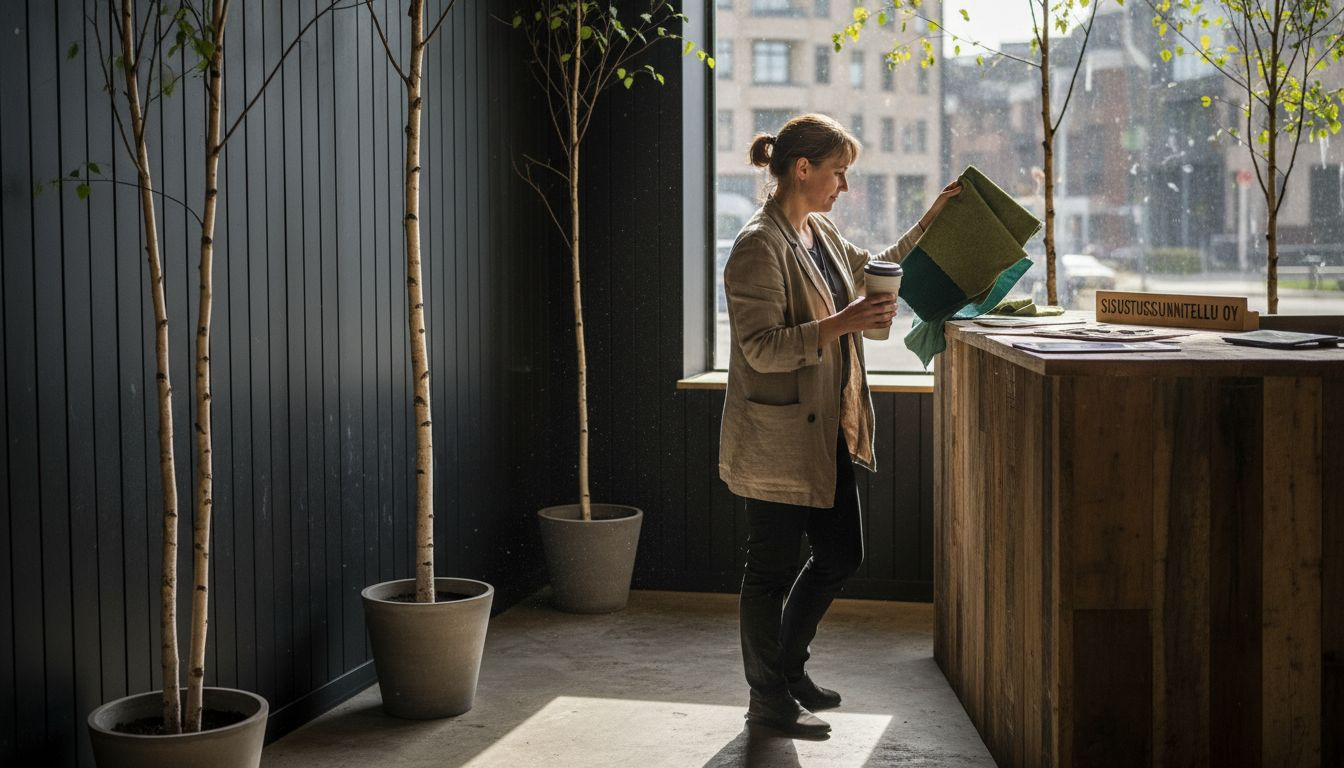
The choice of colors and materials now emphasizes sustainability, locality, and authenticity. Recycled materials, local artisans, and natural tones bring authenticity to the space. Textures range from rough concrete surfaces to soft, natural materials, creating a multi-layered and interesting whole. The color palette draws from both nature's own tones and bold, contrasting combinations.
Pro tip: Don't be afraid to combine different materials and colors – it's the contrast that makes a space interesting and personal.
Technology and experientialism in spatial design
Restaurant design in 2025 will combine technology and experientiality in an even smarter way. Restaurant trends highlight the versatile role of technology in space design, where digital solutions are no longer just side dishes but an integral part of the customer experience. Smart space solutions transform throughout the day to meet different uses – from a peaceful lunch spot in the morning to an atmospheric entertainment center in the evening.
Artificial intelligence and robotics are bringing completely new interactive elements to restaurant spaces. Digital displays can change the atmosphere in an instant, smart lighting solutions react to customer flows, and robotics applications that support staff work streamline service processes. Impressive technological solutions are not only practical, but they also create strong visual experiences that set a restaurant apart from its competitors.
Personalization is taking center stage. Technology is enabling increasingly tailored customer experiences, where the ambiance, lighting, and even sound of a space adapt to the preferences of a group of customers or an individual guest. This means, for example, smart table booking functions where the customer can define the desired atmosphere in advance, or interactive menus that recommend dishes based on the customer’s previous choices.
Pro tips: Technology should not be an intrinsic value – it should always serve the customer experience and bring added value to the restaurant's operations.
The following table summarizes the role of smart technology solutions in restaurant design:
| Solution | Benefits for the restaurant | Benefits for the customer |
|---|---|---|
| Artificial intelligence | Streamline service processes | Gives tailored recommendations |
| Robotics | Speeds up operations | More interactivity |
| Smart lighting | Optimize electricity consumption | Customize the atmosphere |
| Digital displays | Versatile communication | Varied visual experience |
Responsibility and circular economy in restaurants
Restaurants in 2025 will define sustainability holistically. Restaurant trends are increasingly emphasizing environmental and social responsibility themes. Sustainability is no longer just a marketing gimmick, but a true strategic choice that is reflected in all aspects of a restaurant – from interior design to menu and personnel policies.
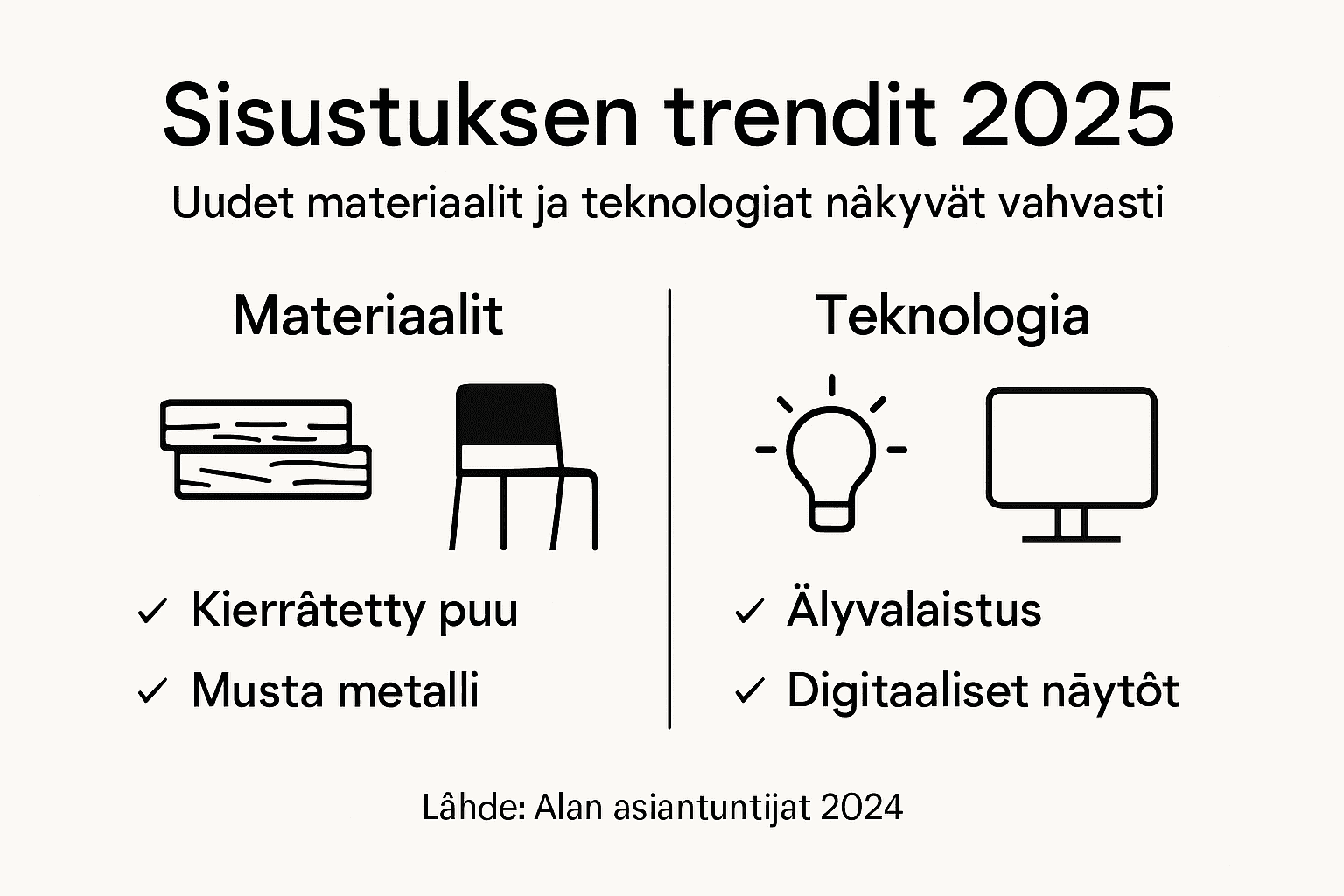
Circular economy principles are increasingly guiding the design of restaurant spaces. Recycled, local and environmentally friendly solutions are preferred in material choices. This means, for example, furniture made from recycled materials, interior surfaces that are sustainably produced, and design elements that respect local craft traditions. Restaurants also want to communicate their values visually.
Social responsibility has become a key competitive factor. Diversity, inclusion and staff well-being are reflected in recruitment, working conditions and customer experience. Minimizing food waste, plant-based alternatives and local, locally produced ingredients are examples of concrete actions of responsibility that customers appreciate.
Pro tips: Responsibility is a holistic way of thinking – it starts with small actions and is reflected in all activities.
How to stand out from the competition – building customer experience
In an increasingly competitive environment, restaurants need to think in a completely new way to succeed. Restaurant trends emphasize individuality and genuine interaction, where the customer experience is at the heart of everything. Good food alone is no longer enough, but a restaurant must create a holistic, memorable experience from the very first moment.
Building a customer experience starts before you even enter a restaurant. Digital booking systems that allow you to customize your desired atmosphere and pre-designed experience packages create expectations and interest. Personal branding of staff, where each waiter or chef has their own unique story, makes the service more human and memorable. The most important thing is to create an emotional connection that goes beyond the boundaries of conventional customer service.
Visual identity is a key way to differentiate yourself. In the design of the space, every detail – from colors to lighting and furniture shapes – tells the story and values of the restaurant. When a customer enters, they are greeted by a space that evokes emotions, provokes the senses and offers something completely unique. This means bold material choices, the use of works by local artists and spaces that transform at different times of the day.
Pro tip: Customer experience is all about the little details – focus on what makes your restaurant trend unique.
Create an unforgettable experience in your restaurant with visual solutions
The focus of restaurant interior design trends in 2025 is on authentic experiences and strong visual contrast. Customers' expectations now go beyond just good food, yearning for a space that tells a story, evokes emotions and creates genuine interaction. This requires bold material choices and the integration of technology into the atmosphere of the space. Dekoja.net offers a unique way to implement these trends. In our galaxy of materials, you will find Musou Black paint and other non-reflective surfaces that will help you create a dramatic, visually clean and deep interior.
Take a step towards the restaurant interior of the future and stand out from the competition by utilizing our Lighting – Dekoja.net selection, which combines technology and aesthetic brilliance. Our vision is to support creative professionals and restaurants to make their spaces experiences that will be remembered. Also, explore our entire offering at Dekoja.net and start the journey towards more impressive, responsible and technologically intelligent restaurant interior design today.
frequently asked questions
What are the most important restaurant interior design trends for 2025?
Restaurant interior design trends 2025 focus on combining technology, responsibility, and experientialism, transforming restaurants into multidimensional experience spaces.
How will technology affect restaurant interior design in 2025?
Technology enables more personalized customer experiences, such as smart lighting and interactive menus, which enrich the restaurant vision and atmosphere.
Why is sustainability an important part of restaurant design in 2025?
Customers value transparency and ethical choices in restaurants, which is evident, for example, in the use of recycled materials and local artists in the interior design.
How can I create a unique customer experience in my restaurant?
Building a holistic customer experience starts with a visual identity where every detail – from materials to lighting – is thoughtful and richly emotional.
Recommendation
- Leading interior design trends 2025 – Visual contrast and technology – Dekoja.net
- Leading interior design trends 2025 – Visual contrast and technology – Dekoja.net
- Leading interior design trends 2025 – Visual contrast and technology – Dekoja.net
- Leading interior design trends 2025 – Visual contrast and technology – Dekoja.net