

Workflow for aesthetic design with super black surfaces
Projects by Finnish restaurant managers, interior designers, and architects increasingly demand innovative visual solutions where super black surfaces and effect materials create unique experiences. Integrating these special materials into the design process brings unique challenges: how to manage wear and tear sensitivity, lighting, and acoustics while creating spaces that evoke emotions? This guide presents a comprehensive workflow that takes your project from needs assessment to successful implementation. You will learn concrete work stages, technological tools, and practical tips that ensure visual success at every stage.
Table of Contents
- Key Learnings
- Aesthetic Design Workflow: From Needs Assessment to Implementation
- Interior Design Workflow with Super Black Surfaces
- Restaurant Managers' and Architects' Perspective with Effect Materials
- The Role of Technology and In-depth Work in the Workflow
- Explore Super Black Materials and Design Resources
- Frequently Asked Questions about Aesthetic Design Workflow
Key Takeaways
| Item | Details |
|---|---|
| Needs assessment and project planning | The workflow begins with a needs assessment and project planning, charting the client's needs, budget, and schedule. |
| BIM-based design | In renovation, BIM becomes mandatory in 2026, increasing design accuracy and renovations of old spaces. |
| Impact of super black surfaces | Super black surfaces absorb light, create depth, and emphasize contrasts, requiring special control over lighting and acoustics. |
| Iterative design process | The conceptual design phase emphasizes iterative feedback and the presentation of mood boards and physical samples in different lighting conditions. |
| Integration of lighting and acoustics | Lighting and acoustics go hand in hand with material choices, creating both an aesthetic and functional balance in the space. |
Aesthetic Design Workflow: From Needs Assessment to Implementation
The aesthetic design workflow in Finland begins with a needs assessment and project planning, which maps out the client's needs, budget, and timeline. This phase lays the groundwork for all subsequent work. In restaurant projects, the needs assessment includes defining the brand identity, analyzing the customer journey, and charting the functional requirements of the spaces. Interior designers focus on creating atmosphere and material selections, while architects consider structural solutions and optimizing space utilization.
During the project planning phase, the first concepts and spatial program proposals are created. At this stage, it is defined how super black surfaces and effect materials will be integrated into the overall design. Material choices are not isolated decisions but part of a broader visual strategy. When designing an aesthetic space with material choices, consider the unique ability of super black surfaces to absorb light and create depth. This property makes them excellent for accent walls, art installations, and backgrounds for ambient lighting in restaurants.
In the conceptual design phase, concepts are concretized into visual presentations. Mood boards, color charts, and material samples help the client understand the end result. An iterative feedback process is critical: the client sees the proposals, provides feedback, and the designer refines the solutions. For super black surfaces, this often means presenting physical samples in different lighting, as digital images do not convey the true depth of the material.
Professional tip: Allocate enough time for discussions with the client during the needs assessment phase. The use of super black surfaces requires a common understanding of how they change the atmosphere of the space and how they are maintained in use. Present reference sites and concrete examples from previous projects.
In the preliminary and implementation design phases, technical details are delved into. Detailed drawings define how materials are installed, how connections are made, and how surfaces are protected from wear. BIM-based design will become mandatory in renovation starting in 2026, which also impacts the aesthetic workflow. BIM models and laser scanning bring precision, especially in the renovation of old spaces, where super black surfaces are combined with historical structures.
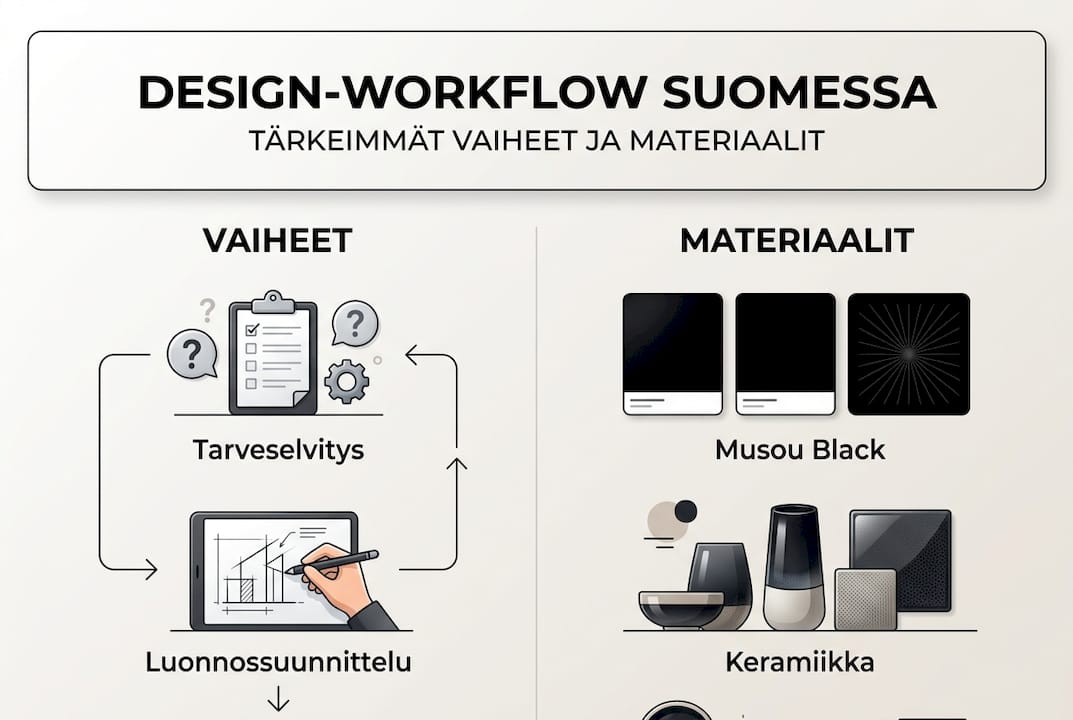
| Design Phase | Key Documents | Timeline |
|---|---|---|
| Needs Assessment | Client interview, space program proposal | 1-2 weeks |
| Project Planning | Concept proposal, budget estimate | 2-3 weeks |
| Conceptual Design | Mood board, material samples, 3D visualizations | 3-4 weeks |
| Preliminary Design | Floor plans, sections, details | 4-6 weeks |
| Implementation Design | Working drawings, material specifications, installation instructions | 4-8 weeks |
The workflow rarely progresses linearly. Material choices can change when the client sees the first visualizations or when the budget requires reprioritization. For super black surfaces, this iterativity is particularly important, as their visual impact strongly depends on the surrounding elements. Lighting design and acoustic management go hand in hand with material choices, creating a whole that functions both aesthetically and functionally.
Interior Design Workflow with Super Black Surfaces
The interior design workflow includes a floor plan, mood board, color and material plan, wall projections, and an iterative feedback process with the client. The floor plan is the foundation upon which everything else is built. It defines space utilization, furniture placement, and traffic flow. When designing with super black surfaces, the floor plan precisely indicates which wall surfaces will receive special treatment and how they relate to the rest of the space.
A mood board is a visual tool that brings together atmosphere, colors, materials, and inspiration. For super black surfaces, a mood board helps the client understand how deep black creates contrast and depth. Collect images of reference sites, material samples, and color charts for the mood board. Combine super black surfaces with light elements, metals, or wood materials to create a balanced whole. A purely black space can feel oppressive, but used correctly, it creates luxury and drama.
- Start with a floor plan and space program: determine where super black surfaces will be placed
- Create a mood board that visualizes the atmosphere and material combinations
- Choose a color palette where super black surfaces act as anchors
- Design lighting in layers: general, accent, and ambient lighting
- Test materials with physical samples in different lighting conditions
- Consider wear sensitivity: protect surfaces outside of high-traffic areas
- Provide maintenance instructions to the client to ensure the longevity of materials
The color and material plan concretizes the ideas from the mood board. At this stage, precise materials, color shades, and finishes are defined. For super black surfaces, this means deciding whether to use Musou Black paint, fabric, or another effect material. Each option brings its own characteristics: paint is a permanent solution for wall surfaces, fabric panels are flexible and interchangeable, and special materials can offer additional properties such as acoustic damping.
Professional tip: Arrange a material sample meeting with the client where you present super black surfaces in various lighting conditions. Bring LED lights and adjust the color temperature from 2700K to 5000K. The client will see how the depth and visual impact of the material change. This investment of time will save later change requests.
The iterative feedback process is the heart of interior design. Present the plans in stages: first the concept and mood board, then the colors and materials, and finally the detailed plans. After each stage, collect feedback and make the necessary changes. When working with super black surfaces, you'll find that clients need time to get used to the idea. Start with smaller surfaces, such as an accent wall or the background of an artwork, before proposing broader applications.
| Material | Suitability | Wear Resistance | Maintenance |
|---|---|---|---|
| Musou Black paint | Wall surfaces, fixed installations | Medium, requires protection | Dust removal with a soft brush |
| Black fabric | Panels, interchangeable surfaces | Good, washable | Vacuum or wash according to manufacturer's instructions |
| Effect laminate | Furniture surfaces, wear-resistant areas | Excellent | Wipe with a damp cloth |
| Matte black metal | Detail accents, furniture parts | Excellent | Wipe with a microfiber cloth |
When you design interior contrast with Musou Black, remember that a super black surface is not an end in itself but a tool. It creates depth, emphasizes other elements, and directs the eye. In a restaurant, a super black background makes the colors of food shine. In a gallery, it makes artworks the focal point. In a private home, it creates an intimate, luxurious atmosphere. Each application requires its own approach, but the basic principles remain the same: balance, contrast, and careful execution.

Restaurant Managers' and Architects' Perspective with Effect Materials
Restaurant design workflow emphasizes the balance of brand, customer experience, and functionality: customer journey, lighting, acoustics, materials. Restaurant managers know that the visual appearance of a space is directly linked to customer satisfaction and business success. When you integrate super black surfaces and effect materials into a restaurant, you are not just designing beautiful walls but creating an experience that sets you apart from competitors.
Brand identity guides all material choices. A fine dining restaurant can use super black surfaces to create an exclusive, intimate atmosphere where lighting directs attention to the food and moments between guests. In a casual dining concept, the same materials can create a modern, urban look when combined with industrial elements like metal and concrete. In a street food restaurant, a super black background can serve as a canvas for colorful neon lights and graffiti-style art.
- Identify core brand values and visual identity before material selection
- Design the customer journey from entrance to table: what the customer sees and experiences
- Use super black surfaces to direct attention and create spatial hierarchy
- Integrate lighting as part of the architecture: recessed lights, LED strips, spotlights
- Consider acoustics: super black acoustic fabric panels are available
- Test material durability: restaurants are high-wear environments
- Plan maintenance instructions for staff for surface cleaning
Lighting design is most critical when using super black surfaces. A black surface absorbs light, so you will need more and better-planned lighting than in traditional spaces. Layered lighting is the solution: general lighting creates a base level, accent lighting highlights food and interior elements, and ambient lighting creates drama. LED technology allows for color temperature and brightness adjustment, which is invaluable when working with super black surfaces.
- Start by placing general lighting: ensure adequate light levels in all areas
- Add accent lighting above tables: dimmable pendant lights or spotlights
- Design ambient lighting: LED strips behind or on the edges of super black surfaces
- Test the effect of lighting on super black surfaces in a prototype or 3D visualization
- Choose the right color temperature: warm 2700-3000K creates intimacy, cooler 4000K creates a modern feel
- Install dimmers and control systems: adjust the atmosphere at different times of the day
Acoustic management is another key challenge in restaurant design. A hard super black surface can reflect sound as much as any other hard-surfaced material. The solution is to use acoustically absorbent super black materials or combine super black surfaces with acoustic panels. There are fabric-based super black solutions on the market that function both visually and acoustically. Alternatively, you can place traditional acoustic tiles on the ceiling and use super black surfaces on walls where acoustic requirements are less stringent.
| Perspective | Functional Priority | Aesthetic Priority | Role of Super Black Surfaces |
|---|---|---|---|
| Restaurant Manager | Customer flow, cleanability, durability | Brand image, Instagram moments | Accent walls, artworks, light panels |
| Interior Designer | Ergonomics, material availability | Atmosphere, color scheme, details | Mood board anchor, visual drama |
| Architect | Structures, safety, regulations | Spatial experience, luminosity | Spatial depth, perspective |
When designing material choices for experiential spaces, remember that a restaurant is a living environment. Materials must withstand daily wear and tear, cleaning, and moisture. The placement of super black surfaces requires careful consideration: avoid areas where customers or staff repeatedly touch walls. Place them in prominent locations where they create a visual impact but remain protected from mechanical wear. The wall opposite the entrance, the bar background, or an accent wall in a private room are ideal locations.
The Role of Technology and In-depth Work in the Workflow
BIM-based design will become mandatory in renovation in Finland starting in 2026, impacting the aesthetic workflow with laser scanning and 3D models. BIM systems enable all designers to collaborate in a single information model, where the architect's structural plans, the interior designer's material choices, and the HVAC designer's technical solutions are visible simultaneously. This reduces errors and conflicts that traditionally emerge only during the construction phase.
Laser scanning brings precision, especially in the renovation of old spaces. When designing super black surfaces for a historic building or an old restaurant, laser scanning produces an accurate 3D model of existing structures. This data integrates into the BIM model, allowing you to immediately see how new materials fit into the space. You can design the fixings for super black panels on uneven walls or visualize how lighting reflects from historical details onto a super black background.
- BIM modeling enables real-time collaboration among all designers
- Laser scanning provides an accurate basis for renovation design
- 3D visualizations help the client understand the impact of super black surfaces
- Virtual reality (VR) allows the client to "walk" through the space before construction
- Material databases in BIM systems facilitate quantity take-offs and cost estimation
- Cloud-based systems enable remote work and client participation in design
However, technology does not replace the designer's creative work. The Deep Work method is recommended for complex aesthetic design requiring undisturbed focus. When designing with super black surfaces, you need time to visualize how light behaves, how the spatial experience changes, and how details work together. This requires deep concentration, which continuous interruptions and multitasking destroy.
Pro Tip: Reserve 2-4 hour blocks in your calendar for deep work without interruptions. Close your email, put your phone on silent, and focus on one design task at a time. Use the first 30 minutes to review previous plans and the following hours for actual creative work. This produces better quality than fragmented work throughout the day.
Gantt charts and project management systems help manage multi-stage projects. When working with super black surfaces, the schedule can extend for unexpected reasons: delivery times for special materials, drying of test surfaces, delays in client decision-making. Visualize the critical paths and dependencies of the project. If the installation of super black surfaces is delayed, will it affect the lighting installation? Can you do other work in parallel?
“Technology is a tool that frees up time for creativity. BIM modeling automates routines, allowing the designer to focus on what truly matters: creating the atmosphere and visual impact of the space.”
Combine technology and deep work to create an efficient workflow. Use BIM systems for documentation and coordination, but allocate separate time for creative design without technological distractions. Sketch by hand, create mood boards from physical materials, and visualize the space in your mind before moving to digital tools. Once you have clarified the vision, technology helps implement it efficiently and flawlessly. This balance between creativity and technology is key to successful aesthetic design with super black surfaces.
Explore super black materials and design resources
Are you ready to take your project to the next level with super black surfaces and effect materials? Dekoja.net is the only Finnish special materials store that delivers Musou Black and the world's blackest effect surfaces directly from domestic stock. We help restaurants, interior designers, and architects create spaces that evoke emotions and stand out from everything else.
You get more than just products from us. You get an expert who helps you through the project from start to finish: from material selection to installation instructions and care guides. Fast deliveries in 1-3 business days from Finland and B2B service for projects mean your schedules stay on track. Explore our material tips for design and find inspiration for your next project. Lifestyle and decorations beyond black.
Frequently asked questions about aesthetic design workflow
What are the main stages of aesthetic design workflow in Finland?
The aesthetic design workflow includes needs assessment, preliminary planning, proposal design, conceptual design, and implementation design. Each stage builds on the previous one and includes iterative feedback from the client. When working with super black surfaces, each stage requires special attention to lighting, material durability, and visual impact.
Why is BIM important in aesthetic design from 2026 onwards?
Building Information Modeling (BIM) will become mandatory for renovation projects in Finland from 2026. BIM enables all designers to collaborate in a single 3D model, reduces errors, and improves coordination. Laser scanning provides an accurate basis for renovating old spaces, which is critical when integrating super black surfaces into historical buildings or old restaurants.
How is lighting designed for super black surfaces?
A super black surface absorbs light, so you need layered lighting: general lighting creates a base level, accent lighting highlights important elements, and mood lighting creates drama. LED technology allows for adjustable color temperature and brightness. Test the effect of lighting in a prototype or 3D visualization before final implementation.
How to manage the wear sensitivity of super black surfaces in restaurants?
Place super black surfaces in areas where mechanical wear is minimal: avoid spots where customers or staff repeatedly touch walls. Choose durable materials such as effect laminate for furniture surfaces. Create clear care instructions for staff and protect surfaces during the construction phase. Regular dusting with a soft brush is sufficient for most super black surfaces.
What does Deep Work mean in a designer's workflow?
Deep Work means undisturbed, deep concentration on complex design tasks. Reserve 2-4 hour blocks where you close your email, put your phone on silent, and focus on one task. This produces higher quality creative work than fragmented multitasking. Designing super black surfaces requires visualization and refining details, which can only be achieved through deep work.